Feeds:
Posts
Comments

Archive for the ‘PEOPLE’ Category


Available at your online booksellers, Amazon, Barnes & Noble, and other booksellers served by Ingram Distributors, booksellers receiving deep discounts. Or place an order at your local bookstore.

A separate Study Guide is also available.

This study guide provides intelligent discussion questions for book clubs, history instruction, or private study

Read Full Post »

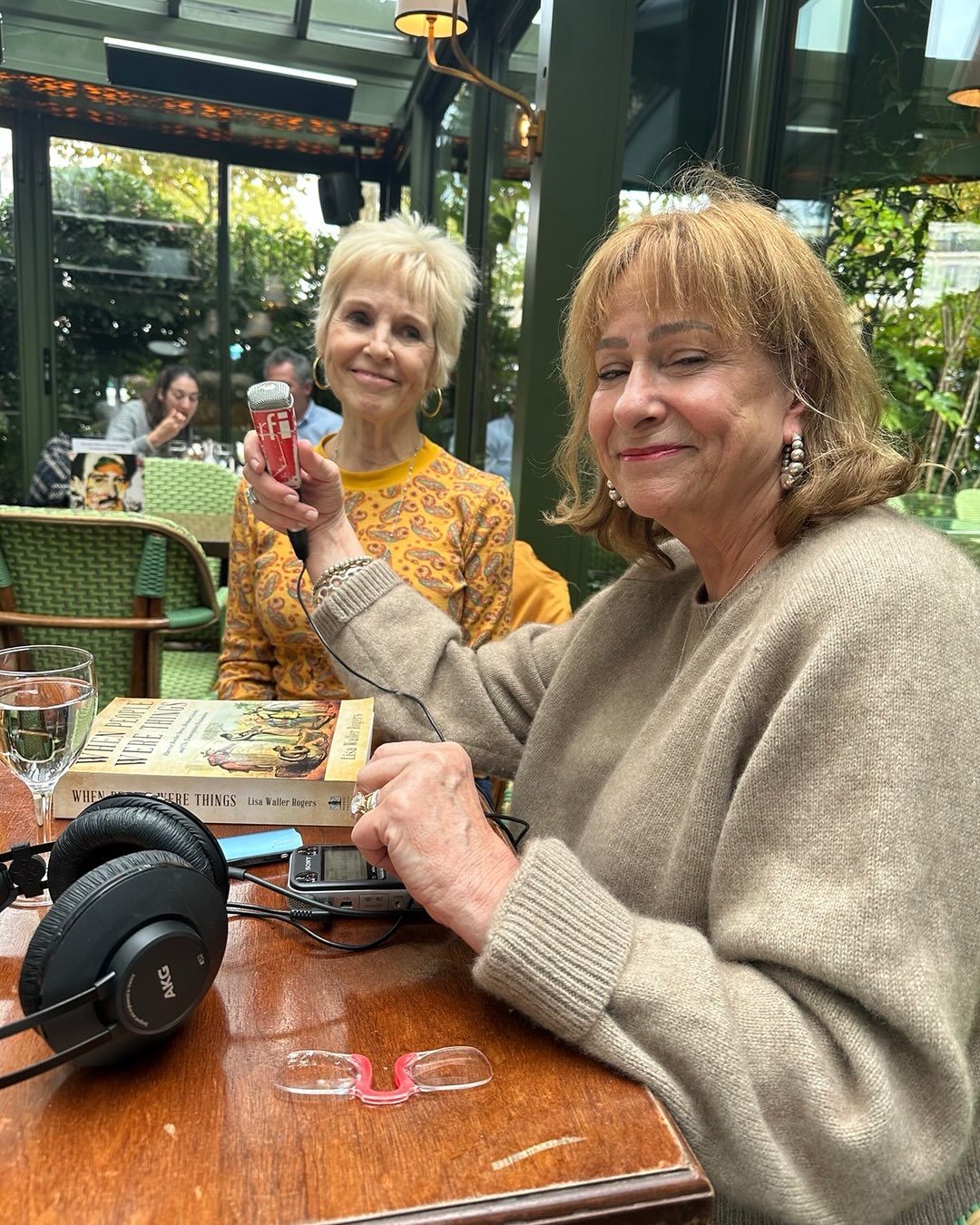
Susan Owensby, the Sound Kitchen, interviewing the author, Lisa Waller Rogers, at Les Closerie des Lilas, Paris.

Susan Owensby, of the Sound Kitchen, for Radio France International, interviewed Lisa Waller Rogers in Paris, about her new book, When People Were Things: Harriet Beecher Stowe, Abraham Lincoln, and the Emancipation Proclamation.

Hear the interview here.

Susan Owensby’s radio listeners come from far and wide and she enjoys a rich fan base. Here is a letter she received from one grateful listener:

Kudos to you, Susan for your thought-provoking and wonderful interview with Lisa Rogers, author of When People Were Things in the Sound Kitchen’s latest edition :”A special interview today”. I learned many things about the extent that human beings can go to degrade and bring pain to fellow beings. Thank you for your great effort.

The United States may be the only Super Power but it has a dark history or racial intolerance which  till date is unfortunately very much alive in the present disposition of the White House. The United States may be the only Super Power but it has a dark history.  Its ancestors have done unthinkable crimes against humanity which no other country in modern history has perhaps  ever done. These  perpetrators were the colonizers from Europe, mainly Englishmen.   They  enslaved, tortured and    dehumanized people only because of their black skin. It is a  well-known fact and a matter of deep shame that even 13 former US  Presidents owned and profiteered in the lucrative slave business,  chief of whom was Thomas Jefferson who is alleged to have more than 600 slaves. Isn’t it a shame to have named the nation’s capital after George Washington, another prominent architect of  shaming the  unfortunate  black people.   I think it’s a  mockery when America acts as the international watchdog for human rights abuse when its own record is rotten.

I have read Uncle Tom’s Cabin in my school days and later in my adult days. It brought tears to my eyes in learning about the pain and sufferings of the slaves. It’s a matter honour that both the anti-slavery books have been written by enlightened ladies. Now that you have aroused my interest in Rogers’ book I would like to read it when I get hold of one. Thank you for your introduction of the book in the Facebook page.  I would be delighted if the following message is conveyed to your girl friend Lisa Rogers.

“Dear Lisa Rogers, kudos to you for your thought-provoking book “When People Were Things”. Your interview with Susan Owensby was outstanding. It was a great endeavour on your part to teach us to differentiate good from the evil. I liked the proverb “The power of the pen”. More so when that pen is held by a kind-hearted and enlightened lady. The pain and sufferings inflected on people just because of the colour of their skin speaks a lot about the shameful history of the United States which you have successfully highlighted. I would like to read your book when I get hold of one. When People Were Things is very much an analogy to Uncle Tom’s Cabin in its powerful portrayal of the message on anti-slavery and human cruelty”.

With kind regards,
Jayanta Chakrabarty
New Delhi, India

Buy the book at many online sites:

ebook $5.99, paperback and hardback version on Amazon.

Barnes & Noble

Booksellers and librarians can find books through Ingram Distributors, books are fully returnable and available at their regular discounts.

Supplementary Study Guide ready end of November 2025, for schools and book clubs.

To contact the author, email lisawallerrogers@barrelcactuspress314.onmicrosoft.com

Early reviews are in next post. Thank you, Lisa

Read Full Post »

***Especially Written for people who prefer reading nonfiction history that is written like a novel.***

Available for sale now.

Available at your online booksellers, Amazon, Barnes & Noble, and other booksellers served by Ingram Distributors, booksellers receiving deep discounts. Or place an order at your local bookstore.

“Lisa Waller Rogers’ storytelling brilliance lies in her ability to humanize historical figures as multidimensional individuals grappling with moral complexities, personal struggles, and the weight of their times….This is historical writing at its finest….”-Emma Harris, 2024 Gilder Lehrman Maryland State American History Teacher of the Year

“As it has become increasingly difficult to engage young people with historical reading materials, this book’s story-telling style, pictures, and quoted primary sources presents itself as a possible solution. The abolitionist movement is brought to life by Ms. Rogers in a way that both moves and inspires. Students of American history would benefit from more of these in-depth examinations.”

-Stephanie Meek, 2024 Gilder Lehrman Alaska State History Teacher of the Year

Why This Book Works
What makes this book stand out is how approachable it feels. Rogers writes with clarity, balancing the weight of history with storytelling that keeps the reader turning pages. She doesn’t just present dates and speeches; she brings to life the emotions, debates, and struggles that defined the era. It’s the kind of history book that can appeal to both students just learning about the Civil War and seasoned readers who want to see the subject from a new angle. The pacing is steady, and Rogers has a knack for making historical figures feel real and relatable, rather than distant icons on a pedestal.

-Amanda Sedlak-Hevener – Media/Journalist
 

Advance Praise

Publishers Weekly Booklife Review

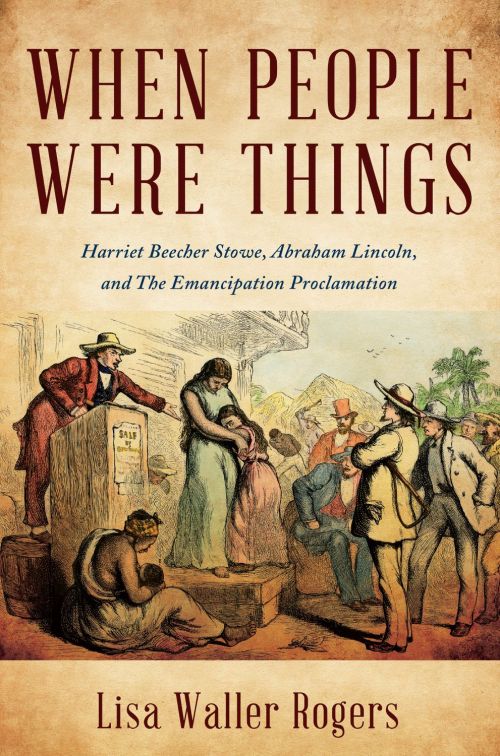
When People Were Things: Harriet Beecher Stowe, Abraham Lincoln, and the Emancipation Proclamation

By Rogers, Lisa Waller

“This intimate epic surveys, with novelistic flair, the lives of men and women, free and enslaved, famous and forgotten, who dared to stand up against slavery in the United States in the years leading up to the Civil War, often at the risk of their own lives. In 100 brisk but rich chapters, Rogers strives to put readers into the shoes of her principal subjects, Harriet Beecher Stowe and Abraham Lincoln, but also a host of abolitionists, formerly enslaved people, and more, in the fractious years between Stowe’s birth in 1811 and Lincoln’s signing of the Emancipation Proclamation at the dawn of 1863—Stowe, Rogers notes with significant narrative and moral power, did not doubt that the president would measure up to his moment.

“Between those events, Rogers dramatizes key moments from myriad lives (among them Theodore Weld, Sojourner Truth, August Wattles, Charles Sumner, Marius Robinson, Paul Edmonson, Harriet Tubman, and many more). The storytelling is inviting and detailed, brought to life with judicious quotes and an eye toward still-pressing themes: mob violence, as decried by both young Lincoln and Stowe; the “revolutionary concept” that women “could change society”; the courage of abolitionist truth-tellers; the “monstrous moral wrong” of slavery; and a Southern-controlled Congress’s anti-democratic efforts to silence abolitionists.

“The subject matter is sweeping, the page count daunting, and the telling at times revelatory, especially when Rogers captures how life felt—and how her cast’s convictions were sharpened—as the nation came to a fierce boil. At times, though, the novelistic approach works against narrative momentum and contextualization, with chapters and sections, especially in the first half, opening with breezily precise bits of declarative scene-setting about mundane happenings that readers must trust will eventually gain significance. The choice to weave in-depth biographical accounts of Stowe’s family and Lincoln’s marriage—while mostly leaving the content and wildly popular theatrical adaptations of Uncle Tom’s Cabin unexamined—leaves readers to seek that context elsewhere.

“Takeaway: Intimate, epic history of Stowe, Lincoln, and the enslaved as the nation came to a boil.

“Comparable Titles: Joan D. Hedrick’s Harriet Beecher Stowe: A Life, Stanley Harrold’s American Abolitionism.

“Production grades

Cover: A

Design and typography: A

Illustrations: A

Editing: A-

Marketing copy: A”

Kirkus Reviews

TITLE INFORMATION

WHEN PEOPLE WERE THINGS

Harriet Beecher Stowe, Abraham Lincoln, and the Emancipation Proclamation

Lisa Waller Rogers

Barrel Cactus Press (662 pp.)

$9.99 e-book, $19.99 paperback, $36.99 hardcover ISBN: 9798999409621

September 1, 2025

BOOK REVIEW

“Rogers offers a scenic walk through a vivid, harrowing, and heartbreaking history of the abolitionist movement.

“The author delivers exceptional research and fresh perspectives as she dives into the biographies of President Abraham Lincoln and author Harriet Beecher Stowe, as well as the greater history of the abolitionist movement, as they all relate to the creation and execution of the Emancipation Proclamation. It’s divided into eight chronological sections, from “Words (1775-1831)” to “Hope (1862-1863).” These are, in many ways, thematic phases, involving a list of individuals that’s quite extensive, but the author effectively shows how they all played key roles, including radical abolitionist John Brown, presidential candidate Stephen A. Douglas, activist and writer Frederick Douglass, journalist William Lloyd Garrison, public speakers Sarah and Angelina Grimké, social reformer Lucretia Mott, Secretary of State William Henry Seward, and formerly enslaved activists Sojourner Truth and Harriet Tubman. Their backgrounds and actions weave through major events that preceded the Civil War, which include the Panic of 1837, the Nat Turner rebellion, the Dred Scott vs.Sandford case, and the establishment of the Underground Railroad. Of course, the publication of Stowe’s novel Uncle Tom’s Cabin (1852) became an ‘abolitionist manifesto, exposing slavery for the cruel and unjust institution it was,’ and, according to Lincoln, the main event that led to the Proclamation. Throughout all the various, detailed sections, the reader comes to understand how Lincoln was influenced by many others in his decision to champion the freeing of enslaved people, and they will gain a greater understanding of his declaration, on January 1, 1863, when he signed the Proclamation and stated, ‘If my name ever goes into history, it will be for this act, and my whole soul is in it.’

“A raw and emotional look at the sacrifices made by those who gave all to end slavery.

“our verdict  GET IT”

More Advance Praise

“In When People Were Things, Lisa Waller Rogers gives us a magisterial treatment of the anti-slavery movement in America and its key players from roughly 1830 to the Emancipation Proclamation in 1863. The book is enlivened by descriptions of such bloody events as the slave insurrection led by Nat Turner, the murder spree of John Brown and his followers, and the brutal caning of Senator Charles Sumner on the Senate floor by a South Carolina congressman….Highly recommended.”-John Oller, author of American Queen, The Rise and Fall of Kate Chase Sprague

“Readers may be surprised at how much humanity, wit and warmth runs through When People Were Things. Rogers’ vivid writing features real people who, whatever their failings and foibles, had moral courage and used it.”-Nancy Koester, author of Harriet Beecher Stowe: A Spiritual Life, and We Will Be Free: The Life and Faith of Sojourner Truth.

“This book provides a wide-ranging, sophisticated, and detailed account of the American antislavery movement from the late eighteenth century into the Civil War.  Its discussions of the personal experiences and family relations of a variety of activists are especially interesting.”- Stanley Harrold, author of Lincoln and the Abolitionists

“In When People Were Things, Lisa Waller Rogers delivers a panoramic portrait of mid-19th century America struggling with what has often and aptly been termed the country’s “original sin,” the institution of chattel slavery that was explicitly enshrined in its founding document, the Constitution of 1787. The book consists of exactly 100 chapters, some very short, and 8 large parts, each covering a specific time period, giving chronological structure to the kaleidoscopic work.

“Through these 100 chapters, Rogers shows how slavery and the debate over slavery functioned at the everyday, ground level in multiple locations across the country, North and South. Along the way, we meet some of the familiar names in that debate, among them Stephen Douglas and Frederick Douglass, Charles Sumner and William Seward, William Lloyd Garrison, Nat Turner and John Brown. Rogers also introduces us to enslavers and enslaved, and many ordinary people whose daily lives were impacted by institutionalized slavery. Yet, she never loses sight of the dramatic big picture, as captured in her subtitle: Harriet Beecher Stowe working her way into the heart and mind of Abraham Lincoln. When the famously circumspect president issued the Emancipation Proclamation on January 1, 1863, Stowe was among many Americans who dared to think that their country might finally be on the path to expiating its original sin….”- Tom Peebles is a former Department of Justice attorney presently living in Paris. He reviews recent works on history and politics at https://tomsbooks.wordpress.com. and for other publications.

When People Were Things offers a clear, well-structured exploration of the abolitionist movement, combining meticulous research with fresh historical insight. Rogers skillfully traces the connections between key individuals, major events, and political shifts that shaped the path to the Emancipation Proclamation. The result is an engaging and highly informative account of a pivotal era in U.S. history.”-Dr. Brittany Jones, assistant professor of Social Studies at the University of Buffalo and 2024 National Council for the Social Studies FASSE Research Award Winner


When People Were Things sheds light on an often overlooked perspective on the debate of slavery in antebellum America, the anti-abolition/pro-slavery Northern sentiment. In the book, Rogers does an outstanding job of providing insight into the complexities of the slavery issue as it existed nationally and regionally. Exploring growing tensions between neighbors, families, and communities leading to open mob violence in the streets as the question of who is a person and what is a thing became an unavoidable question that had to be answered, When People Were Things is a must read for anyone looking for a well rounded look at this pivotal time in American history.”-Michelle Nystel, Founding Forward: Ambassador of Freedom, Iowa

When People were Things is an overview of the entire abolitionist movement from the 1830s up to the Civil War. Rogers highlights the main figures we are familiar with- Lincoln, Frederick Douglass, Harriet Beecher Stowe- while also bringing to life some of the fringe players that often get skipped over in the textbooks, such as James G. Birney. Whether you are a history buff or casual historian, there is something new for all in this book.” –Anthony Swierzbinski, 2024 Gilder-Lehrman Delaware State History Teacher of the Year

When People Were Things by Lisa Rogers is an accessible, well researched examination of the long journey to end an injustice that long kept the United States from living up to its promise that “all men are created equal.

“Rogers’s story of the abolitionist movement provides readers the varying perspectives needed to truly “think like a historian” and understand the complexities of ending the brutal institution of slavery.

“The institution of slavery was so deeply rooted in the cultural, economic, political, and social foundations of American society, the abolitionist movement wasn’t just fighting the injustice of slavery, but trying to change the very heart of the country.


🌟🌟🌟🌟🌟

When People Were Things is a compelling, in-depth look at the anti-slavery movement in the three decades leading up to the Emancipation Proclamation, shedding light on the activists who fought to end one of the darkest chapters in American history. Author Lisa Waller Rogers is a masterful storyteller, bringing these courageous activists to life with nuance and humanity.

“Rogers not only explores prominent figures in the abolitionist movement but also highlights lesser-known enslaved people and women whose contributions were vital to the cause. I especially appreciated the inclusion of so many women’s voices, which added depth and breadth to the narrative.

“Told in short, highly readable chapters, this meticulously researched book doesn’t shy away from the brutal realities of slavery. Yet, amid the horrors, Rogers emphasizes the resilience, love, and dignity of real people who endured and resisted unimaginable circumstances. Her attention to detail makes these historical figures feel fully dimensional and deeply human.

“When People Were Things helped me connect the dots between key historical moments and figures, deepening my understanding of this era of history. I highly recommend this powerful read.” -Lexy Faist Largent, Net Galley Book Reviewer https://www.netgalley.com/book/637451/review/974555

🌟🌟🌟🌟🌟

“A well researched, well written, engaging and informative account of the abolitionist movement in the United States leading up to the Emancipation Proclamation. I was enraptured from the first chapter and could barely put it down. I learned so much that I didn’t know, especially about Harriet Beecher Stowe, Harriet Tubman, John Brown, and the initial challenges of the Civil War. Highly recommended.”-Bruce Raterink – Net Galley, Top Reviewer https://www.netgalley.com/book/637451/review/21954

“In a time when some history is being threatened, When People Were Things is a book that should be read by everyone. Revelatory, filled with inhumanity and humanity, this epic history reveals how precious and precarious freedom and democracy can be.”– Johnny D. Boggs, editor, Western Writers of America’s Roundup Magazine

🌟🌟🌟🌟🌟

“This was a well-written dive into not only the primary, but secondary, and tertiary players that drove the change(s) that resulted in the Emancipation Proclamation. Along the way I learned quite a few things that I had never known and enjoyed the way that these more unknown narratives helped drive the pace. “When People…” features short chapters that make it an easy read and keep you engaged in the evolving story, even if you know where it’s going. The disparate stories helped set the stage for the Civil War so well – placing you into the local mindsets and against the various forces on all sides, with particular attention paid to the female voices and their place. This attention to the female voice and their requisite struggle is at the heart of this book, imo. Highly recommended.”-William Largent, book reviewer https://www.netgalley.com/book/637451/review/927532

🌟🌟🌟🌟🌟

“This book was raw and real . It is shameful that humans treated other humans with such hatred. And now 2025 their [sic] are white racist, demonic white people who would jump at the chance of owning slaves today. Great author.” https://www.netgalley.com/book/637451/review/757272 Carolyn Harris – Reviewer

🌟🌟🌟🌟🌟
A Fresh Look at a Defining Moment in History
“Some stories from American history feel like they’ve been told so many times that nothing new could possibly be said. Yet, Lisa Waller Rogers manages to bring a fresh spark to a well-worn topic in When People Were Things. With a title that immediately draws you in, the book digs into the human side of slavery, abolition, and the monumental figures who helped steer the nation toward freedom. It’s not just a retelling of facts; it’s an invitation to understand how words, ideas, and courage helped change the course of a country. Summary of the Story
Rogers takes readers on a journey through the lives and influence of Harriet Beecher Stowe and Abraham Lincoln, two figures who shaped—and were shaped by—the struggle against slavery. The book explores how Stowe’s groundbreaking novel Uncle Tom’s Cabin awakened a moral conscience in readers across the North, making slavery impossible to ignore. From there, Rogers moves to Lincoln’s evolving stance on emancipation, showing how his leadership and eventual issuance of the Emancipation Proclamation altered the nation’s destiny. By weaving together these two narratives, Rogers highlights how literature, politics, and personal conviction combined in powerful ways to end the idea that human beings could be treated as property.
Why This Book Works
What makes this book stand out is how approachable it feels. Rogers writes with clarity, balancing the weight of history with storytelling that keeps the reader turning pages. She doesn’t just present dates and speeches; she brings to life the emotions, debates, and struggles that defined the era. It’s the kind of history book that can appeal to both students just learning about the Civil War and seasoned readers who want to see the subject from a new angle. The pacing is steady, and Rogers has a knack for making historical figures feel real and relatable, rather than distant icons on a pedestal.
Final Thoughts
When People Were Things is a thoughtful, engaging, and ultimately hopeful book about a dark period in America’s past. Rogers reminds us that change doesn’t come easily, but it can come when voices are raised and convictions are acted upon. The interplay between Stowe’s pen and Lincoln’s policy provides a fascinating study of how art and leadership can work together to transform society. If you’re looking for a book that deepens your understanding of the Emancipation Proclamation while also giving you a compelling narrative, this one is well worth the read.”

Amanda Sedlak-Hevener – Media/Journalist    https://mandysbooknook….-by-lisa-waller-rogers/

Read Full Post »

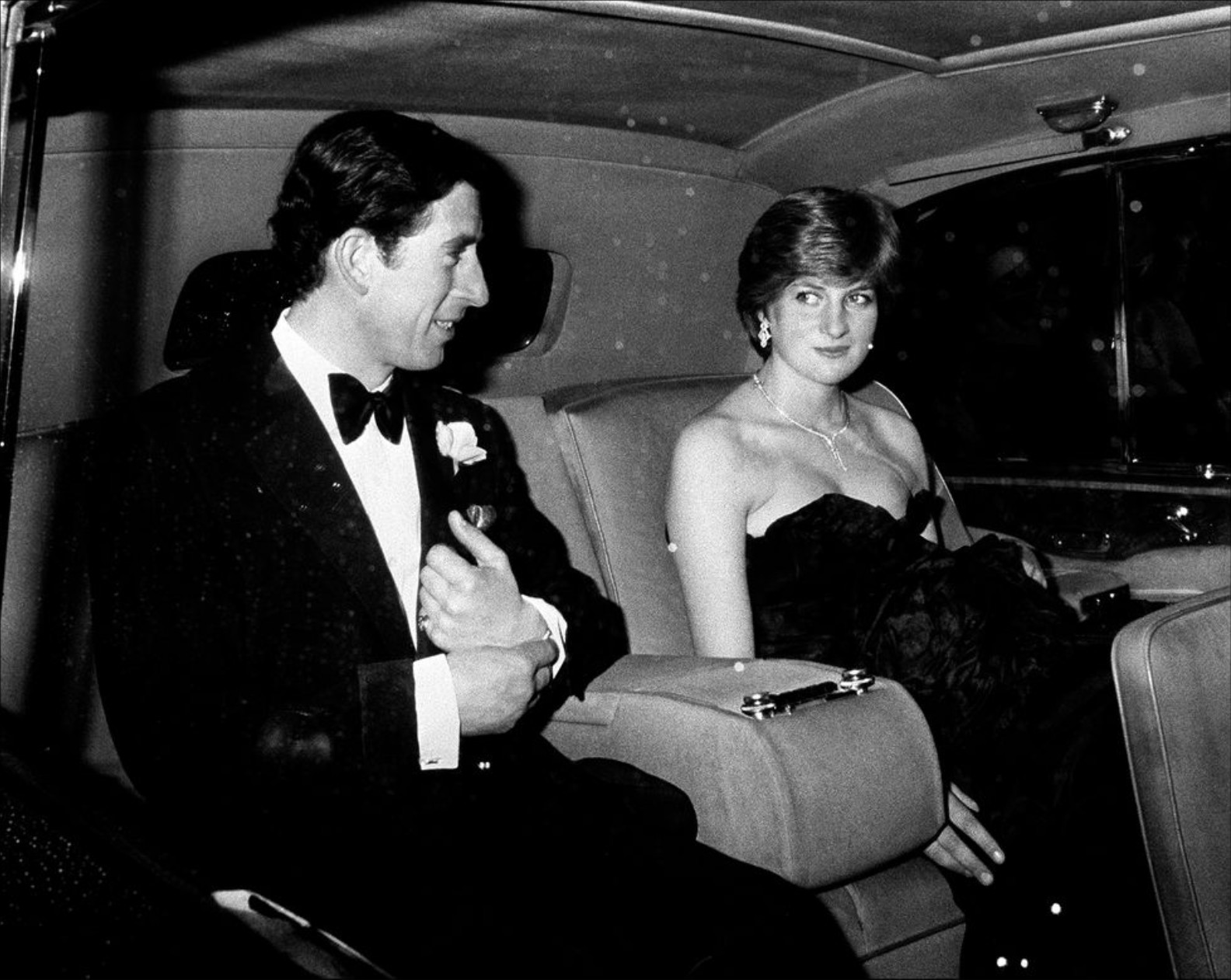
The Prince of Wales and his new fiancée, Lady Diana Spencer, arrive at Goldsmith Hall in London for a charity recital, March 9, 1981.

Lady Diana Spencer, 19, arrived at her first official event since the announcement of her engagement to Charles, the Prince of Wales, wearing a black Emanuel evening gown and her mother’s diamond necklace. Charles, 33, had scolded Diana for wearing black, a color the Royal Family reserved for somber occasions.

Diana's dress at the Goldsmith Hall.

Lady Diana Spencer wowed the world with this black taffeta strapless dress worn to accompany Prince Charles to Goldsmiths’ Hall in London on March 9, 1981.  She stepped out of their car and into a sea of flashbulbs as photographers jockeyed for position to photograph the alluring princess-to-be.


Diana was noticeably uncomfortable in her little black dress and told Princess Grace of Monaco, also in attendance, that the dress she was wearing was two sizes too small.

Lady Diana, Princess Grace of Monaco, and Prince Charles mingle at a music event, London, 1981. photo credit: Tim Graham, HBO.

Princess Grace, who had been the Oscar-winning American actress Grace Kelly before her 1956 marriage to Rainier III, Prince of Monaco, knew just how Diana was feeling.

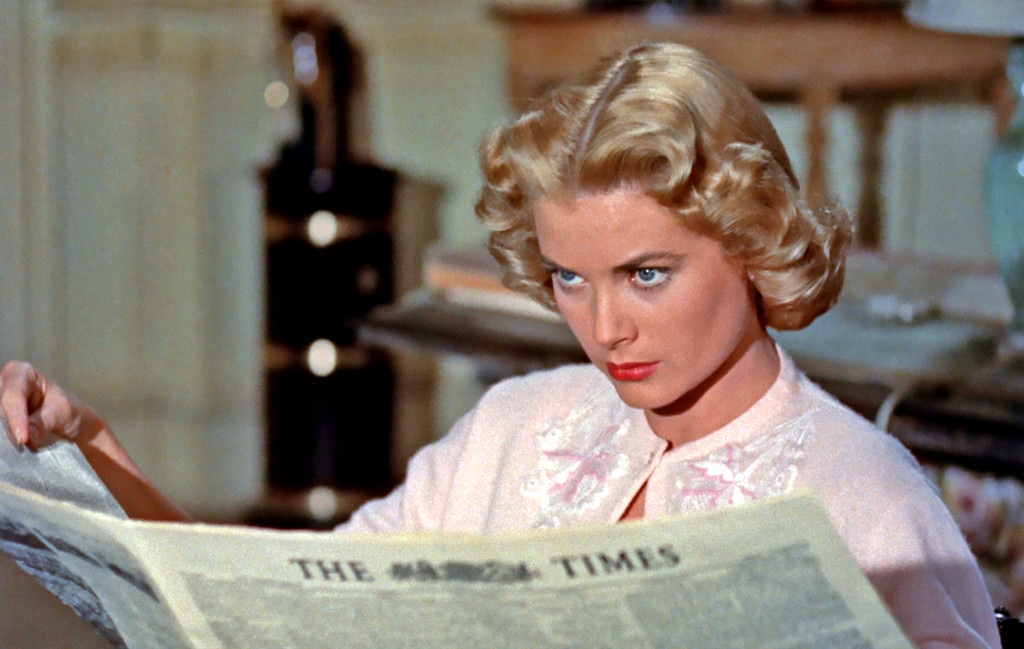
Grace Kelly from the 1954 Hitchcock thriller, “Dial M for Murder.”

Grace had also been an outsider when she married into the House of Grimaldi, the reigning house of Monaco since 1297. Princess Grace pulled Lady Diana aside and they excused themselves into the ladies’ room for private chat. Diana expressed her fears for the future and her feeling of awkwardness in her new role. Grace, who had been royal now for 25 years, patted Diana’s cheeks tenderly and replied:

Don’t worry, it’ll only get worse.

The images of the future royal bride stepping out of a limousine in a black gown with a plunging neckline made newspaper headlines round the world and established Diana as the most glamorous member of the royal family.  Dress designer Elizabeth Emanuel said of Diana’s appearance that night: “The transformation was incredible. She arrived looking like the nursery school teacher she was, but now she looked like a movie star. We gave her the dress, made a little shawl to go with it so she could cover up on the night and away she went….We hadn’t considered the fact that when Diana bent over – as she would have to do when getting out of the car – she would show quite a lot of cleavage. We just thought she looked fabulous.” (1)

Her low-cut outfit apparently raised eyebrows among the royal inner circle too, as she recollected: “I was quite big-chested then and they all got frightfully excited.” Diana continued: “It was a horrendous occasion… I didn’t know whether to go out of the door first. I didn’t know whether your handbag should be in your left or right hand. I was terrified, really ‒ at the time everything was all over the place. I remember that evening so well. I was terrified ‒ nearly sick.” (2)

Eighteen months later, Princess Grace suffered a stroke behind the wheel of her car, and died in a horrific car crash in Monaco. Prince Charles did not understand why Princess Diana was so hellbent on attending Grace’s funeral; he did not understand that she felt a connection to the late Princess, that their lives were parallel. He was against it so Diana appealed to Queen Elizabeth, her mother-in-law, who granted her request. Diana attended the funeral, which was held at the Cathedral of Our Lady Immaculate in Monaco-Ville on September 18, 1982.

Princess Diana represented Queen Elizabeth II at the funeral of Princess Grace of Monaco, 1982.

(1) MSPMint, “Lady Diana Spencer Accompanies Prince Charles to Goldsmiths’ Hall in that ‘LBD’…Little Black Dress,” The Princess Diana News Blog.

(2) Morton, Andrew. Diana: Her True Story ‒ In Her Own Words, excerpted in Harpers’ Bazaar.

Readers, for more on this blog on Grace Kelly, click here.

Readers, for more on this blog on Princess Diana, click here.

Read Full Post »

And how many ears must one man haveBefore he can hear people cry?Yes, and how many deaths will it take ’til he knowsThat too many people have died?

The answer, my friend, is blowin’ in the windThe answer is blowin’ in the wind (1)

In 1964, the Beatles were in awe of songwriter Bob Dylan’s gift for lyrics, as evidenced here in the excerpt from Dylan’s 1962 classic song, “Blowin’ in the Wind.”

Bob Dylan, 1965

John Lennon wanted to meet Dylan but not as badly as he wanted to meet Elvis. Dylan, at 22, was a contemporary and a competitor, while Elvis had achieved mythic status for John. Elvis’ music had been the spark that moved him. John said,

‘Heartbreak Hotel’ was the most exciting thing we had ever heard.

John Lennon, 1964

John had to admit while Elvis’s rock and roll had captured his imagination and influenced his music, Dylan’s lyrics moved him to take more interest in his own lyric-writing.

Bob Dylan met the Beatles on August 28, 1964 at the Delmonico Hotel while the Beatles were in New York. Dylan introduced the Beatles to marijuana during that visit. And so began a long friendship between the Fabulous Four and Bob Dylan. Dylan’s lyrics turned John Lennon inward as a songwriter, expressing his feelings through his lyrics. Less and less, he wrote songs about holding hands and sharing secrets. Here is Lennon’s moody 1965 song, “Norwegian Wood” from the Beatles’ 1965 album, “Rubber Soul”:

I once had a girlOr should I say she once had meShe showed me her roomIsn’t it good Norwegian wood?

She asked me to stayAnd she told me to sit anywhereSo I looked aroundAnd I noticed there wasn’t a chair

I sat on a rug biding my timeDrinking her wineWe talked until two and then she said“It’s time for bed”

She told me she workedIn the morning and started to laughI told her I didn’tAnd crawled off to sleep in the bath

And when I awoke I was aloneThis bird had flownSo I lit a fireIsn’t it good Norwegian wood?

Read Full Post »

Actor Gene Hackman, 1972

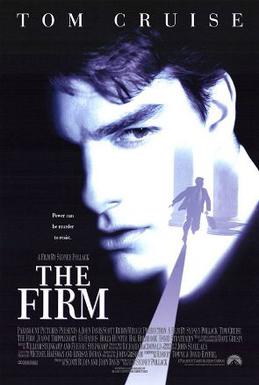
Gene Hackman’s recent and mysterious death at the age of 95 has brought much attention to his filmography. While “French Connection” and “The Conversation” get high marks, I want to draw attention to two of my favorites, “Narrow Margin,” and “The Firm.”

“The Narrow Margin,” starring Gene Hackman and Anne Archer, 1990.

The action-packed “Narrow Margin” features our main characters stuck on a train chased by bad guys with guns. The suspense is very Alfred Hitchcockesque. “The Firm,” based a John Gresham novel, is also a thriller that features a more subtle evil; these bad guys wear tailored suits and sip cocktails on terraces. Gene Hackman plays very different characters in these two movies, a nod to his acting virtuosity.

“The Firm,” released in 1993, stars Tom Cruise, Jeanne Tripplehorn, and Gene Hackman.

Readers: I have written a new nonfiction history, When People Were Things, to be published in late spring. Watch this space.

Read Full Post »

Clara Bow, silent film star, known as the “It Girl.”

In 1929-1933, movies with sound, the “talkies,” replaced silent films. In 1929, Paramount actress Clara Bow retained her position as queen of Hollywood and was still a top-box office draw, though she, like other silent film stars, did not transition well to the new form. Bow said:

“I hate talkies … they’re stiff and limiting. You lose a lot of your cuteness, because there’s no chance for action, and action is the most important thing to me.” (1)

She did not like the sound of her Brooklyn accent in the talkies and became anxious over her career, especially now that the directors expected her to talk and sing. She took refuge in sedatives. (2) As Bow’s star faded, another’s rose: Jean Harlow.

Jean Harlow had her first speaking role in Clara Bow’s movie, the Saturday Night Kid (1929).

Although Jean Harlow had only a bit part in “The Saturday Night Kid,” she made quite a sensation when she appeared on the set wearing a clingy, black crocheted dress, with that platinum blonde hair. Reportedly, Clara Bow ordered her off the set:

“Who’s gonna see me nexta her?”(3)

Hollywood sex symbol, Jean Harlow (1911-1937)

By 1932, Jean Harlow was at the peak of her stardom. Gone were Bow’s “It Girl” looks with ultra-thin and dark eyebrows with downward curved tails. Starlets who wanted to make it in Hollywood now had to resemble Harlow with her iconic, half moon brows. That meant shaving their eyebrows, and drawing in carefully-pencilled crescent shaped ones.

In 1933, Lucille Ball arrived in Hollywood and promptly shaved and pencilled her brows to appear in Sam Goldwyn’s picture, “Roman Scandals,” as a slave girl.

Lucille Ball in “Roman Scandals” (1933)

To the end of her days, Lucille Ball regretted shaving her eyebrows, as they never grew back. The first thing she did in the morning was grab her eyebrow pencil and pencil in her brows.

Lucille Ball, ca. 1940

Fast forward to the 97th Academy Awards, March 2025, to singer Miley Cyrus walking the red carpet with her long, waving tresses and glam girl looks. According to Vogue, it was her bleached eyebrows that stole the show:

They’re not your typical bleached brows, as there’s no bright blonde or platinum shade. Instead, these brows match the soft blonde hue in her hair to give that “barely there” effect. Modern approach to the bleached-brow look. (4)

Miley Cyrus debuts her new look at the March 2, 2025 Academy Awards.


(1) Goldbeck, Elisabeth. “The Real Clara Bow,” Motion Picture Classic, September 1930.

(2) Brady, Kathleen. Lucille: The Life of Lucille Ball, 45.

(3) Longworth, Karina. “The Bombshell,” Slate.

(4) Noble, Audrey. “Miley Cyrus Debuts Barely There Brows at the 2025 Oscars,” Vogue.

Read Full Post »


Harriet Lane, the single (orphaned) niece of bachelor President James Buchanan, served as the “first lady of the land” during his presidency (1857-1861). She was an accomplished hostess and a fashion trendsetter. This marble portrait, by William Henry Rinehart, highlights Lane’s bare shoulders above a deeply plunging neckline, a style she made fashionable when she altered her inauguration ball gown by lowering it two full inches. She added a strip of lace at the neckline, which is called a “Bertha,” which became a fast fad.


Harriet Lane (1830- 1903) in an 1860 photograph. She did not wear much jewelry or ruffles but was fond of floral headdresses and low necklines, that revealed her shoulders and toned arms.

Readers: I will be blogging about people from the American Civil War Era as I have written a new nonfiction history about those times, When People Were Things, to be published in late spring. Watch this space.

Read Full Post »

Readers: I will be blogging about people who appear in my upcoming book, When People Were Things, but include here different stories than are in the book.

Attack against Fort Sumter, 1861, Currier & Ives

On April 12, 1861, the South Carolina militia fired from shore on the Union garrison of Fort Sumter in the Charleston Harbor. The Battle of Fort Sumter were the first shots fired that sparked the Civil War. Days later, President Abraham Lincoln issued a proclamation calling for 75,000 militia men into national service for 90 days to put down the Southern insurrection.

The Northern response among the free states was wildly enthusiastic. War fever took hold. Whereas Lincoln has asked the Indiana governor for 6 regiments, the governor offered 12. At the onset of the war, Washingtonians bit their nails, so nakedly exposed to danger, as neighbor Virginia (to the west) joined the Confederacy and Marylanders (to the north and east) in Baltimore viciously attacked Union troops on their way to defend the federal capital.

The influx of the militia corps took the U.S. War Department by surprise. The new Union soldiers needed food, uniforms, mattresses, blankets, stove, cooking utensils, weapons, tents, knapsacks, overcoats, hammocks, bags, and cots on a massive scale.(1) For starters, where were the soldiers flooding into Washington, D.C. to camp? Massachusetts militia men, the first to arrive, found quarters in the Capitol, where the top of the unfinished wooden dome had been left off for ventilation  The men of the First Rhode Island Regiment found quarters inside the U.S. Patent Office, spreading their bunks beside the “cabinets of curiosities.” (2)

The Rhode Islanders sleep alongside models submitted with patent applications, causing much damage, and tremendous broken glass.

(1) Leech, Margaret. Reveille in Washington, 86.

(2) Ibid, 83.


Read Full Post »

This is what not vaccinating your child with M.M.R. will likely cause infection and a measles outbreak.

Immunologists and medical doctor Michael Mina have conducted research that reveals that measles destroys immune cells. People recovering from measles lose much of their immune memory. The protection they had acquired from previous infections of vaccines to other childhood illnesses is lost.

Dr. Mina compared the damage done to the immune system to the damage done by HIV:

“If you took all of the immunological memory that HIV tears down when it’s untreated for 5 to 10 years, that’s what you see after one measles infection,” Mina said.

Journalist Zeynep Tufekci states that

Some Americans live deep in echo chambers where most of what they hear about vaccines are lies and disdain. It won’t be possible to reverse all this quickly. Perhaps the best we can do is inform parents skeptical of vaccines what they’re risking, before it’s too late.

In Seminole, TX, every day, Dr. Wendell Parkey is confronted with vaccine skeptics who have chosen to not vaccinate their children. Seminole is at the center of the largest measles outbreak since 2019. Since the beginning of the year, more than 140 Texas residents, most who live in the surrounding Gaines County, have been diagnosed and 20 hospitalized. A child has died.

Dr. Parkey can detect measles in a patient before the telltale spots appear. Infected children have no affect and sit with a distant stare. As the illness progresses, the child’s eyes grow red and crusted and he will develop fever and a cough. The fever spikes and the rash would spread over his torso and thighs. The virus might migrate into his lungs and cause pneumonia and he might require an oxygen mask to breathe. Measles could invade his brain, cause swelling and convulsions, possibly blindness or deafness.

Once the virus infects someone, there is not treatment to stop it.

The measles virus is highly contagious. Measles spreads through microscopic droplets which can hang in the air for two hours. In order for a community to develop herd immunity, 95 % of the population must be vaccinated to stave off an outbreak. In Gaines County, the largest school district reported that just 82% of kindergartners received the M.M.R. vaccine in 2023. In one of the smaller school districts, less than half of the students got the shots.

U.S. Health and Human Services Secretary, Robert F. Kennedy, Jr., anti-vaxxer spokesman with no medical background, is recommending that the measles virus be treated with Vitamin A, which he believes will reduce mortality.

Read Full Post »

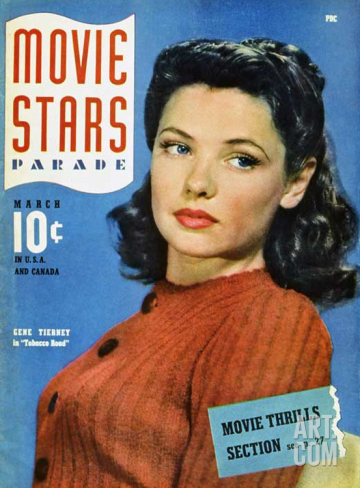
During the WWII years, actress Gene Tierney was at the height of her popularity. Her image graced countless magazine covers.

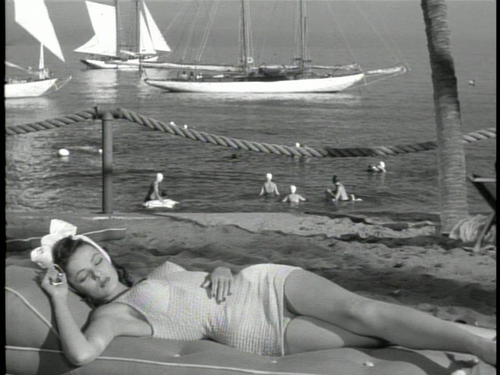
Gene Tierney sleeps in the sun in a scene from “Rings on Her Fingers,” filmed on Catalina Island.

Gene Tierney took time to entertain the troops at the Hollywood Canteen. From 1942-45, three million service personnel on leave – men and women, black and white – would pass through the doors of that converted barn to rub elbows with the stars. On any given night, Bob Hope might be on the stage cracking jokes while Rita Hayworth made sandwiches, Harry James played trumpet, or Hedy Lamarr danced with the soldiers.

Marlene Dietrich and Rita Hayworth serve food at the Hollywood Canteen, 1942

In the spring of 1943, Gene finished filming “Heaven Can Wait” in Hollywood. She was expecting her first child and, gratefully, not yet showing signs of pregnancy. She had kept that a secret for fear of being replaced in the film. She longed to be with husband Oleg Cassini in Kansas, where he was stationed in the army.

American film actress Gene Tierney. ca. 1941

Before leaving Los Angeles and starting her maternity leave, Gene decided to make one last appearance at the Hollywood Canteen. So, that night, Gene showed her support of American troops by signing autographs, mingling with the crowd, and shaking hands. The troops were homesick and sad; a little stardust lightened their load.

A few days after that visit, Gene woke up with red spots covering her arms and face. She had the German measles, or rubella. In 1943, there was no vaccine to prevent contracting the measles. That would not be available for 22 more years. Obstetricians advised patients to avoid crowds in their first four months of pregnancy, to avoid contracting the measles. At the time, it was believed that measles was a harmless childhood disease.

Little did Gene know at the time, but, just two years earlier,

“…[B]y studying a small cluster of cases in Australia, [eye doctor] Dr. N. M. Gregg first noted that the rubella virus could cause cataracts, deafness, heart deformities and mental retardation [in an unborn child].” (3)

Of course, this was before TV and Internet gave us 24/7 news cycles that would have immediately alerted the public to this critical finding. Gene didn’t know that her small act of kindness at the Canteen would have tragic and long-term consequences for both her and her baby’s health.

After a week of doctor-ordered rest, Gene rested, got better, then packed her bags for Fort Riley, Kansas, to join Oleg. The next several months were devoted to making her Junction City home ready for the baby and being a couple.

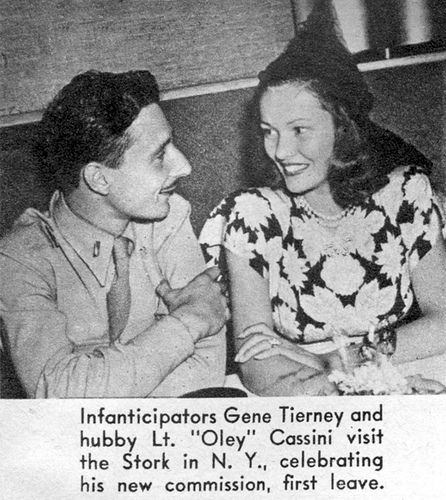
Gene Tierney and husband Oleg Cassini celebrate the birth of their first child with a night out in New York City at the Stork Club. Mid 1943.

By the fall, Gene was living in Washington, D.C., while Oleg was awaiting orders in Virginia. On the morning of October 15, 1943, Gene gave birth to a premature baby girl, weighing only two and a half pounds. Oleg flew to Washington and joined his wife at Columbia Hospital. They named their baby “Daria.”

Doctors informed them that Daria was not in good shape. She was premature and going blind. She had cataracts in both eyes. After reviewing Gene’s medical chart, the doctors concluded that Gene’s measles were responsible for the baby’s defects. They cited the studies done by the Australian eye doctor, Dr. Gregg.

Daria continued to have health problems and delayed development. She had no inner ear fluid and became deaf. It was clear that she suffered from mental retardation. Gene and Oleg hoped against hope that a doctor somewhere could cure Daria. But, after consulting one specialist after another (much of it paid for by Howard Hughes), they had to face the fact that Daria was permanently disabled and needed more care than they were capable of giving her at home.

When Daria was about two years old, Gene got an unexpected jolt. She was at a tennis function. A fan approached her.

“Ms. Tierney, do you remember me?” asked the woman.

Gene had no memory of having met the stranger. She shook her head and replied, “No. Should I?”

The woman told Gene that she was in the women’s branch of the Marines and had met Gene at the Hollywood Canteen.

Gene never would forget what the woman said next.

“By the way, Ms. Tierney, did you happen to catch the German measles after that night I saw you at the Canteen?”

The woman revealed that she had had the measles herself at the time but had broken quarantine just to see Gene at the Canteen.

Gene was dumbstruck. That woman had given her the measles! She was the sole cause of Daria’s disabilities. Gene said nothing. She just turned and walked away.

When Daria was four, Oleg and Gene made the difficult decision to institutionalize Daria (1943-2010). Daria spent most of her life at the ELWYN, an institution for specially disabled in Vineland, NJ.

Gene Tierney never fully recovered from the blow that Daria was disabled. Although she gave birth to another daughter that was healthy, her marriage to Oleg ended in divorce, and her mental health began to deteriorate. She couldn’t concentrate. On the movie set, she would forget her lines. She began to fall apart and live a life of “stark misery and despair,” said ex-husband Oleg.

In much of the 1950s, Gene went from one mental health facility to another seeking help with her bouts of high and low moods and suicidal thoughts. She received 27 shock treatments, destroying even more of her memory. It is believed that Gene Tierney suffered from bipolar depression during a time when effective treatment for that disease was in its infancy.

If Daria had been born after 1965, Gene Tierney would have been vaccinated against the German measles and Daria would have been born healthy.

Currently, parts of the United States are experiencing an unusual outbreak of measles due to the antivaccination movement. Some parents in the western part of the United States have decided not to vaccinate their children due to unfounded worries about it causing autism. These few anti-vaxers are putting our whole population at risk.

Make no mistake. Measles is a highly contagious disease and is anything but harmless including to the fetus:

“Symptoms of measles include fever as high as 105, cough, runny nose, redness of eyes, and a rash that begins at the head and then spreads to the rest of the body. It can lead to inflammation of the brain, pneumonia and death.” (1)

and

“The very success of immunizations has turned out to be an Achilles’ heel,” said Dr. Mark Sawyer, a pediatrician and infectious disease specialist at Rady Children’s Hospital in San Diego. “Most of these parents have never seen measles, and don’t realize it could be a bad disease so they turn their concerns to unfounded risks. They do not perceive risk of the disease but perceive risk of the vaccine.” (2)

Postscript: In 1962, Dame Agatha Christie published the detective fiction, The Mirror Crack’d from Side to Side, using the real-life tragedy of Gene Tierney as the basis for her plot.

Readers, my new book, When People Were Things: Harriet Beecher Stowe, Abraham Lincoln, and the Emancipation Proclamation, will be published late spring 2025. Watch this space for updates.

Read Full Post »

Readers: I will be blogging about people who appear in my upcoming book, When People Were Things, but include here different stories than are in the book.

The American Civil War (1861-1865)

Following the Union defeat at Manassas (1st Bull Run), Virginia, in July 1861 to the Southern Confederate forces, President Abraham Lincoln understood that the disorder of the newly-formed troops had contributed to the debacle.  Lincoln wanted the Union army to be “constantly drilled, disciplined, and instructed.”(1) He sent a telegram to George McClellan, 34,—a West Point graduate, a distinguished veteran of the Mexican-American War, and fresh from having defeated a guerilla band in West Virginia, the only Union victory to date— to come at once to Washington City and take charge of the Army of the Potomac. As he traveled by special train to the capital, enthusiastic crowds heralded his passage along the way. The capture of Washington by rebel forces seemed imminent. Northern delusions of an easy victory vanished.

Major. Genl. George B. McClellan Lithograph, Currier & Ives, 1862.

Within days of McClellan’s arrival, Washington achieved a “more martial look.” (2) McClellan had managed to instill more confidence in the demoralized troops who had retreated in disarray from Bull Run. The soldiers adored “Little Mac.” Drunken soldiers no longer loitered in bars and streets. McClellan wrote to his wife,

I find myself in a new and strange position here: President, cabinet, Gen. Scott, and all deferring to me….I seem to have become the power of the land. I almost think that were I to win some small success now, I could become Dictator…. (3)

Major General George McClellan and his Wife, Ellen Mary Marcy (Nelly), ca. 1860-65.

McClellan disagreed with General Winfield Scott who wanted to attack the enemy in different theaters of war. McClellan believed that he could put an end to the war by concentrated overwhelming forces on Virginia. Summer gave way to fall. Indeed, McClellan had turned the recruits into soldiers and created a powerful army.

In the early months of the war, women worked as laundresses and cooks while the volunteer soldiers drilled and constructed the Defenses of Washington. TITLE: “Washington, District of Columbia. Tent life of the 31st Penn. Inf. (later, 82d Penn. Inf.) at Queen’s farm, vicinity of Fort Bunker Hill.” Library of Congress

While McClellan conducted magnificent reviews in the capital of more than fifty thousand troops marching in straight and orderly columns, and boasted great military plans, he did not seem willing to lead his army anywhere. He was weighed down by fear while the Confederates were bolstered by optimism from their Manassas victory. Congress and Washingtonians grew restless with McClellan’s delay in avenging Bull Run.

This sketch shows a panoramic view of the Grand Review of the Union Army. The illustration appeared in the 7 December 1861 issue of Harper’s Weekly, which claimed that the artist sketched the review while perched on the roof of a barn.

Accustomed to success and thus fearful of failure, McClellan did not want to move; his constant complaint was that he did not have enough troops. Allan Pinkerton, his secret operative, fed his insecurity. Pinkerton provided “Little Mac” with the faulty intelligence that the enemy had at least 150,000 men within striking distance of the capital. McClellan said he would not move until he had 270,000 men of his own. In truth, in October 1861, McClellan had 120,000 men while rebels in and near Manassas had only 45,000. (4) In September, when Confederate pickets withdrew from their position a few miles southwest of Washington on Munson’s Hill, Federal troops discovered that the great cannon they had believed was trained on the capital was nothing but a giant log shaped and painted to resemble a cannon. This “Quaker gun” embarrassed McClellan. Calls for his dismissal intensified.

Confederate “Quaker Guns,” Manassas, Va., 1862

(1) Goodwin, Doris Kearns. Team of Rivals, 373.

(2) Ibid, 378.

(3) Ward, Geoffrey. The Civil War, An Illustrated History, p. 75

(4) MacPherson, James. Battle Cry of Freedom, 360-361.

Readers: Please check this space for when my new book, When People Were Things, is available. Please read it.

Read Full Post »

Readers: Although Julia Ward Howe is not mentioned in my soon-to-be-published history, When People Were Things, her husband is. Although Julia’s Civil War activism is not included in the book, I want to give you a snippet view here.

Julia Ward Howe (1819-1910)

Portrait of Julia Ward Howe, by John Elliott, ca. 1925. National Portrait Gallery/Wikimedia Commons

In 1843, red-haired New York heiress Julia Ward married Dr. Samuel Gridley Howe who had founded the Perkins School for the Blind. She was 24; he was 42. Julia gave birth to their first child while they honeymooned in Europe. She called her husband, “Chev.” They had six children and lived in Boston and Rhode Island. Theirs was not a happy union. Chev disapproved of Julia’s writing and did all he could to thwart it. In 1853, she published her first volume of poetry, Passion-Flowers, anonymously and without her husband’s knowledge. She continued to publish works that often critiqued women’s roles in marriages and society and caused controversy. Her husband was troubled by her writing as it often contained pointed references to her unhappy and stultifying marriage. He did not approve of women having a career outside the home.

In November 1861, the first year of Abraham Lincoln’s presidency and while the Civil War was raging, Julia and Chev traveled to Washington and met Abraham Lincoln,  who, Julia wrote, “was laboring…under a terrible pressure of doubt and anxiety.” Dr. Howe was on the board of the U.S. Sanitary Commission that supported wounded and sick soldiers; during his stay, he would meet with the USSC founder Dorothea Dix. The Howes lodged at Willard’s Hotel on Pennsylvania Avenue.

The Willard Hotel in Washington, D.C., during the Civil War Years, Library of Congress

From their room, Julia saw a billboard advertisement for “an agency for embalming and forwarding the bodies of those who had fallen in the fight or who had perished by fever.”  This image stayed with her.

On a visit to the huge military camps stationed in the national capital, she heard soldiers singing the song, “John Brown’ Body,” originally about a Scotsman but had taken on new meaning in reference to the insurrectionist at Harper’s Ferry. New verses were often being added:

Old John Brown’s body is a-mouldering in the dust,
Old John Brown’s rifle is red with blood-spots turned to rust,
Old John Brown’s pike has made its last, unflinching thrust,
His soul is marching on!

A friend urged Julia to write “some good words for that stirring tune.” That evening, she tried, but the words did not come to her. The next morning at the graying first light, she woke up in her bed at Willard’s and the words of the poem began to flow. She jumped up, grabbed paper and an old stump of a pencil, and scrawled down the words without even looking down at the paper, then fell back to sleep. This is how “The Battle Hymn of the Republic” was born, which she sold to the Atlantic Monthly for $4 in February. Her version links the Union cause to God’s vengeance at the Day of Judgment.

Here are some verses from the first published version:

Mine eyes have seen the glory of the coming of the Lord,
He is trampling out the vintage where the grapes of wrath are stored;
He hath loosed the fateful lightning of His terrible swift sword:
His truth is marching on.

(Chorus)
Glory, glory, hallelujah!
His truth is marching on.

I have seen Him in the watch-fires of a hundred circling camps,
They have builded Him an altar in the evening dews and damps;
I can read His righteous sentence by the dim and flaring lamps:
His day is marching on.

(Chorus)
Glory, glory, hallelujah!
His truth is marching on.

Before long, the song caught on and became the favorite of the Union troops and its unofficial wartime anthem. Julia Ward Howe became somewhat of a celebrity and became a suffragist.


Read Full Post »

Readers:  For a time, I will be blogging about people to be featured in my soon-to-be-published book, When People Were Things: Harriet Beecher Stowe, Abraham Lincoln, and the Emancipation Proclamation. Today Clara Barton, Civil War Nurse, is featured. I promise not to include book spoilers!

Clara Barton, ca. 1850

After a decade of teaching in Massachusetts, Clara Barton moved to New York for a year to study at the Clinton Liberal Institute. In 1851, she took a teaching job in Hightstown, New Jersey, at Cedarville School, where her pay was $2 per student for each eleven-week session. New Jersey offered no public education.

Clara began campaigning for public education in New Jersey. She successfully lobbied the Trenton officials and obtained a building and the funds to run a public school in Bordentown as a pilot project. In one year, the program proved to be such a success that local leaders looked to hiring a principal. Instead of hiring Clara, though, they appointed a man who had came from another place.

Clara Barton’s public school in Bordentown, New Jersey.

In 1854, Clara resigned. She became so distressed at having been passed over for the principalship that she became very ill and was unable to speak or to work. Finally, Clara and another teacher left New Jersey and boarded a train to Washington to find work as governesses.

Clara networked. She met with her Massachusetts congressman, Alexander De Witt, who was also a distant cousin. De Witt then introduced her to Charles Mason, the Commissioner of Patents. Mason wanted to hire Clara to go to Iowa to be the governess to his daughter. But De Witt saw enormous potential in Clara and urged Mason to hire Clara to work in the Patent office as a recording clerk. She was hired. Clara then became one of the first women to work for the federal government.

The Patent Office, Washington, D.C. c. 1855, Edward Sachse & Co. chromolithograph. From the original in the National Portrait Gallery, Smithsonian Institution. Halfway situated between the Capitol and the White House, the Patent Office, built in the Greek Revival Style, took 31 years to build. U.S. Patent law required inventors to submit scale models of their inventions, which were retained by the Patent Office and required housing.

The Patent Office, Washington, D.C. c. 1855, Edward Sachse & Co. chromolithograph. From the original in the National Portrait Gallery, Smithsonian Institution. Halfway situated between the Capitol and the White House, the Patent Office, built in the Greek Revival Style, took 31 years to build. U.S. Patent law required inventors to submit scale models of their inventions, which were retained by the Patent Office and required housing. Before the Civil War, the Patent Office was a popular tourist destination.

Clara’s job at the Patent Office meant copying volumes of technical legal text with pen and ink. She had beautiful penmanship and a strong work ethic so she was up to the task. As if this work was not tedious enough, she had to contend with some male colleagues who resented what they perceived as her intrusion into their masculine domain.  As she walked to and from her desk, they would spit tobacco juice at her and her skirts, make lewd remarks, and puff cigar smoke in her face. Nevertheless, Clara soldiered on.

Examiners working at the Patent Office.

Despite her fortitude, these men succeeded in forcing her from the workplace. She was reassigned to work from her boardinghouse room, by candlelight, at lesser pay. In 1857, President Buchanan was inaugurated and she lost her clerkship, but, for a time, she had made the same yearly salary as the men.

She returned to Massachusetts for three years. But she was not done with Washington, D.C.

Readers: Stay tuned to this space. My new book, When People Were Things will be available for purchase later this spring. Please read it. 

Read Full Post »

Readers:  For a time, I will be blogging about people who appear in my soon-to-be-published nonfiction history, When People Were Things: Harriet Beecher Stowe, Abraham Lincoln, and the Emancipation Proclamation. Today, General McClellan, Abraham Lincoln, and two of Lincoln’s cabinet secretaries are featured. I promise not to include book spoilers.

Lincoln told a colleague, “I wish McClellan would go at the enemy with something – I don’t care what. General McClellan is a pleasant and scholarly gentleman. He is an admirable engineer, but he seems to have a special talent for a stationary engine.”

It is spring 1862, the second year of the American Civil War. Although General George McClellan, leader of the Union Army of the Potomac, had finally moved his troops out of his Washington, D.C., camp, he had stalled out on the Virginia Peninsula. Procrastination was his custom and he had endless excuses to offer for his delay tactics. He heaped blame on President Abraham Lincoln for not supplying him with enough troops as McClellan falsely believed he was outnumbered by the rebels. Lincoln was frustrated with McClellan’s chronic inaction, as McClellan delayed moving his troops toward the Confederate capital of Richmond and attacking and bringing the war to a swift end.

At left, Secretary of War Edwin Stanton sits with President Abraham Lincoln (Library of Congress)

Secretary of War Edwin Stanton suggested that President Lincoln take a trip to the Virginia Peninsula, to Fort Monroe, to prod General McClellan to act. On the evening of May 5, 1862, Lincoln, Treasury Secretary Salmon P. Chase, and Stanton, accompanied by General Egbert Viele, boarded the new Treasury Department cutter, the Miami, and began the twenty-seven-hour journey, sailing down the Potomac, and into the Chesapeake Bay.

The next day, the bay water was so choppy that the noontime meal was fatally disrupted. Lincoln was too miserable to eat, did not stay at the table, and stretched himself out elsewhere. The others in the party tried to enjoy the meal elaborately planned by the host, Chase, and served by his butler, but Chase wrote his daughter, Nettie:

“[T]he plates slipped this way and that, the glasses tumbled over and rolled about, and the whole table seemed as topsy-turvy as if some spiritualist were operating upon it.”

They reached Fort Monroe at about nine o’clock that night. Stanton sent a telegram to McClellan who was only a few miles away and suggested he join them for a conference. McClellan declined. Stanton was not a military man; he like Lincoln, was a lawyer. McClellan had no respect for either of them. McClellan regularly disregarded them.

Lincoln quickly turned his attention to another matter of concern.

Union forces at Fort Monroe occupied the Northern shore of Hampton Roads, a body of water that serves as a wide channel which connects the Chesapeake Bay to three rivers. On the Southern shore, Confederates still held Norfolk and the Navy Yard. The powerful ironclad nine-gun Merrimac (renamed by the Confederates, the Virginia) was docked at the Navy Yard.

CSS Virginia (the Union Merrimac or Merrimack) was the first ironclad warship constructed by the Confederate States Navy during the American Civil War. It was built from the remains of the former steam frigate the USS Merrimack.

Back in March 1862, in a span of five hours, this former Union ship had sunk, captured, and incapacitated five Union vessels in what was known as the Battle of Hampton Roads or the Battle between the ironclads, the Monitor and the Merrimac(k).

March 1862. The Battle of Hampton Roads: Print shows a battle scene between the ironclads Monitor and Merrimac just offshore, also shows a Union ship sinking and rescue boats being put to sea from shore, as well as a Union artillery bunker, Union soldiers and officers, and some rescued sailors. The 3-hour battle between the two ironclads was indecisive. (Library of Congress)

Lincoln feared that the Merrimac would one day sail up the Potomac and attack Washington, the capital of the Union. Lincoln and his advisors pored over maps of the area. The men could not understand why McClellan had not ordered an attack on Norfolk and captured it. Norfolk was wide open. Confederates had left both the city and the Navy Yard vulnerable. Lincoln and his mini-war cabinet planned an assault on that key port to be made by General Wool’s forces.

Although this map shows a lot of info, you can pick out Fort Monroe, Washington, D.C., the Potomac River, Richmond, and Norfolk, Va. The Confederate and Union capitals were only about 100 miles apart.

On the afternoon of May 7, at Lincoln’s suggestion, several Union warships began the shelling of the rebel guns at Sewell’s Point near Norfolk. Upon learning that the rebels were abandoning Norfolk, Lincoln decided to plan its capture.

Lincoln, Chase, and Stanton surveyed the shoreline seeking a good place for the troops to land. Lincoln went ashore in a rowboat, walked around on enemy soil under a full moon, putting himself in danger of being fired upon, and then returned to the Miami. Chase was antsy for an immediate attack. He was worried that McClellan might show up and delay it!

When the convoys landed on the sandy beach the next night (at the landing Chase and Wool had selected), they found that the rebels had evacuated the city and scuttled the Merrimac. The city authorities formally surrendered the city to the Union forces and Wool appointed Viele as the city’s military governor.

In a letter to his daughter, Chase praised the President for the capture of the strategic port city and the vanquishing of the Merrimac. The egoistic McClellan, however, wrote falsely to his wife, “Norfolk is in our possession, the result of my movements.”

Readers: Later this spring my new book, WHEN PEOPLE WERE THINGS: HARRIET BEECHER STOWE, ABRAHAM LINCOLN, AND THE EMANCIPATION PROCLAMATION, will be published. Please read it.

Read Full Post »

Older Posts »