Feeds:
Posts
Comments

Posts Tagged ‘American slavery’


Available at your online booksellers, Amazon, Barnes & Noble, and other booksellers served by Ingram Distributors, booksellers receiving deep discounts. Or place an order at your local bookstore.

A separate Study Guide is also available.

This study guide provides intelligent discussion questions for book clubs, history instruction, or private study

Read Full Post »

Abolitionists, powerless to stop the passage of the Fugitive Slave Law of 1850, nonetheless, held numerous protest conventions. The law, which would be passed by Congress in September, gave unbridled power to arrest fugitive slaves in the North and return them to slavery in the South.

The most memorable and audacious of these protest conventions was the Fugitive Slave Law Convention, held in Cazenovia, New York, on August 21-22, 1850, and organized by New York abolitionist firebrand Gerrit Smith. On the first day, nearly fifty fugitive slaves and 400 others met inside the Free Congregational Church of Cazenovia. Hundreds of others gathered outside the building as there was no more space in the pews. Because of the overflowing crowd, the meeting was moved outdoors into Grace Wilson’s apple orchard.

The resolutions and position statements passed were radical in nature. Chairing the meeting was former slave Frederick Douglass, editor of the North Star newspaper. Using his trademark powerful oratory, Douglass declared all slaves to be prisoners of war. He called slaveholders “robbers” and warned the nation that an insurrection was inevitable should slaves not be liberated. Slaves still held in bondage were encouraged to run away, steal horses and money, and use violence if necessary. Mary Edmonson, 18, a freed slave, spoke often at abolitionist gatherings, and, at Cazenovia, made an eloquent speech in support of Douglass’ resolutions and proposed measures. Other abolitionist celebrities present included Emily Edmonson who, along with her sister, Mary, had been among the fugitive slaves on the Pearl, Gerrit Smith, and the Rev. Samuel J. May.

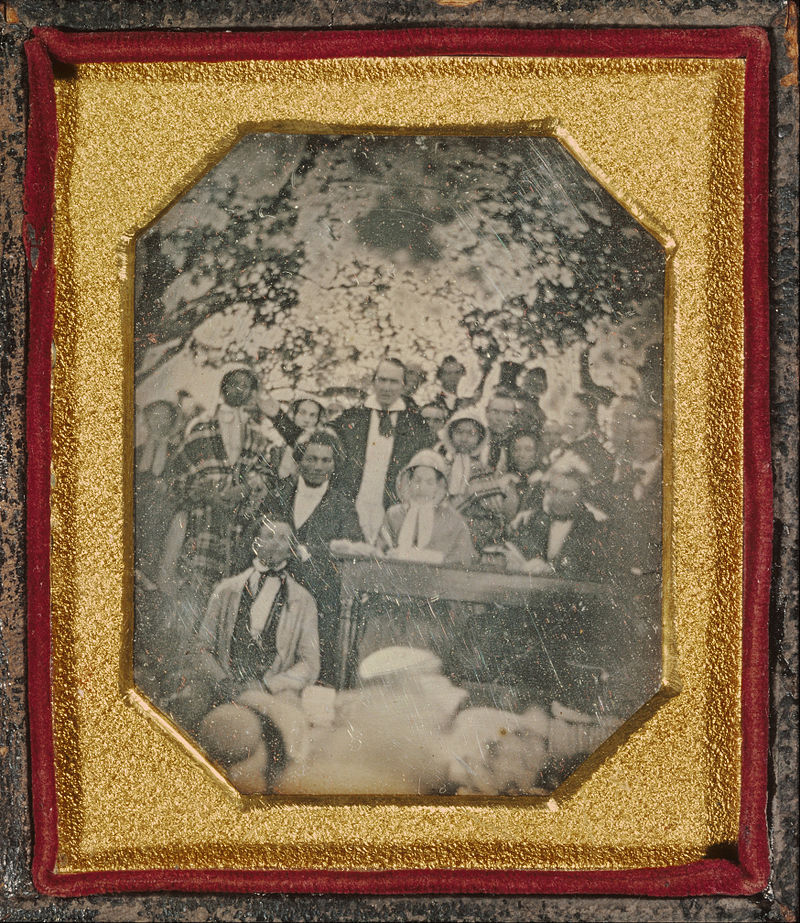
In 1994, a daguerrotype of this storied meeting was found in the Madison County Historical Society.

The Cazenovia Fugitive Slave Convention 1850. Daguerrotype by Ezra Greenleaf Weld, brother of Theodore Weld. At the center of the photo stands philanthropist and Liberty Party founder Gerrit Smith, wearing an open dark jacket and a white shirt with an old-fashioned Lord Byron collar. The women standing beside him, clad in white bonnets and plaid shawls, are Mary (at our left) and Emily Edmonson. Frederick Douglass is seated to the right of Theodosia Gilbert who has taken the place of her fiancé, William L. Chaplin, who had been arrested for Underground Railroad activity.

William L. Chaplin, an associate of Gerrit Smith’s who had arranged the ill-fated April 1848 escape of 77 Washington, D. C. slaves aboard the Pearl, had been scheduled to make a dramatic appearance with some fugitive slaves he had rescued from the South, but things did not turn out well for Chaplin. It had been foolhardy for him to attempt to rescue slaves belonging to two Georgia congressmen! His attempt was foiled, a posse was organized, Chaplin and the fugitives were pursued, found, Chaplin was hit with a club, one fugitive was quickly captured, and the other surrendered shortly. Chaplin was held in the Washington City Jail. His supporters raised the $6,000 bail but Chaplin was not freed. He was then handed over to the Maryland authorities who put him in the Rockville, Maryland jail, where he faced additional and more serious charges. Bail was set at a whopping $19,000.

Emily and Mary Edmonson spent much of September 1850 making appearances in small towns across New York to raise money for Chaplin’s bail. The teenagers had lovely singing voices. They sang and begged for funds on Chaplin’s behalf, even on Sundays, the Sabbath, but, as they believed that Chaplin was doing the Lord’s work, they did not consider their actions sinful. They did this in gratitude. It had been Chaplin who had secured the money for their freedom following their sale south.

Finally, in January 1851, the entire $19,000 was raised and Chaplin was released. He then fled, refused to appear for trial, forfeiting $25,000. Chaplin made little effort to reimburse those who had donated money to his release. Some people were left penniless after their donations. Chaplin abandoned his abolition activity. He married Theodosia Gilbert and together they operated the Glen Haven Water Cure Spa in New York.

Sources:

Brockell, Gillian. “Desperate for Freedom, 77 enslaved people tried to escape aboard the Pearl. They almost made it.” The Washington Post. April 16, 2021.

Conkling, Winifred. Passenger on the Pearl: The True Story of Emily Edmonson’s Flight From Slavery

wikipedia: Edmonson sisters

Read Full Post »

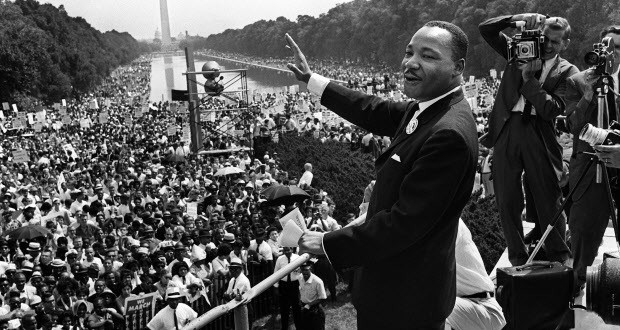
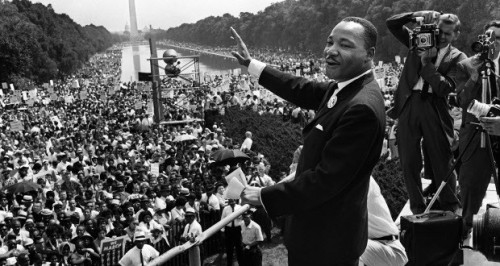
Dr. Martin Luther King, Jr., at the March on Washington, August 28, 1963. Credit:-/AFP/Getty Images

Dr. Martin Luther King, Jr., at the March on Washington, August 28, 1963. Credit:-/AFP/Getty Images

On Aug. 28, 1963,  Dr. Martin Luther King, Jr. stood on the steps of the Lincoln Memorial and delivered his rousing, “I Have a Dream” speech to over 250,000 civil rights supporters gathered for the March on Washington. The speech calls for an end to racism in America. It was considered by many to be the most important speech of the Twentieth Century and helped advance President John F. Kennedy‘s important civil rights legislation then in Congress.
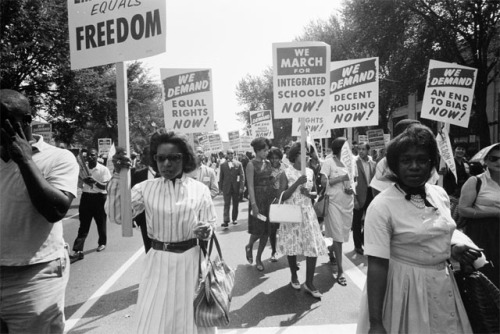
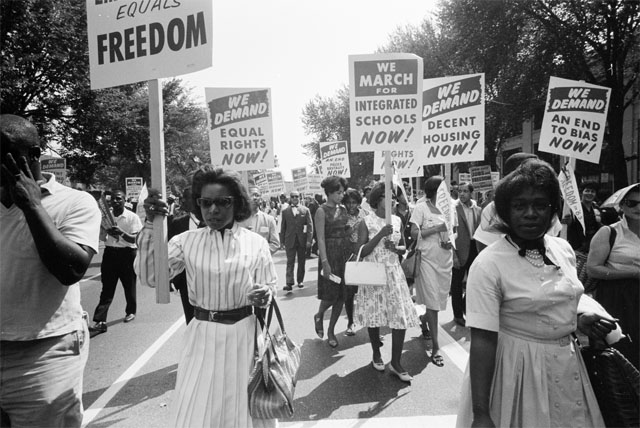
At the March on Washington, August 1963, peaceful African-Americans called for decent jobs with equal pay.

At the March on Washington, August 1963, peaceful African-Americans called for decent jobs with equal pay.

Dr. King timed his March on Washington to coincide with the 100th anniversary of Abraham Lincoln‘s signing of the Emancipation Proclamation which freed millions of American black slaves in 1863.
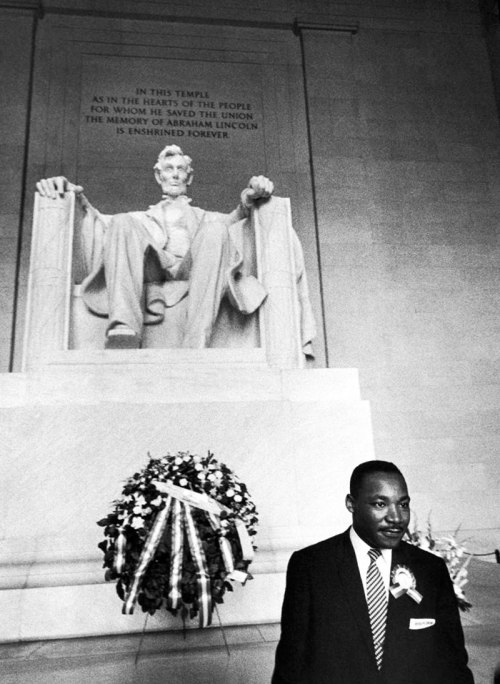
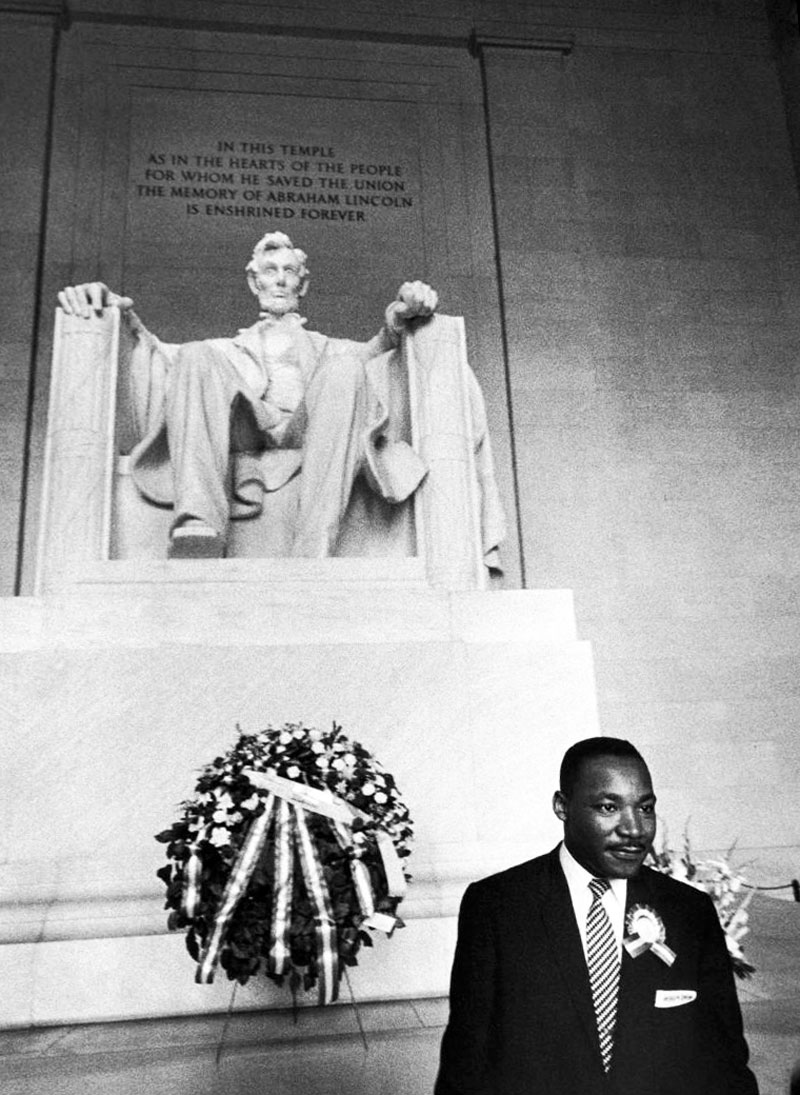
Dr. Martin Luther King, Jr. stands in front of the statue of President Abraham Lincoln at the Lincoln Memorial, Washington, D.C. ca. 1963

Dr. Martin Luther King, Jr. stands in front of the statue of President Abraham Lincoln at the Lincoln Memorial, Washington, D.C. ca. 1963

His opening lines in his speech evoke the Gettysburg Address by President Lincoln:

Five score years ago, a great American, in whose symbolic shadow we stand today, signed the Emancipation Proclamation. This momentous decree came as a great beacon light of hope to millions of Negro slaves who had been seared in the flames of withering injustice. But one hundred years later, the Negro still is not free. It came as a joyous daybreak to end the long night of captivity.” 

Dr. King asked for justice to be made a reality for all of God’s children.

We can never be satisfied as long as the Negro is the victim of the unspeakable horrors of police brutality. We can never be satisfied, as long as our bodies, heavy with the fatigue of travel, cannot gain lodging in the motels of the highways and the hotels of the cities….

We can never be satisfied as long as our children are stripped of their selfhood and robbed of their dignity by signs stating “For Whites Only”. We cannot be satisfied as long as a Negro in Mississippi cannot vote and a Negro in New York believes he has nothing for which to vote. No, no, we are not satisfied, and we will not be satisfied until justice rolls down like waters and righteousness like a mighty stream. “(1)

He spoke of his dream.

I have a dream that one day this nation will rise up and live out the true meaning of its creed: ‘We hold these truths to be self-evident: that all men are created equal.’


I have a dream that one day on the red hills of Georgia, the sons of former slaves and the sons of former slave owners will be able to sit down together at a table of brotherhood.'”

***

Fast forward to August 28, 2013, the 50th anniversary of Dr. King’s March on Washington and his landmark speech. 

Anderson Cooper of CNN is interviewing African-American writer Maya Angelou (1928-2014). They reflect on the state of Dr. King’s dream. Maya Angelou knew Dr. King and was part of the struggle for civil rights change in this country.

Cooper: Do you believe that the arc of history is moving in the right direction? President Obama, recently, when he was talking about Trayvon Martin, he said that he looks at his daughters and that his daughters’ generation is better than his generation was. Do you believe that?

Angelou: Yes, I do. I know that there was a time when people were lynched with everybody’s agreement – not everybody – but with the “Might’s” agreement. The might was white and white was might and so people were lynched.

I grew up in a village in Arkansas where a man was lynched and the skin of his body – after being lynched and burned – the skin was taken off in skin the size of a postage stamp and given to people as mementoes.

You can’t do that in the United States today. I mean you can lynch people and murder people in many ways but you can’t do it in the city square.

Cooper: Hmm.

Angelou: You see? We are better. Not nearly enough. Not nearly enough. But we come and we have to admit that. Because, Mr. Cooper, if we don’t, young people will say, ‘You mean to tell me, with the lives and deaths of Dr. Martin Luther King and Malcolm X and Rosa Parks and the Kennedys, then there’s no point in me trying, because those people were bigger than life.’ So we have to say, ‘You have come a long way.’

***

President Barack Obama spoke from the Lincoln Memorial steps to honor the half-century anniversary of Dr. Martin Luther King, Jr.’s iconic speech, “I Have a Dream.” August 28, 2013.

Our first African-American president was on hand at the Fiftieth Anniversary of the March on Washington Celebration. Like Dr. King, President Barack Obama is a great orator. In his speech to those gathered at the Lincoln Memorial, he echoed Maya Angelou’s sentiment in regard to the civil rights movement, progress, and where America stands.

To dismiss the magnitude of this progress, to suggest as some sometimes do that little has changed, that dishonors the courage and the sacrifice of those who paid the price to march in those years.”

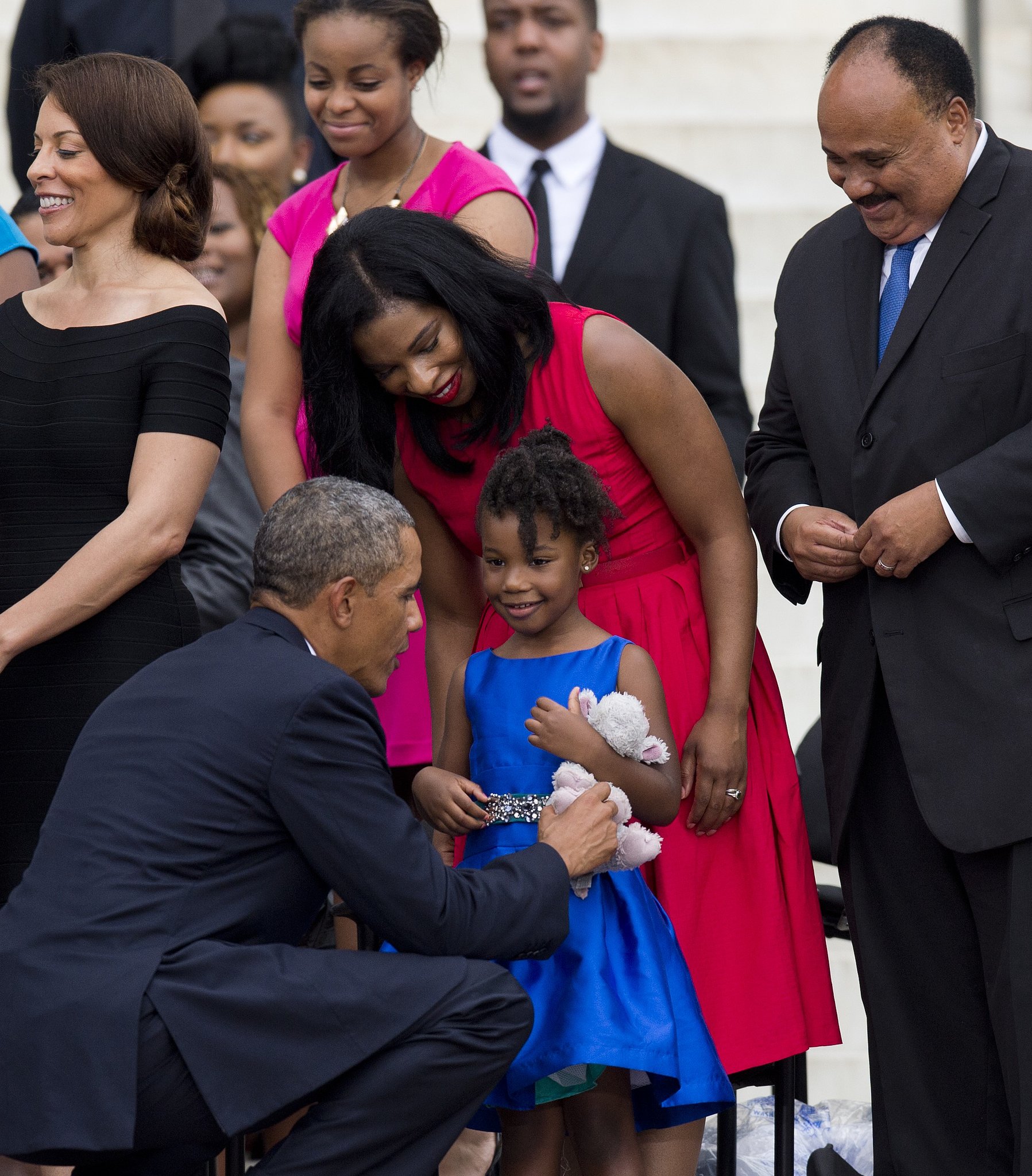
Members of Dr. King’s family, including his then 5-year-old granddaughter, Yolanda King, were present as bells rang at 3 p.m. to mark the historical moment.
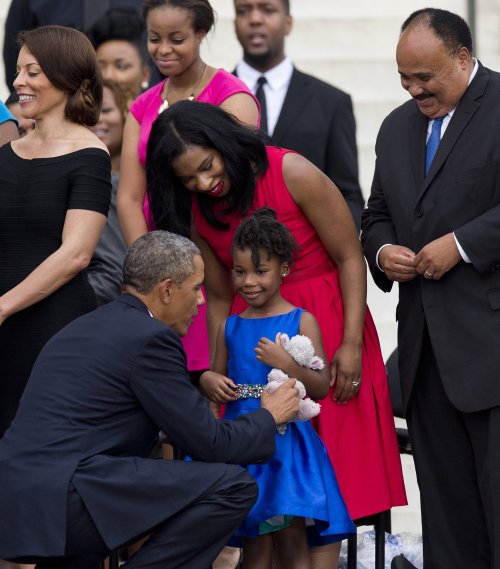
President Obama greets Yolanda King, age 5, Dr. Martin Luther King, Jr.'s granddaughter at the 50th Anniversary of the March on Washington. August 28, 2013. Credit; Getty Images

President Obama greets Yolanda King, age 5, Dr. Martin Luther King, Jr.’s granddaughter at the 50th Anniversary of the March on Washington. August 28, 2013. Credit; Getty Images

For more on Maya Angelou, click here.

Read Full Post »

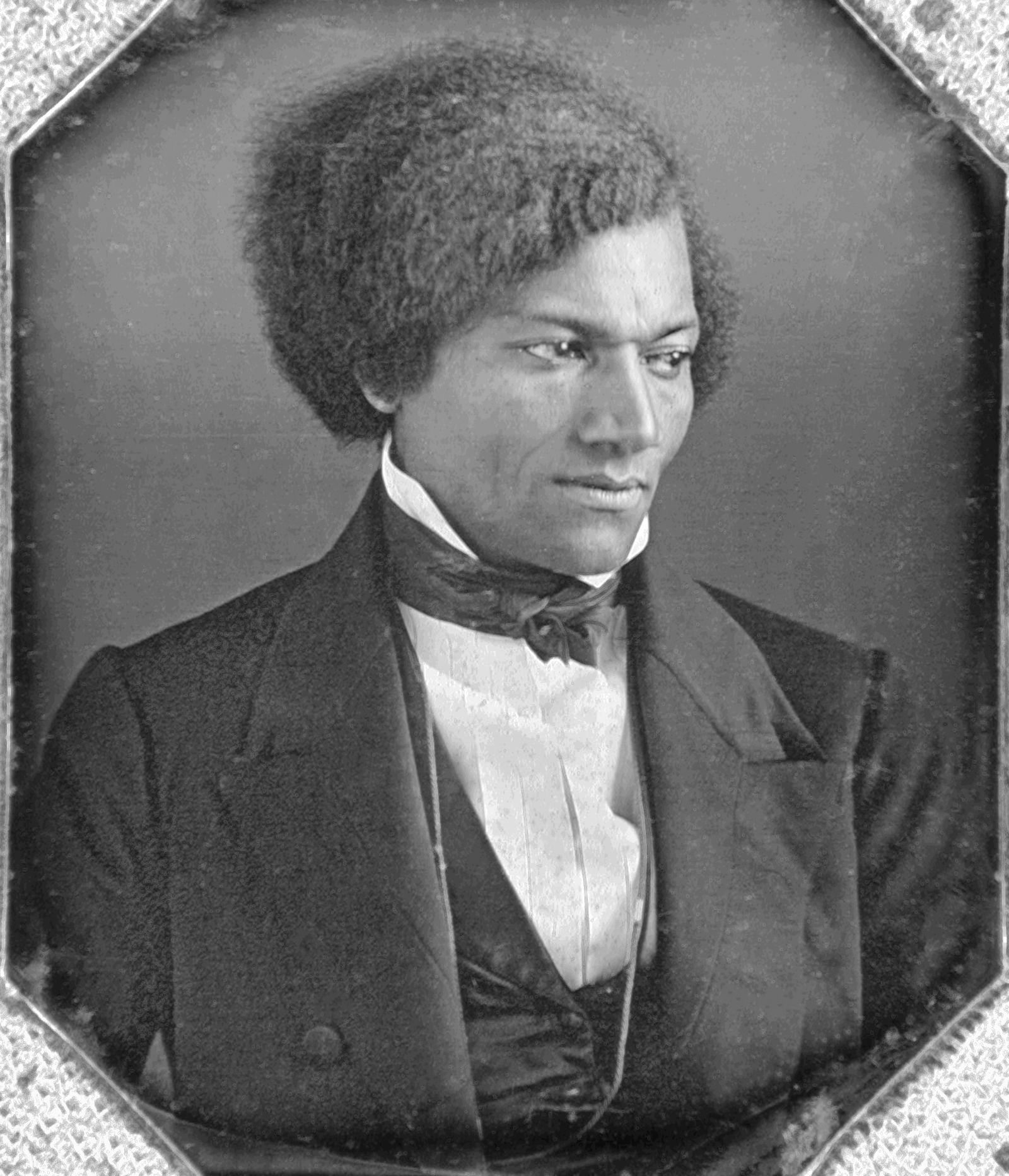
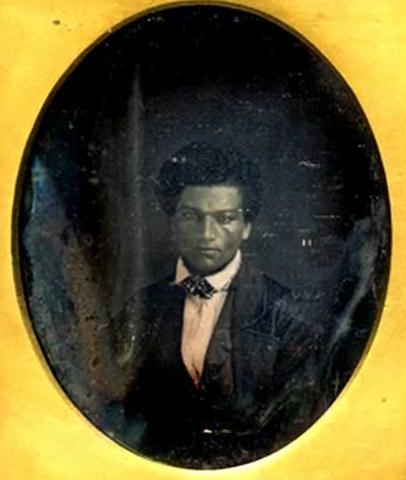
The American abolitionist, Frederick Douglass, in a rare photo taken c. 1840, around the time he became a runaway slave.

Frederick Douglass (1817-1895)

The following is an excerpt from the Narrative of the Life of Frederick Douglass, an American Slave (1845), which includes recollections of Douglass’ experiences on a Maryland plantation:

“To describe the wealth of Colonel Lloyd [his master] would be almost equal to describing the riches of Job. He kept from 10-15 house servants. He was said to own a thousand slaves, and I think this estimate quite within the truth. Colonel Lloyd owned so many that he did not know them when he saw them; nor did all the slaves of the out-farms know him. It is reported of him, that, while riding along the road one day, he met a colored man, and addressed him in the usual manner of speaking to colored people on the public highways of the South:

‘Well, boy, whom do you belong to?’

“To Colonel Lloyd,’ replied the slave.

‘Well, does the colonel treat you well?’

‘No, sir,’ was the ready reply.

‘What, does he work you too hard?’

‘Yes, sir.’

‘Well, don’t [sic] he give you enough to eat?’

‘Yes, sir, he gives me enough, such as it is.’

The colonel, after ascertaining where the slave belonged, rode on; the man also went on about his business, not dreaming that he had been conversing with his master. He thought, said, and heard nothing more of the matter, until two or three weeks afterwards. The poor man was then informed by his overseer that, for having found fault with his master, he was now to be sold to a Georgia trader….

It is partly in consequence of such facts that slaves, when inquired of as to their condition and the character of their masters, almost universally say they are contented, and that their masters are kind. The slaveholders have been known to send in spies among their slaves, to ascertain their views and feelings in regard to their condition. The frequency of this has had the effect to establish among the slaves the maxim that a still tongue makes a wise head.”

Also on this blog: “Abe Lincoln: The Freedmen’s Monument

Read Full Post »