Feeds:
Posts
Comments

Archive for 2009

Jeff Koons' porcelain and gold lifesize sculpture, "Michael Jackson and Bubbles," is on exhibit in Versailles, France.

Jeff Koons' porcelain and gold lifesize sculpture, "Michael Jackson and Bubbles," is on exhibit in Versailles, France.

From the Los Angeles Times

OBITUARY

Michael Jackson’s Life Was Infused With Fantasy and Tragedy

By Geoff Boucher and Elaine Woo

In the early 1980s, Michael Jackson was the world’s most popular entertainer thanks to a series of hit records — “Beat It,” “Billie Jean,” “Thriller” — and dazzling music videos.

Michael Jackson was fascinated by celebrity tragedy. He had a statue of Marilyn Monroe in his home and studied the sad Hollywood exile of Charlie Chaplin. He married the daughter of Elvis Presley.

Jackson met his own untimely death Thursday at age 50, and more than any of those past icons, he left a complicated legacy. As a child star, he was so talented he seemed lit from within; as a middle-aged man, he was viewed as something akin to a visiting alien who, like Tinkerbell, would cease to exist if the applause ever stopped.

It was impossible in the early 1980s to imagine the surreal final chapters of Jackson’s life. In that decade, he became the world’s most popular entertainer thanks to a series of hit records — “Beat It,” “Billie Jean,” “Thriller” — and dazzling music videos. Perhaps the best dancer of his generation, he created his own iconography: the single shiny glove, the Moonwalk, the signature red jacket and the Neverland Ranch.

Toward the end of his life, Michael Jackson made the headlines more often for his odd behavior than for his musical accomplishments. In this 2008 photo, Michael at age 50, appears in another bizarre disguise, a veil, an eye mask, and his trademark black trilby hat

Toward the end of his life, Michael Jackson made the headlines more often for his odd behavior than for his musical accomplishments. In this 2008 photo, Michael at age 50, appears in another bizarre disguise, a veil, an eye mask, and his trademark black trilby hat

In recent years, he inspired fascination for reasons that had nothing to do with music. Years of plastic surgery had made his face a bizarre landscape. He was deeply in debt and had lost his way as a musician. He had not toured since 1997 or released new songs since 2001. Instead of music videos, the images of Jackson beamed around the world were tabloid reports about his strange personal behavior, including allegations of child molestation, or the latest failed relaunch of his career.

A frail-looking Jackson had spent his last weeks in rehearsal for an ambitious comeback attempt and 50 already-sold-out shows at London’s O2 Arena. A major motivation was the $300 million in debt run up by a star who lived like royalty even though his self-declared title of King of Pop was more about the past than the present.

It’s one of the greatest losses,” said Tommy Mottola, former president of Sony Music, which released Jackson’s music for 16 years. “In pop history, there’s a triumvirate of pop icons: Sinatra, Elvis and Michael, that define the whole culture. . . . His music bridged races and ages and absolutely defined the video age. Nothing that came before him or that has come after him will ever be as big as he was.”

Jackson “had it all. . . . talent, grace, professionalism and dedication,” said Quincy Jones, Jackson’s collaborator on his most important albums and the movie “The Wiz.” “He was the consummate entertainer, and his contributions and legacy will be felt upon the world forever. I’ve lost my little brother today, and part of my soul has gone with him.”

Jackson was born Aug. 29, 1958, in Gary, Ind. His mother, Katherine, would say that there was something special about the fifth of her nine children. “I don’t believe in reincarnation,” she said, “but you know how babies move uncoordinated? He never moved that way. When he danced, it was like he was an older person.”

Katherine Jackson, who worked for Sears, Roebuck and Co., taught her children folk songs. Her husband, Joseph, a crane operator who once played with the R&B band the Falcons, played guitar and coached his sons. The boys were soon performing at local benefits. Michael took command of the group even as a chubby-cheeked kindergartner.

“He was so energetic that at 5 years old he was like a leader,” brother Jackie once told Rolling Stone magazine. “We saw that. So we said, ‘Hey, Michael, you be the lead guy.’ The audience ate it up.”
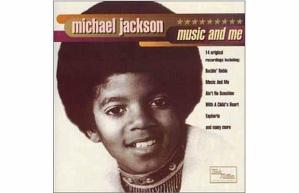
Michael Jackson album coverBy 1968, the Jacksons had cut singles for a local Indiana label called Steeltown. At an engagement that year at Harlem’s famed Apollo Theater, singer Gladys Knight and pianist Billy Taylor saw their act and recommended them to Motown founder Berry Gordy. So did Diana Ross after sharing a stage with the quintet at a “Soul Weekend” in Gary.

Ross said later that she saw herself in the talented and driven Michael. “He could be my son,” she said. Another Motown legend, Smokey Robinson, would describe the young performer as “a strange and lovely child, an old soul in the body of a boy.”

Motown moved the Jacksons to California, and in August 1968 they gave a breakthrough performance at a Beverly Hills club called The Daisy. Their first album, “Diana Ross Presents the Jackson 5,” was released in December 1969, and it yielded the No. 1 hit “I Want You Back,” with 11-year-old Michael on the lead vocals. “ABC,” “I’ll Be There” and other hits followed, and the group soon had their own television series, a Saturday morning cartoon and an array of licensed merchandise aimed at youngsters.

There was a price: childhood.

“I never had the chance to do the fun things kids do,” Jackson once explained. “There was no Christmas, no holiday celebrating. So now you try to compensate for some of that loss.” [The Jacksons are Jehovah’s Witnesses; they do not celebrate holidays and birthdays.]

Joseph Jackson ruled the family, by most accounts, with his fists and a bellowing rage. In a 2003 documentary by British journalist Martin Bashir, Jackson said his father often brandished a belt during rehearsals and hit his sons or shoved them into walls if they made a misstep.

“We were terrified of him,” Jackson said.

Michael Jackson as he appeared in 1878 during the filming of The Wiz

Michael Jackson as he appeared in 1978 during the filming of The Wiz. His father made fun of his facial acne.

In the Bashir interviews, the singer said his father ridiculed him for his pug nose and adolescent acne. He also described, with obvious discomfort, having to listen to an older brother have sex with a woman in the hotel bedroom they shared.

Onstage, Jackson seemed to know no fear.

“When we sang, people would throw all this money on the floor, tons of dollars, 10s, 20s, lots of change,” an adult Jackson once told Newsweek. “I remember my pockets being so full of money that I couldn’t keep my pants up. I’d wear a real tight belt. And I’d buy candy like crazy.”

By 1972, Jackson had his first solo album, “Got to Be There,” which included the title hit as well as “Rockin’ Robin.” His first solo No. 1 single came the same year — the forlorn theme song from the movie “Ben.”

He struggled to understand a world that he saw mostly while staring into spotlights and flashbulbs. Standing ovations greeted him onstage; parental slaps awaited him in the dressing room. Like his mother, he became a Jehovah’s Witness, forswearing alcohol, cigarettes and foul language. He fasted on Saturdays and went door-to-door, wearing a disguise, to spread the faith. (He ended his association with the religion in the late 1980s.)

In 1978, Michael made his film debut as the Scarecrow in “The Wiz,” a black-cast adaptation of “The Wizard of Oz.” The movie launched a creative and commercial partnership with “Wiz” music director Quincy Jones.

Michael Jackson drew inspiration for his moonwalk dance move from French mime Marcel Marceau's "walking against the wind"

Michael Jackson drew inspiration for his moonwalk dance move from French mime Marcel Marceau's "walking against the wind"

The first fruit of their collaboration was “Off the Wall” (1979), Jackson’s debut album on the Epic label. It sold 5 million copies in the United States and 2 million abroad and generated four Top 10 singles.

It was with Jones (as well as often-overlooked songwriter Rod Temperton) that Jackson shaped “Thriller,” which was released near the end of 1982 and became the best-selling studio album in history and a cultural landmark. Its effect on the music industry and the music videos that came to define the then-nascent MTV was huge.

In a Motown TV special in 1983, Jackson, then 24, electrified the nation with his Moonwalk, a dance step that created the illusion of levitation. He took the stage in a black sequined jacket, silver shirt, black fedora and black trousers that skimmed the tops of his white socks. The final touch was a single white glove, studded with rhinestones.

Times critic Robert Hilburn, who observed the performance live at the Pasadena Civic Auditorium, said the broadcast marked Jackson’s “unofficial coronation as the King of Pop. Within months, he changed the way people would hear and see pop music, unleashing an influence that rivaled that of Elvis Presley and the Beatles.”

His dance style combined the robotic moves of break-dancers, the quicksilver spins and slides of James Brown and the grace of Fred Astaire, whose routines he studied. The aging Astaire called him “a wonderful mover.”

Not only did “Thriller” smash sales records as the bestselling album of 1983, but it made Jackson the first artist to top four charts simultaneously: It was the No. 1 pop single, pop album, R&B single and R&B album. It earned five Grammy Awards. Jay Cocks wrote in Time magazine that Jackson “just may be the most popular black singer ever.”

The “Thriller” success enabled Jackson to negotiate what were believed to be the highest royalty rates ever earned by a recording artist. But it also put him in a cage of his own anxieties and obsession.

1994 Honeymoon photo of Michael Jackson and Lisa-Marie Presley at EuroDisney. They stayed in the Sleeping Beauty Suite.

1994 Honeymoon photo of Michael Jackson and Lisa-Marie Presley at EuroDisney. They stayed in the Sleeping Beauty Suite of the Disneyland Hotel.

Jackson bonded with past pop-music royalty by marrying Lisa Marie Presley in 1994 and grabbing a major interest in the Beatles’ catalog, an asset worth $500 million. The marriage was short-lived, however, and his wealth was imperiled by an extravagant lifestyle that included the 2,700-acre Neverland Ranch in the Santa Ynez Valley, where he lived with a menagerie of exotic pets.

Jackson became a prisoner of his own celebrity. He became so accustomed to bodyguards and assistants that he once admitted that he trembled if he had to open his own front door. He compared himself to “a hemophiliac who can’t afford to be scratched in any way.”

Notoriously shy offstage, onstage he was electric and acutely attuned to what his fans craved. Commenting once on a sotto voce note at the end of a ballad, he said: “That note will touch the whole audience. What they’re throwing out at you, you’re grabbing. You hold it, you touch it and you whip it back — it’s like a Frisbee.”

A 30 foot fiberglass statue was pulled along the Thames River in London to publicize Michael Jackson's 1995 album HIStory

A 30 foot fiberglass statue was pulled along the Thames River in London to publicize Michael Jackson's 1995 album HIStory

“I hate to admit it, but I feel strange around everyday people,” he said on another occasion. “See, my whole life has been onstage, and the impression I get of people is applause, standing ovations and running after you. In a crowd, I’m afraid. Onstage, I feel safe. If I could, I would sleep on the stage. I’m serious.”

In better days, his wealth allowed him to fulfill personal fantasies — including building his own amusement park — and bankroll charities, particularly those involving children. Then came the dark whispers about the nature of his relationship with boys.

He was often seen with youngsters, both famous and those plucked from the mundane world to visit his playground estate. In 1993, he was accused of molesting a 13-year-old boy who was a frequent overnight guest in his home. On tour in Asia when the charges were filed, he canceled his performances, citing exhaustion and addiction to painkillers as the reasons.

Video arcade and toys at Michael Jackson's Neverland Estate

Video arcade and toys at Michael Jackson's Neverland Estate

Jackson’s attorney charged that the boy’s father, a would-be screenwriter who had tried to obtain Jackson’s backing for a project, was trying to extort money. The criminal investigation was closed after the boy refused to testify. A civil lawsuit was settled for a reported $20 million.

“I am not guilty of these allegations,” Jackson, then 35, said after the settlement was reached. “But if I am guilty of anything, it is of giving all that I have to give to help children all over the world. It is of loving children of all ages and races. It is of gaining sheer joy from seeing children with their innocent and smiling faces. It is of enjoying through them the childhood that I missed myself.”

He lost a Pepsi endorsement as well as a deal to develop several films. The Jackson-themed Captain EO attraction at Disneyland was scrapped.

A second case unfolded in November 2003, when Santa Barbara authorities, acting on accusations by a 13-year-old cancer patient who had stayed at Jackson’s ranch, arrested the star. The 14-week trial featured celebrity witnesses such as Jay Leno and Macaulay Culkin and Jackson’s own bizarre antics, such as showing up for court in pajama pants and a tuxedo jacket. It ended June 13, 2005, with his acquittal on all counts.
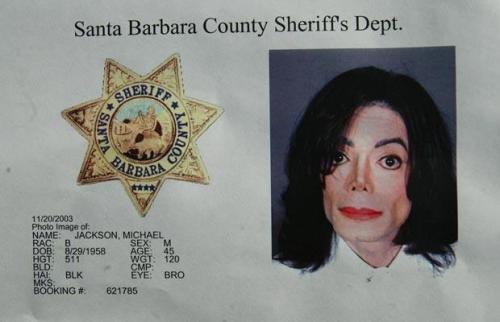
Michael Jackson's 2003 mug shot

Michael Jackson's 2003 mug shot

Jackson acknowledged in the interview with Bashir that, despite the earlier cases, he still invited children to share his bedroom and saw nothing wrong with it.

“It’s not sexual,” he insisted. “I tuck them in, have hot milk, give them cookies. It’s very charming, it’s very sweet.”

He added that his own children “sleep with other people all the time.”

By then, Jackson was a figure of pop music’s past, not its present. When The Times, in 2001, asked top recording executives to name the most valuable acts in the business, Jackson failed to make the top 20.

In 2003, he settled a lawsuit by his former financial advisors after legal documents portrayed the singer as near bankruptcy.

At the same time, he was waging legal battles against his 1970s recording label, Motown Records, and his current label, Sony’s Epic Records. He stirred speculation about his mental state when he contended that the latter company, and in particular Mottola, had inadequately promoted his work because of racism.

He celebrated his 45th birthday in August 2003 at a curious public event that seemed to underscore the decline of his career. Hundreds of fans paid $30 each or more for admission to an old downtown Los Angeles movie palace, where largely amateur or obscure performers sang, lip-synced or danced to the fallen idol’s hits. Most of the seats reserved for A-list guests went begging.

When the honoree took the stage at the end to join in a rendition of “We Are the World,” he was flanked not by the likes of Bob Dylan and Stevie Wonder, as he was when the famous song was first recorded, but by several Jackson impersonators.

Such impersonators usually model themselves on his “Thriller” persona, but the singer himself looked nothing like that in recent years.
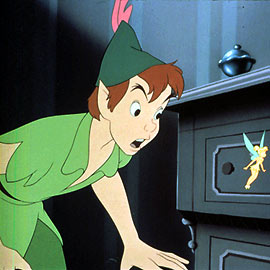
Peter Pan and Tinkerbell

Peter Pan and Tinkerbell

There was intense public curiosity about his physical metamorphosis. Jackson often insisted that his wan complexion was the result of treatment for a skin disorder called vitiligo, but that did not explain why his once-broad nose became long, sleek and pertly tipped.

He publicly admitted to two nose operations, but cosmetic surgeons who studied his photographs surmised that he had undergone far more, possibly so many that he had destroyed the cartilage.

Many plastic surgeries later, Michael Jackson's nose has a perky upturn like Peter Pan's

Many plastic surgeries later, Michael Jackson began to resemble his alter ego, Peter Pan, with his perky upturned nose.

In 1996, Jackson married his former nurse, Debbie Rowe, who bore two of his three children, Prince Michael Jr. and Paris Michael Katherine. He did not disclose the identity of the mother of his third child, Prince Michael II.

He raised the children without their mothers and had them wear elaborate masks whenever they went out with him. Several months after Prince Michael II’s birth, Jackson dangled the baby outside an upper-story hotel window in Berlin to show the child to fans assembled below. The incident led to accusations that the singer was an unfit father. He later acknowledged that he had shown poor judgment.

He is survived by his children; his parents; and siblings Maureen, Jackie, Tito, Jermaine, Marlon, Randy, LaToya and Janet.

Readers, for more on this blog on Michael Jackson, click here.

Read Full Post »

Watch Michael Jackson’s incredible glide move from a 1987 Yokohama concert.


Read Full Post »

Filipino inmates in `Thriller’ video stage tribute

by AP writer Teresa Cerojano

The Filipino inmates who shot to global fame with a YouTube video of their “Thriller” dance (July 2007) swayed and stomped again today, Saturday, June 27, in a behind-bars tribute to their idol, Michael Jackson.

After being told of Jackson’s death Thursday in Los Angeles, the 1,500 inmates at the Cebu Provincial Detention and Rehabilitation Center hit the exercise yard, practicing for nine hours Friday night – and into the wee hours of Saturday morning – for the show. They took breaks only to eat or when it rained, said professional choreographer Gwendolyn Lador, hired by the prison to teach the inmates the dance.

Filipino Prisoners dance to pop tunes such as "Thriller" and "Soulja Boy" as part of their physical fitness

Filipino Prisoners dance to pop tunes such as “Thriller” and “Soulja Boy” as part of their physical fitness

Inmate Alfredo Gaballo, 52, says Jackson “inspired us, so we are all sad about his death.”

Crisanto Nieri, 38, was feeling a little extra stress. He danced Jackson’s part in “Thriller.”

“Even as a kid, he was already my idol,” said Nieri, who is serving seven years on drug charges. “I am happy that our video became famous, but I feel some pressure to perform well.”

A crowd of 700 Cebuanos and foreign tourists watched the performance from a second-floor corridor, swaying to the music and applauding as the inmates, dressed in orange prison T-shirts and sweat pants, stomped and clapped in unison in the hilltop prison, behind thick stone walls topped by electrified razor wire.

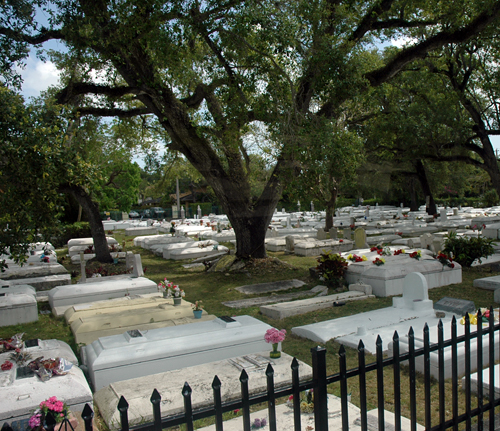
Michael Jackson's "Thriller" video was filmed in the historic Coconut Grove Bahamian Cemetery in Miami, Florida

Michael Jackson’s “Thriller” video was filmed in the historic Coconut Grove Bahamian Cemetery in Miami, Florida

Other numbers included “Ben,” “I’ll Be There” and “We Are the World.” The inmates then held up a 5-by-10 foot (1.5-by-3 meter) tarpaulin showing Michael Jackson holding a sword with his name written below it.

Others waved the flags of the Philippines and other nations.

Before the show, the performers dedicated a prayer to Jackson’s family.

“I was sad because one of the songs of Michael Jackson, `Thriller,’ made us famous around the world,” said Francis Mercader, 36, who has spent a year in detention while on trial for drug charges.

Byron Garcia, the Cebu provincial security consultant who came up with the idea of adding synchronized dancing to poorly attended exercise sessions, said he was surprised by the popularity of the 2007 video – one of more than a dozen inmate dance numbers he has posted on YouTube.

“Thriller” has attracted 24.3 million hits since it was posted two years ago, with nearly a million of them in the 24 hours since news of Jackson’s death spread.

The inmates “consider Michael Jackson as a god here,” Garcia said. “If not for Michael Jackson, they would not have this international recognition.”

“The fame brought them back their self-esteem,” he told reporters. “So that’s why we have these public performances.”


Read Full Post »

One of the millions of starving Ethiopians during the Famine of 1984-85

One of the millions of starving Ethiopians during the Famine of 1984-85

In 1985, Michael Jackson and Lionel Richie wrote a song that ended up making music history. The single, “We are the World,” was recorded to raise money to fight famine in Africa, particularly in Ethiopia, where a 20 year-old civil war raged. As a result of drought and poor harvests, millions of Ethiopians were starving and suffering from disease while their Marxist government spent money on weapons, money that had been intended for food and medicine.

Following Bob Geldof‘s example of Live Aid in Great Britain, Harry Belafonte and Ken Kragen decided to organize an American fundraiser to help out the Ethiopian citizens. Originally, a charity concert was planned, but it was decided that a single recording would bring in more money. Quincy Jones agreed to produce. Michael Jackson and Lionel Ritchie collaborated on the  song.

Jones contacted 45 musicians for the marathon overnight recording session. The supergroup was billed as “U.S.A.” for Africa and was assembled the night of the American Music Awards. Michael Jackson skipped the awards ceremony to record the chorus as a guide for the other musicians.

Getting two artists together in a sound studio would have been a small feat, but 45? Quincy Jones sent a memo to each artist to check their egos at the door.

We_Are_the_World_alternative_coverJones worked out which singers would perform which lyrics, studying recordings of each of the selected singers to decide which would work well with each other. He paired Billy Joel with Tina Turner, Willie Nelson with Dionne Warwick, and Michael Jackson with Prince, who was a no-show. (Prince called in the middle of the session to volunteer a guitar solo but the offer was declined. Prince did, however, contribute a solo recording for the album.) (1)
When released as a single, “We Are The World, ” rose rapidly to the top of the charts, reaching #1 on the Billboard Hot 100 on April 17, 1985, and remaining there for four weeks. It immediately sold out its initial shipment of 800,000 copies, and sales reached 1.5 million shortly afterwards. It proved the power of pop culture to make a positive change in the world and set off a wave of charity projects by other noted celebrities such as Elizabeth Taylor, Sharon Stone, Bruce Springsteen, and Willie Nelson.

Here are the lyrics for the chorus of “We Are the World”:

We Are The World –

We are the world, We are the children
We are the ones who make a brighter day
So let’s start giving
There’s a choice we’re making
We’re saving our own lives
It’s true we’ll make a better day
Just you and me

Words and Music by Michael Jackson and Lionel Richie

Click here for the list of all artists who made up U.S.A. for Africa.

Now view the clip. It’s a moving experience:

(1) “We Are The World,” wikipedia. 


Read Full Post »


Michael Jackson’s signature dance move, the Moonwalk, debuted in 1983 and revolutionized modern dance. Michael’s moonwalk was inspired by the French mime Marcel Marceau’s famous “walking against the wind” routine shown below in Mel Brooks’ “Silent Movie.” Click on the words, “Marcel Marceau,” centered below to see the video clip of Marcel walking against the wind:

 Marcel Marceau


Read Full Post »

Michael Jackson won a Grammy Award for this song, “Don’t Stop ‘Til You Get Enough.” He was happy back then and such a positive force in music. This is one of his best songs. Rock on, Michael.


Read Full Post »

Michael Jackson as a child. Michael died today at age 50.

Michael Jackson as a child. Michael died today at age 50.

Watch this video of the Jackson 5 singing “I Want You Back” and “ABC” on the Ed Sullivan Show in 1970.

This is how we got to know him, Little Michael Jackson, a kid chocked-full of talent and fun. May he rest in peace.


Read Full Post »

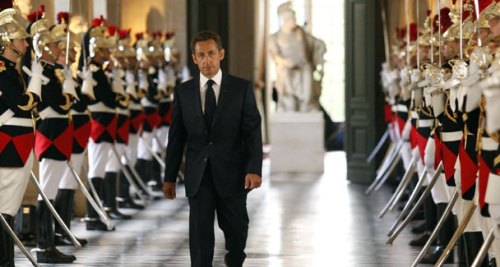
French President Nicolas Sarkost arrives at Versailles Palace on June 22, 2009, to address Parliament. H condemned the use of the burqa in France, calling it an unacceptable symbol of "enslavement."

French President Nicolas Sarkosy arrives at Versailles Palace on June 22, 2009, to address Parliament. He condemned the use of the burqa in France, calling it an unacceptable symbol of "enslavement."

On June 22, 2009, President Nicolas Sarkozy of France arrived at Versailles Palace to address legislators, the first presidential appearance before Parliament since 1875. To protect the independence of lawmakers, presidents had been barred from entering Parliament since Charles Louis-Napoléon Bonaparte’s reign. Reforms carried out by Sarkozy’s party last summer, though, opened the way for him to speak to Parliament. (1)

Mr. Sarkozy entered through rows of French guards with raised swords and plumed helmets, then delivered an American-style state-of-the-nation address. In a sober, far-ranging speech, he spoke about the economy and his vision for the future of France. He saved his strongest comments for the most hotly-debated social issue in France:  the burqa. The burqa is a Muslim head-to-toe garment that some women wear to cloak their bodies and faces. Sarkozy’s declaration, “The burqa is not welcome in France,” was met with enthusiastic applause.

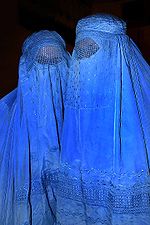
Two Afghan Women Wearing Burqas

Two Afghan Women Wearing Burqas

“We cannot accept to have in our country women who are prisoners behind netting, cut off from all social life, deprived of identity,” Sarkozy told Parliament. “”That is not the idea that the French republic has of women’s dignity. The issue of the burqa is not a religious issue. It is a question of freedom and of women’s dignity,” Mr. Sarkozy said. The burka is not a religious sign. It is a sign of the subjugation, of the submission, of women.”

Mr Sarkozy gave his backing to the establishment of a parliamentary commission to study the burqa and methods to stem its spread. In 2004, France banned Islamic headscarves in its state schools. France is home to five million Muslims, the largest Muslim population in Western Europe.

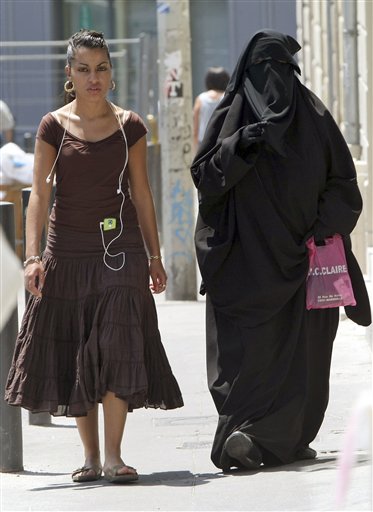
Two women, one wearing the niqab, a veil worn by the most conservative Muslims that exposes only a woman's eyes, right, walk side by side, in the Belsunce district of downtown Marseille, central France, Friday June 19, 2009. The French government's spokesman says he favors the creation of a parliamentary commission to study the small but growing trend of burqa wear in France. Luc Chatel says the commission could possibly propose legislation aimed at banning the burqa and other fully covering garments worn by some Muslim women.

Two women, one wearing the niqab, a veil worn by the most conservative Muslims that exposes only a woman's eyes, right, walk side by side, in downtown Marseille, on June 19, 2009. In France, the terms burka and niqab are often used interchangeably – the former refers to a full-body covering worn largely in Afghanistan with a mesh screen over the eyes, while the latter is a full-body veil, often in black, with a gap for the eyes.A parliamentary commission may study the small but growing trend of burqa wear in France and could propose legislation aimed at banning the burqa and other fully covering garments worn by some Muslim women. The study aims to discover whether the women wear the burka by choice or out of fear.

(1) “Sarkozy Backs Drive to Eliminate the Burqa.” The New York Times, June 23, 2009.

Read Full Post »

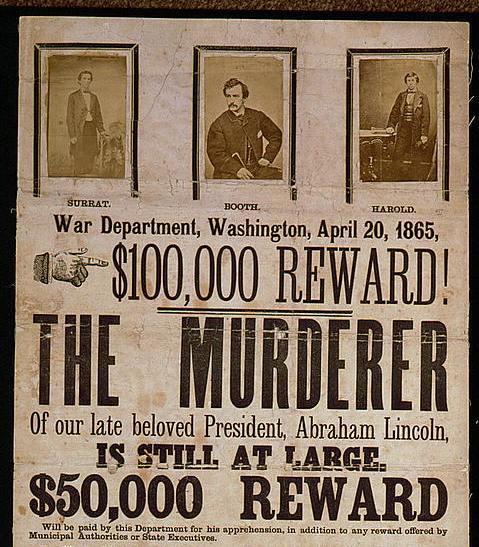
Booth reward posterIt was April 24, 1865 – ten days since President Lincoln was assassinated – and his killer still remained at large. On the night of April 14, John Wilkes Booth had shot the president in the head, jumped on a horse, and slipped across the Potomac River undetected. He had disappeared into Maryland, a state that had stayed in the Union in the Civil War (which had ended just days earlier), but was sprinkled with Confederate spies. Speculation was that Booth would cross Maryland into Virginia with the help of fellow Confederate sympathizers.
The 16th New York Cavalry was on Booth’s trail but no leads had resulted in his capture, despite a whopping $100,000 reward promised by the War Department. So on April 24, Major W.S. Hancock issued a new proclamation appealing to the black population of Washington, Maryland, and Virginia, for their help in the manhunt. Hancock calculated that Booth could not escape without encountering blacks. The following proclamation was printed on letter size handbills and distributed:

THE MURDER OF PRESIDENT LINCOLN.

APPEAL TO THE COLORED PEOPLE!

HEADQUARTERS MIDDLE MILITARY DIVISION

Washington, D.C., April 24, 1865

To the colored people of the District of Columbia and of Maryland, of Alexandria and the border counties of Virginia;

Your President had been murdered! He has fallen by the assassin and without a moment’s warning, simply and solely because he was your friend and the friend of our country. Had he been unfaithful to you and to the great cause of human freedom he might have lived. The pistol from which he met his death, though held by Booth, was fired by the hands of treason and slavery. Think of this and remember how long and how anxiously this good man labored to break your chains and to make you happy. I now appeal to you, by every consideration which can move loyal and grateful hearts, to aid in discovering and arresting his murderer. Concealed by traitors, he is believed to be lurking somewhere within the limits of the District of Columbia, of the State of Maryland, or Virginia. Go forth, then, and watch, and listen, and inquire, and search, and pray, by day and night, until you shall have succeeded in dragging this monstrous and bloody criminal from his hiding place….

Large rewards have been offered…and they will be paid for the apprehension of this murderer….But I feel that you need no such stimulus as this. You will hunt down this cowardly assassin of your best friend, as you would the murderer of your own father….

All information which may lead to the arrest of Booth, or Surratt, or Harold, should be communicated to these headquarters….

W.S. Hancock

Major General U.S. Volunteers

Commanding Middle Military Division


Read Full Post »

(Read “Imelda Marcos Almost Gets the Beatles Killed Part 1” first.)

Hear what the Fab Four had to say about their brush with death in Manila:


*For other related posts on this site, see:
“Imelda Marcos: 2000 Shoes”
“Ferdinand Marcos’ Restless Corpse”
“Imelda Being Imeldific*”

Read Full Post »

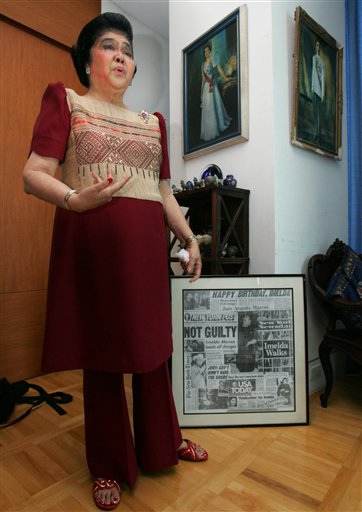
Imelda Marcos being Imeldific, June 20, 2009, Manila.

Imelda Marcos being Imeldific, June 20, 2009, Manila.

“Filipinos are brainwashed to be beautiful. We’re allergic to ugliness,”

said Imelda Marcos as as she greeted reporters this weekend in her swank two-story Manila penthouse. Approaching her 80th birthday on July 2, she complained about her lot in life, saying she is penniless and struggling to still look presentable. Her claim is hardly believable, since she and her husband, the late President of the Philippines Ferdinand Marcos, stashed away billions during his dictatorship. Meanwhile, a 22-carat diamond engagement ring still adorns the former beauty queen’s finger.

“Despite some 900 civil and criminal cases she had faced in Philippine courts since 1991 _ cases ranging from embezzlement and corruption to tax evasion _ she has emerged relatively unscathed and never served prison time. All but a handful of the cases have been dismissed for lack of evidence and a few convictions were overturned on appeal….

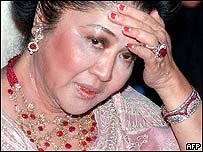
Imelda Marcos penniless yet jeweled

Imelda Marcos penniless yet jeweled

Imelda, her hair coifed and cheeks rouged, teared up as she complained she had to withdraw money from her husband’s meager war pension to post bail so she could travel to Singapore earlier this month for an eye checkup paid for by her children.“I was first lady for only 20 years. All the beautiful things I gave to the Philippines, am I being persecuted for that? I didn’t know you can inherit a crime from your husband.”

Her husband and his cronies allegedly amassed ill-gotten wealth estimated at $5 billion to $10 billion during Marcos’ 20 years in power, but the Presidential Commission on Good Government, created to recover the Marcos billions, says the government has only found cash and assets totaling $1.63 billion.

The assets include three separate sets of diamond tiaras, ruby brooches, emerald necklaces and other jewels.

She remains unashamed of her past, when she shopped in the world’s richest boutiques and launched lavish beautification projects at home in the midst of the Philippines’ extreme poverty.”

*Imeldific is a word coined after former First Lady Imelda Marcos. It means “ostentatious extravagance” as in this example:

She had a shoe collection that met Imeldific standards.

I’ve written more posts on the Marcoses:

“Ferdinand Marcos’ Restless Corpse”

“Imelda Marcos Almost Gets the Beatles Killed”

“Imelda Marcos: 2000 Shoes”

Read Full Post »

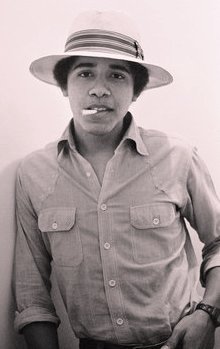
Barry Obama in 1980 when a freshman at Occidental College, photo by Lisa Jack (edited here)

Barry Obama in 1980 when a freshman at Occidental College, photo by Lisa Jack

“Barack Obama: The Freshman,” an exhibition of black-and-white photographs by Lisa Jack, is on view at M + B Gallery in Los Angeles. Lisa Jack took the photographs of the man who would be president when both were students at Occidental College (“Oxy”) in L.A in 1980.

Ms. Jack was scouting that year for people to pose for her photographic portrait project. One of her classmates suggested she call a guy named Barry.

“A friend of a friend was telling me about this really handsome guy, and he walked into the campus coffee shop,” she recalled. She asked him to pose and he agreed. They made arrangements to meet. “I photographed a lot of people and it was always interesting what they decided to wear to the shoot.” (1)

A teenage Barack Obama in a 1980 photo by Lisa Jack

A teenage Barack Obama in a 1980 photo by Lisa Jack

Mr. Obama brought along a leather bomber jacket, a Panama hat, and a pack of cigarettes and wore flared jeans. “Straw hats were not something people wore back then,” she added. “It was obvious that he really put some thought into how he wanted to convey himself.”

Friends remember that Barry Obama had clear-cut ideas about his own style. He grew his hair log, wore subdued square-cut Hawaiian shirts and wore sandals.

Ms. Jack hoped Barry would ask her out, but he did not. Although he was pleased with the photographs, they did not maintain contact. Ms. Jack forgot about the photos until the 2008 presidential campaign.

(1) “When He was Barry,” The New York Times, June 18, 2009.

Read Full Post »

In an interview with John Harwood of CNBC, President Obama swatted a fly, killing it. PETA condemned the president's fly murder.

In an interview with John Harwood of CNBC, President Obama swatted a fly, killing it. PETA condemned the president's fly murder.

The White House is currently experiencing a fly infestation. Flies are swarming the place, irritating everyone, even the president. During an East Room interview on last Tuesday, June 16, a very large fly was circling President Obama’s head, distracting him. The president stopped talking and watched the fly. When it landed on his hand, he studied it then swatted it, killing it dead. Then he brushed it off his hand onto the floor.

“That was pretty impressive, wasn’t it?” he asked the film crew, while glancing down at the dead fly on the floor. “I got the sucker.”

The New York Times dubbed the president, “The First Exterminator.” The scene was an instant youtube hit and made TV news around the world. People for the Ethical Treatment of Animals, though, were not amused, and condemned the Obama Fly Murder.

See the video below:

Read Full Post »

Dorothy Hale and Isamu Noguchi at the premiere of Four Saints in Three Acts, February 7, 1934, Hartford, Connecticut

Dorothy Hale and Isamu Noguchi at the premiere of “Four Saints in Three Acts,” February 7, 1934, Hartford, Connecticut

In 1934, the socialite and actress Dorothy Hale took a road trip through Connecticut with two old friends, writer Clare Boothe Luce and sculptor Isamu Noguchi. They drove in a special car Noguchi had designed with his drinking buddy, futuristic inventor Buckminster Fuller. The car was called the Dymaxion.

The Dymaxion Car

The Dymaxion Car

Buckminster Fuller with his portrait by Isamu Noguchi, 1929, photo by Noguchi

Buckminster Fuller with his portrait by Isamu Noguchi, 1929, photo by Noguchi

The 20-foot long aluminum-bodied Dymaxion car caused a traffic jam wherever it went.  This was between the two world wars when cars were sedans and pick-up trucks. “Bucky” Fuller’s car was shaped like a teardrop and ran on three wheels. It went 90 m.p.h. and was fuel-efficient at 30 m.p.g. The 3-wheeler made a 360-degree turn on a dime. A periscope that came out of the roof gave extra visibility. It seated eleven passengers.

It was the car of the future – for a while. Unfortunately, only three Dymaxion cars were ever produced. Orchestra conductor Leopold Stokowski bought one. Amelia Earhart was interested in investing. Financing was a problem and Fuller was running out of cash.

Aviator Amelia Earhart

Aviator Amelia Earhart

Any hope of putting the Dymaxion in full-scale production dried up quickly when the car was involved in a fatal accident at the 1933 Chicago World’s Fair. Another car was blamed for the crash but that didn’t stop the negative publicity for the Dymaxion.

Sadly, only one of the Dymaxions exists today. You can view the restored exterior of the car at the National Automobile Museum in Reno, Nevada. Disappointingly, though, the car windows are painted opaque from the inside to prevent you looking inside. Evidently, the inside was in very bad shape when the car was acquired and little information exists as to its original look in order to guide the museum restoration artists. The rumor is that the car had been used as a chicken coop somewhere in the Midwest before it was discovered, which explains the wrecked state of the interior!

View this youtube video to see the amazing turning radius of the Dymaxion. While you’re viewing, keep a lookout for Amelia Earhart in the back seat.

http://www.youtube.com/watch?v=YlLZE23EJKs&feature=related

For more on Dorothy Hale, see my most popular post, Frida Kahlo: The Suicide of Dorothy Hale.”

Read Full Post »

From The New York Times, June 15, 2009:

$431,000 Paid for Envelope and Its Stamp

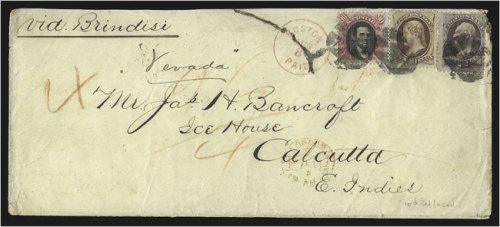
An envelope from an 1873 letter bearing a scarce 90-cent stamp with Abraham Lincoln fetched more than $431,000 at an auction in New York City on Saturday.

The envelope, or cover, as collectors call used envelopes, was sold by Siegel Auction Galleries.

The 1873 letter bearing the scarce 90-cent Lincoln stamp

The 1873 letter bearing the scarce 90-cent Lincoln stamp

Known to collectors as the Ice House Cover, the envelope, which traveled by ship from New York to India, is the only one collectors have found still bearing the red and black stamp with Lincoln on it. Last traded publicly in 1943, then stolen and long thought to have been lost to philately, the cover was seized by the Federal Bureau of Investigation in 2006 and returned, after a court battle, to the heirs of J. David Baker, its last owner.

The letter was sent from a New England ice merchant to one of his ice warehouses in Calcutta, then part of Britain’s East Indies colony. It was franked with a total of $1.12, a large sum of money in those days, which paid the two-ounce foreign letter rate.

Markings on the envelope reveal that it traveled across the Atlantic, by train through Germany and Italy, by ship to Egypt and again from Suez to Bombay, and then by train across India. Before the advent of the Universal Postal Union the next year, the sum reflected rates negotiated between the United States and Britain to encourage growing international trade. Indeed, the commercial success of sending ice from winter ponds in Massachusetts to the sweltering cities of India was part of this progress.

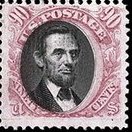
90-cent Lincoln stamp issued in 1869. Image used was provided by photographer Mathew Brady.

This 90-cent Lincoln stamp was issued in 1869. The image was provided by famed Civil War photographer Mathew Brady.

Early collectors mainly sought to fill their albums with stamps that had been soaked off their envelopes, and an item like the Lincoln, issued in 1869 in a run of fewer than 50,000, would have been no exception. When, at the end of the 19th century, collectors began saving entire envelopes — on account of the fascinating tales they revealed about their trips through the world’s postal systems — it became apparent that covers with the Lincoln were no longer to be found.

In 1914, a New York collector traveling in India did come across one. He sold it to a dealer in New York for $50 or $100 — accounts vary — and by the 1960s it had been sold to Mr. Baker, a steel executive and prominent collector in Indianapolis, for $6,500.

One night in 1967, a prized group of about 250 rare covers, including the Ice House Cover, was stolen from his home. The F.B.I. found most of those covers a decade later, and Mr. Baker was able to buy them back from his insurance company. But the Ice House Cover was missing.

In early 2006, however, an elderly couple walked into a stamp shop in Chicago to ask about the value of some old envelopes they had found while cleaning the home of a deceased friend. The store owner recognized the Ice House Cover and alerted the police. After an investigation by the F.B.I. cleared the couple, the cover was returned by court order to Mr. Baker’s widow and daughter. In May, the Philatelic Foundation, a nonprofit organization in New York, examined the cover and declared it genuine.

The buyer on Saturday was Dr. Arthur K. M. Woo, who is renowned in philatelic circles for his worldwide exhibits of rare covers. He paid a total of $431,250, including buyer’s commission.

Read Full Post »

« Newer Posts - Older Posts »