Feeds:
Posts
Comments

Archive for the ‘ART, PHOTOGRAPHY, FASHION, & DESIGN’ Category

American journalist and author Kitty Kelley (b. 1942)

American journalist and author Kitty Kelley (b. 1942)

Writer Kitty Kelley always wondered what her photographer friend Stanley Tretick kept in his Marine Corps locker that he used as a coffee table in his study. One day she asked him what was inside.

Nude pictures,” he told her, winking.

She took him at his word and thought no more about it. The two had been friends since 1981 but it wasn’t until 1999, when Tretick died, that Kelley found out what was really in the battered old trunk, as Tretick had left it to her in his will.

Inside she discovered a trove of keepsakes from Tretick’s days of photographing President John F. Kennedy for United Press International and Look magazine.

American photographer Stanley Tretick (l.) photographs President John F. Kennedy in the Oval Office, 1962. (Abbie Rowe, JFK Library and Museum)

American photographer Stanley Tretick (l.) photographs President John F. Kennedy in the Oval Office, 1962. (Abbie Rowe, JFK Library and Museum)

Among the signed photographs of the president and his wife, Jackie, handwritten notes and letters, and Kennedy buttons and bumper stickers was this PT-109 boat tie clasp that JFK had given Tretick when he followed him in his 1960 presidential campaign. (1)

JFK PT 109 boat pin

JFK PT 109 boat pin

The 1960 Kennedy presidential campaign distributed this boat pin as a reminder of Kennedy’s WWII military service aboard the patrol torpedo boat PT-109.

Patrol Torpedo 109 commanded by John F. Kennedy at far right. 1943

Patrol Torpedo 109 commanded by John F. Kennedy at far right. 1943

On the starless, moonless night of August 1, 1943, Lieutenant Kennedy was at the helm of PT-109, cruising the Solomon Islands in the South Pacific to spot Japanese warships, when:

At about 2:30 in the morning, a shape loomed out of the darkness three hundred yards off PT-109’s starboard bow.”(2)

It was the Japanese destroyer the Amagiri, cruising at top speed. It rammed the PT-109 just forward of the forward starboard torpedo tube, ripping away the starboard aft side of the boat, and cutting the boat in two.

Painting of the August 2, 1943 sinking of PT-109 by the Japanese destroyer Amagiri. By Gerard Richardson. Courtesy of the John F. Kennedy Library and Museum

Painting of the August 2, 1943 sinking of PT-109 by the Japanese destroyer Amagiri. By Gerard Richardson. Courtesy of the John F. Kennedy Library and Museum.

The extreme impact tossed Kennedy around the cockpit. Most of the crew were knocked into the water. Two died; two were injured. Fully expecting the boat to explode into flames, Kennedy ordered his crew to abandon ship.

The eleven survivors took to the water and struck out swimming for an islet three-and-a-half miles away.

Lieutenant Kennedy was a strong swimmer. He had been on the swim team at Harvard University. He saved one of his men by towing him ashore with a lifejacket strap clenched between his teeth. He was the first of his crew to reach the island.

Six days later, islanders scouting for the Allies on Naru Island found the men and sent for help, delivering the following SOS message Kennedy had scratched into the husk of a green coconut:

NAURO (sic) ISL
COMMANDER . . . NATIVE KNOWS
POS’IT . . . HE CAN PILOT . . . 11 ALIVE
NEED SMALL BOAT . . . KENNEDY

Despite the proximity of the Japanese patrols, the crew was rescued without incident and the men reached the U.S. base at Rendova on the Solomon Islands on August 8, 1943.

PT-109 Collision August 1943 (by Philg88; Attribution: Wikimedia Foundation)

PT-109 Collision August 1943 (by Philg88; Attribution: Wikimedia Foundation)

John F. Kennedy receives the Navy and Marine Corps Medal for his courage in the PT-109 incident. 1943

John F. Kennedy receives the Navy and Marine Corps Medal for his courage in the PT-109 incident. 1943

Upon the crew’s return, Kennedy was awarded the Navy and Marine Corps Medal for his leadership and courage. For injuries suffered, he also qualified for a Purple Heart.

(1) Kelley, Kitty. Capturing Camelot: Stanley Tretick’s Iconic Images of the Kennedys. New York: St. Martin’s Press, 2012.

(2) John F. Kennedy Memorial Library and Museum online

Read Full Post »

Excerpt from interview by Jamie Lee Curtis Taete with American fashion designer, Bob Mackie.
“Bob Mackie Has Dressed Almost Everyone,” March 7, 2013. VICE online.

The television shows you designed wardrobe for back then were classic big productions like The Carol Burnett Show. It all seemed so cohesive. Were you responsible for designing every costume and look?
Well, not everything was designed. I would rent a lot of stuff like uniforms and period pieces, but we were doing 50 to 70 costumes per episode, and we had a show every week.

Carol Burnett and Bob Mackie at Carol's home, 1967

Carol Burnett and Bob Mackie at Carol’s home, 1967

I watched an interview with you during which you said that to get inspiration for sketch-comedy wardrobes, you’d walk around the mall and people-watch. You also said that you couldn’t believe what people thought they looked good in. Is strolling around malls or other public places something you still do? 
I don’t do sketch comedy anymore, but I definitely still walk around malls and airports—especially airports—and I think, Oh my God, look at her, or, Look at those ugly shoes! Today, a lot of women are wearing very unflattering clothes.

Yes, I think the worst-dressed people can be found at the airport because somewhere along the line everyone decided that unabashed comfort trumps any sort of decorum whatsoever. It’s crazy. You have people going on two-hour flights in pajamas with neck pillows and their bare feet stinking up the cabin. 
I know! But the thing is, you can be comfortable without looking like a pig. When I fly, I sit there and I watch people board the plane and I think, Where are they going when they arrive? Where can you go when you look that ridiculous?

Are there any specific current trends that you just can’t stand? 
Leggings worn on their own. It stops me cold some days; I just can’t believe my eyes! Just because it’s stretchy, it doesn’t mean it fits or looks good.

And what about from the past?
Well, sometimes, when they’re happening you think, Oh my God, what’s going on here? And then after a while you start liking it. Like when mini-dresses came in, they were just above the knee and everyone was so shocked. Then all of a sudden they were barely covering the crotch. And now everybody’s got it all hanging out and we’re used to it.

Does that happen with things you’ve designed in the past? Do you ever look back and go, “What was I thinking?”
Well, I look back and I say to myself, “That was 30 or 40 years ago and that was the trend at the time.”

READERS: For more Bob Mackie posts, click here

Read Full Post »

In 1990, American fashion guru Bob Mackie began to design Barbie dolls for toymaker Mattel. A peek at that collection demonstrates Mackie’s incomparable creative imagination:

This one is exotic.

Brazilian Banana Bonanza Barbie is sultry.

Sterling Silver Rose is alluring and soft.

Sterling Silver Rose Barbie is elegant.

The Charleston Barbie is sassy

The Charleston Barbie is sassy.

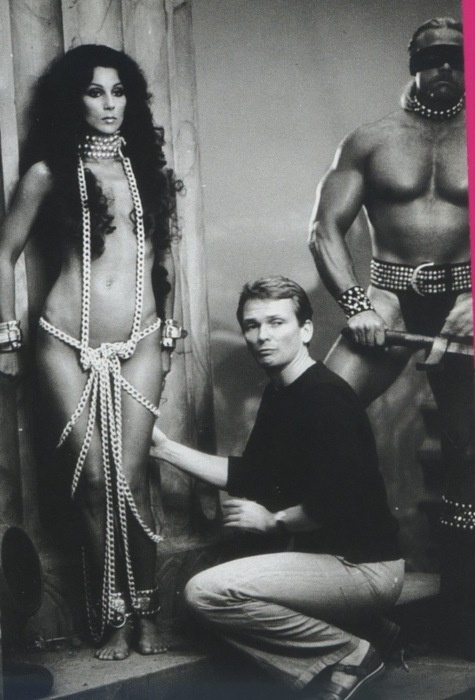
Cher 1980 Barbie is provocative and skimpy.

Cher 1980 Barbie is outrageously sexy.

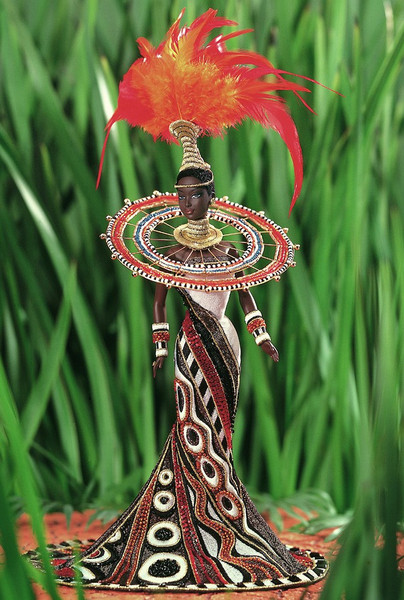
Fantasy_Goddess_of_Africa_grande

Fantasy Goddess of Africa is exotic.

Couture Confection Bride Barbie is classy.

Couture Confection Bride Barbie is classy.

Sultry. Elegant. Sassy. Outrageously Sexy. Exotic. Classy. While these Bob Mackie costumes are fantastically diverse, they have one trait in common. They are glamorous. They are designed to flatter the woman – and to make her stand out. Whether designing for the stars or for Barbie, the Bob Mackie name has become synonymous with over-the-top, splashy, flashy glamour.

Then isn’t it ironic that the costume for which Mackie may be most remembered is not glamorous at all but wildly funny and enormously unflattering?

Not really. Because Bob Mackie got his start in designing costumes for TV, most memorably for “The Carol Burnett Show” (1967-1978), a variety/sketch comedy show for which he designed costumes for all 287 episodes for the entire crew – from the dancers to the secondary actors to the stars – for all the skits, every week, comic and elegant clothing.

We made a lot of costumes!” said Bob Mackie. ‘Nobody had more fun than I did, doing that kind of a show, a weekly show like that…. We could be glamorous one moment, horrible the next. It was just crazy, It was crazy, and I loved it.'”  (1)

Carol Burnett’s costar Vicky Lawrence said of Bob Mackie:

I just thought he was a genius….I just remember always feeling either very funny or very beautiful.”

The Dress in the Window

The eighth episode of the tenth season of “The Carol Burnett Show” (Nov. 13, 1976) opened with Carol Burnett introducing the comedy sketch, “Went With the Wind,” a parody spoof on the 1939 epic film, “Gone With the Wind.” Carol said:

Recently, nearly the entire nation spent a total of 5 hours watching ‘Gone with the Wind’ make its TV debut. So for those of you who ran out of Kleenex and were unable to watch it, we put together our own mini-version to let you know what you’ve missed. Uh-huh.” (2)

Bob Mackie was responsible for the costume design for “Went With the Wind.” As usual, he had read the script for creative inspiration. When the script called for Carol Burnett, as Starlet O’Hara, to tear the curtains down and turn them into a dress that just hung off her, Mackie did not find it funny, as that is the same thing Scarlett O’Hara had done in the actual film. He had to think of something original. He was stymied for ideas.

In "Gone With the Wind," Scarlett O'Hara prepares to tear down the curtains to make a dress.

In “Gone With the Wind,” Scarlett O’Hara prepares to tear down the curtains to make a dress.

Finally, the morning of the Thursday filming, he thought of what to do. He ordered a real curtain rod to be fitted into the velvet drapes. The rod was enormously heavy. He carried it up the narrow back steps behind the stage staircase and helped Carol’s dresser – a tiny woman –  put it on Carol.

In the next scene, Carol makes her dramatic entrance. She descends the stairwell to greet Captain Ratt Butler, played by Harvey Korman, trying to entice him into giving her money. Carol is wearing not just the curtains and sash but also the curtain rod like a long shoulder pad. When the audience saw the curtain rod jutting out from Carol’s shoulders, they shrieked with laughter.

Carol Burnett and Harvey Korman as "Starlet and Ratt" in comic sketch, "Went With the Wind." (1976)

Carol Burnett and Harvey Korman as “Starlet and Ratt” in comic sketch, “Went With the Wind.” (1976)

Ratt tells Starlet,

Starlet, I love you. That – that – gown is gorgeous.”

Starlet replies,

Thank you. I saw it in the window, and I just couldn’t resist it.”

Bob Mackie's sketch of Carol Burnett wearing the curtain rod dress for "Went With the Wind."

Bob Mackie’s sketch of Carol Burnett wearing the curtain rod dress for “Went With the Wind.”

Remembers Mackie:

I’ve never heard laughter like that in my life. It just hit….It just made people laugh, and it still does. Every time I talk to anybody, they bring up this silly curtain rod outfit, with the velvet drapes attached to it. I had an exhibit in New York of my whole career and what was in the front window, that outfit! ….It will be on my tombstone one day.” (3)

At left, the green curtain rod dress designed by Walter Plunkett and worn by actress Vivien Leigh in the 1939 film, Gone With the Wind. At right, is the Bob Mackie spoof of this dress for the Nov. 1976 "Went With the Wind" parody shown on The Carol Burnett Show and worn by Ms. Burnett.

At left, the green curtain rod dress designed by Walter Plunkett and worn by actress Vivien Leigh in the 1939 film, “Gone With the Wind.” At right, is the Bob Mackie spoof of this dress for the Nov. 1976 “Went With the Wind” TV parody shown on The Carol Burnett Show and worn by Ms. Burnett.

This dress scene was number 2 in TV Guide’s January 23-29, 1999, list of “The 50 Funniest Moments in Television” (the funniest moment was the chocolate wrapping scene from “I Love Lucy”).

Now Mackie’s curtain rod dress is enshrined in the Smithsonian Museum as part of the American History Museum’s Kennedy Center Honors Collection.

Click here to watch the youtube clip of “Went With the Wind.” The curtain rod dress appears at 13:13. Enjoy!

Sources:

(1) Youtube clip: “Gags and Gowns: The Genius of Bob Mackie on The Carol Burnett Show.”

(2) wiki: “Went With the Wind”

(3) Youtube clip: Bob Mackie interview: “’The Carol Burnett Show’: TV legends”

(4) “Went With the Wind” script

READERS: For more Bob Mackie posts, click here

Read Full Post »

American costume designer Bob Mackie in an undated photo.

American costume designer Bob Mackie in an undated photo.

In my last post, I introduced American fashion designer Bob Mackie (b. 1940), designer to the stars. He is famous for dressing entertainers such as Cher, Carol Burnett, Diana Ross, Barbara Eden, Bette Midler, Judy Garland, Liza Minnelli, Tina Turner, Joan Rivers, Whitney Houston, Pink, Sharon Stone, Beyonce, Goldie Hawn, Barbra Streisand, Bernadette Peters, Lucille Ball, Ann-Margret, and Mitzi Gaynor. He also creates designs for collector’s edition Barbie dolls.

Although his designs can be elegant, they can also be outrageous. Many of Mackie’s most spectacular designs have a Vegas show-girl quality. They are flamboyant. The gowns and bodysuits are skimpy, clingy, see-through, and spangled with strategically-placed sequins, crystals, and feathers. Mackie has been referred to as “The Sultan of Sequins,” or “The Rajah of Rhinestones,” for his sparkling and imaginative costume designs. (1)

Often, his gowns leave little to the imagination of the girl underneath. Of this, he has said:

A woman who wears my clothes is not afraid to be noticed.”

Mackie has enjoyed tremendous success. He has received nine Emmy Awards and been nominated three times for an Academy Award for dressing Diana Ross in “Lady Sings The Blues,” Barbra Streisand in “Funny Lady,” and Bernadette Peters in “Pennies From Heaven.” In 2002, he was inducted into the Television Hall of Fame.

Here are a few of his most memorable designs.

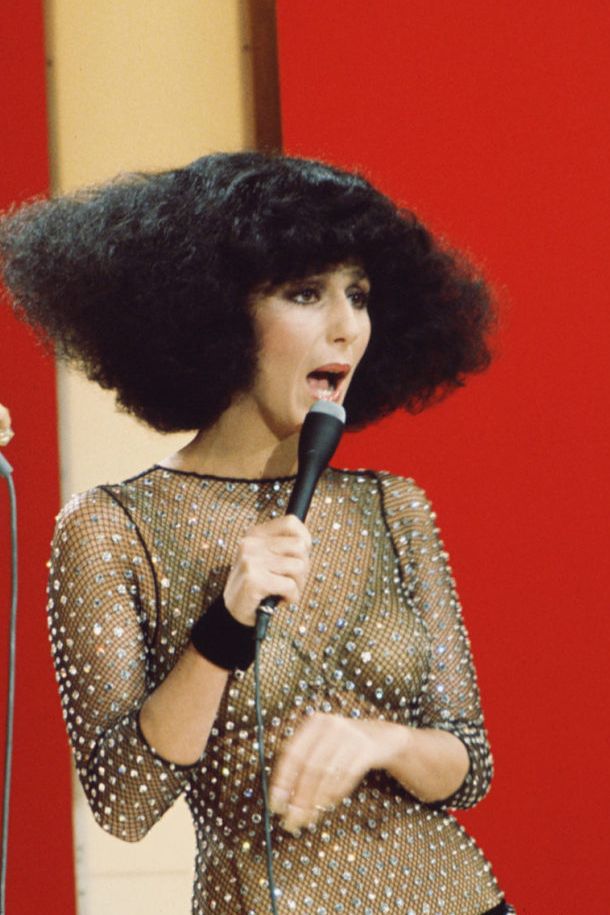
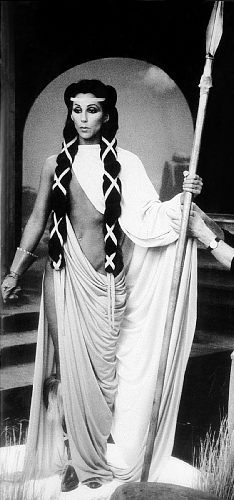
CHER

Cher wears a sleek Bob Mackie jersey dress for "The Sonny & Cher Comedy Hour." ca. 1975.

Cher wears a sleek Bob Mackie jersey dress for “The Sonny & Cher Comedy Hour.” ca. 1975.

Cher accepts the Best Actress Oscar for her film role in "Moonstruck" at the 1988 Academy Awards. Her costume was designed by Bob Mackie. It made headlines.

Cher accepts the Best Actress Oscar for her film role in “Moonstruck” at the 1988 Academy Awards. Her costume was designed by Bob Mackie. It made headlines.

Floral Cher

cher-1973-oscars

Cher Prison album photo shoot

Cher in Mackie TV

Cher in album cover B Mackie

Cher dripping Bob Mackie

Cher by B Mackie

Cher by B Mackie Egyptian

Cher B Mackie later

Cher B Mackie fire costume

Short hair cher

PINK

Singer Pink performs at the 2010 Grammy Award Ceremony in her nude sequined bodysuit by Bob Mackie.

Singer Pink performs at the 2010 Grammy Award Ceremony in her nude sequined bodysuit by Bob Mackie.

 DIANA ROSS

Diana Ross in B Mackie short

 BEYONCE

beyonce

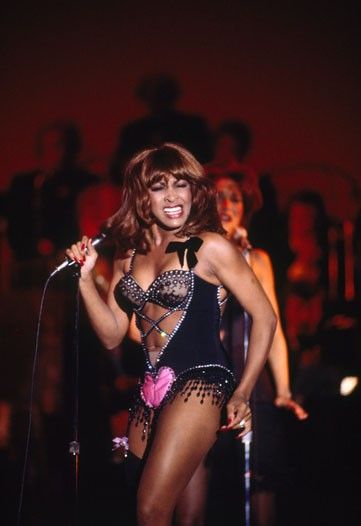
 TINA TURNER

Tina Turner by B Mackie2

Tina Turner by B Mackie

ANN-MARGRET

Ann Margret in B Mackie seated

IVANKA TRUMP WEARS MOTHER IVANA TRUMP’S MACKIE

Ivanka Trump in Ivana's vintage B Mackie

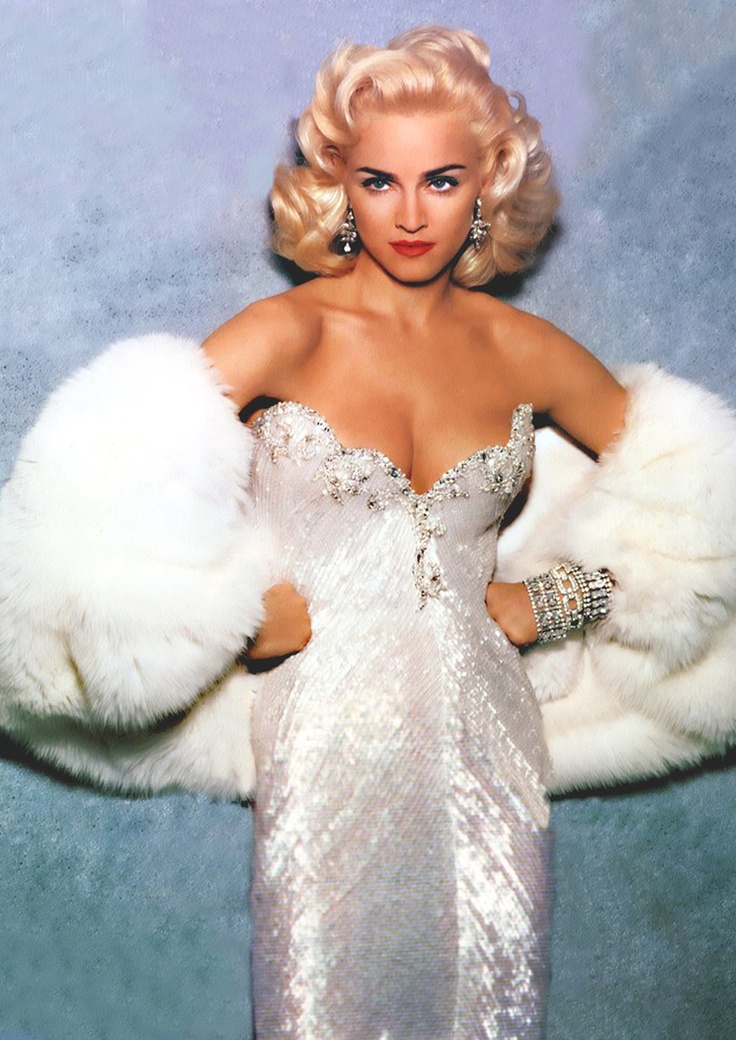
MADONNA

Madonna in Mackie

MITZI GAYNOR

Mitzi Gaynor by B Mackie

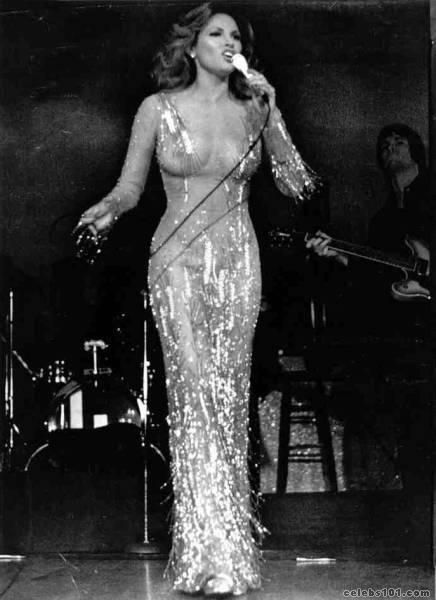
RAQUEL WELCH

Raquel Welch in B Mackie

SHARON STONE

Sharon Stone in Mackie

AND, OF COURSE, CAROL BURNETT 

TSDCABU EC001

(1) ”Bob Mackie,” Wikipedia.

READERS: For more Bob Mackie posts, click here

Read Full Post »

Before “The Sonny & Cher Comedy Hour” debuted on CBS television in 1972, Cher said,

Sonny and I wore clothes, but they were so kind of unisex, you know? Some people don’t even know I was a girl!”

Here is a glance back at the American singing duo, Sonny & Cher, in their unisex phase of the 1960s, before they launched their glitzier TV career:

Salvatore Phillip "Sonny" Bono (1935-1998) and Cherilyn Sarkisian (b. 1946) AKA known as the American singing duo, Sonny & Cher, are shown here in their trend-setting unisex fashion. 1965.

Salvatore Phillip “Sonny” Bono (1935-1998) and Cherilyn Sarkisian (b. 1946) AKA known as the American singing duo, Sonny & Cher, are shown here in their trend-setting unisex fashion. They were married from 1964-1975. They had one child: Chastity “Chaz” Bono. Photo 1965.

Cher and Sonny wear matching striped bell-bottoms. Sonny often wore a furry open vest, as he is here. ca. 1965

Cher and Sonny wear matching striped bell-bottoms. 1965

Cher's father was of Armenian heritage and her mother had some Cherokee blood. She played up her Native American heritage by wearing traditional costumes with beadwork and fringe and singing songs such as "Half-Breed" and "Gypsies, Tramps, and Thieves." Note the unisex theme in their outfits. ca. 1965.

Cher’s father was of Armenian heritage and her mother had some Cherokee blood. She played up her Native American heritage by wearing traditional costumes with beadwork and fringe and singing songs such as “Half-Breed” and “Gypsies, Tramps, and Thieves.” Note the unisex theme in their outfits. ca. 1965.

In 1965, the Sonny (r.) & Cher song, "I've Got You, Babe," knocked the Beatles off the top of the British music charts. English teenagers copied the singing duo's iconic fashion style. Their shows "attracted girls who were ironing their hair straight and dyeing it black, to go with their vests and bell-bottoms" ("Cher,' wikipedia). Cher was fond of fringe; Sonny, of fur.

In 1965, the Sonny (r.) & Cher song, “I’ve Got You, Babe,” knocked the Beatles off the top of the British music charts. English teenagers copied the singing duo’s iconic fashion style. Their shows “attracted girls who were ironing their hair straight and dyeing it black, to go with their vests and bell-bottoms” (“Cher,’ wikipedia). Cher was fond of fringe; Sonny, of fur. 1965

Cher hoped that her new variety show would revive her flagging career. Sonny & Cher had been a big hit in the early to mid-sixties but, in the last several years, their popularity had taken a nosedive. By 1971, when CBS offered them a TV variety show contract, their folk rock style of music had given way to heavier sounds by groups like “Cream” and “Iron Butterfly.” In spite of their revolutionary, hip clothing style that set fashion trends in the sixties, Sonny & Cher were quite conservative when it came to sex and drugs, and, in their wholesomeness, had lost their fan base. They needed a new look to make their show a success.

And Cher knew just who could give it to them. She had met him four years earlier, on the set of “The Carol Burnett Show.” He was Bob Mackie; he worked in the wardrobe department. Mackie recalled:

It was 1967 and I was working on a loose thread on a beaded gown and Cher came over and said, ‘Oh, someday, I’m going to have one of those. And we became friends after that.”

Fashion designer, Bob Mackie, AKA "The Rajah of Rhinestones" or "The Sultan of Sequins" with TV comedienne, Carol Burnett, with whom he worked from 1967-1978. Photo 1967. Courtesy Bob Mackie.

Fashion designer, Bob Mackie, AKA “The Rajah of Rhinestones” or “The Sultan of Sequins” with TV comedienne, Carol Burnett, with whom he worked from 1967-1978. Photo 1967. Courtesy Bob Mackie.

Now that Cher had a production budget, she hired Mackie to design splashy costumes for the “Sonny & Cher Comedy Hour” (1972-1975) as well as for many later productions. A collaboration that lasted forty-two years was born. From then on, Mackie designed clothes for Cher that left viewers with no doubt that Cher was all girl. With Bob Mackie in charge of Cher’s wardrobe, it was, all of a sudden,

Goodbye, baggy blouses and bell-bottom britches!

and

Hello, belly-buttons, bottoms, and bosoms!

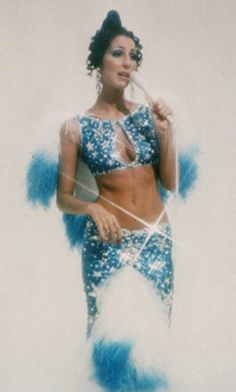
Mackie outfitted Cher as a Native American princess for 'The Sonny and Cher Comedy Hour' television show.

Mackie outfitted Cher as a Native American princess. Photo ca. 1973.

Cher in her 'Half Breed'outfit 1973

Cher’s song, “Half-Breed,” topped the Billboard charts for the week ending October 6,1973. Here she is shown debuting the song on “The Sonny and Cher Comedy Hour.” She wears a Bob Mackie original costume: a headdress decked out in feathers, a sequined halter top, and a loin cloth that reached down to her platform shoes. Photo ca. 1963

Mackie transformed Cher from a shapeless hippie into a shameless sexpot. He created outlandish-for-the-day, navel-baring outfits bedecked with beads, sequins, and feathers topped off by enormous headdresses. Her skimpy outfits made the network censors question whether or not they were appropriate for prime time television. Cher’s bronzed and taut midriff was enviable.

Mackie had the time of his life designing for Cher:

 ‘She was like a big Barbie doll,’ he said. (1)

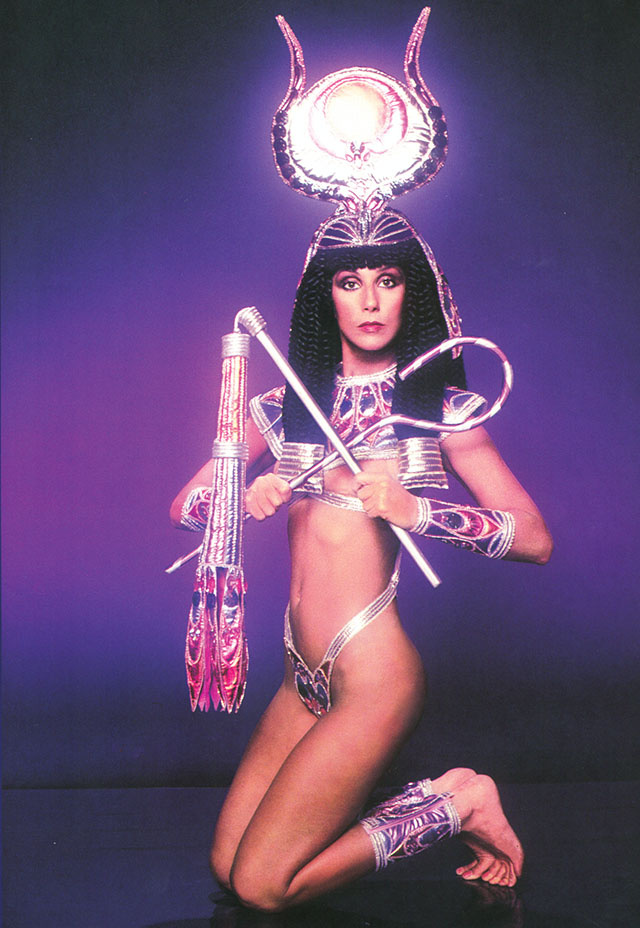
Cher 1975 B Mackie for tv special

Cher channels the Egyptian goddess Isis in this Bob Mackie costume designed for a 1975 TV special.

Cher’s TV shows were popular, as she was a talented singer, comedienne, and actress, but part of the reason she became such a towering success was because people tuned into her programs each week to see what she would OR WOULDN”T be wearing. And Cher never disappointed – thanks to Bob Mackie.

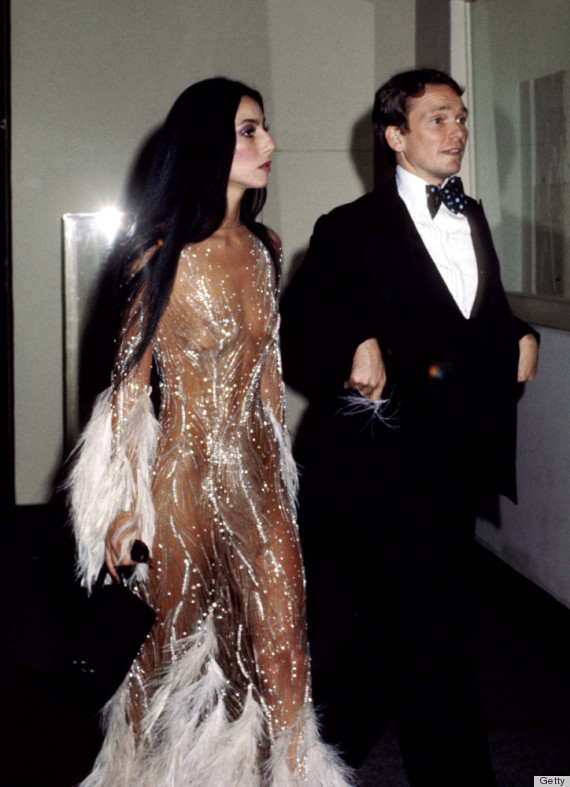
Cher began to make fashion statements on the red carpet, appearing at celebrity functions in “barely there” outfits by Mackie.

Cher and her designer Bob Mackie arrive at a Met gala, 1974. She is wearing a Mackie bodysuit embroidered with feathers and crystals. Mackie said of his muse, "She had such an unbelievable body. She could wear anything." This outfit would be featured on the cover of "Time" magazine the following spring. (1)

Cher and her designer Bob Mackie arrive at a Met gala, 1974. She is wearing a Mackie bodysuit embroidered with feathers and crystals. Mackie said of his muse, “She had such an unbelievable body. She could wear anything.” This outfit would be featured on the cover of “Time” magazine the following spring. (1)

Cher arrives at the 1974 Academy Awards wearing a Bob Mackie design.

Cher arrives at the 1974 Academy Awards wearing a Bob Mackie design.

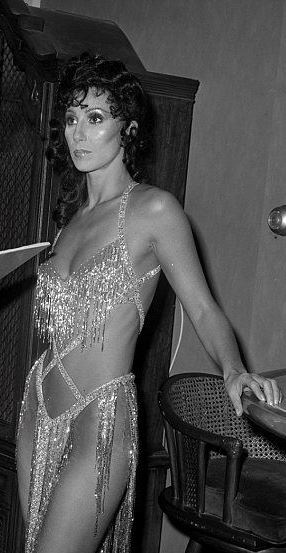
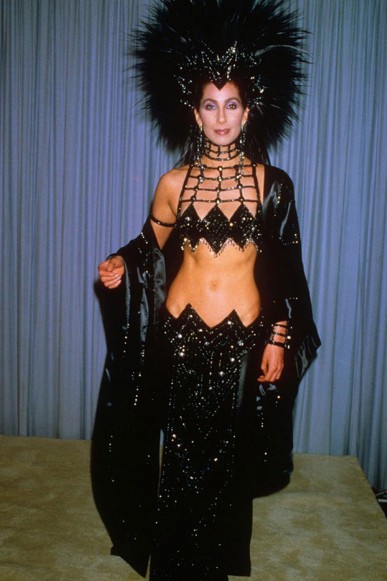
Cher was miffed that she wasn't nominated for her 1985 starring role in the film, "Mask," prompting her to appear in her role as an award presenter in this provocative Mackie number. 1986

Cher was miffed that she wasn’t nominated for her 1985 starring role in the film, “Mask,” prompting her to appear in her role as an award presenter in this a provocative Mackie design that challenged the Academy’s dress code. 1986

Source:

(1) Barnard, Christopher. “Cher’s One-of-a-Kind Fashion Legacy,” November 10, 2010.  Vanity Fair. Web Exclusive.

READERS: For more Bob Mackie posts, click here.

Read Full Post »

Diana Vreeland, Empress of Fashion, 1903-1989

Before her career as editor and columnist at fashion magazines Harper’s Bazaar and Vogue, Diana Vreeland, like other society women of her class, ran a little lingerie shop near Berkeley Square in London. She often traveled to Paris where she would buy her clothes, notably, Chanel. She remembered one such trip in the summer of 1932:

“One night in Paris, after I was married, a friend and I went to a little theatre above Montmartre to see a German[-French] movie called “L’Atlantide,” with a wonderful actress in it called Brigitte Helm, who played the Queen of the Lost Continent. It was the middle of July. It was hot. The only seats in the theatre were in the third balcony, under the rafters, where it was even hotter. There were four seats in a row, and we took two.

L'Atlantide poster 1932

“We sat there, the movie started…and I became totally intoxicated by it. I was mesmerized! …I was absorbed by these three lost Foreign Legion soldiers with their camels, their woes…they’re so tired, they’re delirious with dehydration…And then you see the fata morgana [mirage]. That means that if you desire a woman, you see a woman, if you desire water, you see water – everything you dream, you see. But you never reach it. It’s all an illusion.

“Then…a sign of an oasis! There’s a palm…and more palms. Then they’re in the oasis, where they see Brigitte Helm, this divine looking woman seated on a throne – surrounded by cheetahs! The cheetahs bask in the sun. She fixes her eyes on the soldiers. One of them approaches her. She gives him a glass of champagne and he drinks it. Then she takes the glass from him, breaks it, cuts his throat with it…

Brigette Helm as the Queen of Atlantis, the Lost Continent, shown here with one of her screen cheetahs.  "L'Atlantide" (1932)

Brigette Helm as the Queen of Atlantis, the Lost Continent, shown here with one of her screen cheetahs. “L’Atlantide” (1932)

“This goes on and on. I hadn’t moved an inch. At some point I moved my hand…to here…where it stayed for the rest of the movie. I was spellbound because the mood was so sustained. I was sucked in, seduced by this thing of the desert, seduced by the Queen of the Lost Continent, the wickedest woman who had ever lived…and her cheetahs!

The essence of movie-ism.

“Then…the lights went on, and I felt a slight movement under my hand. I looked down – and it was a cheetah! And beside the cheetah was Josephine Baker!”

Josephine Baker was a hit in Paris cabarets, singing, dancing, and goofing around. In the 1930s, she was the most successful American entertainer in Paris. She got rich fast and was a superstar. She is wearing her notorious silly but erotic banana skirt. ca. 1925

When Josephine Baker began performing her exotic, erotic, and peculiar dances in Paris cabarets in 1925, she became an instant hit, a superstar. In the thirties, she was the most successful American entertainer working in France. She was known as “The Black Pearl” and “The Bronze Venus.” Whether sitting high up in a giant bird cage covered with peacock feathers or dancing semi-nude in a skirt of dangling fabric bananas, audiences were captivated by her infectious charm. ca. 1925

Meanwhile, back to our story:

Diana Vreeland was chatting with Josephine Baker in the balcony of a hot theater, looking at a cheetah.

Diana says to Josephine:

“‘Oh,” I said, ‘you’ve brought your cheetah to see the cheetahs!’

“Yes,” she said,’ that’s exactly what I did.’

“She was alone with the cheetah on a lead. She was so beautifully dressed.  She was wearing a marvelous little short black skirt and a little Vionnet shirt – no sleeves, no back, no front, just crossed bars on the bias. Don’t forget how hot it was, and, of course, the great thing was to get out of this theatre we were in. The cheetah, naturally, took the lead, and Josephine, with those long black legs, was dragged down three flights of stairs as fast as she could go, and that’s fast.

“Out in the street there was an enormous white-and-silver Rolls-Royce waiting for her. The driver opened the door; she let go of the lead; the cheetah whooped, took one leap into the back of the Rolls, with Josephine right behind; the door closed…and they were off!

…Ah! Style was a great thing in those days.” (1)

American entertainer Josephine Baker (1906-1936) often performed onstage in Paris nightclubs with pet cheetah Chiquita. Chiquita wore a diamond collar. Sometimes, during a performance, Chiquita would decide to jump off the stage and into the orchestra pit, causing quite a ruckus. Early 1930s. Courtesy of Victoria and Albert Museum.

American entertainer Josephine Baker (1906-1936) often performed onstage in Paris nightclubs with pet cheetah Chiquita. Chiquita wore a diamond collar. Sometimes, during a performance, Chiquita would decide to jump off the stage and into the orchestra pit, causing quite a ruckus. ca. 1931. Courtesy of Victoria and Albert Museum.

Heads turned when entertainer Josephine Baker took her pet cheetah Chiquita on a walk, sometimes down the Champs-Élysées in Paris. Ca. 1930

Heads turned when entertainer Josephine Baker took her pet cheetah Chiquita on a walk, sometimes down the Champs-Élysées in Paris. Ca. 1930

Sheet music with Josephine Baker and Chiquita

Sheet music with Josephine Baker and Chiquita.

Comparing Josephine Baker to a beautiful Egyptian queen,  artist Pablo Picasso dubbed her “the Nefertiti of Now.” She posed for him in all her glory: “tall, coffee skin, ebony eyes, legs of paradise, a smile to end all smiles.” (2)

Gorgeous, talented, and funny Josephine Baker, an original. Undated photo, ca. 1930

Gorgeous, talented, and funny Josephine Baker, an original. Undated photo, ca. 1930

(1)Vreeland, Diana. D.V. New York: Da Capo Press, 1984

(2) Picasso quote


Read Full Post »

Edith Head in an undated photo

Edith Head in a Paramount Pictures shot. Undated

It was summer vacation of 1924 and Edith Head, 27, wanted a new job. She was tired of making peanuts – $1500 a year – teaching French and art at the Hollywood School for Girls. She did have a husband but he was a heavy drinker. If Edith wanted to improve her quality of life, it was up to her to make it happen. However, there were few jobs open to women in the 1920s but secretarial work and teaching, and neither paid much.

One day, Edith spotted a classified ad in the Los Angeles Times. The Famous Players-Lasky Studio (later, Paramount Pictures) was looking for a sketch artist to create costumes for a new Cecil B. DeMille silent film, “The Golden Bed.” Edith wanted that job. One problem: Edith Head was no artist. She could not draw the human form.

She had exaggerated her qualifications to teach art when applying at the Hollywood School for Girls. True, she was highly educated, and was more than qualified to teach French – but not art. She had received a B.A. in Letters and Sciences with Honors in French at University of California at Berkeley (1919) and a Master’s Degree in Romance Languages at Stanford (1920) – pretty impressive for a girl who grew up in mining camps in the deserts of Mexico and Nevada. But she had no training in art. Once she had been hired at the girls’ school, she had swiftly enrolled in evening art classes at the Chouinard Art School to gain some artistic skill, learning just enough each night to keep one step ahead of the next day’s lesson for her students. So far, though, she could only draw seascapes.

Undaunted, Edith wrote the studio for an interview. She received a prompt reply, telling her to be at the studio the very next morning at 10 a.m., bringing sketches. Sketches? All she had to show of her own were seascapes.

Agnes Ayres stars in Cecil B. DeMille's 1921 film, "Forbidden Fruit." In silent films, costume was an extremely important element. DeMille's films were always lavish extravaganzas.

Agnes Ayres stars in Cecil B. DeMille’s 1921 film, “Forbidden Fruit” at Famous Players-Studio (later Paramount Pictures). In silent films, costume was an extremely important element. DeMille’s films were always lavish extravaganzas.

Edith did not know what to do but she knew that she wanted that job! Soon a light bulb went on in her brain:

That night I made the rounds at Chouinard (Art School) and collected all the students’ best landscapes, seascapes, oils, watercolors, sketches, life, art, everything.”

Some accounts say that Edith actually erased her friends’ names from their sketches and substituted her own. That next day, she appeared at the studio for her interview, a portfolio of other people’s work in hand. Howard Greer, head of the studio wardrobe department, described the interview in his memoirs:

…A young girl with a face like a pussy cat crossed with a Fujita drawing appeared with a carpetbag full of sketches. There were architectural drawings, plans for interior decoration, magazine illustrations, and fashion design. Struck dumb with admiration for anyone possessed of such diverse talent, I hired the gal on the spot.” (1)

Her salary was $40 a week, more than double what she made teaching.

The very next day, Edith reported for work. She sat at her drafting table, her canvas, blank. The jig was up. She couldn’t draw. Greer recalled:

[She] looked out from under her bangs with the expression of a frightened terrier.” (1)

Edith Head

Edith Head

Edith confessed that she had misrepresented her talent, taking credit for others’ work. Inexplicably, Greer did not fire Edith. Curiously, he took her under his wing and taught her how to sketch. Within six months, she sketched in his style and was quite accomplished. Later, when asked about misrepresenting her talent at the interview, she tossed off the fraud as “youthful and naïve indiscretion” and something she would never do again. (Two more lies!)

Whereas Edith dismissed the padding of her resume as an isolated incident, never to be repeated, designing colleague Natalie Visart did not see it that way. She commented:

Edith lied when the truth would have served her better.” (2)

Edith was to have few friends in life, among them, President Richard Nixon and wife Pat and actress Elizabeth Taylor. Biographer David Chierichetti said that

Her lies made her feel in control….Her lying – even more than her blazing ambition – was what turned people against her.”

Reportedly, director John Farrow would not let Edith work on his 1953 film, “Botany Bay,” as he had caught her in too many lies in the past.

But I digress.

Meanwhile, back to the summer of 1924, Edith was working at the bottom of the totem pole in the wardrobe design department.

My first big assignment was to do the Candy Ball costumes for Cecil B. de Mille’s film, “The Golden Bed.” I drew girls dressed as lollypops, peppermint sticks and chocolate drops….

Then came the crisis. I’d drawn very elongated girls with bodies like peppermint sticks and candy cane fingernails two feet long. Came the day of the shooting and, shortly after, came a blast from Mr. DeMille….The peppermint sticks had started cracking during the dance routine….whenever the dancers got within a half a foot of each other, the candy would stick.”

Also, under the hot lights on the set, the chocolate drops melted, and the production had to be halted. Edith went back to the drawing board and designed dresses studded with marshmallows for the peculiar film.

The "Candy Ball" scene from Cecil B. DeMille's 1924 film, "The Golden Bed." Men surround women wearing marshmallow dresses, pull off the sweets, and eat them.

The “Candy Ball” scene from Cecil B. DeMille’s 1924 film, “The Golden Bed.” Men surround women wearing marshmallow dresses, pull off the sweets, and eat them.

In another of Edith’s costume faux pas, Director Raoul Walsh had to stop production on “The Wanderer” (1925) when one of the show’s elephants began eating its costume – wreaths of flowers and grapes and anklets of rose petals.

As Greer had suspected, Edith did have a natural talent for costume design and, before long, it showed up. She began to score more hits than misses. She became a savvy politician. Although the studio maintained that the actresses were not allowed any say in what they wore in the films, Edith got around that rule. She began to talk with the stars, asking each actress what she liked to wear, what she thought she looked good wearing. Edith became known as “The Dress Doctor,” as she approached the design of each actress’s costumes with their tastes and figures in mind, how they moved, talked, and were photographed.

Costume designer Edith Head and film star Gloria Swanson. Undated photo

Costume designer Edith Head and film star Gloria Swanson. Undated photo

In this way, she developed a large and loyal following of actresses such as Barbara Stanwyck, Elizabeth Taylor, and Grace Kelly even though there were stars like Mary Martin, Hedy Lamarr, and Claudette Colbert who didn’t like to work with her.

Edith boasted that she was a magician. She took ordinary women, and, through fashion magic, transformed them into screen sirens.

Accentuate the positive and camouflage the rest,” Edith liked to say.

Edith designed costumes for almost a thousand movies including westerns, biblical epics, war movies, and dramas. Her style was not flashy but flattered the star and advanced the story line. Here are some of Edith Head’s costume designs:

mae west she done him wrong

Mae West in “She Done Him Wrong,” 1933. Costumes by Edith Head.

Dorothy Lamour wearing a new version of a sarong in "Jungle Princess," 1936. Costumes by Edith Head.

Dorothy Lamour wearing a new version of a sarong in “Jungle Princess,” 1936. Costumes by Edith Head.
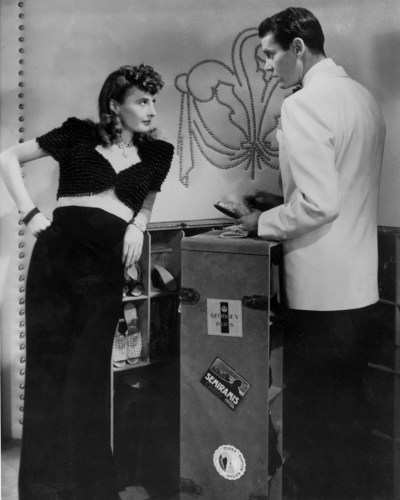
 

Barbara Stanwyck and Henry Fonda in "The Lady Eve," 1941. Costumes by Edith Head.

Barbara Stanwyck and Henry Fonda in “The Lady Eve,” 1941. Costumes by Edith Head.

Veronica Lake in "I Married a Witch," 1942. Costumes by Edith Head.

Veronica Lake in “I Married a Witch,” 1942. Costumes by Edith Head.
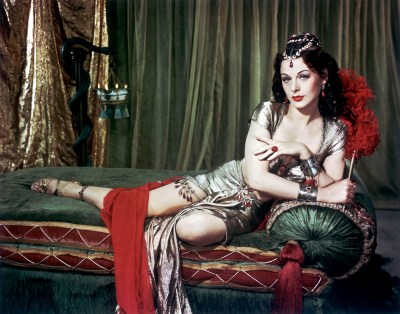
Hedy Lamarr in "Samson and Delilah," 1949. Costumes by Edith Head.

Hedy Lamarr in “Samson and Delilah,” 1949. Costumes by Edith Head.


Gloria Swanson in "Sunset Boulevard," 1950. Costumes by Edith Head.

Gloria Swanson in “Sunset Boulevard,” 1950. Costumes by Edith Head.

Elizabeth Taylor in "A Place in the Sun," 1951. Costumes by Edith Head.

Elizabeth Taylor in “A Place in the Sun,” 1951. Costumes by Edith Head.

Audrey Hepburn in "Roman Holiday," 1954. Costumes by Edith Head.

Audrey Hepburn in “Roman Holiday,” 1954. Costumes by Edith Head.
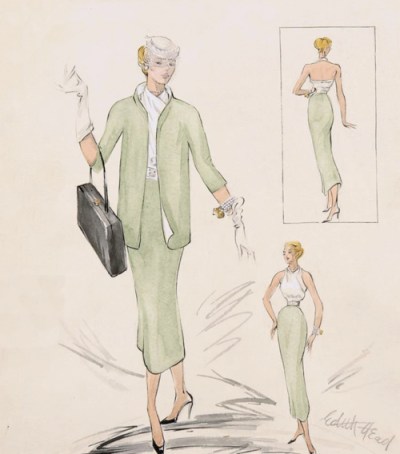
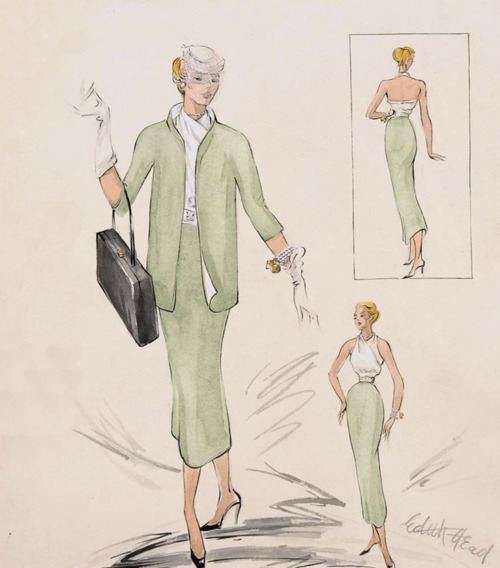
Edith Head sketch for Grace Kelly suit in "Rear Window," 1954

Edith Head sketch for Grace Kelly suit in “Rear Window,” 1954

Grace Kelly in "Rear Window," 1954, wearing green suit shown in above sketch. Costumes by Edith Head.

Grace Kelly in “Rear Window,” 1954, wearing green suit shown in above sketch. Costumes by Edith Head.

Shown here with costar Jimmy Stewart, Grace Kelly wears the green suit shown in the sketch above, sans jacket. "Rear Window," 1954.  Costumes by Edith Head.

Shown here with costar Jimmy Stewart, Grace Kelly wears the green suit shown in the sketch above, sans jacket. “Rear Window,” 1954. Costumes by Edith Head.

Sketch for evening gown by Edith Head for Grace Kelly in "Rear Window," 1954.

Sketch for evening gown by Edith Head for Grace Kelly in “Rear Window,” 1954.

From sketch above, Grace Kelly wears an evening gown from "Rear Window," 1954. Costumes by Edith Head.

From sketch above, Grace Kelly wears an evening gown from “Rear Window,” 1954. Costumes by Edith Head.
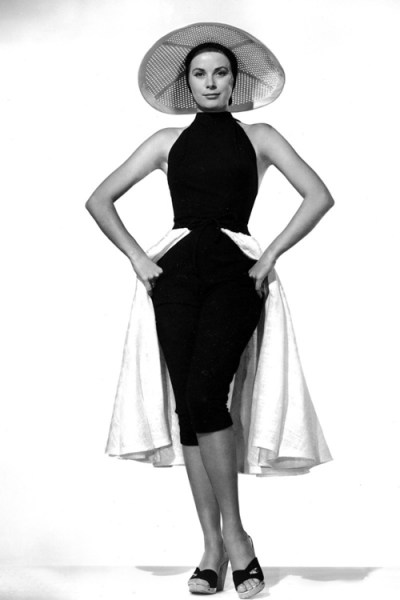
Grace Kelly models sunsuit from "To Catch a Thief," 1955. Costume by Edith Head.

Grace Kelly models sunsuit from “To Catch a Thief,” 1955. Costume by Edith Head.

Grace Kelly in "To Catch a Thief," 1955. Costumes by Edith Head.

Grace Kelly in “To Catch a Thief,” 1955. Costumes by Edith Head.

Grace Kelly in "To Catch a Thief," 1955. Costumes by Edith Head.

Grace Kelly in “To Catch a Thief,” 1955. Costumes by Edith Head.

Edith Head sketch for gold masquerade gown for Grace Kelly in "To Catch a Thief," 1955.

Edith Head sketch for gold masquerade gown for Grace Kelly in “To Catch a Thief,” 1955.

As in sketch above, Grace Kelly wears masquerade gown in "To Catch a Thief," 1955. Costumes by Edith Head.

As in sketch above, Grace Kelly wears masquerade gown in “To Catch a Thief,” 1955. Costumes by Edith Head.

Anne Baxter in Cecil B. DeMille's 1956 remake of "The Ten Commandments." Costumes by Edith Head.

Anne Baxter in Cecil B. DeMille’s 1956 remake of “The Ten Commandments.” Costumes by Edith Head.

Edith Head was awarded eight Oscars and was nominated 35 times for best costume design.

Legendary costume designer Edith Head (1897-1981) displays her 8 Oscar trophies. Originally, she wore blue tinted glasses because it allowed her to view fabrics as they would look in a black-and-white movie. Smoky lenses also made her inscrutable as well as disguising a slightly-crossed right eye. Undated photo

Legendary costume designer Edith Head (1897-1981) displays her 8 Oscar trophies. Originally, she wore blue tinted glasses because it allowed her to view fabrics as they would look in a black-and-white movie. Smoky lenses also made her inscrutable as well as disguising a slightly-crossed right eye. Undated photo

Her brilliant career, that began with a con, was marred by controversy. Often economical with the truth, she sometimes claimed credit for designs that were not her own. She accepted the Oscar for “Sabrina”(1955) although two gowns and one suit wore by Audrey Hepburn – the Parisian look that dominates the movie – were truly designed by then rising French designer Hubert de Givenchy.

Audrey Hepburn wears three dresses from the movie, "Sabrina," 1954. Edith Head designed the "Cinderella" clothes that Audrey's character wears before she travels to Paris. Upon her return, she wears a wardrobe designed by Hubert de Givenchy. Edith Head accepted the Academy Award for Best Costume Design and took credit for De Givenchy's work.

Audrey Hepburn wears three dresses from the movie, “Sabrina,” 1954. Edith Head designed the “Cinderella” clothes that Audrey’s character wears before she travels to Paris. Upon her return, she wears a wardrobe designed by Hubert de Givenchy. Edith Head accepted the Academy Award for Best Costume Design and took credit for De Givenchy’s work.

Edith said the Oscar belonged to her because the costumes had been made in her department. In her acceptance speech, she did not thank de Givenchy. Worse still, when the little black dress became enormously popular, copied by the thousands by clothing manufacturers, Edith made sketches of it for books and appearances and signed them with her name. (3) Only after Edith’s death did Givenchy, a true gentleman, confirm that the black cocktail dress with the bateau neckline and ballerina skirt was his original design, and had been made under Edith’s supervision at Paramount.The Sting movie poster

In 1974, Edith Head was awarded her eighth and final Oscar for her work in “The Sting,” starring Robert Redford and Paul Newman. In her trademark bangs, bun, and tinted owl glasses, Edith flitted happily onto the stage, trilling:

“Just imagine dressing the two handsomest men in the world, and then getting this!” she said, holding out her award.

Robert Redford and Paul Newman play ping pong. Undated photo.

Robert Redford and Paul Newman play ping pong. Undated photo.

She was promptly sued by a costume illustrator who said the work on “The Sting” was hers, not Edith’s. Famous designer Bob Mackie, Cher‘s favorite, who had also worked in the Paramount costume department, said of Edith:

She got more press out of The Sting than anything she ever did and she didn’t even do it.” (4)

(1) Greer, Howard. Designing Male: A Nebraska Farm Boy’s Adventures in Hollywood and with the International Set. G.P. Putnam’s Sons, 1951.

(2) Chierichetti, David. Edith Head: The Life and Times of Hollywood’s Celebrated Costume Designer. New York: HarperCollins Publishers, 2003.

(3) Head, Edith. The Dress Doctor. Boston: Little, Brown, 1959.

(4) Jorgensen, Jay. Edith Head: The Fifty Year Career of Hollywood’s Greatest Costume Designer. New York: Lifetime Media, 2010.

Readers, for more on Edith Head and her costume design, click here.

Read Full Post »

Richard Taylor and Elizabeth Burton. Undated photo

Richard Taylor and Elizabeth Burton. Undated photo

On July 4, 1973, American film actress Elizabeth Taylor (1932-2011) issued the following press release:

“I am convinced it would be a good and constructive idea if Richard [Burton] and I separated for a while. Maybe we loved each other too much. I never believed such a thing was possible. But we have been in each other’s pockets constantly, never being apart but for matters of life and death, and I believe it has caused a temporary breakdown of communication.

I believe with all my heart that the separation will ultimately bring us back to where we should be – and that’s together. I think in a few days’ time I shall return to California, because my mother is there, and I have old and true friends there, too.” (1)

Leaving Richard at the Long Island estate of his lawyer Aaron Frosch, Elizabeth checked out of her room at the Regency Hotel, Park Avenue, New York and flew to Los Angeles. She had to put distance between herself and Richard’s endless drinking, their endless quarreling. She hid from the paparazzi at the Hollywood home of her old and dear friend, Edith Head, the legendary fashion designer for Paramount Pictures. Upon Elizabeth’s arrival, “Edie” got out the bottle of Jack Daniels  for the two of them to share.

Elizabeth considered Edith to be like a second mother to her. Edith returned the affection. In her Spanish-style home in Coldwater Canyon that she shared with her husband Bill, she had placed a plaque at the bottom of the stairwell that read,

ELIZABETH TAYLOR SLEEPS HERE


Edith Head designed costumes at Paramount Pictures for 43 years. (1952)

Edith Head designed costumes at Paramount Pictures for 43 years. (1952)

Edith Head (1897-1981) had won one of her eight Oscars for best costume design for “A Place in the Sun” (1951) in which Elizabeth played socialite Angela Vickers. Taylor’s costumes were so beautiful in that film that they set fashion trends for prom and ball gowns that year. (2)

One evening gown, in particular, was a huge sensation and remains an iconic dress today. It was strapless, to show off Elizabeth’s gorgeous shoulders, which Edith considered one of her best assets, with a sweetheart neckline that showed just a trace of virginal décolletage.

An Edith Head sketch of Elizabeth Taylor's white tulle gown in "A Place in the Sun." (1952)

An Edith Head sketch of Elizabeth Taylor’s white tulle gown in “A Place in the Sun.” (1952)

The bodice was highlighted by clusters of tiny fabric violets. Below the nipped in waist, a full skirt erupted in countless yards of white tulle studded with white velvet violets. It was a flattering silhouette for Elizabeth who Edith considered “one of the prettiest human beings I’ve ever seen.”

Elizabeth Taylor and Montgomery Clift in "A Place in the Sun." (1952)

Elizabeth Taylor and Montgomery Clift in “A Place in the Sun.” (1952)

Eighteen years later, Elizabeth wore another of Edith’s designs to the 1970 Academy Awards, at which she presented the Best Picture Award to “Midnight Cowboy.” It was a chiffon dress – in violet, to match Elizabeth’s famous violet eyes – with a plunging V-neckline. Nestled in Elizabeth’s tanned cleavage was the famous 69-carat, pear-shaped Taylor-Burton diamond, a diamond as big as the Ritz that cost well over a million dollars. It was one of many outstanding pieces in the Elizabeth Taylor Jewelry Collection.

Richard Burton and Elizabeth Taylor arrive at the 1970 Academy Awards. Burton was nominated for Best Actor in "Anne of a Thousand Days" but did not win.

Richard Burton and Elizabeth Taylor arrive at the 1970 Academy Awards. Burton was nominated for Best Actor in “Anne of a Thousand Days” but did not win.

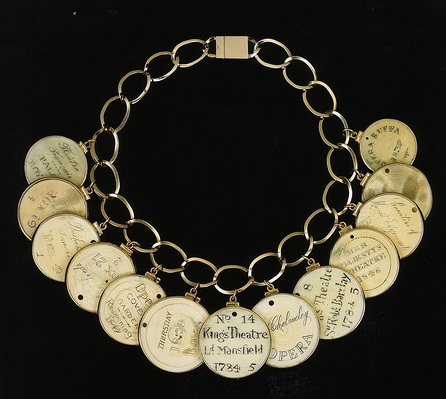
Elizabeth had a love affair with jewelry. She had long admired one piece that Edith Head often wore, a gold and ivory necklace made up of Victorian opera tokens.

Edith Head with sketch

Film costume designer Edith Head wearing her Victorian opera token necklace.

The Edith Head Necklace

The Edith Head Necklace

In 1981, Edith passed away, leaving her necklace to Elizabeth in her will.

E Taylor and e Head necklace

Elizabeth Taylor wears a Victorian opera token necklace of ivory and gold, a gift from her friend Edith Head. Undated photo

I had the opportunity to see the Edith Head Necklace in 2011 at the Christie’s auction of Elizabeth Taylor’s jewelry collection in New York. It was my favorite piece of all of Elizabeth’s jewelry. The necklace was estimated to sell at between $1,500 and $2,000, but it sold for $314,500!

(1) Kashner, Sam and Schoenberger, Nancy. Furious Love: Elizabeth Taylor, Richard Burton, and the Marriage of the Century. New York: HarperCollins Publishers, 2010.

(2) Jorgensen, Jay. Edith Head: The Fifty Year Career of Hollywood’s Greatest Costume Designer. New York: Lifetime Media, 2010.

Readers: For more on Elizabeth Taylor, click here. For more on Edith Head, click here.


Read Full Post »

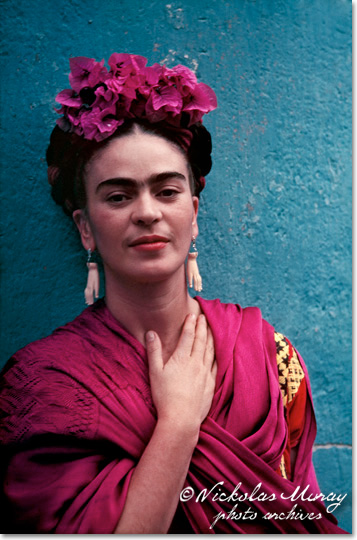
Frida Kahlo photographed by Nickolas Muray 1939. Friday wears ivory earrings given to her by artist Pablo Picasso.

Frida Kahlo photographed by Nickolas Muray outside her home, La Casa Azul, Coyoacán, Mexico. 1939

Because she was ill for so much of her adult life, artist Frida Kahlo (1907-1954) spent much of her time in bed. Her bedroom was upstairs in her home, La Casa Azul (The Blue House), in Coyoacán, outside Mexico City. As a result, her bedroom became her daily world. She gathered around her necessary things and things of beauty.

On the underside of the bed canopy a mirror was hung so that Frida could see herself. Lying in the bed, she could paint self-portraits using the wooden easel her mother gave her. Her paintbrushes, paints, and diary were nearby. She covered her headboard with photographs of loved ones and political idols: Marx, Engels, Lenin, Stalin, and Mao. In the bedroom were her toy collections, pre-Hispanic art pieces, Judas figures, and a diorama of mounted butterflies under glass. The room was fragrant with medicines and perfumes.

The room was both her haven and her prison.

Frida Kahlo's bed at La Casa Azul

Frida Kahlo’s bed at La Casa Azul


Frida Kahlo painting in bed. Undated photo

Frida Kahlo painting in bed. Undated photo

Source: Zamora, Martha. Frida Kahlo: The Brush of Anguish. San Francisco: Chronicle Books, 1990.

For more about Frida Kahlo, click here.

Read Full Post »

"My Fair Lady" soundtrack poster. Miss Hepburn wears the Ascot ensemble.

“My Fair Lady” soundtrack poster

On June 19, 2011,the Ascot dress and hat worn by Audrey Hepburn in the 1964 Academy Award-winning film, “My Fair Lady,” sold at auction for an incredible $3.7 million. The ensemble was designed by Cecil Beaton and was sold from the Debbie Reynolds Collection. Originally, the actress Debbie Reynolds paid $100,000 for the outfit.

Worn by Miss Hepburn in the most memorable scene in the film, it is perhaps the most famous garment ever designed for a motion picture and, most assuredly, Mr. Beaton’s magnum opus.

Art designer Cecil Beaton checks Audrey Hepburn's Ascot costume on the set of "My Fair Lady," 1963

Art designer Cecil Beaton checks Audrey Hepburn’s Ascot costume on the set of “My Fair Lady,” 1963


Cecil Beaton's sketch for Audrey Hepburn's Ascot costume, "My Fair Lady" (1964)

Cecil Beaton’s sketch for Audrey Hepburn’s Ascot costume, “My Fair Lady” (1964)

Audrey Hepburn as Eliza Doolittle at the Royal Ascot horse races. In the film, Eliza is every inch a refined English lady until the horserace tightens. Then she erupts in a stream of Cockney speech that threatens to blow her cover as a Covent Garden flower girl.

For more on Audrey Hepburn, click here.

Read Full Post »

Audrey Hepburn as Cockney flower seller in 1964 musical film, "My Fair Lady." Julie Andrews had played the lead in the Broadway play but producer Jack Warner wanted Audrey Hepburn as Eliza Doolittle for his film. Warner's film was to cost him $5 million. Audrey was well-known, talented, and her films never lost money. He wanted Audrey, not Julie. It caused quite a flap in the movie industry, with many feeling Julie Andrews should have had the role. Julie Andrew was then cast as Mary Poppins. That year, Audrey was snubbed at the Academy Awards, not even being nominated for her "My Fair Lady" performance. Julie Andrews won the Best Actress Oscar for "Mary Poppins."

Audrey Hepburn as Cockney flower seller in 1964 musical film, “My Fair Lady.” Julie Andrews had played the lead in the Broadway play but producer Jack Warner wanted Audrey Hepburn as Eliza Doolittle for his film. Warner’s film was to cost him $5 million. Audrey was well-known, talented, and her films never lost money. He wanted Audrey, not Julie. It caused quite a flap in the movie industry, with many feeling that singer Julie Andrews should have had the role. So Audrey was cast in “My Fair Lady.” Shortly Disney cast Julie Andrews in the musical spectacle, “Mary Poppins”. That year, Audrey was snubbed at the Academy Awards, not even being nominated for her “My Fair Lady” performance. Julie Andrews won the Best Actress Oscar for “Mary Poppins.”

In the 1964 Academy Award winning musical, “My Fair Lady,” linguistics professor Henry Higgins places a bet with his colleague Colonel Pickering. He boasts that, in six months time, he can transform a low-bred, disheveled Cockney flower seller named Eliza Doolittle into a duchess by teaching her to speak properly. Eliza is agreeable; she wants to speak better so she can get a job in a flower shop.

Eliza appears at Professor Higgins’ house to make arrangements for language lessons. Higgins’ housekeeper Mrs. Pearce escorts her into the library, where Higgins is discussing the possible experiment with Pickering.

Pickering: Won’t you sit down, Miss Doolittle?

Eliza (coyly): Oh, I don’t mind if I do. (She sits down on sofa.)

(Eliza offers to pay for voice lessons but Pickering wants to sponsor her.)

Eliza: Oh, you’re real good. Thank you, Captain.

Higgins (tempted, looking at her) It’s almost irresistible. She’s so deliciously low – so horribly dirty!

Eliza: Aoooow! I ain’t dirty: I washed my face and hands afore I come, I did.

Higgins: I’ll take it! I’ll make a duchess of this draggletailed gutter-snipe!

Eliza: Aoooooooow!

Higgins: (carried away): I’ll start today! Now! This moment! Take her away and clean her, Mrs. Pearce. Sandpaper if it won’t come off any other way. Is there a good fire in the kitchen?

Mrs. Pearce: Yes, but –

Higgins (storming on): Take all her clothes off and burn them. Ring up and order some new ones. Wrap her up in brown paper till they come.

Audrey Hepburn as Eliza Doolittle

Rex Harrison as Professor Henry Higgins

Wilfrid Hyde-White as Colonel Hugh Pickering

Mona Washbourne as Mrs. Pearce, Higgins’ housekeeper

Mrs. Pearce prepares the bath for Eliza.

Mrs. Pearce prepares the bath for Eliza.

Cecil Beaton, in charge of sets and costumes, recalls the day this scene was taped for “My Fair Lady”. He recalled it in his diary:

Wednesday, 21 August (1963)

…I wanted to congratulate Audrey (Hepburn) on her appearance, so went down on to the set for a word with her. I watched her being shot, listening to Higgins telling Pickering that, but for her appalling accent, Liza (sic: Eliza) could be passed off as a duchess. The play of expression on her face was such that one could almost see her brain at work with ideas that followed one another like a succession of pictures….

Thursday, 22 August (1963)

At lunch-time Audrey, wearing her dirty hair and face, came into my room to say ‘Ullow’. Every dawn Audrey has to have her hair covered with grease, then with a lot of brown Fuller’s Earth. The effect is really dirty, and psychologically must be very depressing. Tiring, too: it takes another hour to wash out the dirt before going home after the day’s shooting….

Audrey is remarkably disciplined: her memory never at fault, she appears on the set word  perfect, and she can give exactly the same performance over and over again. She confessed, however, that yesterday’s pea-shelling scene had been the greatest strain for she had to eat so many raw peas; at best, she does not care for them even when they are at their youngest and smallest, but having had to eat a bushel of huge Californian peas out of their inflated pods, she then went home to dinner and was served duck and green peas!

Tuesday, 27 August (1963)

On the set Audrey was still doing ‘Loverly’. Finding it difficult to work to different ‘play-backs’ she had been nervously taut most of the day. Now, by mid-afternoon, she was tired out. Her hairdresser was massaging the back of her neck: everyone sorry for her, and the atmosphere tense.

Cecil Beaton's costume design for character Eliza Doolittle in "My Fair Lady" musical film 1964

Cecil Beaton’s costume design for character Eliza Doolittle in “My Fair Lady” musical film 1964

Although Audrey practiced extensively to be able to sing in “My Fair Lady,” in the end it was decided that 90% of her vocal numbers would be dubbed with the voice of Marni Nixon. However, she did sing ‘Wouldn’t it be Loverly,’ shown in the following video:

For more on Audrey Hepburn, click here.

“My Fair Lady” movie trivia

“My Fair Lady” movie quotes


Read Full Post »

Audrey Hepburn 1953

Audrey Hepburn 1953

In 1954, British photographer and creative artist, Cecil Beaton, wrote this article for “Vogue” about a rising film star named Audrey Hepburn. Miss Hepburn was 25 and the newest sensation. She had just won the Academy Award for Best Actress for “Roman Holiday.”

It is always a dramatic moment when the Phoenix rises anew from its ashes. For if “queens have died young and fair,” they are also reborn, appearing in new guises which often create their own terms of appreciation. Even while the pessimists were predicting that no new feminine ideal could emerge from the aftermath of war, an authentic existentialist Galatea was being forged in the person of Miss Audrey Hepburn.

No one can doubt that Audrey Hepburn’s appearance succeeds because it embodies the spirit of today. She had, if you like, her prototypes in France – Damia, Edith Piaf, or Juliet Greco. But it took the rubble of Belgium [sicHolland] an English accent, and an American success to launch the striking personality that best exemplifies our new Zeitgeist [spirit of the age].

French waif

French waif

Nobody ever looked like her before World War II; it is doubtful if anybody ever did, unless it be those wild children of the French Revolution whose stride in the foreground of romantic canvases. Yet we recognize the rightness of this appearance in relation to our historical needs. And the proof is that thousands of imitations have appeared. The woods are full of emaciated young ladies with rat-nibbled hair and moon-pale faces.

Heron's eyes

Heron’s eyes

What does their paragon really look like? Audrey Hepburn has enormous heron’s eyes and dark eye-brows slanted towards the Far East. Her facial features show character rather than prettiness: the bridge of the nose seems almost too narrow to carry its length, which bares into a globular tip with nostrils startlingly like a duck’s bill. Her mouth is wide, with a cleft under the lower lip too deep for classical beauty, and the delicate chin appears even smaller by contrast with the exaggerated width of her jaw bones. Seen at the full, the outline of her face is perhaps too square; yet she intuitively tilts her head with a restless and perky asymmetry.

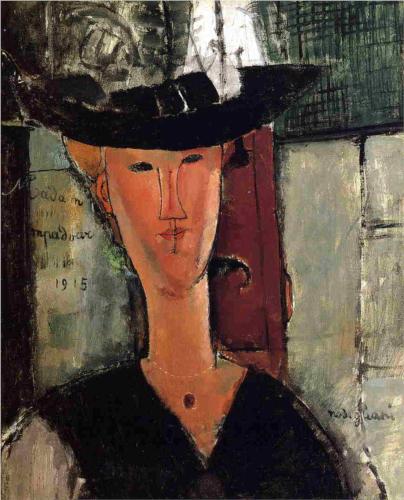
Madame Pompadour by Amedeo Modigliani, 1914.

Madame Pompadour by Amedeo Modigliani, 1914.

She is like a portrait by Modigliani where the various distortions are not only interesting in themselves but make a completely satisfying composite.

Beneath this child-like head (as compact as a coconut with its cropped hair and wispy monkey-fur fringe) is a long, incredibly slender and straight neck.

A rod-like back continues the vertical line of the nape, and she would appear exaggeratedly tall were it not for her natural grace.

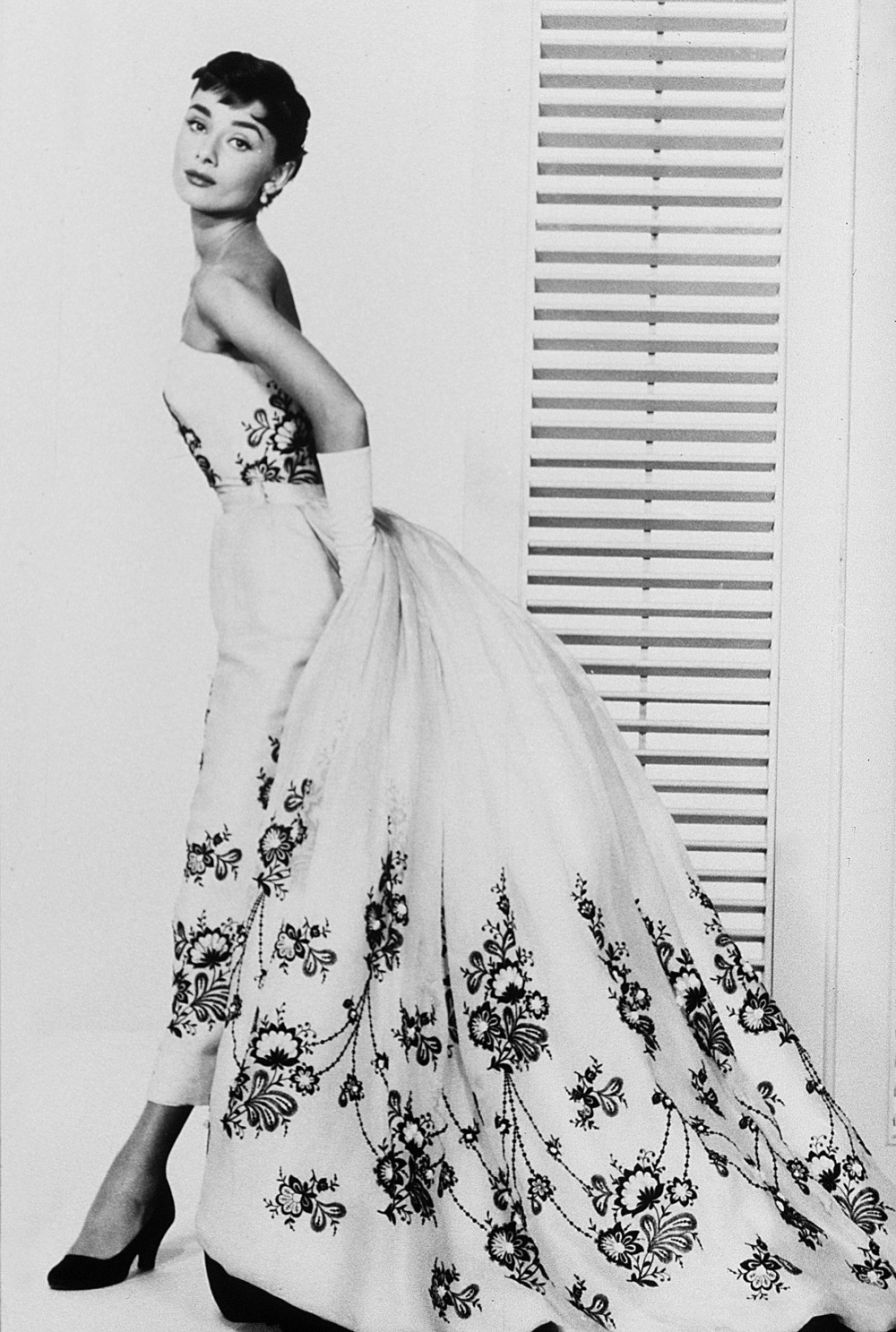
1954 Sabrina dress

Audrey appears in a Givenchy dress from the 1954 movie, “Sabrina.”

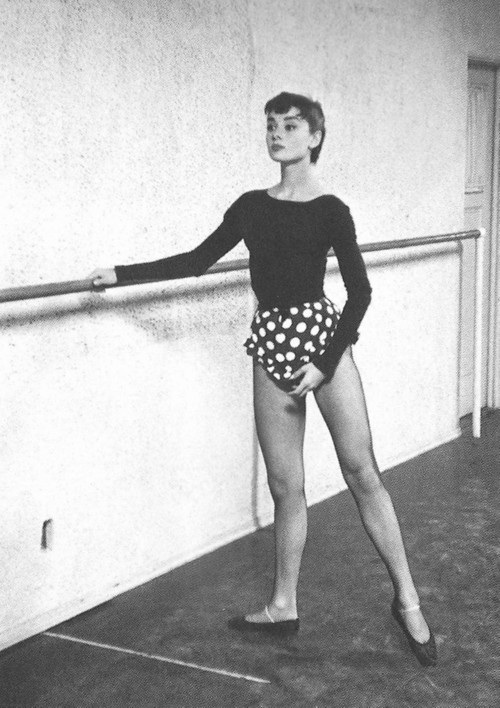
Audrey Hepburn’s stance is a combination of an ultra fashion plate and a ballet dancer. Indeed, she owes a large debt to the ballet for her bearing and abandon in movement, which yet suggest a personal quality, an angular kinship with cranes and storks. She can assume almost acrobatic poses, always maintaining an innate elegance in her incredibly lithe torso, long, flat waist, tapering fingers and endless legs.

Audrey Hepburn was an accomplished ballerina. Undated photo, ca. 1954

Audrey Hepburn was an accomplished ballerina. Undated photo, ca. 1954

With arms akimbo or behind her back, she habitually plants her feet wide apart–one heel dug deep with the toe pointing skywards. And it is more natural for her to squat cross-legged on the floor than to sit in a chair.

Fratellini Poster

Fratellini Poster

Like the natural artist that she is Audrey Hepburn is bold and sure in her effects. There is no lack of vigor in her rejection of the softly pretty. She wears no powder, so that her white skin has a bright sheen. Using a stick of grease paint with a deft stroke, she draws heavy bars of black upon her naturally full brows; and almost in Fratellini fashion, liberally smudges both upper and lower eyelids with black.

To complete the clown boldness, she enlarges her mouth even at the ends, thus making her smile expand to an enormous slice from Sambo’s watermelon. The general public, in its acceptance of such an uncompromisingly stark appearance, has radically forsaken the prettily romantic or pseudo-mysterious heroines of only two decades ago.

1953 Audrey Hepburn grins upon receiving her Oscar for "Roman Holiday."

1953 Audrey Hepburn grins upon receiving her Oscar for “Roman Holiday.”

In clothing, this ingénue Ichabod wears a “junior miss” version of highwayman coats, clergyman cassocks, or students’ pants, overalls, scarfs.

Audrey Hepburn in loafers and scarf. Undated photo

Audrey Hepburn in loafers and scarf. Undated photo

Yet she is infinitely more soignée than most students, possessing, in fact, an almost Oriental sense of the exquisite.

Audrey Hepburn in the 1954 film, "Sabrina."

Audrey Hepburn in the 1954 film, “Sabrina.”

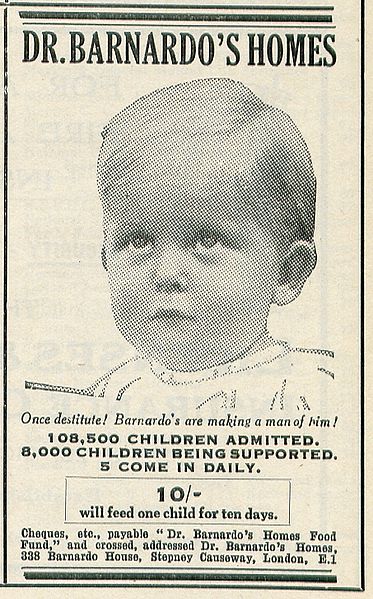
Barnardo's Boys were orphans

Barnardo’s Boys were orphans

And she is immaculately shod, whether in pumps, sandals, or court shoes. Audrey Hepburn is the gamine, the urchin, the lost Barnardo boy.

Audrey Hepburn from the 1954 film, "Sabrina"

Audrey Hepburn from the 1954 film, “Sabrina”

Sometimes she appears to be dangerously fatigued; already, at her lettuce age, there are apt to be shadows under the eyes, while her cheeks seem taut and pallid.

She is a wistful child of a war-chided era, and the shadow thrown across her youth underlines even more its precious evanescence. But if she can reflect sorrow, she seems also to enjoy the happiness life provides for her with such bounty.

It is a rare phenomenon to find a very young girl with such inherent “star quality.” As a result of her enormous success, Audrey Hepburn has already acquired the extra incandescent glow which comes as a result of being acclaimed, admired, and loved. Yet while developing her radiance, she has too much innate candor to take on that gloss of artificiality Hollywood is apt to demand of its queens.

Audrey Hepburn winks in sunlight. undated photo, ca. 1952

Audrey Hepburn winks in sunlight. undated photo, ca. 1952

Her voice is peculiarly personal. With its unaccustomed rhythm and sing-song cadence on a flat drawl, it has a quality of heartbreak. Though such a voice might easily become mannered, she spends much time in improving its musical range.

In fact, with the passing of every month, Audrey Hepburn increases in dramatic stature. Intelligent and alert, wistful but enthusiastic, frank yet tactful, assured without conceit and tender without sentimentality, she is the most promising theatrical talent to appear since the war. Add to this the remarkable distinction she emanates, and it is not rash to say she also gives every indication of being the most interesting public embodiment of our new feminine ideal.

US Vogue, November 01, 1954

 Click here for more on Audrey Hepburn.

Read Full Post »

About a month before doctors amputated her right leg at the knee, Frida Kahlo drew a picture of her severed feet on a pedestal. It is one of many diary entries in which she expresses her anguish at the impending operation. In public, though, she acted lighthearted, saying playfully to friends, "Did you know they are going to cut off my paw?"

From Frida Kahlo’s diary, “Why do I need feet if I have wings to fly.”

About a month before doctors amputated her right leg at the knee, Mexican artist Frida Kahlo drew a picture of her severed feet on a pedestal. Instead of healthy veins protruding from the amputated feet, dead, thorny vines snake out. The flesh is yellow, anemic, and the page is stained with her blood.

This is one of many diary entries in which Frida explores her anguish over the impending operation. She knew that she had no other choice but to cut off her leg. In truth, her right leg was skinny, crippled, shriveled, and lame. It hung from her body as if it were broken. Two toes were missing from the foot. The leg was infected with gangrene. It hurt her terribly.

Her husband Mexican muralist Diego Rivera urged her to accept her fate and submit to yet another operation. Maybe she would be able to get a good prosthetic leg, he urged, and walk a little.

For Diego’s sake, she said to the doctors,

“Prepare me for the operation!”

Then, putting on a brave face for her friends, she asked them, 

“Did you know they are going to cut off my paw?”

For more on Frida Kahlo on this blog, click here.

Herrera, Hayden. Frida: A Biography of Frida Kahlo. New York: HarperCollins Publishers, Inc., 1983.
The Diary of Frida Kahlo: An Intimate Self-Portrait. Introduction by Carlos Fuentes. Essays by Sarah M. Lowe. New York: Abradale, 1995.

Read Full Post »

From ABC News/Univision

Frida Kahlo’s Closet is Opened After 58 Years

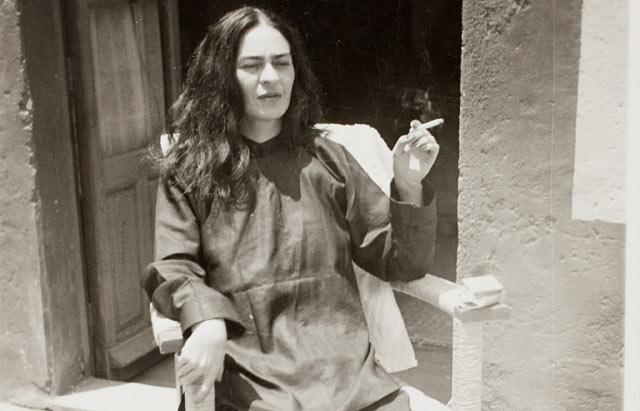
Frida Kahlo is seen smoking after a 1946 operation.

Frida Kahlo, wearing Chinese pajamas, is seen smoking after a 1946 operation.

“Imagine being in Frida Kahlo‘s childhood home and opening up a closet that has been locked for decades. Inside are hundreds of personal items – personal photographs, love letters, medications, jewelry, shoes, and clothing that still hold the smell of perfume and the last cigarette she smoked.

That is exactly what happened when Hilda Trujillo Soto, the director of the Frida Kahlo Museum opened the closets that had been locked since the Mexican artist’s death in 1954. Inside were over 300 items belonging to Frida Kahlo, and now, a wide array of what was found is on display at the Casa Azul, the Frida Kahlo Museum in the Coyoacán neighborhood of Mexico City.

The exterior of Frida Kahlo's home called Casa Azul outside Mexico City, 1952.

The exterior of Frida Kahlo’s home called Casa Azul outside Mexico City, 1952.

The exhibit, Appearances Can Be Deceiving: The Dresses of Frida Kahlo, a collaboration between the museum and Vogue Mexico, brings to an end an elaborate 50 year scheme to keep private the intimate details of Kahlo’s life. It started when she died in 1954, as a distraught Diego Rivera, the famous Mexican muralist and Frida Kahlo’s husband, locked the doors to her closet and never let anyone enter for fear that the contents would be mishandled and ruined.”

Kahlo contracted polio when she was six, leaving her right leg shorter and thinner than her left. Then, when she was 18, a metal tube pierced  through Frida’s abdomen during a bus crash, subjecting her to painful operations and  long periods of bed rest throughout her life.

In keeping with her flamboyance and ebullient spirit, Frida wore long, flowing tehuana skirts, lacy and colorful, that hid this affliction and celebrated her Mexican heritage.

frida-kahlo-dresses-on-display-exhibition-in-mexico-city

Frida Kahlo’s dresses in the Tehuantepec style are on exhibit in Mexico City at the Casa Azul, January 2013.

Frida Kahlo Self-Portrait, 1848, shows her dressed in traditional Tehuantepec costume.

Frida Kahlo Self-Portrait, 1848, shows her dressed in traditional Tehuantepec costume.

Later in life, Frida’s right leg had to be amputated. Included in the exhibit is a ornate red boot with the prosthetic leg Kahlo wore after the amputation.

Mexico Frida Fashion

A prostetic leg belonging to Mexican artist Frida Kahlo is on exhibit at the Casa Azul in Mexico City (Jan. 2013). Frida’s fashion sense combined both form and function – a red boot attached to an artificial leg. Frida Kahlo’s right leg was amputated in 1953 due to gangrene.

Also on view are three ornate corsets, one styled by Jean-Paul Gaultier in memory of Frida after her death. Frida had to wear plaster corsets to alleviate her excrutiating spine pain.

Frida Kahlo, 1941, displays her Communist sympathies with her therapeutic plaster chest cast

Frida Kahlo, 1941, displays her Communist sympathies with her therapeutic plaster chest cast

For more on Frida Kahlo on this blog, click here.

Read Full Post »
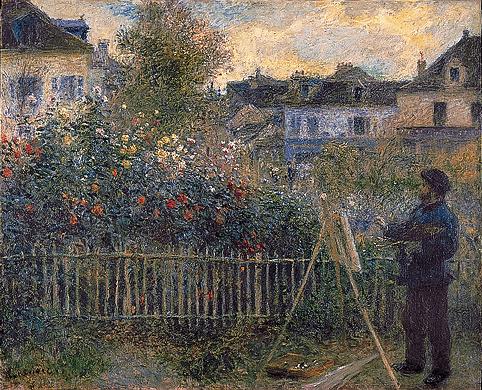
As a young man, French painter Claude Monet (1840-1926) abandoned the traditional approach to painting – standing in a studio, copying the old masters – in favor of painting scenes in the open air. Monet delighted in the interplay of color and light found in nature. He loved to paint in his garden at Argenteuil, a pretty, bustling village just outside of Paris.

"Monet Painting in His Argenteuil Garden," by Auguste Renoir, 1873

A spectacular stretch of the Seine, where the river reached its widest and deepest points, ran through Argenteuil.  Shortly after moving there in 1871, Monet bought a boat and converted it into a floating studio. He kept it moored near his home and used it to get a vista of the riverbank from the water.

"Claude Monet Painting on His Studio Boat," by Édouard Manet, 1874. The shadowy female figure sitting with the artist is his wife and model Camille Doncieux Monet.

Living with Monet at Argenteuil were his wife Camille Doncieux and their son Jean. Camille had been Monet’s model since they met in 1865. The couple lived in depressing poverty.

Claude Monet (1860) and wife Camille Doncieux Monet (undated)

Right up to her death, Camille posed for her husband’s paintings, more often than not, appearing as an indistinct female figure in a rural landscape.

"River Scene at Bennecourt," Claude Monet, 1868

Sometimes Camille has her back to the observer; othertimes her face is veiled or hidden.

"Camille on the Beach at Trouville," by Claude Monet, 1870

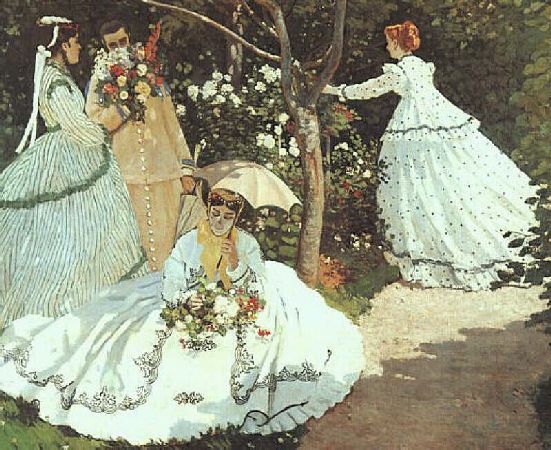
Camille was quite the devoted model. In Monet’s painting, “Women in a Garden” (1866-67), she posed for all four female figures!

"Women in a Garden," Claude Monet, 1866-67

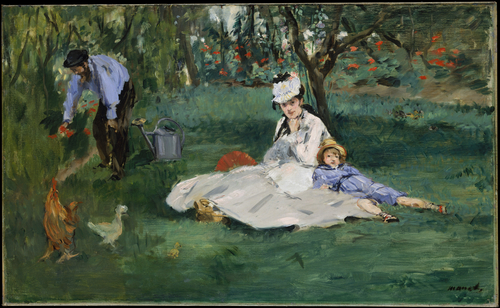
Camille was so cooperative that she freely posed for Monet’s painter friends, too.

"The Monet Family in Their Garden at Argenteuil," by Édouard Manet, 1874. Camille and son Jean relax while Claude Monet tends his garden.

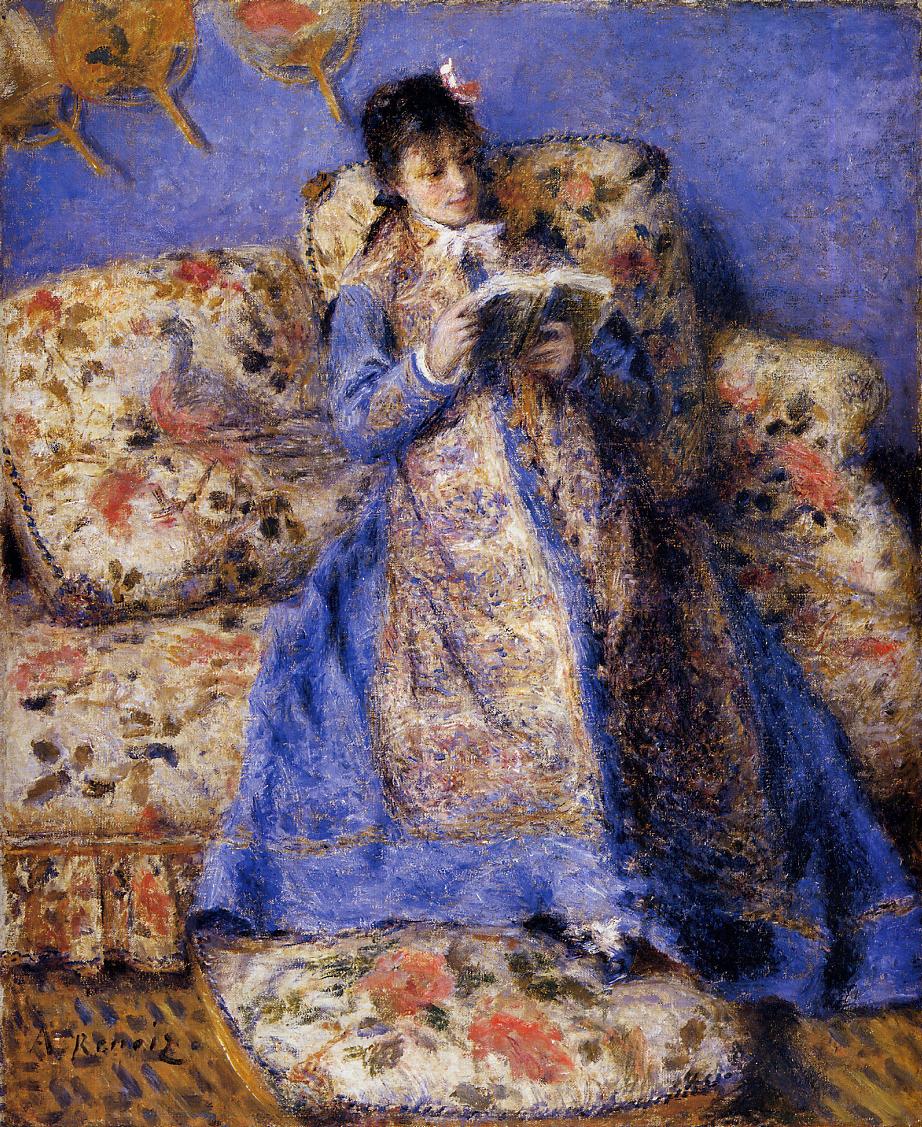
Auguste Renoir painted Madame Monet – known as “La Monette” – several times.

"Camille Monet Reading," by Auguste Renoir, 1872

Here is one of the rare times her husband paints her face clearly enough to distinguish her features, particularly her huge and sad-looking eyes. She often looks melancholy.

"The Bench," by Claude Monet, 1873

In 1876, Camille Monet fell ill with what is believed to have been cervical cancer. In “Camille Holding a Posy of Violets,” below, one can see the toll the disease has had on her health. She looks tired, older, and pale. It is speculated that her expression betrays her disgust with her husband who, by then, was openly carrying on a flirtation with their mutual friend, Alice Hoschede. Alice and her two children shared a house with the Monets.

"Camille Holding a Posy of Violets," or "Portrait," by Claude Monet, 1877

In 1878, Camille gave birth to a second son, Michel. Her health was dangerously weakened. Although Monet was not as attentive as he could have been to his wife, he loved Camille and was devastated that she was dying. For a time, he lost the desire to paint.

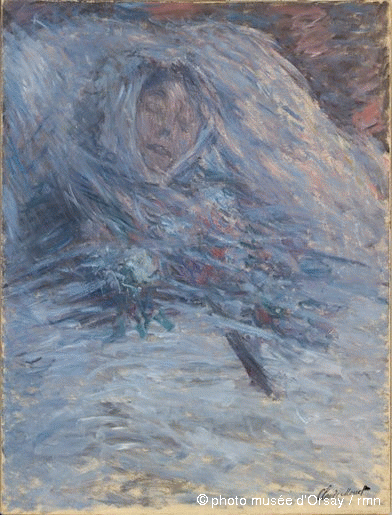
Finally Camille’s long suffering came to an end on September 5, 1879. Monet was grief-stricken. But even his internal pain could not stifle his passion to paint. Camille – his model-wife – was his muse, his inspiration to paint. At her deathbed, he took out his paints and painted her last portrait.

"Camille on her Deathbed," by Claude Monet, 1879

“I caught myself watching her tragic forehead,” Monet wrote afterwards to a friend, “almost mechanically observing the sequence of changing colours that death was imposing on her rigid face. Blue, yellow, grey and so on… my reflexes compelled me to take unconscious action in spite of myself.”

Little is known about Camille Doncieux Monet (1847-1879) mainly because Monet’s mistress and second wife, Alice Hoschede, was so jealous of Camille that she demanded that Monet destroy all mementos – letters, photos – anything – that attested to Camille’s very existence. (1)

(1) Gedo, Mary Mathews. Monet and His Muse: Camille Monet in the Artist’s Life. Chicago: University of Chicago Press, 2010.

Read Full Post »

« Newer Posts - Older Posts »