Feeds:
Posts
Comments

Archive for the ‘PEOPLE’ Category


Harriet Lane, the single (orphaned) niece of bachelor President James Buchanan, served as the “first lady of the land” during his presidency (1857-1861). She was an accomplished hostess and a fashion trendsetter. This marble portrait, by William Henry Rinehart, highlights Lane’s bare shoulders above a deeply plunging neckline, a style she made fashionable when she altered her inauguration ball gown by lowering it two full inches. She added a strip of lace at the neckline, which is called a “Bertha,” which became a fast fad.


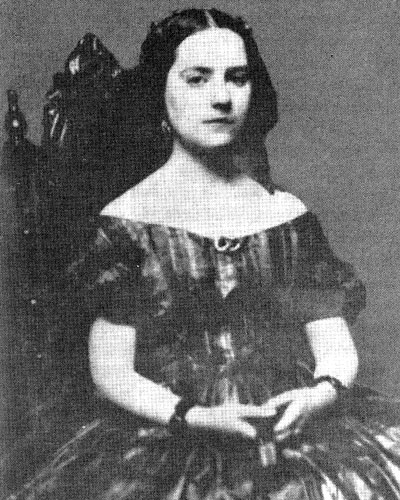
Harriet Lane (1830- 1903) in an 1860 photograph. She did not wear much jewelry or ruffles but was fond of floral headdresses and low necklines, that revealed her shoulders and toned arms.

Readers: I will be blogging about people from the American Civil War Era as I have written a new nonfiction history about those times, When People Were Things, to be published in late spring. Watch this space.

Read Full Post »

Readers: I will be blogging about people who appear in my upcoming book, When People Were Things, but include here different stories than are in the book.

Attack against Fort Sumter, 1861, Currier & Ives

On April 12, 1861, the South Carolina militia fired from shore on the Union garrison of Fort Sumter in the Charleston Harbor. The Battle of Fort Sumter were the first shots fired that sparked the Civil War. Days later, President Abraham Lincoln issued a proclamation calling for 75,000 militia men into national service for 90 days to put down the Southern insurrection.

The Northern response among the free states was wildly enthusiastic. War fever took hold. Whereas Lincoln has asked the Indiana governor for 6 regiments, the governor offered 12. At the onset of the war, Washingtonians bit their nails, so nakedly exposed to danger, as neighbor Virginia (to the west) joined the Confederacy and Marylanders (to the north and east) in Baltimore viciously attacked Union troops on their way to defend the federal capital.

The influx of the militia corps took the U.S. War Department by surprise. The new Union soldiers needed food, uniforms, mattresses, blankets, stove, cooking utensils, weapons, tents, knapsacks, overcoats, hammocks, bags, and cots on a massive scale.(1) For starters, where were the soldiers flooding into Washington, D.C. to camp? Massachusetts militia men, the first to arrive, found quarters in the Capitol, where the top of the unfinished wooden dome had been left off for ventilation  The men of the First Rhode Island Regiment found quarters inside the U.S. Patent Office, spreading their bunks beside the “cabinets of curiosities.” (2)

The Rhode Islanders sleep alongside models submitted with patent applications, causing much damage, and tremendous broken glass.

(1) Leech, Margaret. Reveille in Washington, 86.

(2) Ibid, 83.


Read Full Post »

This is what not vaccinating your child with M.M.R. will likely cause infection and a measles outbreak.

Immunologists and medical doctor Michael Mina have conducted research that reveals that measles destroys immune cells. People recovering from measles lose much of their immune memory. The protection they had acquired from previous infections of vaccines to other childhood illnesses is lost.

Dr. Mina compared the damage done to the immune system to the damage done by HIV:

“If you took all of the immunological memory that HIV tears down when it’s untreated for 5 to 10 years, that’s what you see after one measles infection,” Mina said.

Journalist Zeynep Tufekci states that

Some Americans live deep in echo chambers where most of what they hear about vaccines are lies and disdain. It won’t be possible to reverse all this quickly. Perhaps the best we can do is inform parents skeptical of vaccines what they’re risking, before it’s too late.

In Seminole, TX, every day, Dr. Wendell Parkey is confronted with vaccine skeptics who have chosen to not vaccinate their children. Seminole is at the center of the largest measles outbreak since 2019. Since the beginning of the year, more than 140 Texas residents, most who live in the surrounding Gaines County, have been diagnosed and 20 hospitalized. A child has died.

Dr. Parkey can detect measles in a patient before the telltale spots appear. Infected children have no affect and sit with a distant stare. As the illness progresses, the child’s eyes grow red and crusted and he will develop fever and a cough. The fever spikes and the rash would spread over his torso and thighs. The virus might migrate into his lungs and cause pneumonia and he might require an oxygen mask to breathe. Measles could invade his brain, cause swelling and convulsions, possibly blindness or deafness.

Once the virus infects someone, there is not treatment to stop it.

The measles virus is highly contagious. Measles spreads through microscopic droplets which can hang in the air for two hours. In order for a community to develop herd immunity, 95 % of the population must be vaccinated to stave off an outbreak. In Gaines County, the largest school district reported that just 82% of kindergartners received the M.M.R. vaccine in 2023. In one of the smaller school districts, less than half of the students got the shots.

U.S. Health and Human Services Secretary, Robert F. Kennedy, Jr., anti-vaxxer spokesman with no medical background, is recommending that the measles virus be treated with Vitamin A, which he believes will reduce mortality.

Read Full Post »

Readers: I will be blogging about people who appear in my upcoming book, When People Were Things, but include here different stories than are in the book.

The American Civil War (1861-1865)

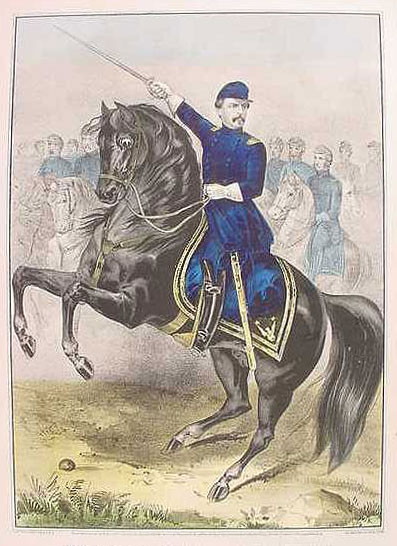
Following the Union defeat at Manassas (1st Bull Run), Virginia, in July 1861 to the Southern Confederate forces, President Abraham Lincoln understood that the disorder of the newly-formed troops had contributed to the debacle.  Lincoln wanted the Union army to be “constantly drilled, disciplined, and instructed.”(1) He sent a telegram to George McClellan, 34,—a West Point graduate, a distinguished veteran of the Mexican-American War, and fresh from having defeated a guerilla band in West Virginia, the only Union victory to date— to come at once to Washington City and take charge of the Army of the Potomac. As he traveled by special train to the capital, enthusiastic crowds heralded his passage along the way. The capture of Washington by rebel forces seemed imminent. Northern delusions of an easy victory vanished.

Major. Genl. George B. McClellan Lithograph, Currier & Ives, 1862.

Within days of McClellan’s arrival, Washington achieved a “more martial look.” (2) McClellan had managed to instill more confidence in the demoralized troops who had retreated in disarray from Bull Run. The soldiers adored “Little Mac.” Drunken soldiers no longer loitered in bars and streets. McClellan wrote to his wife,

I find myself in a new and strange position here: President, cabinet, Gen. Scott, and all deferring to me….I seem to have become the power of the land. I almost think that were I to win some small success now, I could become Dictator…. (3)

Major General George McClellan and his Wife, Ellen Mary Marcy (Nelly), ca. 1860-65.

McClellan disagreed with General Winfield Scott who wanted to attack the enemy in different theaters of war. McClellan believed that he could put an end to the war by concentrated overwhelming forces on Virginia. Summer gave way to fall. Indeed, McClellan had turned the recruits into soldiers and created a powerful army.

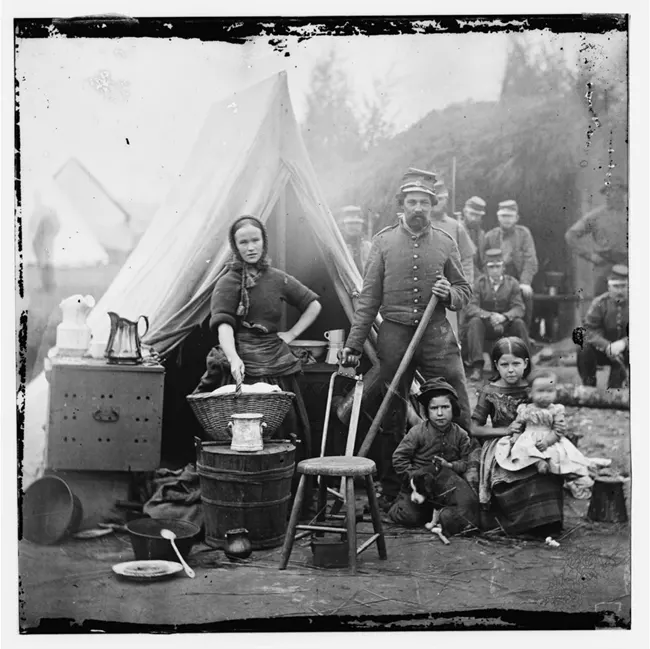
In the early months of the war, women worked as laundresses and cooks while the volunteer soldiers drilled and constructed the Defenses of Washington. TITLE: “Washington, District of Columbia. Tent life of the 31st Penn. Inf. (later, 82d Penn. Inf.) at Queen’s farm, vicinity of Fort Bunker Hill.” Library of Congress

While McClellan conducted magnificent reviews in the capital of more than fifty thousand troops marching in straight and orderly columns, and boasted great military plans, he did not seem willing to lead his army anywhere. He was weighed down by fear while the Confederates were bolstered by optimism from their Manassas victory. Congress and Washingtonians grew restless with McClellan’s delay in avenging Bull Run.

This sketch shows a panoramic view of the Grand Review of the Union Army. The illustration appeared in the 7 December 1861 issue of Harper’s Weekly, which claimed that the artist sketched the review while perched on the roof of a barn.

Accustomed to success and thus fearful of failure, McClellan did not want to move; his constant complaint was that he did not have enough troops. Allan Pinkerton, his secret operative, fed his insecurity. Pinkerton provided “Little Mac” with the faulty intelligence that the enemy had at least 150,000 men within striking distance of the capital. McClellan said he would not move until he had 270,000 men of his own. In truth, in October 1861, McClellan had 120,000 men while rebels in and near Manassas had only 45,000. (4) In September, when Confederate pickets withdrew from their position a few miles southwest of Washington on Munson’s Hill, Federal troops discovered that the great cannon they had believed was trained on the capital was nothing but a giant log shaped and painted to resemble a cannon. This “Quaker gun” embarrassed McClellan. Calls for his dismissal intensified.

Confederate “Quaker Guns,” Manassas, Va., 1862

(1) Goodwin, Doris Kearns. Team of Rivals, 373.

(2) Ibid, 378.

(3) Ward, Geoffrey. The Civil War, An Illustrated History, p. 75

(4) MacPherson, James. Battle Cry of Freedom, 360-361.

Readers: Please check this space for when my new book, When People Were Things, is available. Please read it.

Read Full Post »

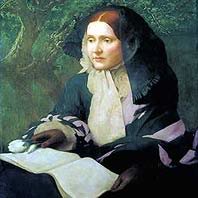
Readers: Although Julia Ward Howe is not mentioned in my soon-to-be-published history, When People Were Things, her husband is. Although Julia’s Civil War activism is not included in the book, I want to give you a snippet view here.

Julia Ward Howe (1819-1910)

Portrait of Julia Ward Howe, by John Elliott, ca. 1925. National Portrait Gallery/Wikimedia Commons

In 1843, red-haired New York heiress Julia Ward married Dr. Samuel Gridley Howe who had founded the Perkins School for the Blind. She was 24; he was 42. Julia gave birth to their first child while they honeymooned in Europe. She called her husband, “Chev.” They had six children and lived in Boston and Rhode Island. Theirs was not a happy union. Chev disapproved of Julia’s writing and did all he could to thwart it. In 1853, she published her first volume of poetry, Passion-Flowers, anonymously and without her husband’s knowledge. She continued to publish works that often critiqued women’s roles in marriages and society and caused controversy. Her husband was troubled by her writing as it often contained pointed references to her unhappy and stultifying marriage. He did not approve of women having a career outside the home.

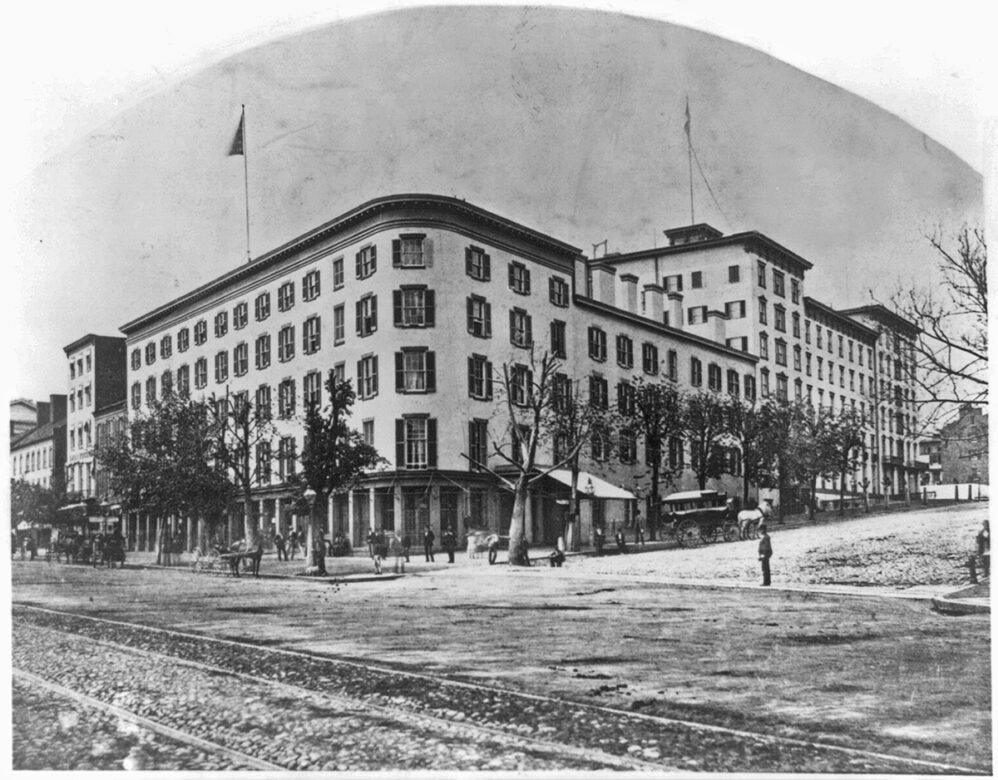
In November 1861, the first year of Abraham Lincoln’s presidency and while the Civil War was raging, Julia and Chev traveled to Washington and met Abraham Lincoln,  who, Julia wrote, “was laboring…under a terrible pressure of doubt and anxiety.” Dr. Howe was on the board of the U.S. Sanitary Commission that supported wounded and sick soldiers; during his stay, he would meet with the USSC founder Dorothea Dix. The Howes lodged at Willard’s Hotel on Pennsylvania Avenue.

The Willard Hotel in Washington, D.C., during the Civil War Years, Library of Congress

From their room, Julia saw a billboard advertisement for “an agency for embalming and forwarding the bodies of those who had fallen in the fight or who had perished by fever.”  This image stayed with her.

On a visit to the huge military camps stationed in the national capital, she heard soldiers singing the song, “John Brown’ Body,” originally about a Scotsman but had taken on new meaning in reference to the insurrectionist at Harper’s Ferry. New verses were often being added:

Old John Brown’s body is a-mouldering in the dust,
Old John Brown’s rifle is red with blood-spots turned to rust,
Old John Brown’s pike has made its last, unflinching thrust,
His soul is marching on!

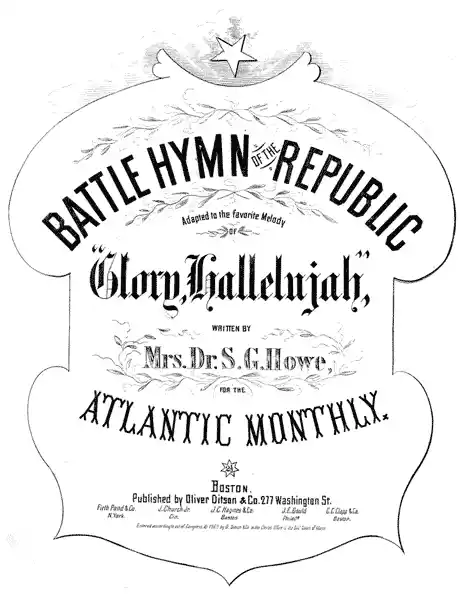
A friend urged Julia to write “some good words for that stirring tune.” That evening, she tried, but the words did not come to her. The next morning at the graying first light, she woke up in her bed at Willard’s and the words of the poem began to flow. She jumped up, grabbed paper and an old stump of a pencil, and scrawled down the words without even looking down at the paper, then fell back to sleep. This is how “The Battle Hymn of the Republic” was born, which she sold to the Atlantic Monthly for $4 in February. Her version links the Union cause to God’s vengeance at the Day of Judgment.

Here are some verses from the first published version:

Mine eyes have seen the glory of the coming of the Lord,
He is trampling out the vintage where the grapes of wrath are stored;
He hath loosed the fateful lightning of His terrible swift sword:
His truth is marching on.

(Chorus)
Glory, glory, hallelujah!
His truth is marching on.

I have seen Him in the watch-fires of a hundred circling camps,
They have builded Him an altar in the evening dews and damps;
I can read His righteous sentence by the dim and flaring lamps:
His day is marching on.

(Chorus)
Glory, glory, hallelujah!
His truth is marching on.

Before long, the song caught on and became the favorite of the Union troops and its unofficial wartime anthem. Julia Ward Howe became somewhat of a celebrity and became a suffragist.


Read Full Post »

Readers:  For a time, I will be blogging about people to be featured in my soon-to-be-published book, When People Were Things: Harriet Beecher Stowe, Abraham Lincoln, and the Emancipation Proclamation. Today Clara Barton, Civil War Nurse, is featured. I promise not to include book spoilers!

Clara Barton, ca. 1850

After a decade of teaching in Massachusetts, Clara Barton moved to New York for a year to study at the Clinton Liberal Institute. In 1851, she took a teaching job in Hightstown, New Jersey, at Cedarville School, where her pay was $2 per student for each eleven-week session. New Jersey offered no public education.

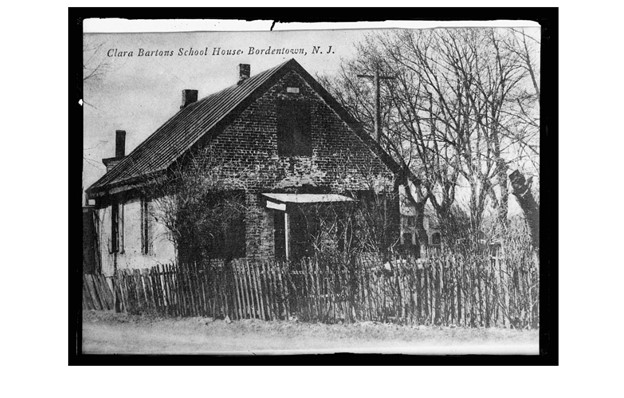
Clara began campaigning for public education in New Jersey. She successfully lobbied the Trenton officials and obtained a building and the funds to run a public school in Bordentown as a pilot project. In one year, the program proved to be such a success that local leaders looked to hiring a principal. Instead of hiring Clara, though, they appointed a man who had came from another place.

Clara Barton’s public school in Bordentown, New Jersey.

In 1854, Clara resigned. She became so distressed at having been passed over for the principalship that she became very ill and was unable to speak or to work. Finally, Clara and another teacher left New Jersey and boarded a train to Washington to find work as governesses.

Clara networked. She met with her Massachusetts congressman, Alexander De Witt, who was also a distant cousin. De Witt then introduced her to Charles Mason, the Commissioner of Patents. Mason wanted to hire Clara to go to Iowa to be the governess to his daughter. But De Witt saw enormous potential in Clara and urged Mason to hire Clara to work in the Patent office as a recording clerk. She was hired. Clara then became one of the first women to work for the federal government.

The Patent Office, Washington, D.C. c. 1855, Edward Sachse & Co. chromolithograph. From the original in the National Portrait Gallery, Smithsonian Institution. Halfway situated between the Capitol and the White House, the Patent Office, built in the Greek Revival Style, took 31 years to build. U.S. Patent law required inventors to submit scale models of their inventions, which were retained by the Patent Office and required housing.

The Patent Office, Washington, D.C. c. 1855, Edward Sachse & Co. chromolithograph. From the original in the National Portrait Gallery, Smithsonian Institution. Halfway situated between the Capitol and the White House, the Patent Office, built in the Greek Revival Style, took 31 years to build. U.S. Patent law required inventors to submit scale models of their inventions, which were retained by the Patent Office and required housing. Before the Civil War, the Patent Office was a popular tourist destination.

Clara’s job at the Patent Office meant copying volumes of technical legal text with pen and ink. She had beautiful penmanship and a strong work ethic so she was up to the task. As if this work was not tedious enough, she had to contend with some male colleagues who resented what they perceived as her intrusion into their masculine domain.  As she walked to and from her desk, they would spit tobacco juice at her and her skirts, make lewd remarks, and puff cigar smoke in her face. Nevertheless, Clara soldiered on.

Examiners working at the Patent Office.

Despite her fortitude, these men succeeded in forcing her from the workplace. She was reassigned to work from her boardinghouse room, by candlelight, at lesser pay. In 1857, President Buchanan was inaugurated and she lost her clerkship, but, for a time, she had made the same yearly salary as the men.

She returned to Massachusetts for three years. But she was not done with Washington, D.C.

Readers: Stay tuned to this space. My new book, When People Were Things will be available for purchase later this spring. Please read it. 

Read Full Post »

Readers:  For a time, I will be blogging about people who appear in my soon-to-be-published nonfiction history, When People Were Things: Harriet Beecher Stowe, Abraham Lincoln, and the Emancipation Proclamation. Today, General McClellan, Abraham Lincoln, and two of Lincoln’s cabinet secretaries are featured. I promise not to include book spoilers.

Lincoln told a colleague, “I wish McClellan would go at the enemy with something – I don’t care what. General McClellan is a pleasant and scholarly gentleman. He is an admirable engineer, but he seems to have a special talent for a stationary engine.”

It is spring 1862, the second year of the American Civil War. Although General George McClellan, leader of the Union Army of the Potomac, had finally moved his troops out of his Washington, D.C., camp, he had stalled out on the Virginia Peninsula. Procrastination was his custom and he had endless excuses to offer for his delay tactics. He heaped blame on President Abraham Lincoln for not supplying him with enough troops as McClellan falsely believed he was outnumbered by the rebels. Lincoln was frustrated with McClellan’s chronic inaction, as McClellan delayed moving his troops toward the Confederate capital of Richmond and attacking and bringing the war to a swift end.
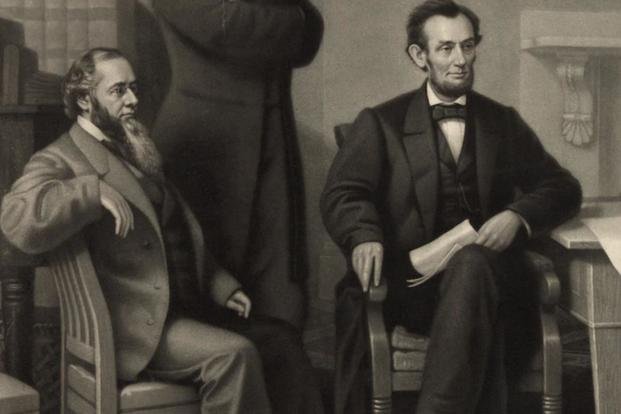
At left, Secretary of War Edwin Stanton sits with President Abraham Lincoln (Library of Congress)

Secretary of War Edwin Stanton suggested that President Lincoln take a trip to the Virginia Peninsula, to Fort Monroe, to prod General McClellan to act. On the evening of May 5, 1862, Lincoln, Treasury Secretary Salmon P. Chase, and Stanton, accompanied by General Egbert Viele, boarded the new Treasury Department cutter, the Miami, and began the twenty-seven-hour journey, sailing down the Potomac, and into the Chesapeake Bay.

The next day, the bay water was so choppy that the noontime meal was fatally disrupted. Lincoln was too miserable to eat, did not stay at the table, and stretched himself out elsewhere. The others in the party tried to enjoy the meal elaborately planned by the host, Chase, and served by his butler, but Chase wrote his daughter, Nettie:

“[T]he plates slipped this way and that, the glasses tumbled over and rolled about, and the whole table seemed as topsy-turvy as if some spiritualist were operating upon it.”

They reached Fort Monroe at about nine o’clock that night. Stanton sent a telegram to McClellan who was only a few miles away and suggested he join them for a conference. McClellan declined. Stanton was not a military man; he like Lincoln, was a lawyer. McClellan had no respect for either of them. McClellan regularly disregarded them.

Lincoln quickly turned his attention to another matter of concern.

Union forces at Fort Monroe occupied the Northern shore of Hampton Roads, a body of water that serves as a wide channel which connects the Chesapeake Bay to three rivers. On the Southern shore, Confederates still held Norfolk and the Navy Yard. The powerful ironclad nine-gun Merrimac (renamed by the Confederates, the Virginia) was docked at the Navy Yard.

CSS Virginia (the Union Merrimac or Merrimack) was the first ironclad warship constructed by the Confederate States Navy during the American Civil War. It was built from the remains of the former steam frigate the USS Merrimack.

Back in March 1862, in a span of five hours, this former Union ship had sunk, captured, and incapacitated five Union vessels in what was known as the Battle of Hampton Roads or the Battle between the ironclads, the Monitor and the Merrimac(k).

March 1862. The Battle of Hampton Roads: Print shows a battle scene between the ironclads Monitor and Merrimac just offshore, also shows a Union ship sinking and rescue boats being put to sea from shore, as well as a Union artillery bunker, Union soldiers and officers, and some rescued sailors. The 3-hour battle between the two ironclads was indecisive. (Library of Congress)

Lincoln feared that the Merrimac would one day sail up the Potomac and attack Washington, the capital of the Union. Lincoln and his advisors pored over maps of the area. The men could not understand why McClellan had not ordered an attack on Norfolk and captured it. Norfolk was wide open. Confederates had left both the city and the Navy Yard vulnerable. Lincoln and his mini-war cabinet planned an assault on that key port to be made by General Wool’s forces.
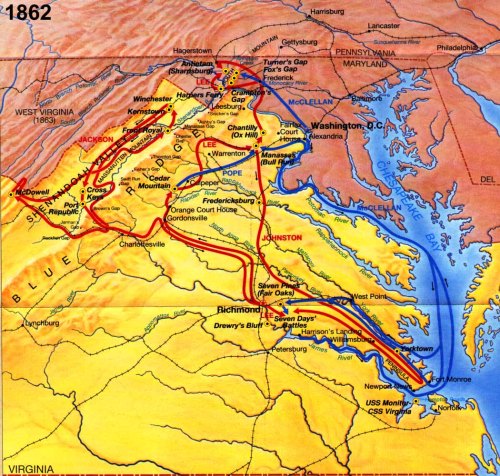
Although this map shows a lot of info, you can pick out Fort Monroe, Washington, D.C., the Potomac River, Richmond, and Norfolk, Va. The Confederate and Union capitals were only about 100 miles apart.

On the afternoon of May 7, at Lincoln’s suggestion, several Union warships began the shelling of the rebel guns at Sewell’s Point near Norfolk. Upon learning that the rebels were abandoning Norfolk, Lincoln decided to plan its capture.

Lincoln, Chase, and Stanton surveyed the shoreline seeking a good place for the troops to land. Lincoln went ashore in a rowboat, walked around on enemy soil under a full moon, putting himself in danger of being fired upon, and then returned to the Miami. Chase was antsy for an immediate attack. He was worried that McClellan might show up and delay it!

When the convoys landed on the sandy beach the next night (at the landing Chase and Wool had selected), they found that the rebels had evacuated the city and scuttled the Merrimac. The city authorities formally surrendered the city to the Union forces and Wool appointed Viele as the city’s military governor.

In a letter to his daughter, Chase praised the President for the capture of the strategic port city and the vanquishing of the Merrimac. The egoistic McClellan, however, wrote falsely to his wife, “Norfolk is in our possession, the result of my movements.”

Readers: Later this spring my new book, WHEN PEOPLE WERE THINGS: HARRIET BEECHER STOWE, ABRAHAM LINCOLN, AND THE EMANCIPATION PROCLAMATION, will be published. Please read it.

Read Full Post »

More from the Archives

Read Full Post »

COMING SPRING 2025

Readers, if you would like to receive an e-galley of an advanced review copy, reach out to me in the comments section and i will provide you with an email to write me. Lisa

Read Full Post »

Read Full Post »

Charles Dickens (aged 30). This portrait of Charles Dickens was painted by the American artist Francis Alexander (1800-1880) early in 1842, shortly after Dickens arrived in Boston at the start of his first visit to North America.

After returning from his 1842 visit to America, Charles Dickens (1812-1870) read a disturbing government report on child labor in the United Kingdom titled the Report of the Children’s Employment Commission. He read testimonies of little girls working as seamstresses, six hours a day, six days a week, and rooming above the factory floor. Girls told of dragging coal carts through tight underground passages over eleven-hour days.

A child laborer known as a “hurrier” is shown harnessed to a coal corve. Hurriers were required to drag an empty coal cart down from the shaft bottom along passageways between 24 to 30 inches high and return with a full load from the coal face. One child would be harnessed to the front of the corve, while another would follow behind, pushing the load with their hands and their heads. Most hurriers would have large septic calluses on their legs, hands and knees and many were bald as a result of pushing corves up steep inclines with their heads. Their bodies were often ‘old’ and broken before they reached adulthood.

Factory bosses used children to climb into the insides of industrial machinery to clear a jam, sometimes with fatal consequences. These were not isolated incidents but common. Families were poor and hungry and they took what work they could find, even if it meant sending a child as young as five to work.

Dickens at the Blacking Warehouse, From a drawing by Fred Bernard. Reproduced in “The Dickens Country” by kind permission of Messrs. Chapman and Hall

It is believed that, at the age of twelve,  Charles Dickens had been forced to drop out of school, sell his books, and go to work at the dirty, rat-infested Warren’s Blacking Warehouse, a shoe polish factory, near Charing Cross leading from the Strand to the Thames, where Charles typed up and labeled countless pots of shoe-blacking. Dickens’ father was locked up in a debtors’ prison, taking with him his wife and youngest children, and young Charles was expected to support his family at this grinding toil.  The pay was meager, only a few shillings a week. Young Dickens worked ten-hour days and saw his family only on Sundays. This he endured for three years, a most painful episode in his young life.

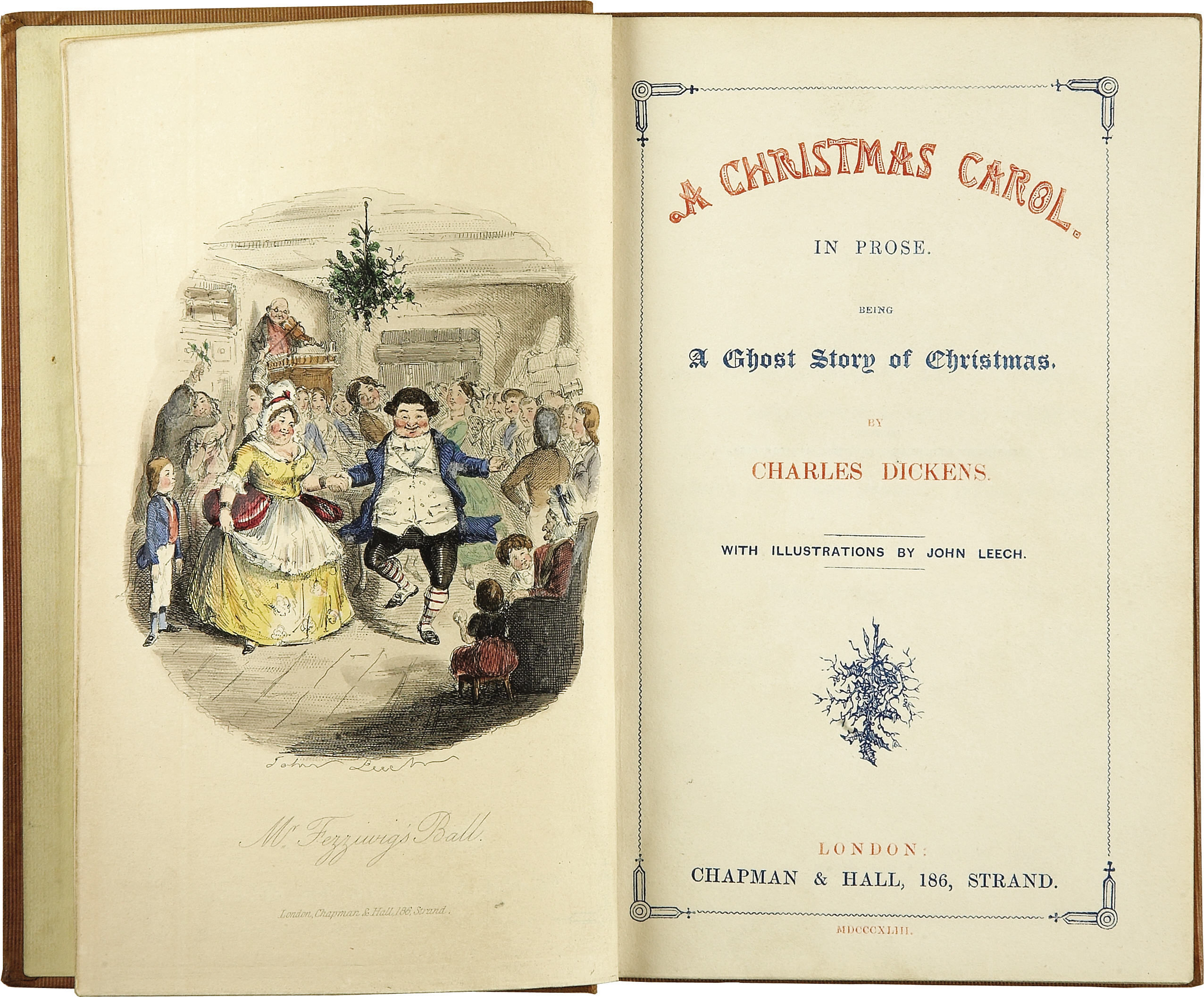
Influenced by his youth and a recent visit to the Field Lane Ragged School for street children, Dickens decided to shine a light on uneven workforce wages by writing a novella. The story came to him over six weeks as he took his nighttime strolls through London, walking fifteen or twenty miles a night, sometimes weeping, sometimes laughing. The result was a masterpiece called A Christmas Carol, published on December 19, 1843, a morality tale pointing out the benefits of compassion and the terrible cost of miserliness. In one scene, men and women, bosses and workers, young and old, dance and drink merrily, feast, and celebrate the joys of Christmas together. The book was a runaway bestseller.


John Leech, Public domain, via Wikimedia Commons

Readers: For more on Charles Dickens, click here.

Read Full Post »

Mary Todd Lincoln, ca. 1861

When Mary and Abraham Lincoln moved into the White House in 1861, Mary was 42 years old, a time when women her age dressed in somber grays, dull browns, and boring blues. But not Mary Todd Lincoln. For her, expensive clothes were a mark of importance, of breeding. She proceeded to dress like a peacock, draping herself in bold blues, crimson, yellow, and royal purple, attracting a lot of unwanted attention and sparking criticism from the Washington social elite. Brought up among the overdressed ladies of Kentucky, her gowns and bonnets were ornamented with flowers, lace, dots, and bows sewn on yards of velvet, taffeta, and silk at a time of war when soldiers were going without blankets. Mary took her fashion cues from Eugenie, Empress of France, whose parties and clothes appeared in line drawings and detailed descriptions in one of Mary’s favorite magazines, Godey’s Lady’s Book. She was admonished for wearing low-necked dresses that revealed her “milking apparatus,” said one critic, and for the “flower beds which she carries on top of her head,” said another. A petite woman, the bell-shaped dresses overwhelmed her; hoops made her look shorter and squat.

Buoyed by a grandiose sense of self-importance coupled with her new position as the president’s wife, Mary demanded what she wanted. She expected everyone to do her bidding. She was surprised when clothing merchants sent her bills. The line between purchase and donation was fuzzy. Mary looked for donors to buy her gowns and hats, rewarding them with political favors. When she blew her four-year budget for White House renovations in under a year, she contrived several plots to secretly defray her debt. In one instance, she persuaded the White House gardener to sell manure from the stables at ten cents a wagonload. It raised more stink than cash. Her spending eventually came to light and became a national scandal. Lincoln was mortified and had to deal with it, all the while referring to it benignly as his beloved Mary’s silly “flub-a-dub.”

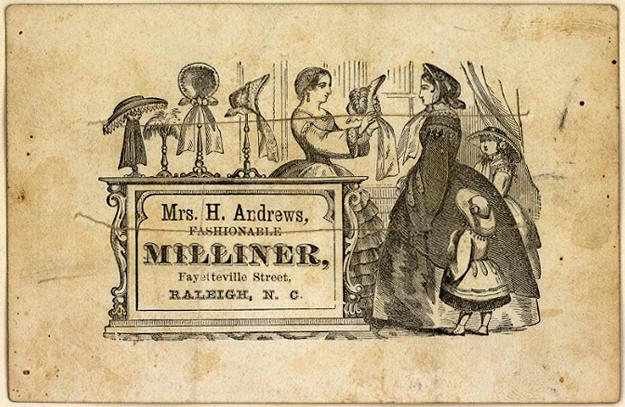
Willian's of Pennsylvania Avenue, Washington's best known milliner at the time, made Mary Todd Lincoln's bonnets. Unfortunately, he also made bonnets for Mrs. Horatio Taft.

Now, back to what we were saying about Mary and her clothing:

It was an April evening in 1861. The Marine Band was playing a concert on the White House lawn. Mary and President Lincoln had invited many guests, among them Mary Cook Taft, wife of Horatio Taft, an examiner at the U.S. Patent Office. Mary Taft was wearing a delicate straw bonnet lavishly trimmed with pretty purple ribbons embroidered with little black figures. The bonnet had long strings which tied beneath her chin in a bow. Mary Taft’s teenage daughter, Julia, accompanied her to the promenade grounds that day and vividly recalled their costumes:

“My mother, of course, wore the bonnet, together with a purple and white silk over a moderate crinoline, and lavender kid gloves. I was dressed in white Swiss, much beruffled, but without hoop skirt or crinoline, which was an abiding grievance with me. But my hat…was very gratifying and almost compensated for the lack of crinoline.”

Women’s Fashions 1860

Mary and Julia walked around mingling with the other guests while the band played on. The national anthem brought those in chairs to their feet, men doffing their hats, and all standing in patriotic attention. At the close of the concert, the Taft women walked over to the south front where the presidential party was sitting, to pay their respects. Mary Lincoln could not take her eyes off Mary Taft’s bonnet. Julia recalled what happened next:

Julia Taft, undated photo

“After a few words of greeting, [Mrs. Lincoln] took my mother aside and talked with her for a moment. While I could not hear their conversation, I knew someway that they were talking about my mother’s bonnet and I was a bit puzzled at the look of amazement on my mother’s face. I did not see why my mother should look so surprised at a passing compliment from Mrs. Lincoln.”

Mary Lincoln wanted the purple strings off Mary Taft’s bonnet and asked for them. Mary Taft was angry—she loved her bonnet with its pretty purple ribbon— but what could she do? Mary Taft’s husband was a government appointee. Mrs. Lincoln could get him fired and then how would they pay for Julia’s private Washington school? So, begrudgingly, Mrs. Taft agreed to give up her ribbons to “Madam President” as Mary Lincoln requested to be called by the White House staff. 

The Washington milliner Willian sent for Mary Taft’s bonnet, removing the purple ribbons for Mary Lincoln, and sending back Mary Taft’s bonnet with new lavender ribbon. Not long after this incident, Julia, who was often in the White House as a babysitter for her little brothers, Bud and Holly, the inseparable playmates of Tad and Willie Lincoln, caught sight of Mary Lincoln wearing a purple dress and a bonnet trimmed with her mother’s purple ribbons. 

Mary Lincoln is shown with two of her four sons. Willie is to our left and Tad is to our right. Tad’s name is Thomas. He was so wiggly that he was nicknamed Tadpole. One of the Lincoln’s sons, Eddie, died when they had lived in Springfield. The eldest Lincoln boy, Robert, was studying at Harvard in 1860, the year this photo was taken.

Source: Bayne, Julia Taft. Tad Lincoln’s Father. Boston, Little, Brown, and Co., 1931.

Readers: For more on Mary Lincoln, click here.

Read Full Post »

Robert Francis Kennedy, photo, 1964

Robert Francis Kennedy (1925-1968)

After winning the 1960 presidential election, John F. Kennedy appointed his younger brother, Robert, as U.S. attorney general. “Bobby” was just thirty-five, and, although a graduate of Virginia Law School, had little legal experience. Although the appointment was a bold act of nepotism, it aroused little controversy, and only one senator voted against confirmation. JFK was so confident in this decision, that he joked at the annual Alfalfa Club Dinner, the night after the inauguration:

I just wanted to give [Bobby] some legal experience before he practices.

John F. Kennedy and Jacqueline Kennedy arrive at an inaugural ball, January 20, 1961

Bobby Kennedy was not an unknown in Washington politics. He had made a name for himself in 1957-1959 while serving as chief counsel to the U.S. Senate’s Select Committee on Improper Activities in Labor and Management, familiarly known as the “Senate Rackets Committee.” His brother, John, then a Massachusetts senator, sat on that committee. Bobby’s intelligence convinced him that Teamsters Union president Jimmy Hoffa had worked with the Mafia, extorted money from employers, and raided pension funds. During the hearings, both Kennedy men squared off with Hoffa and his mobster connections. In 1860, Bobby Kennedy published The Enemy Within, exposing the corruption within the Teamsters.

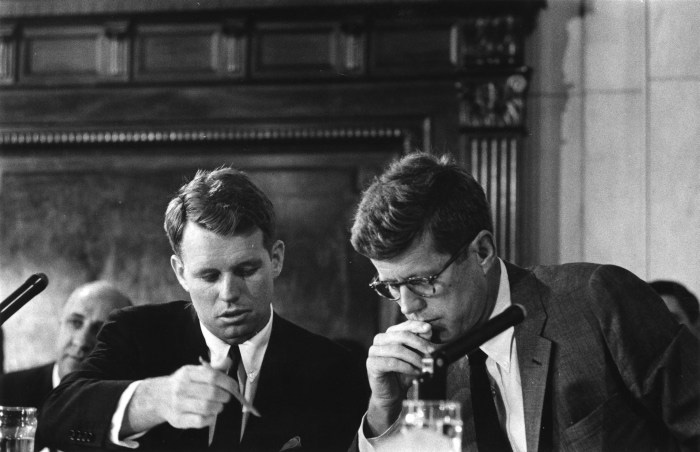
Robert F. Kennedy and John F. Kennedy during the Senate hearings circa May 1957. Photograph by Howard Jones for Look Magazine in the John F. Kennedy Presidential Library and Museum, Boston.

Although RFK’s tenure in the Kennedy administration would be associated with civil rights gains—the month prior to the 1860 presidential election, Bobby had negotiated to secure the release of the Rev. Dr. Martin Luther King, Jr., from an Atlanta jail—he was most identified with his relentless crusade against organized crime. Among his many achievements in this dangerous arena, he worked to secure the Federal Wire act, which specifically targeted the use of telephone, Internet, cable tv, and fiber optic communications with the aim to disrupt the Mafia’s gambling operations. Convictions against organized crime figures rose by 800 percent during his term. Kennedy worked to shift FBI Director J. Edgar Hoover’s focus away from communism to organized crime.

President John F. Kennedy and singer Frank Sinatra at the 1961 Inaugural Gala

Frank Sinatra

Singer and film star Frank Sinatra (1915-1998) grew up poor and lower class in Hoboken, New Jersey. Once he made it big in showbiz (thanks to help from his Mafia cronies), he obsessed about fitting in with the upper class. He wormed his way into politics, using his Hollywood star power to campaign and fundraise for Democratic heavyweights such as Franklin Roosevelt and John F. Kennedy. In attaching himself to men of honor, Sinatra hoped to achieve the respectability he craved.

Sinatra had cultivated a relationship with President Kennedy through movie star Peter Lawford, who was married to the president’s sister, Pat.

Host Frank Sinatra (L) wears an eyepatch, laughing with actor Peter Lawford and his wife Patricia Kennedy (1924 – 2006) during a surprise 21st birthday party held for actor Natalie Wood at Romanoff’s, Hollywood, California, July 20, 1959. (Photo by Murray Garrett/Getty Images)

In March 1962, President Kennedy was scheduled to fly to Southern California. Peter Lawford asked Sinatra to be the president’s host at his Palm Springs estate. Sinatra was thrilled. He went straight to work. At his own expense, Sinatra installed a helicopter pad, cottages for the Secret Service, and even a flagpole for the presidential flag.

But the president’s brother Bobby Kennedy wasn’t having it. When he heard about his brother Jack’s proposed stay at Sinatra’s, he went ballistic. Bobby was making the “most single-minded attack on organized crime in American history” and could not abide Jack associating with someone with mob connections. Peter Lawford was chosen to tell Sinatra that the president would not be staying with him.

Sinatra did not take the news well. He had a notoriously explosive temper:

“Sinatra vented his spleen by destroying the concrete landing pad with a sledgehammer. He applied a different kind of sledgehammer to his friendship with Peter and Pat [Lawford], banning them from his company….Jack ended up staying at the home of Bing Crosby. Marilyn Monroe flew down to be with the president, spending the night in his bedroom….”

Peter Lawford, Frank Sinatra, and Marilyn Monroe ca. 1961-62

Bedell Smith, Sally. Grace and Power: The Private World of the Kennedy White House. New York: Random House, 2004.

Leamer, Laurence. The Kennedy Women: The Saga of an American Family. New York: Fawcett Books, 1994.

Readers: For more on Frank Sinatra on this blog, click here.

Read Full Post »

A biopic of the life of Amy Winehouse, Back to Black, will be released in the U.S. by Focus Features on May 15. Marisa Abela stars as the troubled British singer-songwriter. Since Winehouse’s death in 2011, many projects on her life and music had been in the works but none had gotten off the ground until now.

The film is a sympathetic portrayal of the life of the struggling artist, who, during her lifetime, the tabloids loved to bash. The film begins with her birth into a Jewish family, her parents’ divorce, the discovery of her amazing and unique talent, rise in the music industry, troubled marriage, ongoing battle with addiction and bulimia with the resulting dysfunction, trauma, and her inevitable decline, which led to her tragic death at 27.

Readers: Read more about Amy Winehouse on this blog by clicking here.

Read Full Post »

Abolitionists, powerless to stop the passage of the Fugitive Slave Law of 1850, nonetheless, held numerous protest conventions. The law, which would be passed by Congress in September, gave unbridled power to arrest fugitive slaves in the North and return them to slavery in the South.

The most memorable and audacious of these protest conventions was the Fugitive Slave Law Convention, held in Cazenovia, New York, on August 21-22, 1850, and organized by New York abolitionist firebrand Gerrit Smith. On the first day, nearly fifty fugitive slaves and 400 others met inside the Free Congregational Church of Cazenovia. Hundreds of others gathered outside the building as there was no more space in the pews. Because of the overflowing crowd, the meeting was moved outdoors into Grace Wilson’s apple orchard.

The resolutions and position statements passed were radical in nature. Chairing the meeting was former slave Frederick Douglass, editor of the North Star newspaper. Using his trademark powerful oratory, Douglass declared all slaves to be prisoners of war. He called slaveholders “robbers” and warned the nation that an insurrection was inevitable should slaves not be liberated. Slaves still held in bondage were encouraged to run away, steal horses and money, and use violence if necessary. Mary Edmonson, 18, a freed slave, spoke often at abolitionist gatherings, and, at Cazenovia, made an eloquent speech in support of Douglass’ resolutions and proposed measures. Other abolitionist celebrities present included Emily Edmonson who, along with her sister, Mary, had been among the fugitive slaves on the Pearl, Gerrit Smith, and the Rev. Samuel J. May.

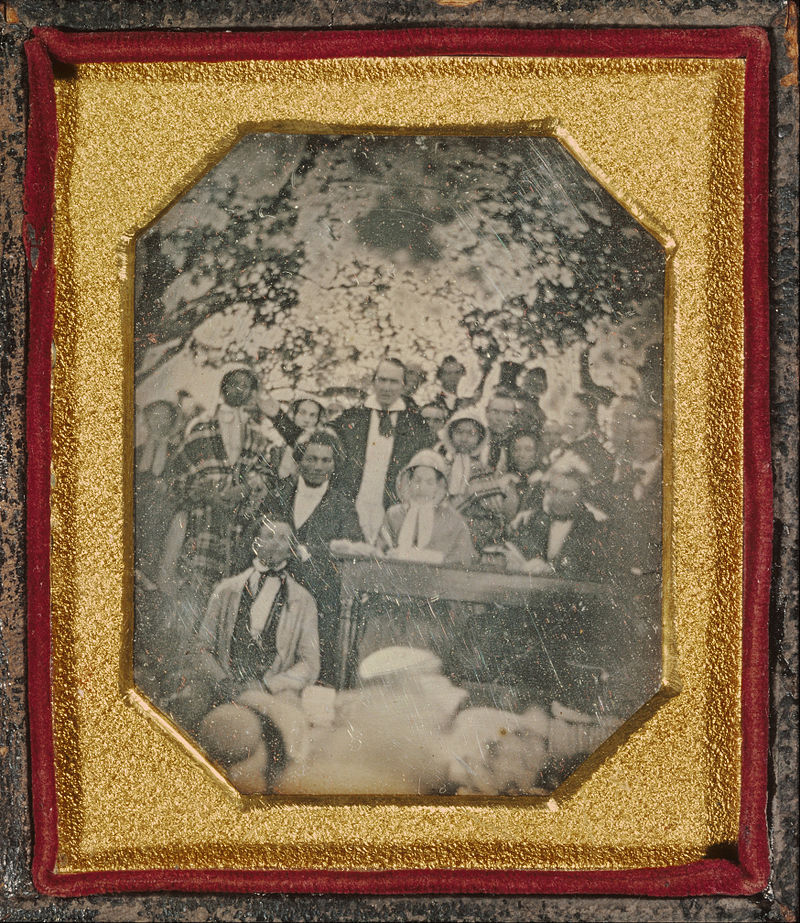
In 1994, a daguerrotype of this storied meeting was found in the Madison County Historical Society.

The Cazenovia Fugitive Slave Convention 1850. Daguerrotype by Ezra Greenleaf Weld, brother of Theodore Weld. At the center of the photo stands philanthropist and Liberty Party founder Gerrit Smith, wearing an open dark jacket and a white shirt with an old-fashioned Lord Byron collar. The women standing beside him, clad in white bonnets and plaid shawls, are Mary (at our left) and Emily Edmonson. Frederick Douglass is seated to the right of Theodosia Gilbert who has taken the place of her fiancé, William L. Chaplin, who had been arrested for Underground Railroad activity.

William L. Chaplin, an associate of Gerrit Smith’s who had arranged the ill-fated April 1848 escape of 77 Washington, D. C. slaves aboard the Pearl, had been scheduled to make a dramatic appearance with some fugitive slaves he had rescued from the South, but things did not turn out well for Chaplin. It had been foolhardy for him to attempt to rescue slaves belonging to two Georgia congressmen! His attempt was foiled, a posse was organized, Chaplin and the fugitives were pursued, found, Chaplin was hit with a club, one fugitive was quickly captured, and the other surrendered shortly. Chaplin was held in the Washington City Jail. His supporters raised the $6,000 bail but Chaplin was not freed. He was then handed over to the Maryland authorities who put him in the Rockville, Maryland jail, where he faced additional and more serious charges. Bail was set at a whopping $19,000.

Emily and Mary Edmonson spent much of September 1850 making appearances in small towns across New York to raise money for Chaplin’s bail. The teenagers had lovely singing voices. They sang and begged for funds on Chaplin’s behalf, even on Sundays, the Sabbath, but, as they believed that Chaplin was doing the Lord’s work, they did not consider their actions sinful. They did this in gratitude. It had been Chaplin who had secured the money for their freedom following their sale south.

Finally, in January 1851, the entire $19,000 was raised and Chaplin was released. He then fled, refused to appear for trial, forfeiting $25,000. Chaplin made little effort to reimburse those who had donated money to his release. Some people were left penniless after their donations. Chaplin abandoned his abolition activity. He married Theodosia Gilbert and together they operated the Glen Haven Water Cure Spa in New York.

Sources:

Brockell, Gillian. “Desperate for Freedom, 77 enslaved people tried to escape aboard the Pearl. They almost made it.” The Washington Post. April 16, 2021.

Conkling, Winifred. Passenger on the Pearl: The True Story of Emily Edmonson’s Flight From Slavery

wikipedia: Edmonson sisters

Read Full Post »
« Newer Posts - Older Posts »