Feeds:
Posts
Comments

Archive for the ‘STAGE & SCREEN’ Category


Michael Jackson’s signature dance move, the Moonwalk, debuted in 1983 and revolutionized modern dance. Michael’s moonwalk was inspired by the French mime Marcel Marceau’s famous “walking against the wind” routine shown below in Mel Brooks’ “Silent Movie.” Click on the words, “Marcel Marceau,” centered below to see the video clip of Marcel walking against the wind:

 Marcel Marceau


Read Full Post »

Dorothy Hale and Isamu Noguchi at the premiere of Four Saints in Three Acts, February 7, 1934, Hartford, Connecticut

Dorothy Hale and Isamu Noguchi at the premiere of “Four Saints in Three Acts,” February 7, 1934, Hartford, Connecticut

In 1934, the socialite and actress Dorothy Hale took a road trip through Connecticut with two old friends, writer Clare Boothe Luce and sculptor Isamu Noguchi. They drove in a special car Noguchi had designed with his drinking buddy, futuristic inventor Buckminster Fuller. The car was called the Dymaxion.

The Dymaxion Car

The Dymaxion Car

Buckminster Fuller with his portrait by Isamu Noguchi, 1929, photo by Noguchi

Buckminster Fuller with his portrait by Isamu Noguchi, 1929, photo by Noguchi

The 20-foot long aluminum-bodied Dymaxion car caused a traffic jam wherever it went.  This was between the two world wars when cars were sedans and pick-up trucks. “Bucky” Fuller’s car was shaped like a teardrop and ran on three wheels. It went 90 m.p.h. and was fuel-efficient at 30 m.p.g. The 3-wheeler made a 360-degree turn on a dime. A periscope that came out of the roof gave extra visibility. It seated eleven passengers.

It was the car of the future – for a while. Unfortunately, only three Dymaxion cars were ever produced. Orchestra conductor Leopold Stokowski bought one. Amelia Earhart was interested in investing. Financing was a problem and Fuller was running out of cash.

Aviator Amelia Earhart

Aviator Amelia Earhart

Any hope of putting the Dymaxion in full-scale production dried up quickly when the car was involved in a fatal accident at the 1933 Chicago World’s Fair. Another car was blamed for the crash but that didn’t stop the negative publicity for the Dymaxion.

Sadly, only one of the Dymaxions exists today. You can view the restored exterior of the car at the National Automobile Museum in Reno, Nevada. Disappointingly, though, the car windows are painted opaque from the inside to prevent you looking inside. Evidently, the inside was in very bad shape when the car was acquired and little information exists as to its original look in order to guide the museum restoration artists. The rumor is that the car had been used as a chicken coop somewhere in the Midwest before it was discovered, which explains the wrecked state of the interior!

View this youtube video to see the amazing turning radius of the Dymaxion. While you’re viewing, keep a lookout for Amelia Earhart in the back seat.

http://www.youtube.com/watch?v=YlLZE23EJKs&feature=related

For more on Dorothy Hale, see my most popular post, Frida Kahlo: The Suicide of Dorothy Hale.”

Read Full Post »

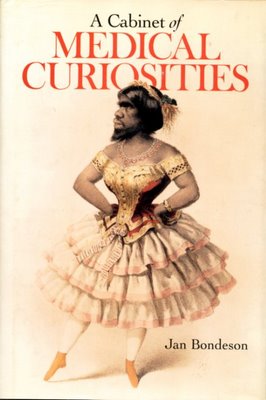
an illustration of Julia Pastrana, a Victorian stage performer who toured Europe, Canada, and the United States billed as the Bearded Lady, the Nondescript, the Ape-Woman.

An illustration of Julia Pastrana, a Victorian stage performer who toured Europe, Canada, and the United States billed as the Bearded or Hairy Lady, the Nondescript, the Ape-Woman, the Marvelous Hybrid or Bear Woman.

Julia Pastrana (1834-1860) was one of the most famous human curiosities of her time, touring Europe, Canada, and the United States in the 1850s as “the Bearded Lady” or the “Ape-Woman.” Born poor in Mexico, she suffered from a rare inherited disorder (hypertrichosis), not understood during the Victorian Age, that caused her entire body to be covered in silky, black hair. Add to that a jutting jaw with huge teeth that made her look positively like a monkey. Yet while grotesque and freakish, she also exuded a feminine grace. She sang Spanish songs sweetly, had slender feet and hands, and displayed a buxom figure at a petite four-and-a-half feet tall. She styled her hair in elaborate coiffures and wore embroidered lace dresses that barely covered her knees. She spoke three languages, cooked, and sewed. In her stage act, she danced a Highland Fling.

When she toured London in 1857 in one of the monster shows popular at the time, she attracted journalists, doctors, and scientific minds. Julia was very popular. It cost 3 shillings to see her in the Regent Gallery, compared to the 6 shillings that a Victorian laborer might earn in a week. Promoted by her avarious manager and new husband, Theodore Lent, Julia was now billed as “The Nondescript,” suggesting that she was a unique species, perhaps “the missing link” between humans and the rest of the animal kingdom. Debate raged in the newspapers as to her origins and her appearance was described at length. She submitted to medical examinations freely and received many distinguished visitors. Charles Darwin mentioned her in his book, The Variation of Animal and Plants under Domestication, writing:

Julia Pastrana, a Spanish dancer, was a remarkably fine woman – she had a thick and masculine beard.”

Julia loved her husband very much and, in 1859 in Moscow, she became pregnant with their first child. Her doctors were worried. Julia’s narrow hips and small frame could mean a difficult childbirth, they warned. On March 20, 1860, Julia gave birth to a hair-covered little boy. He died within 35 hours. Julia died five days later, at age 26.

Theodore Lent was distraught. Julia had been the bank. Now the bank was closed! How was he to live now that his source of income had died? He had a Eureka moment. Why should the bank close? He sent Julia’s corpse and that of his newborn son to Professor Sukolov of Moscow University for embalming. The process took 6 months but the results were amazing. Julia’s mummified remains looked lifelike. He dressed Julia in one of her dancing costumes and his son in a cute sailor suit. He stood them up on a pedestal and took them on a tour, exhibiting them as pickled specimens for 20 years.

Julia Pastrana and son, embalmed, on tour after their deaths

Julia Pastrana and son, embalmed, on tour after their deaths

When touring Sweden, Theodore met another hairy young woman named Zenora who suffered from a condition very similar to Julia. He married her and began touring her as Zenora Pastrana – Julia’s sister. Theodore grew richer and richer. In the 1880s, he and Zenora retired to St. Petersburg where they bought a waxworks museum. Theodore wasn’t able to enjoy his retirement for long because he became ill and was sent to a lunatic asylum where he died.

Over the course of the next 100 years, the mummies changed hands countless times, being sold to German fairs, an Austrian circus, and a Norwegian chamber of horrors. They came out of mothballs in 1970 and went on a short tour of Sweden and Norway. An American tour was aborted due to public outcry over the utter tastlessness of the idea. The mummies were put in storage by Norwegian owner Hans Lund in 1973.

In August of 1976, vandals broke into the storage unit. Julia’s mummified son was mutilated and his remains eaten by mice. Only her body remained. Then in 1979, the storage facility was again broken into and Julia’s body was stolen. It was assumed at the time to be destroyed.

Then, in February of 1990, a Norwegian journalist made a surprise discovery of a mummy in the basement of the Institute of Forensic Medicine in Oslo. It turns out that, back in 1979, the police had responded to a call involving some children who found an arm in a ditch. A search revealed the mummified body of Julia, badly mangled. The police did not know her identity. They took the mummy to the Institute.

It is believed by some, though not confirmed by me at this time, that the remains of Julia Pastrana have rested in a sealed coffin at the Department of Anatomy at Oslo University since 1997. “She is now a buried woman, not an exhibition object. She rests [at peace],” says Professor Gunnar Nicolaysen [translated from Norwegian].

Read Full Post »

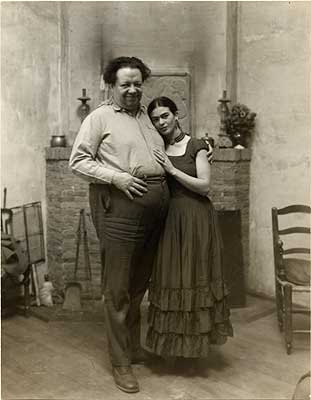
Artists Diego Rivera and Frida Kahlo

Artists Diego Rivera and Frida Kahlo

By the summer of 1938, Frida Kahlo was on her way to being discovered as an artist in her own right, rather than only being referred to as the wife of famed Mexican muralist Diego Rivera. That summer, actor and art collector Edward G. Robinson had traveled to Mexico City just to see her paintings and had paid $200 each for four of them. Frida was thrilled. She had sold only a few of her paintings so far and had been content to just give them away. She later wrote of the Robinson sale:

“For me it was such a surprise that I marveled and said, “This way I am going to be able to be free; I’ll be able to travel and do what I want without asking Diego for money.”

She and Diego had become increasingly estranged because of his many illicit extramarital affairs, including one with Frida’s sister Cristina. Frida was heartsick by Diego’s infidelities and retaliated by having multiple affairs of her own, with both men and women. Despite their discord, they remained deeply in love. Frida and Diego made up one of those married couples who could neither stay together nor apart. By the summer of 1939, they would be divorced – only to remarry a year later.

"Self-Portrait Dedicated to Leon Trotsky (Between the Curtains)" 193

“Self-Portrait Dedicated to Leon Trotsky (Between the Curtains)” by Frida Kahlo, 1937

That November, Frida Kahlo traveled to New York City for her first one-person exhibition of her paintings, held at the Julien Levy Gallery, confident in her new status as celebrated artist. As always, her exotic Zapotec clothing and heavy jewelry created a buzz in the press. Her show was a great success. Time magazine noted that “the flutter of the week in Manhattan was caused by the first exhibition of paintings by famed muralist Diego Rivera’s…wife, Frida Kahlo.” Frida Kahlo’s hand, bedecked with huge rings, adorned a cover of Vogue.

Notables such as artist Georgia O’Keeffe attended the gallery exhibit as did playwright and former editor of the fashion magazine Vanity Fair Clare Boothe Luce.

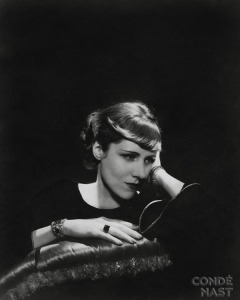
Claire Booth Brokaw (Luce) (1903-1987) as photographed by Cecil Beaton for the August 1934 issue of Vanity Fair

Claire Boothe Brokaw (Luce) (1903-1987) as photographed by Cecil Beaton for the August 1934 issue of Vanity Fair

Luce remembered the occasion well:

“The exhibition was crowded. Frida Kahlo came up to me through the crowd and at once began talking about Dorothy’s suicide [Dorothy Hale was a friend of both Kahlo and Luce’s].…Kahlo wasted no time suggesting that she do a recuerdo of Dorothy. I did not speak enough Spanish to understand what the word recuerdo meant….I thought Kahlo would paint a portrait of Dorothy in the style of her own self-portrait [dedicated to Trotsky][see above], which I bought in Mexico….

Suddenly it came to me that a portrait of Dorothy by a famous painter friend might be something [Dorothy’s] poor mother might like to have. I said so, and Kahlo thought so, too. I asked the price, Kahlo told me, and I said, ‘Go ahead. Send the portrait to me when it is finished. I will then send it on to Dorothy’s mother.’”

Dorothy Hale was a sometime actress, Ziegfeld showgirl, and socialite. Hale’s life had gone downhill seven years earlier after her husband Gardner Hale was killed when his car drove off a 500 foot cliff in Santa Maria, California. Hale’s career as an actress was drying up; she was failing her screen tests. She was in severe financial trouble and living on charity from friends.  On October 20, 1938, Hale assembled her close friends for a party at her New York apartment and announced that she was taking a long trip. The farewell party lasted until the wee hours of the morning. Hale stayed up writing good-bye letters to her friends and drinking the last of the vodka. A little before  6 a.m. on the 21st,  Hale put on her black velvet dress and pinned on it a corsage of small yellow roses sent to her by the sculptor Isamu Noguchi. She then climbed onto the windowsill of her luxury high-rise apartment suite and jumped to her death.

"The Suicide of Dorothy Hale" by Frida Kahlo, 1938/39

“The Suicide of Dorothy Hale” by Frida Kahlo, 1938/39

From the encounter between Luce and Kahlo at the gallery exhibit arose one of Frida Kahlo’s most shocking and controversial paintings, “The Suicide of Dorothy Hale” (1938/39). Kahlo painted Dorothy Hale as she jumped, fell, and landed, dead and bloody, on the concrete walk outside her apartment building. Blood-red lettering at the bottom of the retablo details the tragedy in Spanish:

“In New York City on the 21st of October 1938, at 6:00 in the morning, Dorothy Hale committed suicide by throwing herself from a very high window in the Hampshire House. In her memory, this portrait was executed by Frida Kahlo.”

Luce recalls the horror she felt when the painting was delivered to her home and she first laid eyes on it.

“[W]hen I pulled the painting out of the crate…I felt really physically sick. What was I going to do with this gruesome painting of the smashed corpse of my friend, and her blood dripping down all over the frame? I could not return it – across the top of the painting there was an angel waving an unfurled banner which proclaimed in Spanish that this was ‘The Suicide of Dorothy Hale, painted at the request of Clare Boothe Luce, for the mother of Dorothy’. I would not have requested such a gory picture of my worst enemy, much less of my unfortunate friend.”

Luce wanted to have the painting destroyed, but was dissuaded by friends. Instead, she had sculptor and friend Noguchi paint over the angel with the banner and gave the painting to a friend.

Luce couldn’t have known at the time that Kahlo was in a desperate state of mind as she always was when she was afraid of losing Diego. At the time she painted “The Suicide of Dorothy Hale,” Kahlo herself was having repeated thoughts of committing suicide.

READERS: For more posts on Frida Kahlo, click here.

For more on Dorothy Hale, read my post, “Dorothy Hale and the Dymaxion Car.”

Read Full Post »

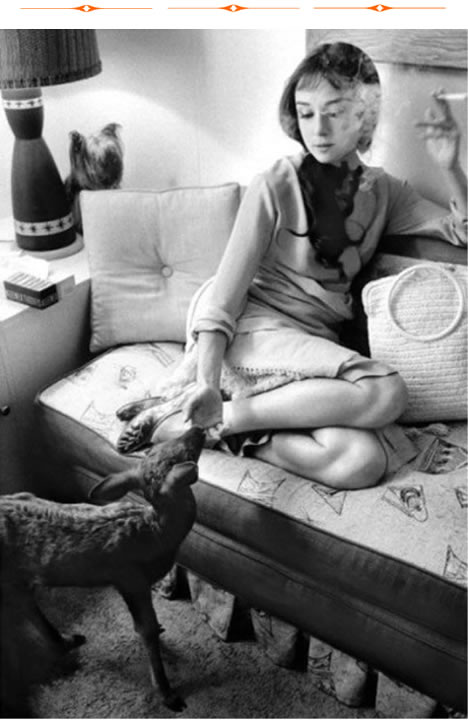
Audrey Hepburn in her dressing room during the filming of "Green Mansions." She is feeding Ip the fawn while her Yorkshire terrier Mr. Famous looks on from the left.

Audrey Hepburn in her dressing room during the filming of “Green Mansions.” She is feeding Ip the fawn while her Yorkshire terrier Mr. Famous looks on from the left.

This is an excerpt from,”Hollywood icon Audrey Hepburn is still full of surprises“:

[The book] Remembering Audrey, features candid portraits by Bob Willoughby, a photographer on the set of many of Hepburn’s films who became close enough to the beauty to literally follow her home. His visual account of Hepburn’s private life and career is peppered with unexpected moments, such as cameos by Pippin, nicknamed Ip, the fawn. When Hepburn was making her 1959 flick “Green Mansions,” directed by then-husband Mel Ferrer, the animal trainer on the set suggested that she take her on-screen sidekick, a baby deer, home with her so that he would learn to follow her. “It was truly amazing to see Audrey with that fawn,” remembers Willoughby in the caption alongside a photo of Pippin cuddling up to Hepburn like a lap dog as she naps on the couch. (Her pet dog, Mr. Famous, is curled in a ball at the other end of the sofa.) “While Audrey’s maid had been told about the little deer, she could not believe her eyes seeing Ip sleeping with Audrey so calmly,” writes Willoughby. “She was shaking her head and just kept smiling.”

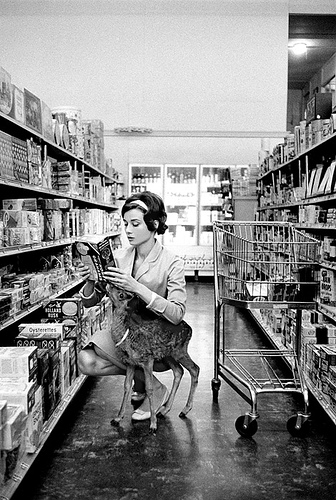
Audrey Hepburn shopping in Beverly Hills with her pet deer and costar, Pippin, known as "Ip." (1958)
Audrey Hepburn shopping in Beverly Hills with her pet deer and costar, Pippin, known as “Ip.” (1958)

In another shot, the fawn inspects a box of Honey Grahams, shopping with Hepburn in a Beverly Hills supermarket. “Beverly Hills habitués are fairly blasé about what they see,” writes Willoughby, “but Audrey being followed around town by this lovely creature stopped everyone in their tracks.”

For more on Audrey Hepburn on this site, click here.

Read Full Post »

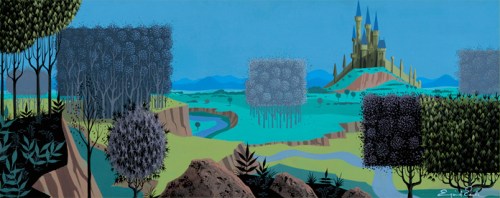
The iconic castle from "Sleeping Beauty," by artist Eyvind Earle for Disney
The iconic castle from “Sleeping Beauty,” by artist Eyvind Earle for Disney

Up until the release of Disney’s “Sleeping Beauty” in 1959, the Disney characters were normally drawn first for a film and then the background was drawn later to complement the characters. But this process was reversed in 1951 – causing some hard feelings – when Walt Disney Studios hired the new background painter, Eyvind Earle.

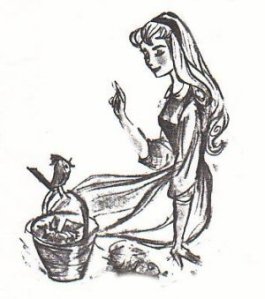
Tom Oreb's early drawings of Sleeping Beauty, influenced by Audrey Hepburn

Tom Oreb's early drawing of Sleeping Beauty, influenced by Audrey Hepburn

Walt Disney wanted the setting to have a very Renaissance Germanic look and Earle’s style fit the bill. The problem was that, when Earle joined the studio, the characters for “Sleeping Beauty” had already been drawn. Soft and round in the Disney tradition, the characters clashed with Earle’s stylized angular backgrounds. Though it was unusual to take style direction from a background painter, that’s what the character artists were forced to do. They had to go back to the drawing board and reconceive all the characters in a style that suited Earle’s design.

Although Sleeping Beauty would have blonde hair in the film, character stylist Tom Oreb based the princess’ original design on the physical geometry of  brunette Audrey Hepburn.

Audrey Hepburn

Audrey Hepburn

“The qualities of that actress’ slender, willowy physicality lend themselves beautifully to the design environment of the film,” said Disney historian Jeff Kurtti.

drawing of Sleeping Beauty by Marc Davis, redesigned for use in 1959 film

drawing of Sleeping Beauty by Marc Davis, redesigned for use in 1959 film

Originally,” said Disney animator Ron Dias, “Sleeping Beauty looked a lot like Audrey Hepburn; she was softer, rounder, more like the ‘designy’ Disney girl. Back at the drawing board, Marc Davis redesigned her. She became very angular, moving with more fluidity and elegance, but her design had a harder line. The edges of her dress became squarer, pointed even, and the back of her head came almost to a point rather than round and cuddly like the other Disney girls. It had to be done to complement the background.”

Click below to see Helene Stanley perform in the Disney Studio as the live action model for Sleeping Beauty as Disney artists sketch away. This video was part of the premiere of the Disneyland TV show.

Read Full Post »

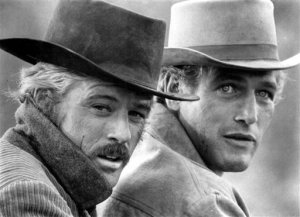
A publicity shot from the 1969 American Western film, "Butch Cassidy and the Sundance Kid," starring Robert Redford (left) and Paul Newman. Newman died in September of 2008 of cancer.

A publicity shot from the 1969 American Western film, “Butch Cassidy and the Sundance Kid,” starring Robert Redford (left) and Paul Newman. Newman died in September of 2008 of cancer.

Robert Redford Remembers Paul Newman (1925-2008):

I first met Paul Newman in 1968, when George Roy Hill, the director of  “Butch Cassidy and the Sundance Kid,” introduced us in New York City. When the studio didn’t want me for the film — it wanted somebody as well known as Paul — he stood up for me. I don’t know how many people would have done that; they would have listened to their agents or the studio powers.

The friendship that grew out of the experience of making that film and “The Sting” four years later had its genesis in the fact that although there was an age difference, we both came from a tradition of theater and live TV. We were respectful of craft and focused on digging into the characters we were going to play. Both of us were fundamentally American actors, with the qualities and virtues that characterize American actors: irreverence, playing on the other’s flaws for fun, one-upmanship — but always with an underlying affection. Those were also at the core of our relationship off the screen.

Paul was very engaged at work. He was there. He liked a lot of rehearsal. But he was fun too. Whenever he’d make a mistake on set, he would enjoy it more than anybody. I’d look at him, and he’d look at me, and I’d say, “You’re not fooling anybody. You’re not staring at me intensely; you’ve lost your line.” And he’d roar with laughter.

Paul Newman was a nonprofit entrepreneur with a line of foods from lemonade to popcorn to spaghetti sauce.

Paul Newman was a nonprofit entrepreneur with a line of foods from lemonade to popcorn to spaghetti sauce.

We shared the belief that if you’re fortunate enough to have success, you should put something back — he with his Newman’s Own food and his Hole in the Wall camps for kids who are gravely ill, and me with Sundance and the institute and the festival. Paul and I didn’t see each other all that regularly, but sharing that brought us together. We supported each other financially and by showing up at events. And then we’d give each other a hard time. Whatever success one of us would have, the other would knock it down. If you’re in a position of being viewed iconically, you’d better have a mechanism to take yourself down to keep the balance. I think we did that for each other.

Paul Newman was one of the last of the great 20th century actors. He was strikingly handsome with piercing blue eyes. He dropped out of college to become a Navy Pilot only to discover he was not qualified due to colorblindness.

Paul Newman was one of the last of the great 20th century actors. He was strikingly handsome with piercing blue eyes. He dropped out of college to become a Navy Pilot only to discover he was not qualified due to colorblindness.

What impressed me about Paul was that he was very realistic about who he was. He knew the world of hyperbole and distortion he was in. That meant he maintained a certain amount of privacy. He was generous and a pillar of integrity. He was loyal and self-effacing. His commitment to his profession was serious, as was his commitment to social responsibility and especially to his family.

Paul Newman was a successful professional race car driver. He got his first taste of car racing when starring in the 1969 film, "Winning."

Paul Newman was a successful professional race car driver. He got his first taste of car racing when starring in the 1969 film, “Winning.”

He had a life that had real meaning and that will for some time.I last saw him a few months ago. He’d been in and out of the hospital. I knew what the deal was, and he knew what the deal was, and we didn’t talk about it. We talked about what was on our minds: the election, politics, what needed to be done. Ours was a relationship that didn’t need a lot of words.

Mostly I’ll miss the fun we had. We played lots of pranks on each other. I used to race cars, and after he took this rare Porsche I owned for a drive, he began to get into racing. He had incredible reflexes, and he got really good, but he talked so much about it that I got sick of it. So I had a beaten-up Porsche shell delivered to his porch for his 50th birthday. He never said anything, but not long after, I found a crate of molten metal delivered to the living room of my (rented) house. It dented the floor. I then had it turned into a really ugly sculpture and dropped into his garden. To this day, neither one of us has ever mentioned it.


Read Full Post »

Clark Gable (1901-1960)

Clark Gable (1901-1960)

In my last two posts, I blogged about Clark Gable destroying undershirt sales when he took off his shirt in the 1934 Columbia picture “It Happened One Night” to reveal only bare skin and no undergarment. Men wanted to be like Gable and stopped buying undershirts. It would take a war, 17 more years, and another sexy actor before undergarments would become popular again. This time though, the t-shirt would jump from underwear to outerwear.

It was 1951, the actor was Marlon Brando, and the production was “A Streetcar Named Desire.” On Broadway and then on the big screen, Brando electrified audiences with his portrayal of the animalistic Stanley Kowalski who struts about in his stand-alone, outerwear t-shirt. Originally, the t-shirt was issued by the U.S. Navy (as early as 1913) as a crew-necked, short-sleeved, white cotton undershirt to be worn under a uniform. Although men did wear soft cotton tees after the war, they were worn for labor or under a dress shirt, but not to be seen in public. But Brando’s Kowalski is a brawny exhibitionist, fond of strutting about the streets in a tight, sweaty, smelly, and sticky tee that accentuates his massive torso and rippling biceps. Brando pulls the tee shirt up and over his head in one scene as he flirts with the sister-in-law, and in another scene, rips at his shirt in anguish as he cries upstairs to his wife with the unforgettable line, “Stella!” (Click to see.)

Actor James Dean (1931-1955)

Actor James Dean (1931-1955)

Offscreen, Marlon Brando took the rebel fashion statement even further, pairing his white t-shirt with boots, motorcycle, and an anti-establishment sneer. It started a t-shirt craze. Next thing we know, movie icon James Dean (“Rebel Without A Cause,” see last post) borrows the Brando t-shirt, jeans and boots look but tops it off with a jeans jacket. From that point on, the t-shirt is set loose and becomes next the symbol of restless and rebellious American youth.

Read Full Post »

Continuing from yesterday’s post, “Clark Gable: He’s Just Not That Into…Undershirts,” we are talking about name brand products being deliberately displayed in movies to influence consumer spending. Placing products in movies is big business for merchandisers, ad men, and marketers – and highly competitive, given the cluttered field.

To learn about strategic product placement in movies, I visited the website of Norm Marshall & Associates of Los Angeles/New York/Boston/Sydney/Tokyo, an entertaining marketing firm. We sense the cutthroat nature of the business when we read on Norm Marshall’s website that:

“As audiences continue to be sliced among proliferating media and properties, we continue to find ways to reach them.”  History has proven the effectiveness of product placement in movies. Norm Marshall cites these examples:

Tom Cruise in "Risky Business"

Tom Cruise in "Risky Business"

When Clark Gable got undressed for bed, he was seen not wearing an undershirt under his shirt in the 1934 movie “It Happened One Night.” The most popular undershirt in the 1930s was the sleeveless A-shirt, or tank top. Undershirt sales plummeted, thanks for Gable – for no real man would wear an undershirt if screen idol Gable didn’t.

James Dean, the movie idol of the 1950s, caused sales of Ace Combs to reach record levels when he slicked back his hair with one in “Rebel Without A Cause.”

Sales of RayBan™ sunglasses skyrocketed after handsome and sleek Tom Cruise wore them in the 1985 movie “Risky Business.”

Association with Steven Spielberg’s movie E.T. The Extraterrestrial increased the sales of peanut butter and chocolate Reeses Pieces™ by 70%.

condron.us

Read Full Post »

Warner Brothers' 2009 box office hit, PG-rated "He's Just Not That Into You"

Warner Brothers' 2009 box office hit, PG-13 rated "He's Just Not That Into You"

According to a February 25 New York Times article, The American Medical Association is planning on lodging an official complaint against Warner Brothers for its “disturbing images of specific cigarette brands” in their new movie, “He’s Just Not That Into You.” Melissa Walthers, director of the health advocacy group’s effort to reduce teenage smoking, says that there is no artistic reason to include such images.

While the movie “He’s Just Not That Into You” doesn’t show anyone smoking, there are numerous shots of the cigarette brand Natural American Spirit Lights in their recognizable bright yellow box as well as a red Marlboro carton, and the AMA is not happy. Ironically, the story line places smoking in a negative light. The main character, played by Jennifer Connelly, leaves her husband not because he cheated on her (although he did) but because he lied about quitting smoking.

Ms. Walthers says that various studies estimate that smoking in films prompts 200,000 young people to start smoking each year. Other health organizations besides the AMA have pressured The Motion Picture Association of America to “trim tobacco sequences” from their movies, but the industry cites the need for artistic license and, in 2007,  refused to consider an outright ban on cigarettes and smoking in film.

it-happened-one-nightAs for anyone out there skeptical about the power of the media to influence consumers, look back to the year 1934 and the release of the Frank Capra comedy, “It Happened One Night” with Clark Gable and Claudette Colbert, the winner of five Academy Awards, including Best Picture (Columbia). Sales of men’s undershirts declined sharply after Gable, undressing for bed in a scene, took off his shirt and appeared bare-chested and sexy. He was not wearing the traditional undershirt, a standard clothing item at the time for men. According to legend, sales of undershirts plummeted overnight. American men had made up their minds. If Clark Gable didn’t think he needed an undershirt under his shirt, then neither did they.

Click here to see the famous scene from “It Happened One Night” titled, “The Walls of Jericho.” (That’s Claudette Colbert with Gable, who, win finishing the movie, pronounced it the worst she’d ever made – then went on to win an Oscar for that very movie.

Read Full Post »

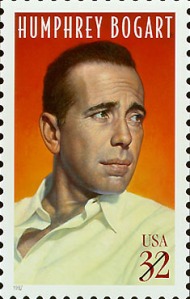
bogart-stamp
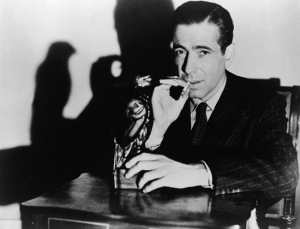
Everybody in my generation knows who Humphrey Bogart (1899-1957) is and how he gained his celebrity status – through his movies. He appeared in 75 feature motion pictures. His many roles included his portrayals of hard-boiled detective Sam Spade in “The Maltese Falcon” (1941), tough but noble nightclub owner Rick Blaine in “Casablanca” (1942), and crusty but lovable steamboat captain Charlie Allnut in “The African Queen” (1951), for which he won an Oscar.

Less well-known is that Humphrey Bogart attained celebrity status shortly after he was born, appearing as a pitchman in a national campaign to sell Mellin’s baby food. A drawing of Humphrey by his mother, successful commercial artist Maud Humphrey (1865-1940), was used in the advertisements. In sentimental Victorian tradition, Maud Humphrey portrayed her son as a little round-faced cherub with rosy cheeks, ringlet curls, and large eyes. She shamelessly dressed him in long white dresses or like Little Lord Fauntleroy in side-buttoned overalls with rolled-up cuffs and a billowing white starched shirt. He became known as the “original Maud Humphrey baby.” His friends and some professional models sat for her portraits, too. Her signature style was the chubby-cheeked, happy child.

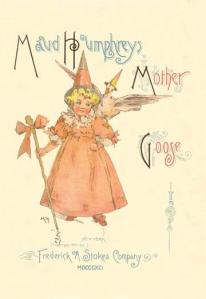
maud-humphrey-s-mother-goose-book-cover-20x30-posterFrom the 1890’s through the 1920’s, Maud Humphrey flourished as a child portrait painter, illustrating calendars, greeting cards, postcards, fashion magazines, and more than 20 story books. She was a child prodigy, having begun illustrating in children’s magazines at the age of sixteen. She studied art in Paris and also with the American painter James McNeill Whistler. Her technique was a dry watercolor similar to etching. By the turn-of-the-century, Maud Humphrey, who continued to use her maiden name after she was married to Dr. Belmont Bogart, was one of the most recognized, well-paid and popular illustrators in America. The illustrations of her stylized, beautiful, and perfect children promoted many national products including Ivory Soap, Crosman Bro’s Flower Seeds, Sunshine Stoves, Ranges, and Furnaces, Butterick Patterns, Metropolitan Life Insurance Company, and Anheuser-Busch.

art by Maud Humphrey

art by Maud Humphrey

Throughout his childhood, Humphrey was a model for his mother’s designs.” There was a period in American history,” he recalled years later, ” when you couldn’t pick up a … magazine without seeing my kisser in it.”

Maud Humphrey earned over $50,000 a year at a time when males dominated the workforce and women didn’t get the vote until 1919. Her husband’s surgical practice brought in an additional $20,000 annually for the family plus he inherited money. As a result, Humphrey grew up rich in Manhattan’s posh Upper West Side, attending private school, and summering in an elegant Victorian two-story cottage on 55 acres of land in western New York on Lake Canandaigua with a champion-class yacht moored at their private pier. Humphrey and his two little sisters were attended by nurses and nannies and servants in starched uniforms.

art by Maud Humphrey

art by Maud Humphrey

But summers at the lake were anything but idyllic for Humphrey and his sisters. “Lady Maud” as her friends called her was driven to create an estimated ten colored drawings per week. She limited herself to five hours of sleep a night. The pressing deadlines and demands of her craft exacted a heavy toll on her health and the quality of her family life. She suffered from excrutiatingly painful migraine headaches and left the care of the children to the servants, cruel ones, said the neighbors, of a low type given to a lot of yelling and frequent hitting.

The parents didn’t seem to notice. The marriage was also troubled. Both of Humphrey’s parents drank too much and argued bitterly. “We kids would  pull the covers over our ears to keep out the sound of fighting,” said Humphrey. It was commonly known that Dr. Bogart was addicted to morphine, giving himself injections and perhaps also to his headache-plagued wife, who also took pills he gave her.

Maud Humphrey’s drawings of the sweet simplicity of a child frolicking in a perfect and happy world were far removed from the life she created for her own brood – and herself. “I doubt that she read very much. I know that she never played any games,” said Humphrey. “She went to no parties, gave none. And I can’t remember that she even had any friends.” He called her “Maud,” never “Mother.” “She was essentially a woman who loved work…to the exclusion of everything else…[S]he was incapable of showing affection to us.” Humphrey’s was a childhood devoid of hugs and kisses.

Bogart in "The Maltese Falcon"

Bogart in "The Maltese Falcon"

Burdened by his effeminate portraits on baby food ads, Humphrey was mocked by childhood schoolmates and called a sissy. Attempting to be more manly, he got into a lot of fights and once shot out the red lanterns at building sites with his new air rifle. His first movie roles were gangster ones, morphing over time from Little Lord Fauntleroy into the cigarette-puffing, tough-talking good guy we still love today.

Read Full Post »

Roy Rogers on his golden palomino Trigger, with wife and costar Dale Evans

Roy Rogers on his golden palomino Trigger, with wife and costar Dale Evans

It was 1938 and Leonard Slye needed a horse. Not just any horse. His horse had to be fast, well-trained, and handsome. You see, Leonard was a singing cowboy who had just gotten his first leading role in a western movie called “Under Western Stars.” He needed a horse to ride in the movie. Several stables in the Hollywood area sent out horses for Leonard to choose among. After trying out six or seven of them, he rode a golden palomino named “Golden Cloud.” It was love at first ride. He chose Golden Cloud for the movie role but renamed him “Trigger” because of his tremendous speed. Leonard Slye changed his own name, too, and became known as Roy Rogers.

“Under Western Stars” was a huge hit. As Roy toured the country promoting the film, Roy realized that his fans wanted to see Trigger as much as they wanted to see him. But Roy didn’t own Trigger. At that time, Roy was only making $75 a week as a contract actor for Republic Pictures and Trigger costs $2500! Roy also had a wife to support. But Roy couldn’t take the chance that Trigger would be paired with another star in a movie. Roy wanted to make more movies with Trigger and take him on tours around the country. So Roy took the financial risk and arranged to buy the expensive horse, arranging to pay off his debt to Trigger’s owners on installment, much, like Roy said, like he was paying off a bedroom set. Roy later said it was the best $2500 he ever spent.

Roy and Trigger went on to become superstars, making 88 movies and 100 tv shows together. Roy was called “The King of the Cowboys” and Trigger was known as “The Smartest Horse in the World.” Their western shows thrilled audiences with their wild cowboy and faithful horse adventures and horse-pumping action.

When Trigger died in 1965 at approximately the age of 35, the Smithsonian Institute asked Roy Rogers for his body for their collection of historical Americana. Wife and costar Dale Evans wanted Trigger to have a decent burial with a nice headstone. But Roy didn’t like either idea. He didn’t want Trigger to be so far away from California or buried underground. So Roy arranged for Trigger’s hide to be stretched over a plastic likeness of a horse in a rearing position.

Trigger is still the most popular attraction at the Roy Rogers-Dale Evans Museum in Branson, Missouri. Roy also arranged for his German shepherd Bullet and Dale’s horse Buttermilk to be preserved and exhibited at the museum. Roy used to joke that after he died, he wanted to be preserved and mounted on the saddle on Trigger.

Roy Rogers’ son, Dusty, once said of his father. “Trigger died and Dad had him stuffed. Bullet died and Dad had him stuffed. Buttermilk died and Dad had her stuffed. Now Mom sleeps with one eye open!”
 
When Roy Rogers died, my husband Tom cried. Watch this video and you’ll see why. Here’s Roy Rogers and Trigger at the Hollywood Canteen:

Read Full Post »

Expert Markswoman Annie Oakley performing her famous mirror trick
Expert Markswoman Annie Oakley performing her famous mirror trick (see Jan. 16 blog entry)

Aim at a high mark and you will hit it. No, not the first time, not the second time and maybe not the third. But keep on aiming and keep on shooting – for only practice will make you perfect. Finally, you’ll hit the bull’s-eye of success.
-Annie Oakley (1860-1926)

Chief Sitting Bull, whose army had defeated Custer’s troops at the Battle of Little Big Horn in 1876, was so impressed with Annie Oakley’s amazing precision with a shotgun that he gave her an Indian name, Watanya Cecila, or Little Sure Shot.

Annie Oakley was one of the first people to be filmed by Thomas Edison, inventor of the motion picture camera. (1) This 80-second film from late 1894 shows Annie firing a rifle 25 times in 27 seconds and shooting glass balls tossed in the air by manager husband Frank Butler. View a clip of it here:

http://www.youtube.com/watch?v=XN85Nj_bfQo

(1)Macy, Sue. Bull’s-Eye. National Geographic Society: Washington, D.C., 2001.

Read Full Post »

Carolyn King Waller

Carolyn King Waller

My mother Carolyn King Waller stopped by Lisa’s History Room this afternoon for a little chat. Carolyn was born in Corpus Christi, Texas, in 1934. She has a mind like a steel trap; her ability to recall stories from the past is legend.

Lisa: Thanks for stopping by today, Mom. Everyone knows that you love history. What would you say is your favorite period?
Carolyn: Probably the World War Two years, 1941 to 1945. And of course World War Two for other countries was longer that. 1941 to 1945 were America’s war years.
Lisa: And why is that your favorite period?
Carolyn: The fate of the world hung in the balance. It was a lot of drama – really, truly, good against evil.
Lisa: So it fascinates you.
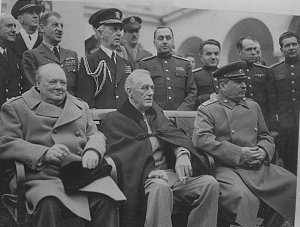
Carolyn: I’m not the only one…others are fascinated by it still…of course, we didn’t know about the Jews being exterminated, 6 million…then the Stalin thing…Stalin moved in from the east, we (the Allies) moved in from the west. The countries that Stalin occupied in the east became known as the countries behind the Iron Curtain. Churchhill coined the phrase. The poor people who had been under Germany were then under Russia! We didn’t really free them. The people in those countries had no freedom. We slowly woke up to who Stalin was. The Russians never left, including East Berlin, so World War II strengthened the Russians, it helped one problem, it created a worse one though, by increasing the strength of the Communists. Roosevelt was blamed for that but there wasn’t much he could do. It was said that Roosevelt gave too much away to Stalin at the 1945 Conference of Yalta,

1945 Conference at Yalta

1945 Conference at Yalta

but there really was very little he could do about it. They (the Communists) were there – they had occupied Eastern Europe – they had “boots on the ground.” We didn’t know then that Stalin had murdered millions of his own people, that he was a monster. In the early days, Truman even said, “I like Old Joe.”
Lisa: What else makes it an interesting period?
Carolyn: Outsized personalities of Hitler, Stalin, Roosevelt, and Churchhill – huge . Churchhill was a fabulous orator, Roosevelt knew about ships, had knowledge of the military, selected good generals. Hitler was a poor strategist; he entered all those countries at once. He told the generals what to do but he wasn’t good at military strategy. He was just a madman.
Lisa: To learn more, are there some books you would recommend?
Carolyn: Books about the period abound, certainly the biographies of those four men, stories of the war itself would be good.
Lisa: Does a particular book come to mind?
Carolyn: Kennedy’s thesis that became a book, While England Slept, No Ordinary Time, the Churchill bios by William Manchester – The Last LionA Man Called Intrepid
Lisa: What films capture the flavor and the truth of the war?
Carolyn: “The Best Years of Our Lives” showed the problems of returning servicemen from the war. “Edge of Darkness,” with Errol Flynn and Ann Sheridan depicts the Norwegian struggle. Norway was given away by the Quisling leader. The Norwegians had to fight Germany in an underground movement. There may be another movie, “A Moon is Down,” by John Steinbeck about occupied Norway, but I’ve not seen it.
Lisa: What else?
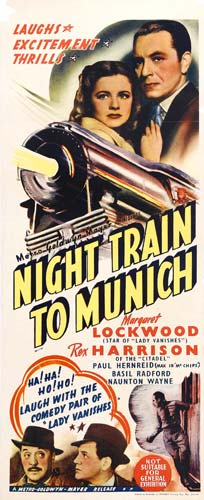
Carolyn: “Escape” which was a book by Ethel Vance, with Robert Taylor and Norma Shearer; “Night Train to Munich,” with Rex Harrison; and, of course, “Casablanca; “Ministry of Fear,” with Ray Milland; “Cloak and Dagger,” with Gary Cooper and Lily Palmer,night-train-to-munich “Watch on the Rhine,” with Bette Davis and Paul Lucas, and “OSS,” with Alan Ladd. All of those are great movies.
Lisa: What was it like to be a young girl in the war years?
Carolyn: In elementary school, our room would get the American flag for the week if our class bought the most war stamps and bonds that week. The classes competed to have the flag on display at the front of the room. It was a big deal. I was at Fisher School two years. Stamps were ten cents, bonds were $18.75 redeemable in ten years for $25. You had a book of stamps and you would try to fill the book with stamps. You would turn in a certain amount of stamps to redeem for a bond. That paid for the war! My grandparents sold cattle during the war years and they gave me money to do it because I was always a big stamp buyer. The government was smart to do that. It was an easy way for the government to get money from the citizens to finance, to fight the war. So many (citizens) had schoolchildren. While boys – women and men were fighting and dying in the war around the world – I was a young girl busy doing cartwheels in the front yard and joining little clubs – I was totally isolated. I didn’t know anyone who died in the war.
Lisa: Changing the subject, you wanted to say something about (actress) Carole Lombard.

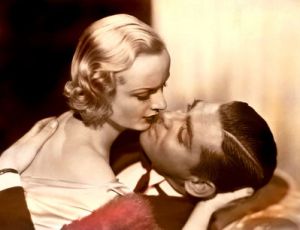
Carole Lombard and Clark Gable

Carole Lombard and Clark Gable

Carolyn: Yes. Japan attacked us on Dec. 7, 1941. In January 1942 Carole Lombard went on a war bond tour – to Indiana I think. She wanted to get home to see (her husband and actor) Clark Gable afterward, in a hurry, because they had had a fight over Lana Turner. She insisted on flying out to California late at night when it was dark and foolish to fly over the Rockies. She should have waited for a better plan but she insisted on flying out. She crashed in her plane in the Rockies. She was only 33. All they found of her were her earrings. Clark went to the scene and was distraught. He was always a good drinker, but he isolated himself for a few days afterward or so and drank heavily before he came back out. Roosevelt said she (Lombard) was one of our first casualties of the war or maybe even first hero. Before she had left, she had said to Clark Gable, “Pappy, you need to join this man’s army (meaning the United States Army).” After she died, Gable did just that; he enlisted. He was about 41. He didn’t need to sign up. They were not drafting men of his age. But he was distraught and he did it. He was made a captain or something at the top – he became brass right away – he was too important to be just a regular fellow. He may have been in the Army but he was still a celebrity.
Lisa: Was Clark Gable decorated?
Carolyn: He was stationed in Great Britain, he was an officer, he may have been in some forays over Germany.
Lisa: What will we be talking about during your next visit to Lisa’s History Room?
Carolyn: What should we talk about? Should we talk about history?
Lisa: Well, if you had something you wanted to tell, what would it be?
Carolyn: I’d tell about the depression years. We had butter beans at Mother’s, and (my grandmother) Nona cooked cheap things, rice pudding, bread pudding, onions….the hobos, I don’t want to say that, the homeless people, they would come to the back door. Nona would give them a plate of food and they would to go and sit out under a tree in the backyard and eat their food. People weren’t afraid of other people back then.
Lisa: Okay, save those stories for next time. Thank you so much for stopping by today.
Carolyn: Well, bless your heart, you make me feel like a celebrity!

Read Full Post »

annie-oakley-poster1I was just at Randall’s picking up some Haagen-Dazs chocolate ice cream for Katie, O’Doul’s for Tom, and mango sorbet for myself when I happened to glance at the magazine rack at the checkout stand. “Oprah’s Cocaine Relapse!” shouted the headline on the National Enquirer. “Stedman furious as her secret lover TELLS ALL. PLUS: THE SHOCKING VIDEO!”

How ironic. I’d just been reading about Annie Oakley, eager to blog about her, and not sure where to start, her life is so rich with stories. Leave it to the National Enquirer to give me the nudge. I’d write about the media libel that almost took down Annie Oakley’s reputation. Who’d have thought that Oprah Winfrey and Annie Oakley would have something in common?

Actually, that’s not so strange. Annie Oakley (1860-1926) was, in her day, as big a superstar as Oprah Winfrey is today. As most everyone knows, Annie Oakley was to shooting what Lucille Mulhall (see last post, “America’s First Cowgirl”) was to roping. For 17 years, she received second billing as an expert markswoman with Buffalo Bill’s Wild West Show, at a time when women were largely restricted to home, church, and school. In 1887, she set sail with the troupe to England where they performed for Queen Victoria’s Golden Jubilee. For six months, they remained in Europe. Royalty from all over Europe came to see the show and Annie Oakley was one of its biggest attractions. She shot glass balls that her husband Frank Butler sent skyward. She charmed the audience with her girl-like antics. “The loudest applause of the night is reserved for Miss Annie Oakley, because her shooting entertainment is clever, precise, and dramatic,” a London reviewer wrote. (1)

Annie Oakley never walked onto the stage. She skipped in, bowing, waving, and throwing kisses. She had some thrilling riding tricks but her most famous antic involved shooting a target with the aid of a handheld mirror. She would turn her back on her target and take aim at it by looking in the mirror. Sometimes the target was an apple sitting on the head of her dog, Dave. Then she would prop her shotgun over her right shoulder, aim it behind her, and shoot without turning around. When she hit the target, when she almost always did, she would do a little jumpkick then skip happily out of the arena. The audiences loved it. If she missed the target, though, she would turn her face to the crowd and pout dramatically. The audiences loved that, too.

No doubt about it. Annie Oakley was an entertainer. But she never lost sight that she was foremost a lady. As an athlete, she might have been more comfortable in pants but she refused to wear them, considering them unladylike, and wore A-line or pleated skirts instead. Her costumes were always wholesome, her legs below her short skirt covered entirely by dark, pearl-button leggings, and her shirt longsleeved, covering neck and wrists. Her starched white blouse with its high collar gave her a prim look. She was considered by her friends as “straitlaced.” (1)

When she traveled, she and Frank shared a tent, which Annie made homey with knick-knacks, photographs, a welcome mat, and sometimes a white picket fence. Annie Oakley took great care to keep up respectability.

annie-oakley-in-tent5
So it came as a great shock to her when she learned of an article that appeared in two Chicago newspapers on August 11, 1903, smearing her good name. The papers reported that someone by the name of Annie Oakley was in a Chicago jail after pleading guilty to stealing “the trousers of a negro” to get money to buy cocaine. (2) “ANNIE OAKLEY ASKS COURT FOR MERCY–Famous Woman Crack Shot…Steals to Secure Cocaine,” screamed one headline.The bogus story was picked up by newspapers nationwide.

At the time, Annie was 42 years old and had just finished starring in The Western Girl. Any plans she may have had of continuing her acting career on the stage came to an abrupt halt. She filed lawsuits against 55 newspapers for blackening her good name. She spent the next seven years testifying in court about the damage done to her reputation by the false newspaper articles. She won 54 of the 55 lawsuits. The woman who had been arrested that August day turned out to have been an impostor posing as Annie Oakley who had confessed to the crime. Her name was Maude Fontenella. She had once performed in a burlesque Wild West show as “Any Oakley.” It was the fault of a Chicago reporter named Ernest Stout who filed the false story, saying that the police inspector had verified that the woman was the real Annie Oakley. (2) Annie Oakley was neither a thief nor a drug addict.

The scandal behind her, the verdicts just, Annie went back on the road with another wild west show, though now she wore a brown wig. Her hair had turned completely white.

I’ve read the National Enquirer on Oprah. It seems that Oprah has admitted on TV to past cocaine use. But, fortunately, in these modern times, her past indiscretion did not ruin her reputaiton.

(1) Macy, Sue. Bull’s Eye: A Photobiography of Annie Oakley. National Geographic Society: Washington, D.C., 2001.
(2) Kasper, Shirl. Annie Oakley. The University of Oklahoma Press: Norman, 1992.

Read Full Post »

« Newer Posts - Older Posts »