Jeff Koons' porcelain and gold lifesize sculpture, "Michael Jackson and Bubbles," is on exhibit in Versailles, France.
From the Los Angeles Times
OBITUARY
Michael Jackson’s Life Was Infused With Fantasy and Tragedy
By Geoff Boucher and Elaine Woo
In the early 1980s, Michael Jackson was the world’s most popular entertainer thanks to a series of hit records — “Beat It,” “Billie Jean,” “Thriller” — and dazzling music videos.
Michael Jackson was fascinated by celebrity tragedy. He had a statue of Marilyn Monroe in his home and studied the sad Hollywood exile of Charlie Chaplin. He married the daughter of Elvis Presley.
Jackson met his own untimely death Thursday at age 50, and more than any of those past icons, he left a complicated legacy. As a child star, he was so talented he seemed lit from within; as a middle-aged man, he was viewed as something akin to a visiting alien who, like Tinkerbell, would cease to exist if the applause ever stopped.
It was impossible in the early 1980s to imagine the surreal final chapters of Jackson’s life. In that decade, he became the world’s most popular entertainer thanks to a series of hit records — “Beat It,” “Billie Jean,” “Thriller” — and dazzling music videos. Perhaps the best dancer of his generation, he created his own iconography: the single shiny glove, the Moonwalk, the signature red jacket and the Neverland Ranch.

Toward the end of his life, Michael Jackson made the headlines more often for his odd behavior than for his musical accomplishments. In this 2008 photo, Michael at age 50, appears in another bizarre disguise, a veil, an eye mask, and his trademark black trilby hat
In recent years, he inspired fascination for reasons that had nothing to do with music. Years of plastic surgery had made his face a bizarre landscape. He was deeply in debt and had lost his way as a musician. He had not toured since 1997 or released new songs since 2001. Instead of music videos, the images of Jackson beamed around the world were tabloid reports about his strange personal behavior, including allegations of child molestation, or the latest failed relaunch of his career.
A frail-looking Jackson had spent his last weeks in rehearsal for an ambitious comeback attempt and 50 already-sold-out shows at London’s O2 Arena. A major motivation was the $300 million in debt run up by a star who lived like royalty even though his self-declared title of King of Pop was more about the past than the present.
It’s one of the greatest losses,” said Tommy Mottola, former president of Sony Music, which released Jackson’s music for 16 years. “In pop history, there’s a triumvirate of pop icons: Sinatra, Elvis and Michael, that define the whole culture. . . . His music bridged races and ages and absolutely defined the video age. Nothing that came before him or that has come after him will ever be as big as he was.”
Jackson “had it all. . . . talent, grace, professionalism and dedication,” said Quincy Jones, Jackson’s collaborator on his most important albums and the movie “The Wiz.” “He was the consummate entertainer, and his contributions and legacy will be felt upon the world forever. I’ve lost my little brother today, and part of my soul has gone with him.”
Jackson was born Aug. 29, 1958, in Gary, Ind. His mother, Katherine, would say that there was something special about the fifth of her nine children. “I don’t believe in reincarnation,” she said, “but you know how babies move uncoordinated? He never moved that way. When he danced, it was like he was an older person.”
Katherine Jackson, who worked for Sears, Roebuck and Co., taught her children folk songs. Her husband, Joseph, a crane operator who once played with the R&B band the Falcons, played guitar and coached his sons. The boys were soon performing at local benefits. Michael took command of the group even as a chubby-cheeked kindergartner.
“He was so energetic that at 5 years old he was like a leader,” brother Jackie once told Rolling Stone magazine. “We saw that. So we said, ‘Hey, Michael, you be the lead guy.’ The audience ate it up.”
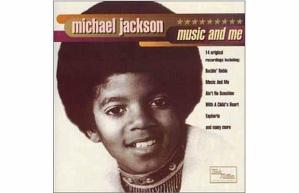 By 1968, the Jacksons had cut singles for a local Indiana label called Steeltown. At an engagement that year at Harlem’s famed Apollo Theater, singer Gladys Knight and pianist Billy Taylor saw their act and recommended them to Motown founder Berry Gordy. So did Diana Ross after sharing a stage with the quintet at a “Soul Weekend” in Gary.
Ross said later that she saw herself in the talented and driven Michael. “He could be my son,” she said. Another Motown legend, Smokey Robinson, would describe the young performer as “a strange and lovely child, an old soul in the body of a boy.”
Motown moved the Jacksons to California, and in August 1968 they gave a breakthrough performance at a Beverly Hills club called The Daisy. Their first album, “Diana Ross Presents the Jackson 5,” was released in December 1969, and it yielded the No. 1 hit “I Want You Back,” with 11-year-old Michael on the lead vocals. “ABC,” “I’ll Be There” and other hits followed, and the group soon had their own television series, a Saturday morning cartoon and an array of licensed merchandise aimed at youngsters.
There was a price: childhood.
“I never had the chance to do the fun things kids do,” Jackson once explained. “There was no Christmas, no holiday celebrating. So now you try to compensate for some of that loss.” [The Jacksons are Jehovah’s Witnesses; they do not celebrate holidays and birthdays.]
Joseph Jackson ruled the family, by most accounts, with his fists and a bellowing rage. In a 2003 documentary by British journalist Martin Bashir, Jackson said his father often brandished a belt during rehearsals and hit his sons or shoved them into walls if they made a misstep.
“We were terrified of him,” Jackson said.

Michael Jackson as he appeared in 1978 during the filming of The Wiz. His father made fun of his facial acne.
In the Bashir interviews, the singer said his father ridiculed him for his pug nose and adolescent acne. He also described, with obvious discomfort, having to listen to an older brother have sex with a woman in the hotel bedroom they shared.
Onstage, Jackson seemed to know no fear.
“When we sang, people would throw all this money on the floor, tons of dollars, 10s, 20s, lots of change,” an adult Jackson once told Newsweek. “I remember my pockets being so full of money that I couldn’t keep my pants up. I’d wear a real tight belt. And I’d buy candy like crazy.”
By 1972, Jackson had his first solo album, “Got to Be There,” which included the title hit as well as “Rockin’ Robin.” His first solo No. 1 single came the same year — the forlorn theme song from the movie “Ben.”
He struggled to understand a world that he saw mostly while staring into spotlights and flashbulbs. Standing ovations greeted him onstage; parental slaps awaited him in the dressing room. Like his mother, he became a Jehovah’s Witness, forswearing alcohol, cigarettes and foul language. He fasted on Saturdays and went door-to-door, wearing a disguise, to spread the faith. (He ended his association with the religion in the late 1980s.)
In 1978, Michael made his film debut as the Scarecrow in “The Wiz,” a black-cast adaptation of “The Wizard of Oz.” The movie launched a creative and commercial partnership with “Wiz” music director Quincy Jones.

Michael Jackson drew inspiration for his moonwalk dance move from French mime Marcel Marceau's "walking against the wind"
The first fruit of their collaboration was “Off the Wall” (1979), Jackson’s debut album on the Epic label. It sold 5 million copies in the United States and 2 million abroad and generated four Top 10 singles.
It was with Jones (as well as often-overlooked songwriter Rod Temperton) that Jackson shaped “Thriller,” which was released near the end of 1982 and became the best-selling studio album in history and a cultural landmark. Its effect on the music industry and the music videos that came to define the then-nascent MTV was huge.
In a Motown TV special in 1983, Jackson, then 24, electrified the nation with his Moonwalk, a dance step that created the illusion of levitation. He took the stage in a black sequined jacket, silver shirt, black fedora and black trousers that skimmed the tops of his white socks. The final touch was a single white glove, studded with rhinestones.
Times critic Robert Hilburn, who observed the performance live at the Pasadena Civic Auditorium, said the broadcast marked Jackson’s “unofficial coronation as the King of Pop. Within months, he changed the way people would hear and see pop music, unleashing an influence that rivaled that of Elvis Presley and the Beatles.”
His dance style combined the robotic moves of break-dancers, the quicksilver spins and slides of James Brown and the grace of Fred Astaire, whose routines he studied. The aging Astaire called him “a wonderful mover.”
Not only did “Thriller” smash sales records as the bestselling album of 1983, but it made Jackson the first artist to top four charts simultaneously: It was the No. 1 pop single, pop album, R&B single and R&B album. It earned five Grammy Awards. Jay Cocks wrote in Time magazine that Jackson “just may be the most popular black singer ever.”
The “Thriller” success enabled Jackson to negotiate what were believed to be the highest royalty rates ever earned by a recording artist. But it also put him in a cage of his own anxieties and obsession.

1994 Honeymoon photo of Michael Jackson and Lisa-Marie Presley at EuroDisney. They stayed in the Sleeping Beauty Suite of the Disneyland Hotel.
Jackson bonded with past pop-music royalty by marrying Lisa Marie Presley in 1994 and grabbing a major interest in the Beatles’ catalog, an asset worth $500 million. The marriage was short-lived, however, and his wealth was imperiled by an extravagant lifestyle that included the 2,700-acre Neverland Ranch in the Santa Ynez Valley, where he lived with a menagerie of exotic pets.
Jackson became a prisoner of his own celebrity. He became so accustomed to bodyguards and assistants that he once admitted that he trembled if he had to open his own front door. He compared himself to “a hemophiliac who can’t afford to be scratched in any way.”
Notoriously shy offstage, onstage he was electric and acutely attuned to what his fans craved. Commenting once on a sotto voce note at the end of a ballad, he said: “That note will touch the whole audience. What they’re throwing out at you, you’re grabbing. You hold it, you touch it and you whip it back — it’s like a Frisbee.”

A 30 foot fiberglass statue was pulled along the Thames River in London to publicize Michael Jackson's 1995 album HIStory
“I hate to admit it, but I feel strange around everyday people,” he said on another occasion. “See, my whole life has been onstage, and the impression I get of people is applause, standing ovations and running after you. In a crowd, I’m afraid. Onstage, I feel safe. If I could, I would sleep on the stage. I’m serious.”
In better days, his wealth allowed him to fulfill personal fantasies — including building his own amusement park — and bankroll charities, particularly those involving children. Then came the dark whispers about the nature of his relationship with boys.
He was often seen with youngsters, both famous and those plucked from the mundane world to visit his playground estate. In 1993, he was accused of molesting a 13-year-old boy who was a frequent overnight guest in his home. On tour in Asia when the charges were filed, he canceled his performances, citing exhaustion and addiction to painkillers as the reasons.

Video arcade and toys at Michael Jackson's Neverland Estate
Jackson’s attorney charged that the boy’s father, a would-be screenwriter who had tried to obtain Jackson’s backing for a project, was trying to extort money. The criminal investigation was closed after the boy refused to testify. A civil lawsuit was settled for a reported $20 million.
“I am not guilty of these allegations,” Jackson, then 35, said after the settlement was reached. “But if I am guilty of anything, it is of giving all that I have to give to help children all over the world. It is of loving children of all ages and races. It is of gaining sheer joy from seeing children with their innocent and smiling faces. It is of enjoying through them the childhood that I missed myself.”
He lost a Pepsi endorsement as well as a deal to develop several films. The Jackson-themed Captain EO attraction at Disneyland was scrapped.
A second case unfolded in November 2003, when Santa Barbara authorities, acting on accusations by a 13-year-old cancer patient who had stayed at Jackson’s ranch, arrested the star. The 14-week trial featured celebrity witnesses such as Jay Leno and Macaulay Culkin and Jackson’s own bizarre antics, such as showing up for court in pajama pants and a tuxedo jacket. It ended June 13, 2005, with his acquittal on all counts.
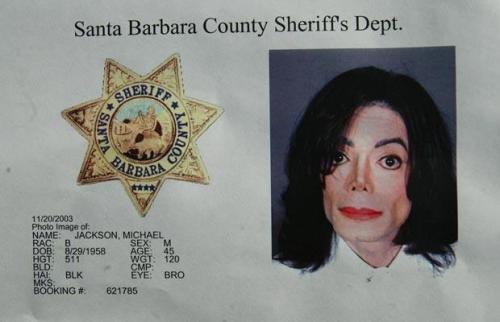
Michael Jackson's 2003 mug shot
Jackson acknowledged in the interview with Bashir that, despite the earlier cases, he still invited children to share his bedroom and saw nothing wrong with it.
“It’s not sexual,” he insisted. “I tuck them in, have hot milk, give them cookies. It’s very charming, it’s very sweet.”
He added that his own children “sleep with other people all the time.”
By then, Jackson was a figure of pop music’s past, not its present. When The Times, in 2001, asked top recording executives to name the most valuable acts in the business, Jackson failed to make the top 20.
In 2003, he settled a lawsuit by his former financial advisors after legal documents portrayed the singer as near bankruptcy.
At the same time, he was waging legal battles against his 1970s recording label, Motown Records, and his current label, Sony’s Epic Records. He stirred speculation about his mental state when he contended that the latter company, and in particular Mottola, had inadequately promoted his work because of racism.
He celebrated his 45th birthday in August 2003 at a curious public event that seemed to underscore the decline of his career. Hundreds of fans paid $30 each or more for admission to an old downtown Los Angeles movie palace, where largely amateur or obscure performers sang, lip-synced or danced to the fallen idol’s hits. Most of the seats reserved for A-list guests went begging.
When the honoree took the stage at the end to join in a rendition of “We Are the World,” he was flanked not by the likes of Bob Dylan and Stevie Wonder, as he was when the famous song was first recorded, but by several Jackson impersonators.
Such impersonators usually model themselves on his “Thriller” persona, but the singer himself looked nothing like that in recent years.
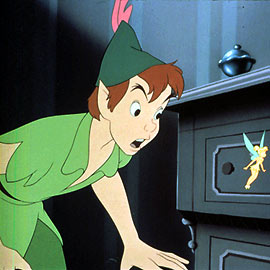
Peter Pan and Tinkerbell
There was intense public curiosity about his physical metamorphosis. Jackson often insisted that his wan complexion was the result of treatment for a skin disorder called vitiligo, but that did not explain why his once-broad nose became long, sleek and pertly tipped.
He publicly admitted to two nose operations, but cosmetic surgeons who studied his photographs surmised that he had undergone far more, possibly so many that he had destroyed the cartilage.

Many plastic surgeries later, Michael Jackson began to resemble his alter ego, Peter Pan, with his perky upturned nose.
In 1996, Jackson married his former nurse, Debbie Rowe, who bore two of his three children, Prince Michael Jr. and Paris Michael Katherine. He did not disclose the identity of the mother of his third child, Prince Michael II.
He raised the children without their mothers and had them wear elaborate masks whenever they went out with him. Several months after Prince Michael II’s birth, Jackson dangled the baby outside an upper-story hotel window in Berlin to show the child to fans assembled below. The incident led to accusations that the singer was an unfit father. He later acknowledged that he had shown poor judgment.
He is survived by his children; his parents; and siblings Maureen, Jackie, Tito, Jermaine, Marlon, Randy, LaToya and Janet.
Readers, for more on this blog on Michael Jackson, click here.



 Jones worked out which singers would perform which lyrics, studying recordings of each of the selected singers to decide which would work well with each other. He paired Billy Joel
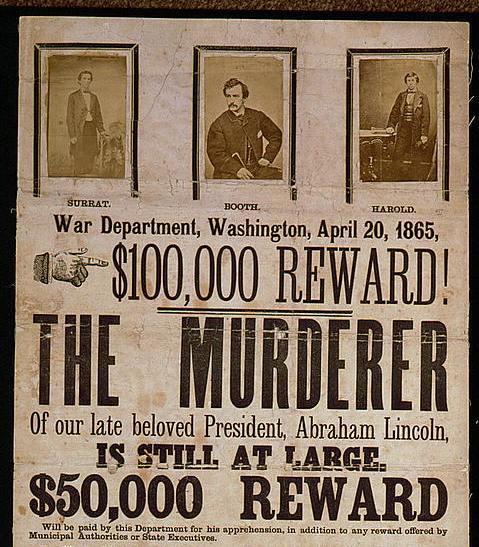 It was April 24, 1865 – ten days since President Lincoln was assassinated – and his killer still remained at large. On the night of April 14, John Wilkes Booth had shot the president in the head, jumped on a horse, and slipped across the Potomac River undetected. He had disappeared into Maryland, a state that had stayed in the Union in the Civil War (which had ended just days earlier), but was sprinkled with Confederate spies. Speculation was that Booth would cross Maryland into Virginia with the help of fellow Confederate sympathizers.