Feeds:
Posts
Comments

Archive for the ‘MUSIC & DANCE’ Category

Audrey Hepburn (ca. 1935-37, perhaps in Brussels, age 6-8)

Audrey Hepburn (ca. 1935-37, perhaps in Brussels, age 6-8)

It was May 9, 1940, and Audrey Kathleen Hepburn (Ruston) had just turned eleven years old. She was living in Holland with her mother, her two older brothers, and other relatives. Her father lived in London. Her parents were divorced.

To celebrate Audrey’s birthday, her mother, Dutch Baroness Ella van Heemstra Ruston, had bought tickets for her and Audrey to see a performance by the great English dance troupe, The Sadler’s Wells Ballet. The company was touring Holland, France, and Belgium. Audrey’s town of Arnhem was to be one of their stops.

Audrey (1929-1993) had been living in Holland for only nine months. Previously, she had been in boarding school in England. But, in September 1939, Hitler invaded Poland. All at once, England was no longer a safe place for a little girl, as it had declared war on Germany. At her mother’s request, Audrey’s father scooped up Audrey from her school and put her on a big orange plane to Holland (also known as the Netherlands), where her mother’s family lived. Holland intended to stay neutral in the war with Germany and was considered a safe place for riding out the conflict.
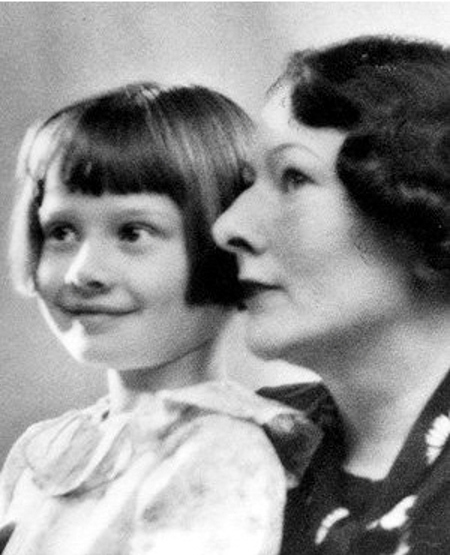
Audrey Hepburn and her mother Ella, Baroness van Heemstra Hepburn-Ruston, ca. 1936.

Audrey Hepburn and her mother Ella, Baroness van Heemstra Hepburn-Ruston, ca. 1936.

Audrey had not seen her dad since that day at the airport. She missed him so! Her parents’ divorce had left an aching hole in her heart. But on this particular May day, Audrey was not sad. She was looking forward to the ballet! Her mother had given her more than one reason to smile:

My mother had our little dressmaker make me a long taffeta dress. It went all the way to the ground, and it rustled. There was a little round collar, a little bow here, and a little button in front. The reason she got me this, at great expense, was that I was to present a bouquet of flowers at the end of the performance to…the director of the company.”

The evening finally arrived. Audrey wore her beautiful new long dress and got to see the famous Margot Fonteyn dance in “Horoscope” and “Façade” by choreographer Frederick Ashton. It was marvelous.

Margot Fonteyn in the Polka from Ashton's Facade, 1940. Fonteyn was the principal dancer of the Royal Ballet Company for 20 years.

Margot Fonteyn as the Polka from Ashton’s Facade, 1940. Fonteyn was the principal dancer of the Royal Ballet Company (originally the Sadler’s Wells) for 20 years.

Afterwards, Audrey’s mother took the stage and gave a formal thanks to the troupe first in Dutch, then in English. Next was Audrey’s big moment. To her surprise, her bouquet of tulips and roses was hurriedly accepted. A quick supper followed, as the dancers hustled about afterward, gathering up their props and costumes, to get on their bus to leave Arnhem that very evening. According to the British consul, there was suspicious German military activity nearby. The dancers didn’t want to get stuck in Holland if the Germans did attack and closed off the borders.

As Audrey’s head lay on the pillow that night, the Germans invaded Holland, Belgium, and Luxembourg. The Dutch were totally shocked. They never dreamed Hitler would attack them, his “Dutch cousins”! Just the night before, matter of fact, Hitler had made a radio broadcast, promising to all who listened that he had no plans whatsoever of attacking Holland. For five days, the Germans came down on the Dutch with the force of Hell. They never bothered issuing a formal declaration of war either.

 German parachutists invading the Netherlands, May 10-15, 1940

This is the city center of Rotterdam, Holland, following the German Blitz of May 14, 1940. A ceasefire was already in progress but the Nazis bombed anyway.

They blasted the city of Rotterdam with an air attack that killed 1,000 Dutch civilians and left 85,000 homeless (accounts vary as to the exact number).

Incendiary bombs were dropped on the Hague. Nazi troops tore through Audrey’s town of Arnhem, looting and despoiling as they pleased. The Germans threatened to bomb every Dutch city until they were demolished until Holland surrendered. The Dutch military, though terribly outnumbered, fought back anyway, but they were no match for the conquering horde, and were forced to surrender. After five days, Holland capitulated. It would be occupied by the Nazis for five very long years. The Germans wanted to take over the world and destroy the Jewish population.

At first, Audrey’s family was allowed to remain at their regal ancestral home, Castle Zypendaal (or Zijpendaal). Audrey Hepburn’s mother’s family was of Dutch nobility.

Audrey Hepburn's mother's family was of Dutch nobility. This is one of their homes, the Castle Zypendaal in Arnhem.

Audrey Hepburn’s mother’s family was of Dutch nobility. This is one of their homes, the Castle Zypendaal in Arnhem.

Over the next ten months, the van Heemstra bank accounts, securities, and jewelry would be confiscated by the Nazis. Rations were imposed on food and fuel which were soon in short supply for the suffering Dutch people. Food became completely nonexistent during the Hunger Winter of 1944 as the Germans cut off all imports of foods to punish the Dutch Resistance (secret group that fought back against the Nazis from inside Holland). During that time, Audrey confessed to eating bread made from flour from tulip bulbs and grass to keep from starving to death like 20,000 other Dutch citizens did that winter.
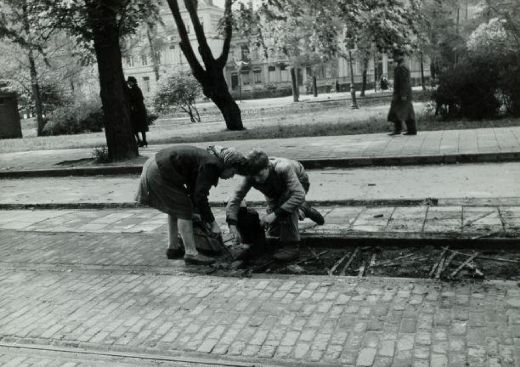
The Hunger Winter, 1944-45. Wood is taken from the tram rail in Holland to burn as fuel.

The Hunger Winter, 1944-45. Wood is taken from the tram rail in Holland to burn as fuel.

The German occupiers spread anti-English sentiment, banning the import of British jams and biscuits and outlawing the Girl and Boy Scouts. The Germans hoped they could whip the Dutch into a hatred for the English and recruit them in the battle against Britain.

Audrey Hepburn-Ruston was an English name and Audrey spoke English. She carried a British passport. With the Nazis cracking down on the English, the Baroness was worried. Quickly, Audrey’s mother gave Audrey a new identity as a little Dutch girl. For the war years, the Baroness changed her daughter’s name to Edda van Heemstra. Audrey – now Edda – took Dutch language lessons so she could pass as Dutch and not be arrested for being English. Audrey did not risk speaking English for the rest of the war.
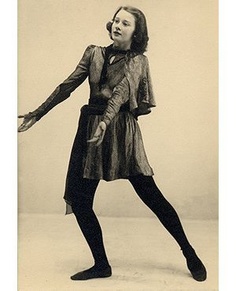
Audrey Hepburn at a dance recital, 1944, Arnhem Conservatory, Holland (age 15)

Audrey Hepburn at a dance recital, 1944, Arnhem Conservatory, Holland (age 15)

Audrey was keen to be a famous ballet dancer and her mother was the quintessential stage mom. In 1941, Ella sent Audrey to the Arnhem Conservatory to study dance. It was then that Audrey decided that she wanted to grow up to become a ballerina. Her dream was to

“wear a tutu and dance at Covent Garden.”

Her mother made her ballet slippers from scraps of felt, as materials became scarcer and scarcer, since the Nazis took the best for themselves, always.

As a child of war, Audrey learned to cope with hunger, fear, and deprivation through art, music, and dance. Soon, though, she and some other dancers began staging private, secret dance shows to raise money for the Dutch Resistance.

I designed the dances myself. I had a friend that played the piano, and my mother made the costumes. They were very amateurish attempt – but…it amused people.”

The recitals were given in houses with windows and doors closed, and no one outside knew what was going on. Afterward, money was collected and turned over to the Dutch Resistance. To keep from being discovered, the audiences did not clap.

“The best audience I ever had made not a single sound at the end of my performance.”

Audrey Hepburn during a dance recital in Arnhem, Holland, 1944
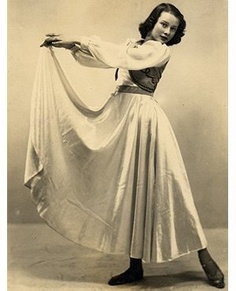
Audrey Hepburn during a dance recital in Arnhem, Holland, 1944

Sometimes at these “black performances,” resistance workers attended. They gave the young performers money and folded messages to be stuffed into the children’s shoes and transported the next day to resistance workers. The children risked death to save the lives of resistance workers and Audrey was one of these children.

One winter day, Audrey was walking along a city street when three truckloads full of German soldiers toting rifles stopped suddenly. The soldiers ordered all the girls in their sight to line up and get in the trucks. Audrey did as she was told. As the trucks drove off, Audrey kept saying the Lord’s Prayer to herself in Dutch. Then the convoy stopped unexpectedly. Some soldiers jumped out and began abusing some Jews. Audrey said:

“I remember hearing the dull sound of a rifle butt hitting a man’s face. And I jumped down, dropped to my knees, and rolled under the truck. I then skittered out, hoping the driver would not notice me – and he didn’t.”
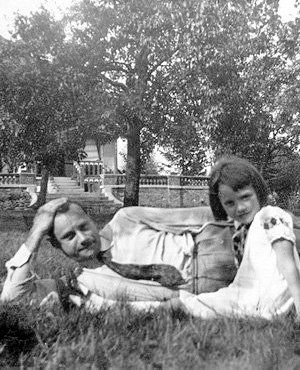
Audrey with father, preNazi Occupation, ca. 1934-35, age 5-6

Audrey with father, preNazi Occupation, ca. 1934-35, age 5-6

And where was Audrey’s father all this time? He was arrested in England and accused of peddling Nazi propaganda for the notorious leader of the British Union of Fascists, Sir Oswald Mosley. He remained under house arrest for the duration of the war on the Isle of Man with other suspected Nazi sympathizers.

Below are some beautiful drawings Audrey made during the war.

Audrey Hepburn's childhood artwork

Audrey Hepburn’s childhood artwork

Read Full Post »

Whitney Houston talking to the audience before proceeding to perform "Saving All My Love for You" during the HBO-televised concert "Welcome Home Heroes with Whitney Houston" honoring the troops, who took part in Operation Desert Storm, their families, and military and government dignitaries, 1991.

from TMZ:

Whitney Houston‘s family was told by L.A. County Coroner officials … the singer did not die from drowning, but rather from what appears to be a combination of Xanax and other prescription drugs mixed with alcohol … this according to family sources.

We’re told Coroner’s officials informed the family there was not enough water in Whitney’s lungs to lead to the conclusion that she drowned.

Our sources say the family was told Whitney may well have died before her head became submerged.

And family sources tell us … it was actually Whitney’s aunt, Mary Jones, who discovered Whitney’s body in the bathtub. Mary had laid out Whitney’s dress for the evening on the bed and then left for about a half hour. When Whitney didn’t come out of the bathroom, Mary entered, pulled Whitney out of the tub and began administering CPR.

And we’re told … Whitney’s mom has arranged to have the singer’s body flown back to Atlanta, as early as tomorrow. The family was told the Coroner has no problem releasing the body because there is no evidence of foul play — and unless cops put a hold on the body, it can be flown back East.

Readers: For more on Whitney Houston here on Lisa’s History Room, click here.

Read Full Post »

An emergency medical team removes Whitney Houston's lifeless body from her 4th floor room at the Beverly Hilton Hotel, L.A., on February 11, 2012.

TMZ reports that Whitney Houston may have drowned. Her body was initially found face down in the bathtub but had been removed by her bodyguards and staff before medical personnel arrived. Various pill bottles were found in her room at the Beverly Hilton Hotel. An autopsy will be performed to discover whether Ms. Houston died from an overdose, drowning, or another cause.

A bathroom at the Beverly Hilton Hotel much like the one in which Whitney Houston died.

Family members said Houston had been taking Xanax, prescribed for anxiety. TMZ reported that, the night before she died, Whitney Houston had been drinking alcohol heavily. Had she mixed the two drugs, it would have had a strong sedative effect, perhaps causing her to fall asleep in the bathtub and drown.

Paparazzi swarm around a coroner's van transporting Whitney Houston's body from the Beverly Hilton Hotel to the L.A. County morque for an autopsy.

Readers: For more on Whitney Houston here on Lisa’s History Room, click here.

Read Full Post »

Before Whitney Houston signed a contract with Artista Records in 1983, she was a much sought-after teenage model. She was one of the first African-American women to appear on the cover of Seventeen magazine.

Whitney Houston (r.) enjoys an ice cream treat with an unidentified model in this 1981 issue of Seventeen magazine. Whitney was 18 years old.

Readers: For more on Whitney Houston here on Lisa’s History Room, click here.


Read Full Post »

This Peace Love Whitney Jr. Hoodie honors the life of Whitney Houston with a peace sign, a heart, and a graceful treble clef to symbolize Whitney's musical gifts. This is one of the many offerings at CafePress.

More tasteful gifts from Cafe Press, these to memorialize the passing of the great American rhythm and blues singer Whitney Houston, with “Peace Love Whitney” t-shirts and gifts. Visit Cafe Press to see the cool designs for yourself.

Readers: For more on Whitney Houston here on Lisa’s History Room, click here.

Read Full Post »

Whitney Houston (1963-2012) The legendary singer, actress, and producer won six Grammy awards, two Emmy awards, 30 Billboard Music Awards across her extensive career. She was probably best known for her megahit “I Will Always Love You,” written by Dolly Parton.

Gifted singer Whitney Elizabeth Houston (1963-2012) died today yet her voice lives on and has the power to move us.

This video features Houston singing the American National Anthem at the 1991 SuperBowl when the U.S.A. was involved in the Gulf War.

Readers: For more on Whitney Houston here on Lisa’s History Room, click here.

Read Full Post »

Mariah Carey (l.) and Whitney Houston perform a duet at the 1999 Oscars ceremony. The two pop stars were good friends.

Zimbio is posting what Hollywood stars such as Mariah Carey are saying about Whitney Houston’s death. Check it out. Also Toofab is showing tweets from stars.

Readers: For more on Whitney Houston here on Lisa’s History Room, click here.

Read Full Post »

The Hollywood Reporter confirms that Whitney Houston has died at age 48. The news broke at around 5 p.m. Pacific Standard Time today, Saturday, February 11, 2012.

The R&B singer and multiple Grammy Award winner was due to make an appearance at the Clive Davis pre-Grammy Awards gala tonight. She was spotted in the Beverly Hilton Hotel in Los Angeles on Thursday morning where she was overheard chastising an assistant. According to The Hollywood Reporter:

“Later that night, Houston got into an altercation with X Factor finalist Stacy Francis at an R&B appreciation event where she was said to be acting “belligerent.” On Friday night, as THR broke news that Houston had been approached for the judges’ seat on X Factor, she was said to be at a spa, according to her publicist.”

Houston had been at rehearsals for the show on Thursday, coaching singers Brandy and Monica. The Daily Mail Online reported that Houston looked disheveled, was sweating profusely, and liquor and cigarettes could be smelled on her breath.

It is speculated that Houston’s death could be due to a drug and/or alcohol overdose, as it is well known that the singer struggled with substance abuse for decades. Whitney Houston and her ex-husband, Bobby Brown, once had a reality show on which they appeared high on drugs.

She is survived by her daughter with Brown, Bobbi Kristina, 18, who is known as “Krissi.”

Readers: For more on Whitney Houston here on Lisa’s History Room, click here

Read Full Post »

Michael Jackson wraps his arms around Whitney Houston

The Los Angeles Times reports that pop singer Whitney Houston died Saturday in Beverly Hills at the Beverly Hilton Hotel. Authorities are trying to determine a cause of death.

Houston, 48, was in the Los Angeles area for a musical tribute to music executive Clive Davis and had performed and spoken to reporters earlier in the week. Clive Davis was the person responsible for launching Houston’s singing career. Appearing on Good Morning America, Davis once said of Houston:

“The time that I first saw her singing in her mother’s act in a club … it was such a stunning impact. To hear this young girl breathe such fire into this song. I mean, it really sent the proverbial tingles up my spine.’

Record studio executive Clive Davis poses with singer Whitney Houston whom he discovered singing in a nightclub with her mother.

Whitney’s publicist Kristen Foster told the Associated Press on Saturday that Houston had died but did not provide further details.

The Daily Mail Online reported inaccurately that Whitney was found by her on-off boyfriend Ray J in her hotel room.

It is now believed that Ms. Houston was found by her bodyguard, “Ray.” The Beverly Hills Police Department say that at 3:43 p.m. (Pacific Standard Time), a 911 call was placed from the Beverly Hilton Hotel. The police were on the scene in two minutes. When they got to Ms. Houston’s room on the 4th floor, hotel staff were attempting CPR on her lifeless body. At 3:55 p.m., the singer was pronounced dead. As of 6:10 p.m. PST, Ms. Houston’s body was still in the room. (Radar Online)

Preliminary findings suggest no foul play.

Oddly enough, the Clive Davis preGrammy Award party – the biggest black tie event associated with the record awards ceremony – went on as planned, just hours after Houston’s death. The party was held in the Beverly Hilton Hotel, the same hotel where Houston was found unconscious. It was an eerie incongruency, stars stepping out of limos for the party as Houston fans arrived in tears to lay bouquets of flowers in memory.

Shocked to learn of Whitney Houston’s tragic death, fans flock to the scene at the Beverly Hilton, where they lay flowers and light candles in tribute to the fallen singer

Readers: For more on Whitney Houston here on Lisa’s History Room, click here.

Read Full Post »

An homage to the more innocent days of Whitney Houston’s singing career:

“How Will I Know?” My niece sang this to me when she was 12.

Readers: For more on Whitney Houston on this blog, click here.

Read Full Post »

Whitney Houston dies at 48.

LOS ANGELES (AP) – Whitney Houston, who reigned as pop music’s queen until her majestic voice and regal image were ravaged by drug use, has died. She was 48.

Publicist Kristen Foster said Saturday that the singer had died, but the cause and the location of her death were unclear.

At her peak in the 1980s and ’90s, Houston was the golden girl of the music industry and one of the world’s best-selling artists.

Among her hits were “How Will I Know,” ”Saving All My Love for You” and “I Will Always Love You.” She won multiple Grammy Awards including Album and Record of the Year.

Her success carried her beyond music to movies like “The Bodyguard.”

But by the end of her career, drug use took its toll as her record sales plummeted and her voice became raspy and hoarse.

Readers: For more on Whitney Houston on this blog, click here.

Read Full Post »

Elizabeth Taylor in costume as “Cleopatra,” from the 1963, 20th Century Fox production of the same name

Yet another iconic item worn by actress Elizabeth Taylor is on the auction block – a wig she wore in the 1963 film, “Cleopatra.” Ms. Taylor wore many different hairdos in the movie and British wigmaster Stanley Hall made three wigs for each style. The wig for sale is made of real human hair, medium brown, and is adorned with hanging braids and gold beads.

Elizabeth Taylor is photographed with some props from the 1963 film, “Cleopatra.”

In the movie, Ms. Taylor’s character wears this particular wig when she tries to convince Julius Caesar, played by Rex Harrison, to accept supreme control of the empire. (1) The wig is being sold by Heritage Auctions of Dallas, Texas, and is set to fetch around $11,000.

Elizabeth Taylor in the arms of Richard Burton, from the movie, “Cleopatra,” 1963.

It was during the 1962 filming of “Cleopatra” in Rome that 30-year-old Elizabeth Taylor fell madly in love with her other male costar and onscreen lover, Richard Burton, 36, cast as Mark Antony. The two were both married to others at the time.

At the time, Ms. Taylor was already a big film star being paid the unprecedented amount of a million dollars to play Cleopatra. Mr. Burton, however, who was Welsh, was a Shakespearean stage actor largely unknown outside of England.

Richard Burton (l), talks with Eddie Fisher and his wife Elizabeth Taylor on the Cinecitta set in Rome, early 1962.

When people began to whisper that perhaps Ms. Taylor and Mr. Burton were conducting an illicit affair, the couple denied the accusations. So uncontrollable was their love and lust, that their affair was

“bloody obvious,” to use Burton’s term – so flagrantly on display. (2)

When the director of “Cleopatra” shouted “Cut!” at the end of love scenes, Taylor and Burton would continue to kiss.

They carried on on the movie set, film lot, in their private villas, and took their love to town – to the Via Veneto. But they were not safely in America, where  there was a time-honored tradition not to pry into the private lives of public people and where the studio would have squelched any unflattering press. They were in Rome – the land of the paparazzi.

The Italian “paparazzi” were a new style of journalist. These young, Vespa-riding photographers with cameras with zoom lenses slung around their neck were hungry for a money-making photo that would reveal the affair to the waiting world. With a pack mentality, they were ruthlessly intent upon snapping photos of the jetset enjoying La Dolce Vita, the sweet life, popularized in the film of that same name. And Liz and Dick were getting hot and heavy on the Via Veneto.

From February thru July, paparazzi stalked Taylor and Burton’s every move, hoping for that money-making photo that would expose the lovers to the world. And they got them, too, forcing both Liz and Dick to deal with their respective spouses.

Liz Taylor and Richard Burton emerge from the restaurant Tre Scalini in the Piazza Navona, spring, 1962.

The Burton-Taylor Affair – “Le Scandale,” as Burton termed it – created international interest and thus, international coverage.

Richard Burton leans in for a kiss from Elizabeth Taylor on the Cinecitta sound stage, circa March 30, 1962. Paparazzo Elio Sorci hid under a car across from the movie lot all day to snap this photo which came to be known as the “kissing picture.” It blew the lid off the Taylor-Burton affair, appearing in first the Italian papers before making its way to New York.

The public, it seemed, had an unquenchable appetite to follow the drama. Gone were the days when American readers of Photoplay and Modern Screen were content to read fictional accounts of their favorite movie stars generated by the big movie studios.

Elizabeth Taylor gazes into the eyes of her true love, Richard Burton, as they sail off the Amalfi Coast where the filming of “Cleopatra” was wrapping up. June, 1962. Marcello Geppetti, photographer.

It is hard to overstate the excitement caused at the time by Elizabeth and Richard’s grand passion. Everyone was following the saga, even First Lady Jackie Kennedy, who asked the publicist Warren Cowan in early 1963,

“Warren, do you think Elizabeth Taylor will marry Richard Burton?”(3)

Richard Burton and Elizabeth Taylor in the glow of their love, caught by paparazzo on a yacht off the coast of Ischia in the Bay of Naples, June 1962.

Initially, the pair were condemned by the press for their public adultery until publishers woke up and realized how much the “Liz and Dick” machine increased tabloid, newspaper, magazine, and book sales.

Photoplay July 1962. Everyone had an opinion about the Taylor Burton affair.

Note to readers: Today also begins the first auction at Christie’s, New York, of  The Collection of Elizabeth Taylor, which I was privileged to view on December 3, 2011. (2)

(1) Source: The Guardian

(2) “Remembering Liz (1932-2011),” Life Commemorative, 2011.

(3) Kashner, Sam and Schoenberger, Nancy. Furious Love: Elizabeth Taylor, Richard Burton, and the Marriage of the Century. New York: HarperCollins Publishers, 2010.

Readers: For more on Elizabeth Taylor on Lisa’s History Room, click here.

Read Full Post »

Amy Winehouse died of alcohol poisoning.

Yesterday, as I reported, the coroner at St. Pancras Coroner’s Office, London, released the toxicology report on Amy Winehouse, the 27-year-old British singer found dead in her flat on July 23. The official finding is that Winehouse’s death was due to alcohol poisoning. Her blood alcohol contained five times the legal limit of alcohol, which stopped her breathing and sent her into a coma. Three empty vodka bottles were found near her body in her bedroom.

Ironically, Amy Winehouse burst upon the international music scene with her 2006 hit single, “Rehab,” in which she famously refuses treatment for her alcohol and drug abuse:

“Rehab” became her anthem over the next five years as we watched, played out in the press, her very public spiral downward, in particular, the tumult that led up to her divorce from Blake Fielder-Civil, her husband of two years, whom she had met in a bar:

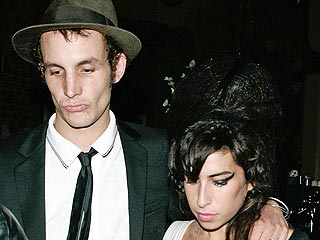
Blake Fielder-Civil and Amy Winehouse

“In addition to the reported drug use, Winehouse was famously caught on video carving the words ‘I Love Blake’ into her stomach with a shard of glass, and during an interview with Rolling Stone magazine, she displayed photos of the couple passing pills to each other with their tongues.

But the Sid-and-Nancy-style love affair was also accompanied by photos of heated arguments that ended with both sporting bruises and scratches, as well as an arrest in Norway in October 2007 for marijuana possession; the couple were released with a fine. Just months after the wedding, Fielder-Civil was arrested on charges of suspicion of attacking a bar landlord and attempting to bribe him to drop the allegation. Following his incarceration, Winehouse was frequently seen wandering the streets of her Camden neighborhood in a daze, and she subsequently canceled a U.S. tour.” (source)

Some people laughed at Amy’s troubles; others scolded her for her misbehavior. Those familiar with addiction did neither. They knew all too well this predictable pattern. If Amy didn’t get treatment for addiction, she would die.

At yesterday’s inquest, Amy’s parents and friends listened as Amy’s doctor recounted how Amy had been totally resistant to any therapies that could have helped her with her drinking problems. That foolish decision robbed her of her health, beauty, freedom, and happiness, and, finally, her life.

In reporting the inquest’s findings, I have run across some websites with headlines saying, to the effect, that Amy did it to herself, that she deserves no pity: she drank herself to death. You will find none of these attitudes here. Yes, Amy Winehouse is responsible for her own troubles and the suffering she caused herself and others. But Amy was grappling with something she was powerless to control. She was an alcoholic who tried to control her drinking, which she could not.

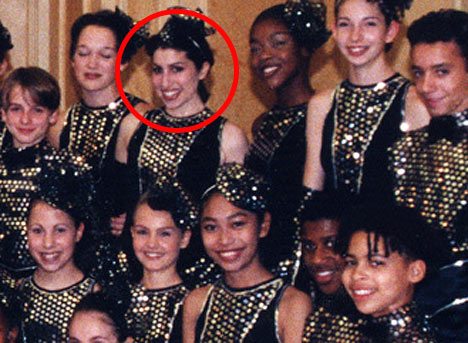
Amy Winehouse, circled, as a 13-year-old pupil at the Sylvia Young Theatre.

Addiction is an illness. It is chronic, progressive, and, if left untreated, sometimes fatal. Amy Winehouse suffered from an illness she dangerously thought she could manage alone. Rest in peace, Amy Winehouse.

For more on Amy Winehouse on this blog, click here.

Read Full Post »

British singer Amy Winehouse lost her battle with addiction.

It looks like we have an explanation for Amy Winehouse‘s tragic death. A coroner says the singer died from drinking too much alcohol, ruling it a “death by misadventure.” A pathologist says Winehouse (1983-2011) consumed a “very large quantity of alcohol” prior to her death and that her blood registered at 4.5 times over the legal drunk-driving limit. Winehouse, who died this summer at the age of 27, had struggled with drug and alcohol addiction for years.

Her doctor says she had resumed drinking in the days before her death after a period of abstinence (which we don’t have to believe).

O blessed Lord, you ministered to all who came to you:
Look with compassion upon all who through addiction have lost their health and freedom.
Restore to them the assurance of your unfailing mercy.
Remove from them the fears that beset them.
Strengthen them in the work of their recovery;
And to those who care for them, give patient understanding and persevering love.
Amen.

source: The Book of Common Prayer

Read the coroner’s report on Amy Winehouse at the Associated Press.

Read about Amy Winehouse last days at the Daily Mail Online.

Read more about Amy Winehouse on this blog by clicking here.


Read Full Post »

Addiction claims another victim. Amy Winehouse is dead at age 27.

Chemical dependence claimed another victim today: 27 year old Amy Winehouse, British rocker, was found dead at her London flat this afternoon. 

The Definition of Addiction 

Answer yes or no to the following seven questions. Most questions have more than one part, because everyone behaves slightly differently in addiction. You only need to answer yes to one part for that question to count as a positive response. 

  1. Tolerance. Has your use of drugs or alcohol increased over time?
  2. Withdrawal. When you stop using, have you ever experienced physical or emotional withdrawal? Have you had any of the following symptoms: irritability, anxiety, shakes, sweats, nausea, or vomiting?
  3. Difficulty controlling your use. Do you sometimes use more or for a longer time than you would like? Do you sometimes drink to get drunk? Do you stop after a few drink usually, or does one drink lead to more drinks?
  4. Negative consequences. Have you continued to use even though there have been negative consequences to your mood, self-esteem, health, job, or family?
  5. Neglecting or postponing activities. Have you ever put off or reduced social, recreational, work, or household activities because of your use?
  6. Spending significant time or emotional energy. Have you spent a significant amount of time obtaining, using, concealing, planning, or recovering from your use? Have you spend a lot of time thinking about using? Have you ever concealed or minimized your use? Have you ever thought of schemes to avoid getting caught?
  7. Desire to cut down. Have you sometimes thought about cutting down or controlling your use? Have you ever made unsuccessful attempts to cut down or control your use?

If you answered yes to at least 3 of these questions, then you meet the medical definition of addiction. This definition is based on the of American Psychiatric Association (DSM-IV) and the World Health Organization (ICD-10) criteria.(1

Read more about the death of Amy Winehouse at the Daily Mail.

Read more about Amy Winehouse’s life at NPR.

Read Full Post »

« Newer Posts - Older Posts »