Feeds:
Posts
Comments

Archive for the ‘MUSIC & DANCE’ Category

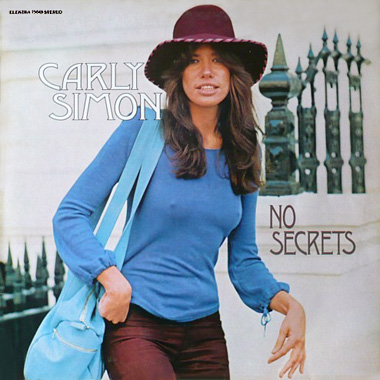
Carly Simon in 1973

In 1973, American singer Carly Simon scored the biggest global hit of her career with the release of  “You’re So Vain.” That year, the song hit #1 on the U.S. Pop and Adult Contemporary charts and sold over a million copies in the United States alone. “You’re So Vain”  is ranked at seventy-two on Billboard’s Greatest Songs of All-Time.    

Written and performed by Simon, the hit became her signature song. In it she speaks critically of a self-absorbed lover.    

You’re So Vain Lyrics    

 
You walked into the party like you were walking onto a yacht
Your hat strategically dipped below one eye
Your scarf it was apricot
You had one eye in the mirror as you watched yourself gavotte
And all the girls dreamed that they’d be your partner
They’d be your partner, and….
  
You’re so vain, you probably think this song is about you
You’re so vain, I’ll bet you think this song is about you
Don’t you? Don’t you?
 
You had me several years ago when I was still quite naive
Well you said that we made such a pretty pair
and that you would never leave
But you gave away the things you loved and one of them was me
I had some dreams they were clouds in my coffee, clouds in my coffee and….
 
 You’re so vain, you probably think this song is about you…..
 
Well I hear you went up to Saratoga and your horse naturally won
Then you flew your Lear jet up to Nova Scotia to see the total eclipse of the sun
Well, you’re where you should be all of the time
And when you’re not you’re with
Some underworld spy or the wife of a close friend
Wife of a close friend, and….
 
You’re so vain, you probably think this song is about you….. 
  

Carly Simon, "Anticipation." 1970
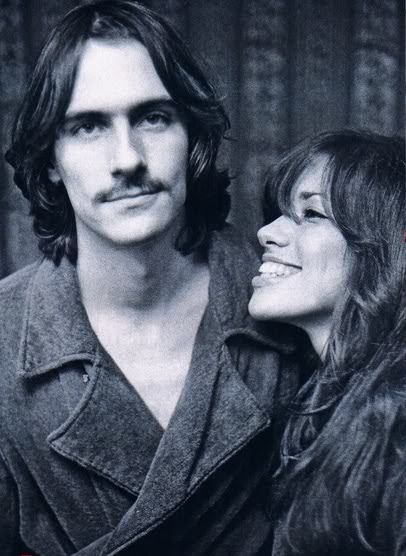
James Taylor and Carly Simon in an undated photo

Since the year of its release, the public has been obsessed with solving the puzzle in the song:

Who exactly is Simon referring to when she asserts in the song, “You’re so vain”?

Is it a lover from her past?

If so, then who is it?

 Carly Simon has dated many famous men.    

She has turned the speculation into a long-running guessing game, creating an intense media buzz and keeping the spotlight on herself. In countless interviews, she has dropped hints as to whom she is singing about but manages to never reveal his identity.  Her ex-husband musician James Taylor, to whom she was married when she recorded the song, is not in the running, she vows.    

 Interest has focused on four possible candidates, all of whom are Simon’s ex-lovers:    

rocker Mick Jagger (who sings back-up vocals on “You’re So Vain”)    

Mick Jagger marries Bianca De Macias in St. Tropez in 1971.

  actor Warren Beatty 

Actors Julie Christie and Warren Beatty, 1972.

 actor/musician Kris Kristofferson  

Carly Simon and Kris Kristofferson, 1974

 musician/activist Cat Stevens/Yusuf Islam
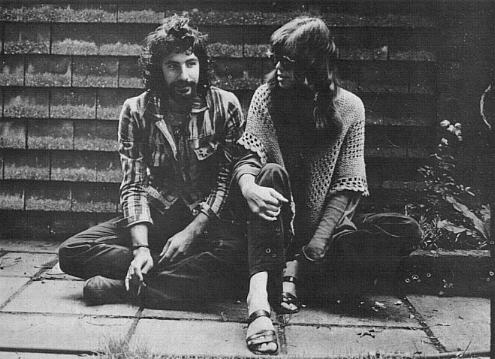
Cat Stevens and Carly Simon in London, 1970, during the recording of Simon's song, "Anticipation." Simon wrote the song while waiting for her first date with Stevens.

The strongest contender is Warren Beatty – who actually phoned Simon and thanked her for writing the song about him.     

Here is a little bit of what Simon has said:    

The Washington Post – 1983

WP: Who was ‘You’re So Vain about? Mick Jagger?    

Carly: No.    

WP: Warren Beatty?    

Carly: It certainly sounds like it was about Warren Beatty. He certainly thought it was about him – he called me and said thanks for the song….    

WP: You had gone with him?    

Carly: Hasn’t everybody?    

WP: No.    

Carly: That only means you haven’t met him, though at the time I met him he was still relatively undiscovered as a Don Juan. I felt I was one among thousands at that point – it hadn’t reached, you know, the populations of small countries….    

 CNN – People In The News – 2004    

Paula Zahn : Long ago, you once admitted that it could potentially be a composite of a number of men that were dear to you in your life. Whether that be Mick Jagger, Warren Beatty or maybe even a little bit of James Taylor in there?    

Carly: Well, I guess for those who are interested in clues – the name of the person it was about had an “E” in it.    

PZ: Oh, well thank you…that’s very helpful Carly. That could be Mick, Warren or James. We still have the same three in the pot.    

Carly: Maybe I could disclose another letter. OK, it also has an “A”.    

PZ: (Laughter) Ok, we’ll be asking you about this for the next thirty years.    

Carly: Well listen, two vowels ain’t bad    

 Regis & Kelly – 2004

Regis : Isnt’ it time for you to tell the world – who’s the guy you’re singing about? Is it Warren Beatty? Is it Mick Jagger? Or is it me? Tell us!    

Carly: If I tell it, it’s going to come out in dribs and drabs. And I’ve given out two letters already, and “A” and an “E”. But I’m going to add one to it. I’m going to add an “R”, in honor of you.    

(End of Interviews) 

An a, an e, and an r – Warren Beatty certainly passes Simon’s letter test – and you can definitely put a checkmark in the vanity column, too.  In the New York Times bestseller, Natasha: The Biography of Natalie Wood, author Suzanne Finstad recalls a 1960 wrap party for the filming of  “Splendor in the Grass,” in which Natalie Wood starred opposite newcomer Warren Beatty.     

Actors Warren Beatty and Natalie Wood in 1962

At the party, Director Elie Kazan passed out gag gifts to the cast. He presented Warren Beatty with a hand mirror that said, “Good God, Warren.”    

“According to Kazan’s assistant director, Kranze, the mirror was a symbol for Beatty’s vanity during filming. ‘I recall distinctly getting on the set early in the morning and he’s in there before his make-up call….he’s in front of a mirror, a set stage, where the mirror’s right on the stage—and he’s got a straight pin, right? He’s putting that pin into each eyelash, and separating and moving them forward. He’s separating every ___ eyelash! He’s going one by one by one. Oh, my G__, this is six feet of pure ego!'”    

Besides, Beatty’s family comes from Nova Scotia, the place mentioned in the song, adding more credence to those who believe Simon wrote the song about him.    

In the new book, Star: How Warren Beatty Seduced America, author Peter Biskind estimates that Beatty has slept with over 12,000 women.

Read Full Post »

Little Michael Jackson, age 3, ca. 1961 (Lisa's History Room)

Yesterday marked the one-year anniversary of Michael Jackson‘s death. In her only TV interview, mother Katherine Jackson reminisced on “Dateline” about her internationally famous son.

She remembered the day she realized Michael had talent:

We had a Maytag washing machine, and it was rickety when the agitators would go, you know how they go [imitates sound]. This one was so rickety that it had a [imitates sound] kinda like that, and Michael was there on the floor wearing his diaper and his little bottle, and he just was dancing to the rhythm of what the washing machine made.” 

Katherine Jackson went on to say that she had never met Debbie Rowe, the biological mother of Michael’s two oldest children, Prince (b. 1997) and Paris (b. 1998), until Michael’s death. Katherine, who raised nine children, is now mother to Paris, Prince, and Blanket, Michael’s third child, born in 2002.

Katherine didn’t always agree with the way Michael (1958-1009) was raising his children:

I never did like the fact that he put, um, scarfs or veils over their faces….” 

Michael Jackson with daughter Paris (l) and son Prince (r), circa 2001-02 (Lisa's History Room)

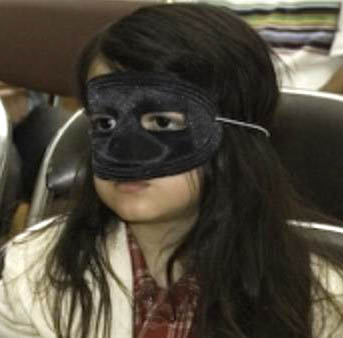
Michael Jackson covered son Blanket's face with a mask, ca. 2004-05 (Lisa's History Room)

Katherine says the children are doing fine except that they have no friends. Prince, 13, Paris, 12, and Blanket, 8, have previously been tutored at home. Katherine is trying to give her grandchildren a more normal upbringing, free of the bizarre restrictions imposed by their father. In September, the three children will be enrolling in school for the first time in their lives, reports the Daily Mail.   Below are pictures of the children enjoying their first carefree Hawaiian vacation a few days before returning to the continental U.S. for a Gary, Indiana, hometown memorial for their father.

Michael Jackson's eldest son, "Prince," 13, whose full name is Michael Joseph Jackson, Jr. Hawaii, June 1010. (Lisa's History Room)

Michael Jackson's daughter, Paris, age 12, whose full name is Paris-Michael Katherine Jackson. Hawaii, June 2010. (Lisa's History Room)

Michael Jackson's youngest son, "Blanket," 8, whose full name is Prince Michael Jackson II, enjoys a water chute at a Hawaii resort, June 2010 (Lisa's History Room)

Readers: Click here for more posts on Michael Jackson.

sources: Dateline, The Daily Mail

Read Full Post »

Michael Jackson is seen visiting burn victim Keith Perry in the burn center at Brotman Medical Center in Culver City, Calif., on Feb. 4, 1984. The pop star was recuperating in the hospital after suffering from a burn to his head while filming a commercial for Pepsi-Cola. (Lisa's History Room)

Readers: Click here for more posts on Michael Jackson.

Read Full Post »

Michael Jackson's "Blue Eye" - a never-before-seen photograph of Michael Jackson that was considered but rejected as the cover for Jackson's 2001 album "Invincible" (Lisa's History Room)

“As the one-year anniversary of Michael Jackson‘s death approaches, a very special picture of the pop star will be up for grabs at a memorabilia auction to take place in December, reports The Daily Mail.

The portrait, taken in 1999, is an uncommonly subdued shot of the late King of Pop, who was as known for his extravagance as he was for his music.

Titled “Michael Jackson’s Blue Eye,” the photo features Jackson dressed in a black suit jacket with small mirrors scattered across his chest. His eyes are closed, with one covered with a brilliant patch of blue makeup. His hair is pulled back behind his head, and the makeup makes the singer appear healthy and vibrant.

The portrait is a stark contrast from the image of a painfully skinny Jackson most commonly associate with his death, and serves as a reminder of Jackson’s enduring appeal as a larger-than-life figure.

The portrait was reportedly shot by then-23-year-old French photographer Arno Bani, who told the paper that Jackson was a fan of his fashion photography and commissioned him for the shoot.

The portrait was on the short list to make the cover of Jackson’s 2001 album, “Invincible” (his final studio album), but ultimately lost out to a similarly themed (but less eerie) Warhol-esque photo of Jackson’s face.

The portrait’s unveiling comes amid renewed insistence from Jackson’s family that his death was no accident. According to Us Weekly, Jackson expressed concerns to his mother, Katherine, that people “wanted him dead.”

“He would always say that. For him to say that, he must have known something,” said Katherine, who appears on a “Dateline” special this Friday titled “Michael Jackson: A Mother’s Love.”

The “Blue Eye” portrait, along with 11 other unpublished shots of Jackson and 50 contact boards, will be put up for bidding by auctioneers Pierre Berge & Associates in December.”

source: NYDailyNews.com

Readers, I’ve written many more posts on Michael Jackson. Click here for more.

Read Full Post »

Diego Rivera shown with wife, Frida Kahlo. Frida's mother called them "the Elephant and the Dove."

Elvis Presley at his shiniest

What did Mexican muralist Diego Rivera and rock sensation Elvis Presley have in common?

They both had twin brothers who died.

Diego Rivera and his twin brother Carlos were born on December 8, 1886 in Guanajato, Mexico. Carlos, however, died eighteen months later.

"The Flower Carrier" by Diego Rivera (1886-1957)

On January 8, 1935, in Tupelo, Mississippi, Gladys Presley gave birth to identical twin boys. The first one, Jesse Garon Presley, was stillborn. Thirty-five minutes later, Elvis Aaron (Aron) Presley entered this world. Gladys told Elvis that, as the surviving twin, he had been destined for great things.

READERS: For more posts on Frida Kahlo and Diego Rivera, click here.

Read Full Post »

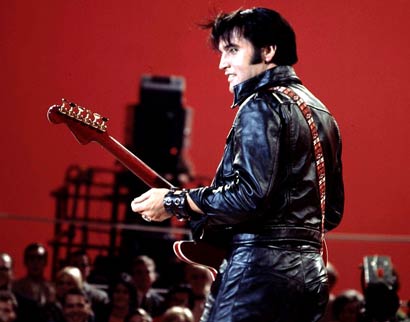
Elvis 1968 from his "1968 Comeback Special" on ABC TV

Today is Elvis’ 75th birthday. Happy Birthday, Elvis. We love you.

Elvis loved Christian gospel music. Here he is singing “Oh, Happy Day.”

Song : Oh, Happy Day
 
Oh happy day
Oh happy day
Oh happy happy day;
Oh happy day, When Jesus washed
Oh when he washed
When Jesus washed
He washed my sins away!
Oh happy day
Oh happy day
Oh happy day
Oh happy day
When Jesus washed
Oh when he washed
When Jesus washed
He washed my sins away!
Oh happy day
Oh happy day

He taught me how
He taught me
Taught me how to watch
He taught me how to watch
and fight and pray
fight and pray
yes, fight and pray

And he’ll rejoice
and He’ll, and He’ll
rejoice in things we say
and He’ll rejoice in things we say
things we say
yes, things we say

Oh happy day, Oh happy day
Oh happy day
Oh happy day

Oh happy day, Oh happy day
When Jesus washed
Oh when he washed
He washed my sins away, He taught me how
to watch, fight and pray
fight and pray
Oh happy day, Oh happy day
When Jesus washed
Oh when he washed
He washed my sins away, We´ll live rejoicing
ev´ry day, ev´ry day
Oh happy day, Oh happy day
When Jesus washed
Oh when he washed
He washed my sins away

Check out Part one of my Birthday Tribute to Elvis: Viva Elvis!

Readers, for more posts on Elvis, scroll down the right sidebar to Categories/People/Elvis. Enjoy!

Read Full Post »

The Presleys, 1937: Gladys, Elvis, and Vernon. It's ironic that Elvis is wearing such a grown-up boy's hat. Soon he would discover that he was a more responsible person than his father. By the time Elvis was in his early twenties, he would be the sole breadwinner for the rest of his life for himself and his parents.

I couldn’t let the day go by without saying at least a few words about Elvis. Today is his 75th birthday and I am watching a TCM marathon of Elvis shows. On the tube, paused so I could blog, is “Viva Las Vegas.” I just watched Elvis perform the title song. It’s obvious that the director asked him to tone down his sexy moves; there’s barely a suggestion of hip action. But wow can he wiggle that torso and strut like the rooster that he was.

Elvis' birthplace on the Old Saltillo Road in Tupelo, Mississippi

I’ve been doing some reading about Elvis again, reminding myself what most of us know about his legendary rise from rags to riches. His parents Vernon and Gladys Presley were dirt poor. Vernon couldn’t keep a job very long. He was a drinker. He was 17, Gladys was 21 when they eloped and moved in with his parents. Eighteen months later, their son Elvis was born on January 8, 1935, in a two-room house in Tupelo, Mississippi, a house Vernon built just for the birthing. The house had no indoor plumbing or electricity.

Elvis had an identical twin brother, Jessie Garon, who was stillborn. Thirty-five minutes later at 4 a.m., Elvis Aron (later Aaron) was born.

This is a photo of the memorial headstone for Jessie Garon Presley in the Meditation Garden at Elvis' Graceland mansion in the city of Memphis, Tennessee. Jessie Garon was the twin brother of Elvis Presley who was born and died on January 8, 1935 in the Presleys' two-room shack in Tupelo, Mississippi. The Presleys could not afford to pay the $10 doctor bill for delivering Elvis and Jessie. Jessie Garon Presley was buried in a shoebox in an unmarked grave in Priceville Cemetery in Tupelo. This memorial headstone was placed in the Meditation Garden at Graceland shortly after Elvis was re-interred there in October 1977.

Elvis was told from the beginning that he was special. God had spared his life while Jessie had died. Gladys became an overly protective parent from the get-go. Elvis remained her only child, though she miscarried another child about ten years later. Both she and Vernon doted on Elvis. Gladys walked Elvis to school every day until he entered high school. She made him carry his own fork and spoon so he wouldn’t pick up any germs from using cutlery once used by others.

Vernon was a terrible breadwinner. He couldn’t keep a job, probably because of his drinking. When Elvis was three, Vernon received payment for a pig from his farmer landlord Orville Bean. Vernon decided that he hadn’t been paid enough for the pig so he altered the amount of payment on the check. He was arrested for forgery and sent to prison for under a year. Interestingly, Orville Bean was instrumental in securing an early release for Vernon.

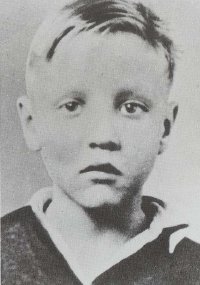
Elvis Presley at age 4 in 1939. He was a blonde. He later dyed his hair to look like screen actor Tony Curtis.

Meanwhile, with Vernon in prison, Gladys and Elvis had no income. They lost their home and had to move in with relatives. The experience so traumatized little Elvis that he began to sleepwalk.

And so it went. For the first twenty-one years of his life, Elvis lived a hand-to-mouth existence. Elvis, Gladys, and Vernon moved from place to place living sometimes with relatives, or living on public assistance in substandard dwellings, cheek-to-jowl. When Elvis was a teenager, Vernon moved them into such a crummy apartment complex that they had to share the bathroom with the other tenants. The bathroom was disgusting. Elvis refused to bathe there and ended up getting cleaned up at the high school or not at all.

There was never enough to eat. It’s possible an usher at a movie theatre where Elvis worked got fired for giving Elvis food.

The family moved to keep just one step ahead of their creditors or the police. Vernon ran moonshine while picking up an odd job here or there.  He never made enough money to take care of his family because he didn’t stay with the job. Vernon was frequently absent from home. Elvis and Gladys grew closer at those times and Elvis was definitely the man of the house. Gladys could count on him.  Early on, Elvis began to refer to his parents as “his babies.”

Elvis keenly felt the responsibility of taking care of his mother. They were very close. They spoke to one another in baby talk. Elvis called his mother “Sat’n.” Gladys was as impulsive as Vernon was reckless. Gladys was everything to Elvis and he to her.

Elvis’ musical talent was cultivated in the rich gospel tradition of the Southern Christian Church. The Presleys might have been poor but they could still go to church. They faithfully attended the Assembly of God church in Tupelo where Pentecostal worship was practiced. Dance was not allowed by the church, but those Pentecostals sure loved to sing. The experience formed his musical foundation. Elvis recalled watching the preacher belting out a tune and wildly jumping up on the piano. The preacher’s passion for music was electric – and Elvis was paying attention.

Vernon, Elvis, and Gladys Presley, 1945. Elvis was 10. In a year, he'd receive his first guitar - though he wanted a bicycle.

Elvis’ musical talent was first recognized by his fifth-grade teacher, Oleta Grimes, who, coincidentally, was the daughter of Orville Bean. She heard the moving way Elvis sang the sad ballad “Old Shep” and brought him to the attention of the school principal, who entered Elvis into a talent contest at the Mississippi-Alabama Fair and Dairy Show. Wearing a cowboy suit and standing on a chair, Elvis, without accompaniment, sang a sad song about a boy’s love for his dog. He won second place and received a free pass to ride all the rides at the fair.

Watch a youtube recording of Elvis singing “Old Shep,” 1956 below:

Shortly after that, Elvis asked his parents to give him a bicycle. Gladys was afraid for his safety so she bought him a bicycle instead. A preacher from the Assembly of God church where they were faithful members, family members, and friends pitched in to give Elvis informal guitar lessons. He soon learned to play the piano. By 7th grade, Elvis took his guitar along with him to school.

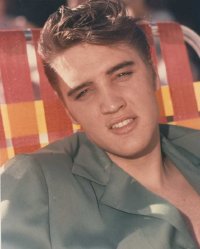
Elvis as a teenager

One night during Elvis’ high school years, Vernon upped and moved the family from Tupelo to Memphis, Tennessee, where Elvis’ subsequent visits to Beale Street exposed him to jazz and blues and more rockabilly. Elvis began to work on his image. He didn’t wear jeans like the other boys in school; jeans were what poor people wore (and overalls), and Elvis definitely did not want to be poor. He always had a job in high school and saw that he dressed well. He wore dress pants, often in his favorite colors, pink and black. He sometimes sported a black bolero jacket.  He bought his flashy clothes at Lansky Brothers on Beale Street. He wore his collar up, his hair longer than the others. He dyed it black, slicking it back with thick gunk. He let his sideburns grow long. In the eleventh grade, the coach kicked Elvis off the football team for refusing to cut his hair (1952).

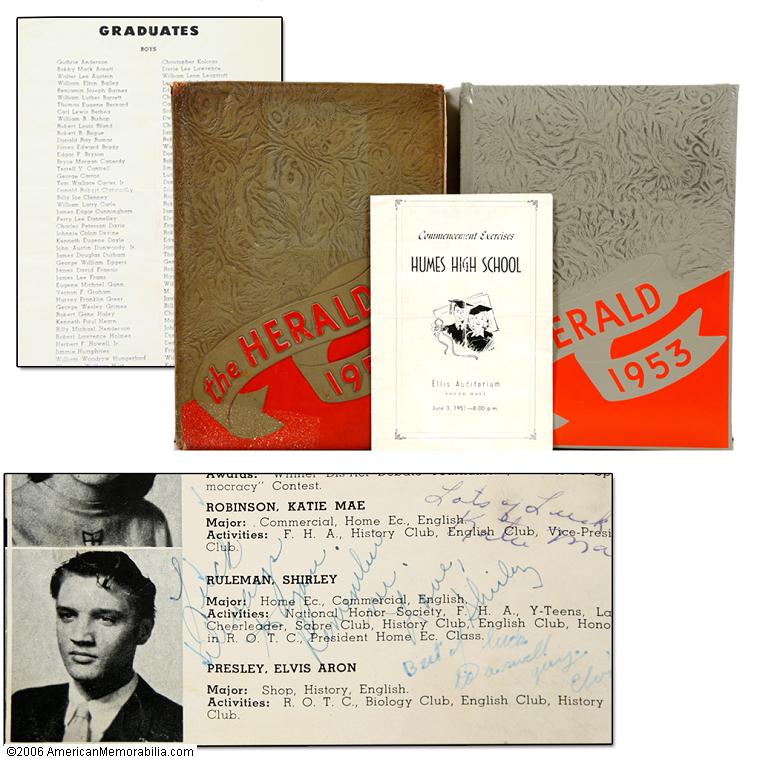
Elvis Presley's senior photo

Elvis worked as an usher at the Suzore #2 Movie Theatre which let him watch a lot of shoes. In his 1953 Hume High School senior picture, you can see that Elvis has put a permanent wave in his hair. He was copying Tony Curtis, who was the biggest star of his day. He had just completed the mega-hit, “Houdini.”

Elvis Presley in 1954, the year his career takes off
Music was Elvis’ passion. He was determined to express himself, his individuality, through his wild clothes and hair and, eventually, his music. He hung out at record shops. He visited Sun Records which had its home in Memphis. In his senior year, Elvis began to pick up local gigs with established local bands. He entered local music contests. Elvis wanted to make something of himself. Then, in 1956,  he made it – big. The hot new talent went to New York to do a recording session.

"The Kiss," 1956, shows Elvis Presley, 21 years old, baby-faced, and barely legal, kissing an unknown woman, as photographed by fledgling freelance photographer Alfred Wertheimer. RCA had hired Wertheimer to shoot publicity for their hot new young talent coming to New York for a recording session and a television appearance with steve Allen. Elvis doesn't seem to mind the intrusive camera.

Elvis loved to read and was especially wild for Marvel Comics. He admired Captain Marvel. In his Las Vegas live performances, he often wore jumpsuits with lightning bolts as his trademark – like Captain Marvel. Captain Marvel and his lightning bolt exuded power and success.

Elvis Presley "That's All Right"/"Blue Moon of Kentucky" 78 (Sun 209, 1954). This was Elvis' first record. It was produced in 78 r.p.m.

From the most humble beginnings to the dizzying heights of fame and fortune rose Elvis Aaron Presley. He continues to fascinate – and to sell records. He remains the best-selling solo artist in the history of popular music. Gifted at vocals, guitar, and piano, he was known as the King of Rock and Roll, or simply The King. Elvis didn’t like to be called The King. He felt it was sacreligious. Elvis had talent, good looks, charm, sensuality, and a genuinely good sense of humor. He was the star of 44 films – not very good films, I grant you, but very popular ones – countless  live concerts and TV performances, and has sold over 1 billion records. He was nominated for 14 Grammy Awards, winning 3, and inducted into 4 Halls of Fame.

Now that I’ve done my part in paying tribute to the Great Elvis, who left us so much joy with his unmatchable voice and moves, I can return to watching “Viva Las Vegas!” But not without saying, “Viva Elvis!”

Continue with Part 2 of my tribute to Elvis: Elvis Sings Gospel

Readers, I’ve written many posts on Elvis. Look down the right sidebar to Categories/People/Elvis. Enjoy!

Read Full Post »

L-R: Actor Robert Wagner, his wife Natalie Wood (1938 - 1981) and host Frank Sinatra (in eyepatch) pose together during a surprise 21st birthday party held for Wood at Romanoff's, Hollywood, California, July 20, 1959. (Photo by Murray Garrett/Getty Images)

It was New Year’s Eve, 1958, and Peter and Pat Kennedy Lawford were celebrating at a private party at Romanoff’s in Beverly Hills, a popular spot with Hollywood stars. The Lawfords sat at the most prestigious table in the room with Frank Sinatra, Natalie Wood, and Robert Wagner. Pat was dazzled by Sinatra’s charm and basked in his attention. Sinatra was thrilled to be in the presence of the sister of the fast-rising Senator John F. Kennedy of Massachusetts.

Host Frank Sinatra (L) wears an eyepatch, laughing with actor Peter Lawford and his wife Patricia Kennedy (1924 - 2006) during a surprise 21st birthday party held for actor Natalie Wood at Romanoff's, Hollywood, California, July 20, 1959. (Photo by Murray Garrett/Getty Images)

Pat had only known Sinatra since August, when she met him at a dinner party at the home of Gary and Rocky Cooper. Since then, Sinatra had swept the Lawfords up into his orbit.

“Sinatra suddenly stood at the center of Pat’s and Peter’s lives.” [1]

Sinatra had become such a fixture in Pat’s world that, by the time she gave  birth on November 4, she decided to give new baby Victoria the middle name of Francis, in honor of her newest and dearest friend, Francis Albert Sinatra. 

The Lawfords not only saw Frank at least twice during the week, but, on many weekends – at Frank’s insistence – they made the 120-mile drive from their Santa Monica home to his Palm Springs estate. The Lawfords always kept the same bedroom at Sinatra’s Rancho Mirage compound. Frank made the Lawfords so at ease that they left some of their casual clothing in the bedroom closet.

Back at Romanoff’s, the new year was blowing in chilly and Pat was wearing a low-cut gown. As the night worn on, she and Natalie grew weary. But Sinatra didn’t want the night to end. He suggested they move the party to his place – two-and-half hours away at Rancho Mirage! Pat gasped at the dread thought. It was only a fifteen minute drive from Romanoff’s to her home!

Peter Lawford recalls the evening:

T

Teen idol Frank Sinatra, caricature by Al Hirschfeld

When [Sinatra] went to the gents’ room, the girls said that it was too chilly to go that night. They preferred driving in the morning, but then we said, ‘Who’s going to tell him?’ Knowing his temper, Pat out and out refused to say anything, and Natalie didn’t even want to be in the same room when he was told. Finally, R.J. [Robert Wagner] insisted that I be the one to do it, so when Frank got back to the table, I explained as gracefully as I could that we’d prefer joining him in the morning.

Well, he went absolutely nuts. ‘If that’s the way you want it, fine,’ he said, slamming his drink on the floor and storming out of the restaurant.

I rang him up the next morning and his valet…answered and whispered hello. He said that Frank was still asleep because he hadn’t gotten to bed until five a.m. Then he said, ‘Oh, Mr. Lawford. What happened last night? I better tell you that he’s pissed. Really pissed off. He went to your closet and took out all the clothes that you and your wife keep here and ripped them into shreds and then threw them into the swimming pool.’ That gives you an idea of Frank’s temper….” (2)

Evidently, Frank first tried to make a bonfire of the Lawford’s clothes.  But the fire wouldn’t get going, so, frustrated,  he tossed everything in the pool. (1)

Peter was distraught at the loss of his favorite aged blue jeans. Pat consoled him. “We’ll age another pair. Just make sure you don’t take them down to Frank’s.” (1)


(1) Leamer, Laurence. The Kennedy Women: The Saga of an American Family. New York: Random House Publishing Group, 1994.

(2) Kelley, Kitty. His Way: The Unauthorized Biography of Frank Sinatra. New York: Bantam Books, 1986.

Readers, for more on Frank Sinatra on Lisa’s History Room, check out: “Sinatra: From Donkey to Elephant”

Readers, for more on Natalie Wood on Lisa’s History room, click here

Read Full Post »

President John F. Kennedy and singer Frank Sinatra at the 1961 Inaugural Gala

Singer and film star Frank Sinatra (1915-1998) grew up poor and lower class in Hoboken, New Jersey. Once he made it big in showbiz (thanks to help from his Mafia cronies), he obsessed about fitting in with the upper class. He wormed his way into politics, using his Hollywood star power to campaign and fundraise for Democratic heavyweights such as Franklin Roosevelt and John F. Kennedy. In attaching himself to men of honor, Sinatra hoped to achieve the respectability he craved.

Sinatra had cultivated a relationship with President Kennedy through movie star Peter Lawford, who was married to the president’s sister, Pat.

Pat Kennedy Lawford and British actor Peter Lawford

In March 1962, the president was scheduled to fly to Southern California. Peter Lawford asked Sinatra to be the president’s host at his Palm Springs estate. Sinatra was thrilled. He went straight to work. At his own expense, Sinatra installed a helicopter pad, cottages for the Secret Service, and even a flagpole for the presidential flag.

But the president’s brother Bobby Kennedy wasn’t having it. He was the Attorney General of the United States at the time. When he heard about his brother Jack’s proposed stay at Sinatra’s, he went ballistic. Bobby was making the “most single-minded attack on organized crime in American history” and could not abide Jack associating with someone with mob connections. (1) Peter was the one chosen to tell Sinatra that the president would not be staying with him.

Sinatra did not take the news well. He had a notoriously explosive temper:

“Sinatra vented his spleen by destroying the concrete landing pad with a sledgehammer. He applied a different kind of sledgehammer to his friendship with Peter and Pat [Lawford], banning them from his company….Jack ended up staying at the home of Bing Crosby. Marilyn Monroe flew down to be with the president, spending the night in his bedroom….”

Peter Lawford, Frank Sinatra, and Marilyn Monroe ca. 1961-62

(l. to r.) Peter Lawford, Frank Sinatra, Marilyn Monroe, ca. 1961-62

…and Frank Sinatra became a Republican.

(1) Leamer, Laurence. The Kennedy Women: The Saga of an American Family. New York: Fawcett Books, 1994.

For more on Sinatra, check out “Sinatra: Pants on Fire!”

Read Full Post »

Elizabeth Taylor as "Cleopatra" (1963)

Elizabeth Taylor as Queen of the Nile in "Cleopatra" (1963)

There’s a delicious new Elizabeth Taylor biography on the market: How to Be a Movie Star: Elizabeth Taylor in Hollywood by William Mann. I’ve been reading juicy excerpts online. The book is so good, so rich in scandalous detail, that I’ve ordered a copy to be sent to my doorstep.

I’m devouring the chapter on the early 1962 filming of “Cleopatra,” when Elizabeth famously ditches husband #4 Eddie Fisher for her Welsh costar Richard Burton. Author Mann paints Elizabeth Taylor as quite the pampered diva, ensconced in her Italian villa, filming in Rome by day. Her butler, for example, was one of many charged with satisfying her every frivolous need.

An example: Elizabeth was a pack-a-day smoker – despite the fact that she was recovering from pneumonia and a tracheotomy that had seriously delayed the movie’s production and almost cost Elizabeth her life. Nevertheless, she smoked, and with a cigarette holder. She never used the same holder twice.

“Fresh ones – at least ten a day –  had to be at the ready, and they had to be color-coded. A green dress called for a matching holder – and Madame changed outfits quite frequently as her moods shifted. Every morning Oates [her butler] prepared a box of cigarette holders based on what Elizabeth would be wearing that day and evening, and not only did the holders have to match her outfits, they couldn’t clash with the tablecloth.” (1) 

Richard Burton as Mark Antony with Elizabeth Taylor as Queen of the Nile in "Cleopatra" (1963)

Richard Burton as Marc Antony with Elizabeth Taylor in "Cleopatra" (1963)

But Richard Burton wasn’t dazzled by Liz’s Hollywood fame. Twentieth Century Fox was paying her $1 million to play the Queen of the Nile in their production. Elizabeth Taylor was the highest-paid actress of the day – but Richard Burton called her “Lumpy” – and to her face. She was intrigued by his dismissive attitude toward him.

Burton was a heavy drinker.  In his first big scene with Taylor, he appeared on the set with a terrible hangover. Elizabeth, although the mother of 3 children at the time, with an adoption of a fourth child in the works, had never been particularly maternal. Yet when she saw how sick Burton was, she felt an overwhelming need to take care of him. It was the turning point. They began a hot-and-heavy and very public romance.

Rumors seeped out and crossed the Atlantic, creeping into gossip columns by Hedda Hopper and Dorothy Kilgallen, scandalizing the film industry and the public who were just recovering from Liz’s latest romantic acquisition, when she stole the married Eddie Fisher from actress wife Debbie Reynolds.

In early 1958, Fisher embraces wife Reynolds in Las Vegas, though his eye seems to be on Taylor, his best friend Mike Todd's wife. In March, Todd dies in a plane crash, and Fisher soon leaves Reynolds for Taylor.

In early 1958, Fisher embraces wife Reynolds in Las Vegas, though his eye seems to be on Taylor, his best friend Mike Todd's wife. In March, Todd dies in a plane crash, and Fisher soon leaves Reynolds for Taylor.

Meanwhile, back on the “Cleopatra” set, Eddie Fisher learned of his wife’s affair. Their marriage had already been on shaky ground but was not yet in complete tatters. He wanted to salvage it. On February 5, at the suggestion of his  wife’s secretary, he took Elizabeth shopping. He chartered a flight to Paris. The international press followed their every move, as the former nightclub crooner Fisher and his gorgeous celebrity wife visited Parisian fashion houses such as Yves St. Laurent, Chanel, and Dior, where Eddie wrote check after check for gowns, jewels, and furs for his flagrantly unfaithful wife. Eddie Fisher once said,

“To keep Elizabeth happy, you have to give her a diamond before breakfast every morning.”

Delighted with her new trinkets, Elizabeth promised Fisher she would stop seeing Burton. A rupture was temporarily averted; they flew back to Rome.

Two weeks passed yet things did not go better for Fisher. Liz did not keep her word. She continued seeing Burton. On February 17, 1960, drinking heavily, Elizabeth swallowed 14 sleeping pills and passed out cold.  She was hospitalized for what was considered a suicide attempt. She was distraught over her personal life. She could not make the break with Burton. She had fallen head-over-heels in love with him.

A little over a week later, she turned thirty, and her parents flew to Rome for the celebration. Shortly afterward, Burton confronted her in front of Fisher and told her she must choose between her two men. On the spot, she chose Burton. Richard divorced his wife of 13 years, Sybil Burton. In 1964, Elizabeth divorced Fisher and married Richard Burton.

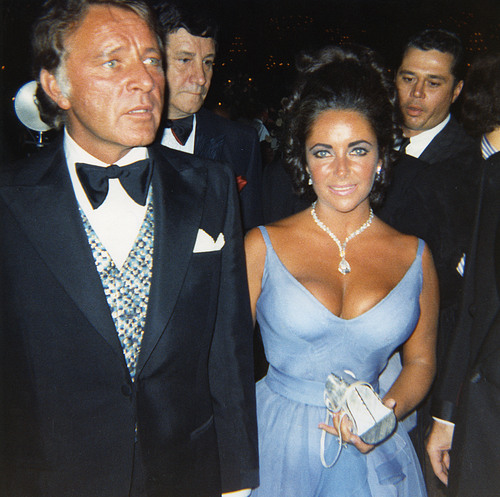
Richard Burton escorts wife Elizabeth Taylor in an Edith Head evening gown, 1970
Richard Burton escorts wife Elizabeth Taylor to the 1970 Oscars. Taylor wears an Edith Head gown that matches her violet eyes and displays her assets, particularly her own 69-carat, pear-shaped Cartier diamond — which later became known as the Taylor-Burton diamond.

Twice married, twice divorced to one another, the love affair between Elizabeth Taylor and Richard Burton remains one of the most famous – and tempestuous – of the Twentieth Century.

(1) Mann, William J. How to Be a Movie Star: Elizabeth Taylor in Hollywood. New York: Houghton Mifflin Harcourt, 2009.

Read Full Post »

James Brown mixing the moves

The King of Funk: James Brown (1933-2006) bustin’ some moves

Growing up in the 1960s, I saw a lot of the Sunday night television program, “The Ed Sullivan Show.” I was eleven years old when James Brown appeared on the variety show in 1966. I’d never seen anyone perform like him before. He just came all apart on stage. He sang and sweated and scooted around the floor like he was on fast skates. But the part I couldn’t believe was when he became so overwrought with emotion – pleading, crying – that a fellow musician saw fit to intervene, come on stage, throw a cape over Brown’s shoulders, and escort him offstage.

At first, he looked like he was going to take the suggestion and leave. He’d take a few steps then throw off that cape. He’d fall back into his frenzied song, falling to the floor. Again the man would come – with a different cape each time, always fancy, sometimes leopard-printed, and, again, try to take Brown offstage before he became completely unglued.

The two videos here are from the days before James Brown hit the big time. They’re poor quality; you can’t really see Brown’s face well. But the footwork and raw energy in both performances is unsurpassed. In later performances, everything is so polished, and the costumes so over the top, the band and dancers so distracting, that you can forget to just keep your eyes on the great James Brown.

In this first video, James Brown sings “Please, Please, Please.” You’ll be able to see the full theatrics of the cape routine. Note how short Brown’s pants are.

In this video, you can see the fancy dancer Michael Jackson emulated. Go, James, go! “I Feel Good”

James Brown was recognized by numerous titles, including and foremost The Godfather of Soul, Soul Brother Number One, Sex Machine, Mr. Dynamite, The Hardest Working Man in Show Business, The King of Funk, Minister of The New New Super Heavy Funk, and Mr. Please Please Please Please Her.

Comedian Eddie Murphy did a parody of James Brown on Saturday Night Live,
strutting around a hot tub in a robe singing:

Sometimes it make me break out in a cold sweat!
One two three four! 

Hot tub! Ha! Da!
Ah-full of water!
I say hot tub! Ha!
Day! Ba! Very, very hot… Very hot! Da!
Hot tub! Gonna get ya hot-a!
Gonna make ya sweat! Hey! Say!
Hot tub! Rub a dub in the hot tub!
Rub a dub with me!

At the end of the routine, “Brown” takes off his robe and reveals a very taut and muscular Eddie Murphy – in a gold lamé bikini. Click here to see this hilarious video.

Eddie Murphy impersonates "the Godfather of Soul," James Brown in a Saturday Night Live skit, "James Brown's Celebrity Hot Tub"

Eddie Murphy impersonates James Brown on the Saturday Night Live skit, “James Brown’s Celebrity Hot Tub Party”

james brown

Read Full Post »

Mackenzie Phillips says she had sex with her dad

The Mamas and the Papas, from left to right: Michelle Phillips, John Phillips (in tube), Denny Doherty, and Mama Cass Elliot. The sixties pop rock band is remembered for its sweet harmony and enchanting melodies.
Father and Daughter, John and MacKenzie Phillips, in 1998.

Father and Daughter, John and MacKenzie Phillips, in 1998.

Associated Press

Wed Sep 23, 12:37 pm ET

CHICAGO – Former child star Mackenzie Phillips said Wednesday her father, John Phillips, who was a leader of the 1960s pop group the Mamas and the Papas, raped her when she was a teenager and that her sexual relationship with him later became what she termed “consensual.”

Mackenzie Phillips writes in her new book, High on Arrival, that she had sex with her father on the night before she was to get married in 1979 at age 19, according to People magazine.

“On the eve of my wedding, my father showed up, determined to stop it,” writes Phillips, who was 19 and a heavy drug user at the time. “I had tons of pills, and Dad had tons of everything too. Eventually I passed out on Dad’s bed.”

“My father was not a man with boundaries. He was full of love, and he was sick with drugs. I woke up that night from a blackout to find myself having sex with my own father.”

She told “The Oprah Winfrey Show” in an interview that aired Wednesday that her siblings “definitely have a problem with this.” Winfrey also read a statement from Genevieve Waite, John Phillips’ wife at the time of the alleged abuse and Mackenzie’s stepmother that said he was “incapable, no matter how drunk or drugged he was, of having such a relationship with his own child.”

At far right, MacKenzie Phillips from a publicity photo for the 80s TV sitcom, "One Day at a Time." MacKenzie Phillips is best known for her roles as an emotionally troubled and rebellious teenager.

At far right, MacKenzie Phillips from a publicity photo for the 80s TV sitcom, “One Day at a Time.” MacKenzie Phillips is best known for her roles as an emotionally troubled and rebellious teenager.

Phillips, who starred on TV’s “One Day at a Time,” said the sexual relationship with her father lasted a decade and ended when she became pregnant and didn’t know who had fathered the child. She had an abortion, which her father paid for, and “and I never let him touch me again.”

Phillips told Winfrey that she first tried cocaine when she was 11 years old. Her father did drugs with her, taught her to roll joints and injected her with cocaine. Phillips said she’s been clean for a year after pleading guilty to possessing cocaine and entering a drug treatment program.

Phillips said the sexual relationship, although she believes it became consensual, was “an abuse of power” and “a betrayal” on her father’s part. She said she forgave John Phillips on his deathbed.

“I can’t be the only one this has happened to,” Phillips said. “Someone needs to put a face on consensual incest.”

Here is a video of the Mamas and the Papas singing “California Dreaming.” MacKenzie Phillips’ father, John Phillips – “Papa John” –  plays guitar, wearing a fur hat. The other band members are Michelle Phillips (at the time, John Phillips’ wife and MacKenzie’s stepmother), Mama Cass Elliot, and Denny Doherty.

 Click here for more on the wild and reckless lives of John and Michelle Phillips.

Read Full Post »

John Lennon, right, from a scene in the fantastically funny film, "A Hard Day's Night." Lennon is "sniffing a coke" while sitting next to Wilfrid Brambell who plays Paul McCartney's grandfather, constantly referred to as "a clean old man" and the source of great trouble to the Beatles in the show.

John Lennon, right, from a scene in the fantastically funny film, "A Hard Day's Night" (1965). Traveling on a train, Lennon sits next to Wilfrid Brambell, who plays Paul McCartney's grandfather. John is "sniffing coke." Paul's grandfather is constantly referred to as "a clean old man." In fact, he is not, and is the source of great trouble to the Beatles, in particular, Ringo, in this pseudo rock documentary.

Beatle John Lennon (1940-1980) had a witty sense of humor. During live performances of “I Want to Hold Your Hand,” Lennon often changed the words to “I want to hold your gland,” because of the difficulty hearing the vocals above the noise of screaming audiences in the grip of Beatlemania.

At the Royal Variety Show in 1963—in the presence of members of the British royalty, including Her Majesty Queen Elizabeth the Queen Mother, Princess Margaret, and Lord Snowdon —Lennon quipped to the largely upper-crust audience:

“For our next song, I’d like to ask for your help. For the people in the cheaper seats, clap your hands … and the rest of you, if you’ll just rattle your jewelry.”

 
A clip from this London performance is shown below, with the Beatles singing, “With Love From Me to You,” “Until There Was You,” and “Twist and Shout.” Paul makes a joke before “Until There Was You,” referring to American singer Sophie Tucker as a group (she was large). John makes his jewelry comment before playing my all-time favorite “Twist and Shout.” Enjoy.

Read Full Post »

Ancient Egyptian bust on display at Chicago's Field Museum. It bears a striking resemblance to pop star Michael Jackson, complete with disfigured nose

Ancient Egyptian bust on display at Chicago's Field Museum. It bears a striking resemblance to pop star Michael Jackson, complete with disfigured nose

Busted: Statue’s a Dead Ringer for Jacko


The Pharaoh of Pop doesn’t quite have the same ring to it as King of Pop, but visitors to Chicago’s Field Museum could swear that’s Jacko’s face on a 3,000-year-old Egyptian bust. 

 The spitting image limestone sculpture has been on display at the museum since 1988, but recently started drawing attention because of its likeness to Jacko — complete with disfigured nose.

Unfortunately the bust, which was carved sometime between 1550 B.C. and 1050 B.C., is of a woman and MJ likely never had the chance to see the statuette.
 
“I have no idea whether Jackson ever visited the museum,” a Field spokesperson said to the Sun-Times‘ Michael Sneed. “But the similarity between the limestone statue of a woman – which is about 3,000 years old — and Jackson is astounding.”
 
Interestingly, Jackson cast himself as an interloper in ancient Egypt in his video for “Remember the Time,” so maybe he sensed some Egyptian roots

Read Full Post »

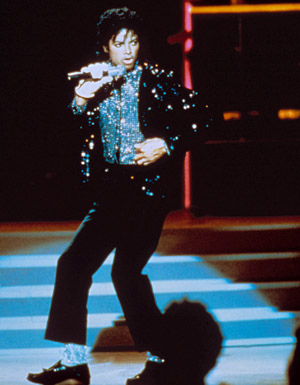
Michael Jackson unveiled his moonwalk dance on March 25, 1983, when he performed his hit song, "Billie Jean," on the TV special, Motown 25: Yesterday, Today, Forever

Michael Jackson unveiled his moonwalk dance on March 25, 1983, when he performed his hit song, "Billie Jean," on the TV special, Motown 25: Yesterday, Today, Forever

I was 29 years old when Michael Jackson and his brothers blew through Texas with their 1984 summer Victory Tour. It was July. I was a fifth-grade school teacher during the regular year. During the summer I was waiting tables at the Night Hawk Steakhouse. Michael Jackson’s record-setting album and video, “Thriller,” was a huge hit.

On Fridays during the school year, I gave my students a treat. At lunchtime, I ordered out for pizza. Then I rolled a TV on a tall stand into my classroom, turned out the lights, shut the blinds, and showed my students the “Thriller” video. We got up out of our chairs and danced. Michael Jackson gave us the chills. We just couldn’t get enough of his energy.

Back to the Victory Tour. It was July 15, 1984 – a Sunday – and I’d just finished my wait shift at the Night Hawk. I clocked out then jumped into my un-air-conditioned Honda and headed South to my apartment. I turned on the radio. The announcer was talking about how exciting the Victory Tour was. Michael Jackson was in Dallas! He had performed Friday and Saturday nights. He was to perform just one more night at Texas Stadium before continuing on his tour. Hasting’s on the Drag across from U.T. still had tickets.

I exited IH 35 and headed straight to Hastings, bought a ticket, raced home, changed clothes, and hit IH 35 for Dallas. When I got there, I realized what a crummy seat I had. The concert started and the lights went down real low, low enough, I discovered, for me to jump over a concrete wall, hunker down, and slither all the way down to the wheelchair section at the front of the stage undetected. A mother sitting in a front row seat gestured to me to come over. She was holding a child in her arms and offered me the empty seat to her right. I took it. I watched the show from a front row seat.

The show was great.  Michael Jackson performed all the songs from the tour, but what I most remember was watching him moondance to “Billie Jean.” Wow. He didn’t sing “Thriller,” which confused me at the time. Now I understand that he didn’t think the choreography translated well into a stage song.

Curtis Jerome Haynes

Curtis Jerome Haynes

On a previous post, I’ve written about Marcel Marceau‘s influence on Michael Jackson’s moonwalk (“Michael Jackson and the Moonwalk“). Here’s a video sent to me via an old friend, musician Curtis Jerome Haynes, showing the origins of the moonwalk. Some of the “Origins of the Moonwalk” dancers featured in the video are Cab Calloway, Fred Astaire, and Sammy Davis, Jr.

In reference to the youtube clip shown below, Curtis Haynes writes that, 

Missing from the montage are James Brown, the Nicholas Brothers, and Marcel Marceau.”

Thanks, Curtis!

Readers, for more on this blog on Michael Jackson, click here.

Read Full Post »

« Newer Posts - Older Posts »