Feeds:
Posts
Comments

Archive for the ‘TOPICS’ Category

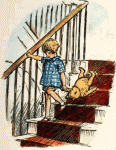
Christopher Robin with Winnie-the-Pooh illustration by E.H. Shepard

Christopher Robin with Winnie-the-Pooh illustration by E.H. Shepard

Reuters new service released this announcement on 01/09/09:

“The first official sequel to the original Winnie-the-Pooh books will appear in October, its publishers said on Saturday, more than 80 years after the honey-loving bear first appeared in print.”Return to the Hundred Acre Wood” is the follow up to A.A. Milne’s “Winnie-the-Pooh” and “The House At Pooh Corner,” which were famously illustrated by E.H. Shepard.

The new book, published by Egmont Publishing in Britain and Penguin imprint Dutton Children’s Books in the United States, will be written by David Benedictus, [and] Mark Burgess, who has already drawn classic children’s characters including Paddington Bear and Winnie-the-Pooh, is to provide the illustrations.”

This new Pooh illustrator Mark Burgess has illustrated several children’s picture books and many of teddy bears, but my limited Internet search has not turned up any of Winnie-the-Pooh. Following the classic work of original Pooh illustrator E.H. Shepard will be a tall order for Burgess. According to The Star Phoenix on January 14, 2009, a collection of Shepard’s drawings for the original Pooh books sold for almost $2 million in London last month.

E.H. Shepard is also famous as the original illustrator of The Wind in the Willows by Kenneth Grahame. Like Christopher Robin Milne, Shepard came to resent Winnie-the-Pooh, feeling that his illustrations for the Milne books overshadowed his other work.

The Wind in the Willows illustration by E.H. Shepard

The Wind in the Willows illustration by E.H. Shepard

Read Full Post »

winniethepooh-bookThis is the story of how A.A. Milne came to write the stories of Winnie-the-Pooh, or just plain Winnie the Pooh, as Disney would have it.

It was the beginning of World War I. A Canadian lieutenant, Harry Colebourn, a veterinarian in Winnipeg,  offered his services to his country. He was already a trained officer attached to the 34th Regiment of Cavalry, and received orders to leave with the regiment on a train for Valcartier, Quebec, and then take a ship to England. While en route to Valcartier, he was detached from the 34th Regiment and transferred to  the Canadian Army Veterinary Corps.

On August 24, 1914, the train stopped at White River, Ontario, an important stop for all trains. Here they would take on coal and water as well as clean out the cinders. The trains carried men and horses, as horses were vital in the war effort. During the four-to-six hour stop, the horses would get off the train to be watered and exercised. Troops would drill along Winnipeg Street where the train station was located.

It was on the train platform that Lieutenant Colebourn noticed a man with a female black bear cub on a leash. It was not an uncommon sight for the times; several people had pet bears back then. Many old photos show bears leashed and posing with family members. Lieutenant Colebourn talked to the man and found out he was a trapper. The trapper told the lieutenant that he had killed the cub’s mother. The lieutenant, being a vet, knew that the cub had little chance now of surviving in the wild without its mother. So he paid the trapper $20 for the cub and took it back with him to the train. He named his new companion, “Winnie,” after his hometown of Winnipeg.

From Gaspe Bay, he and Winnie embarked for England aboard the S.S. Manitou with the rest of the troops, where they headed to a military encampment in Southern England on the Salisbury Plain (home to Stonehenge).

Lt. Harry Colebourn and Winnie

Lt. Harry Colebourn and Winnie.

Winnie became the mascot of the C.A.V.C. while the company remained in England. She became a pet to many of the soldiers, following them around like a tame dog. She slept under Harry’s cot in his tent. Sometimes she would climb the center pole of the tent in the night and give it a shake. But, as Winnie grew older and bigger, the men began to worry that the shaking would make the tent collapse in the night with them in it. From then on, they slept with Winnie tethered to a pole outside the tent.

But it was wartime. Soon the brigade was ordered to France. Harry, now a captain, could not take Winnie with him to the battlefront. On December the ninth of that same fall, Harry took Winnie to the London Zoo. It was his full intention to return for her after the war and return with her to Canada. Harry was very faithful to Winnie. When on leave from war duty, he made trips to London to visit Winnie in the zoo.

Winnie continued to capture the hearts of all those who met her. She became a very popular attraction at the London Zoo.  It was said that people would knock on her cage door and she would open it and come out. She would allow children to ride on her back and she would eat from their hands. Her attendants considered her trustworthy. No other bears were allowed such contact with the visitors to the zoo.

The war ended in 1918 but Harry didn’t take Winnie out of the London Zoo. Instead he donated her as a gesture of appreciation to the zoo for caring for Winnie through the war years and he returned to Winnipeg alone. Living in London at that time was author A.A. Milne. 

Christopher Robin Milne and Winnie at the London Zoo c.1924
Christopher Robin Milne and Winnie at the London Zoo c. 1924

On August 21, 1921, Milne’s son, Christopher Robin, or “Billy Moon,” as he later referred to himself, had his first birthday. Milne gave him an Alpha Farnell stuffed teddy bear which came to be known as “Edward.”  From 1924 on, Milne and his son began to visit Winnie the bear in the London Zoo. Christopher Robin became very attached to Winnie. He was even allowed inside the cage to feed Winnie condensed milk. Soon Christopher Robin’s stuffed bear underwent a name change. Although a boy, “Edward” soon became known as Winnie.

Inspired by both the zoo bear Winnie and his son’s stuffed bear of the same name, author Milne began to write and publish his Pooh’s Classics. In 1926 the first and best know of the series called Winnie-the-Pooh, was published, the additional name “Pooh,” being borrowed from the name of a swan. Milne’s characters are mostly inspired by Christopher Robin’s stuffed animals, among them Piglet, Tigger, and Eeyore. These toys are now on display at the New York Public Library.

At first, Christopher Robin enjoyed the fame his father’s books brought him, but, as he grew older, he became resentful. He felt his father was exploiting his childhood for personal gain.

Read Full Post »

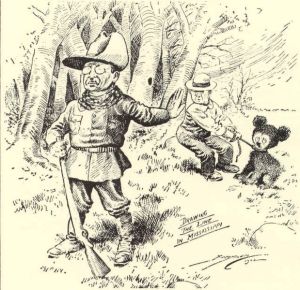
11/16/1902 Washington Post cartoon by Clifford Berryman, "Drawing the Line in Mississippi"

11/16/1902 Washington Post cartoon by Clifford Berryman, "Drawing the Line in Mississippi"

Everyone knows that the teddy bear is named after the twenty-sixth president of the United States, Theodore “Teddy” Roosevelt, but they may not know why.

It happened in November of 1902. Teddy Roosevelt was on a bear-hunting trip through Louisiana and Mississippi. It was an “exasperating” hunt, said Roosevelt, and after five days, he never got a shot. Out of pity, his companions corraled and roped a bear for his prey. But Roosevelt refused to kill a defenseless animal. The press printed the story and the public applauded their president’s restraint. But the story really caught fire when a political cartoon appeared on the front page of the Washington Post two days later, with cartoonist Clifford Berryman portraying Roosevelt as “turning away with disgust, with sloped rifle,” from a “very black bear being roped around the neck by a very white catcher.” (1)

Berryman was commenting on Roosevelt’s race relations. Roosevelt thought that “negroes” as a group were far inferior to whites. He, however, also believed that individual blacks could rise to social heights. In 1901, he became the first president to invite a black man to the White House when he sat down to dinner with African-American educator Booker T. Washington.

Anyway, whether or not the readers of the Post picked up on Berryman’s allegory is not what we remember today. What is recalled is that the cartoon sparked a full-scale teddy bear craze. (2) The public fell in love with the cartoon bear. People wrote and begged Berryman to draw more “bear cartoons,” which he did. In subsequent cartoons, he made the bear rounder, smaller, and cuter, and thus all the more endearing with its prickly pear ears,  imploring eyes, and scraggly fur.

Skip to a candy and toy shop in Brooklyn. Shop owner  Morris Michtom had seen Berryman’s cartoon. He asked his wife Rose to create a stuffed bear like the one in the cartoon.

That night, Rose cut and stuffed a piece of plush velvet into the shape of a bear, sewed on shoe button eyes and handed it to Morris to display in the shop window. He labeled it, “Teddy’s bear.” (3)

To Michtom’s surprise, not just one but a dozen customers wanted to buy the bears. Michtom received Roosevelt’s permission to use his name on his product and began the mass production of the cuddly toy bears which sold for $1.50.

Oregon family c.1900 with prized family teddy bear

Oregon family c.1900 with prized family teddy bear

Today the teddy bear craze is still going strong and we think of teddy bears as being toys for children. But, back at the beginning, women bought the teddy bears for themselves, made them clothes they read about in Ladies’ Home Journal, and carried them with them everywhere.

(1) Morris, Edmund. Theodore Rex. Random House: New York, 2001.
(2) History.com: http://www.history.com/home.do
(3) Jewish Virtual Library: www.jewishvirtuallibrary.org

Read Full Post »

victorian-silhouetteIn Nellie Bly’s book, Ten Days in a Mad-House (see category, “Nellie Bly,” for related posts), Nellie Bly described various women she met in the Blackwell Island Women’s Lunatic Asylum. She was confined to Hall 6 with 45 of the least dangerous women in the institution. While some of them were certifiably “crazy,” (her words), many, she felt, had been wrongly locked up. A Frenchwoman, for example, named Josephine Despreau, fell sick in a boarding house and the woman of the house called in the police. They arrested her and took her to the station-house. She didn’t understand the proceedings because of the language barrier and the judge paid no attention to her protests. She was locked up in the insane asylum in no time.
Well into the twentieth century, it was easy to get a woman locked up in a mental institution. It was not unheard of for a man to tire of his wife in favor of another woman and get his wife declared insane and committed to an insane asylum. I was remarking upon this horror the other day and my mother told me that my great uncle Sam P did this very thing to his wife Helen. He had her committed to an asylum in San Antonio. Helen found a way out, though, and slipped away to Corpus Christi to live with her sister.

Do any of you have any asylum stories to share?

Read Full Post »

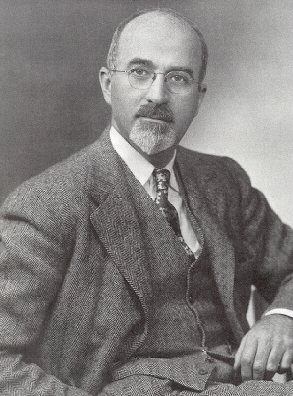
Dr. Walter Freeman, the ice pick lobotomist

Dr. Walter Freeman, the ice pick lobotomist

I’d fully intended to move away from the subject of insane asylums and talk about a cowgirl from Oklahoma by the name of Lucille Mulhall. But I cannot in good conscience leave the subject without telling what I’ve learned about the barbaric brain surgeon responsible for Rosemary Kennedy’s lobotomy, the operation that permanently incapacitated her at the young age of 23. Rosemary had been acting in an agitated behavior, according to her father, Joseph P. Kennedy, throwing fits and showing interest in boys, and he sought an operation to settle her down. Two doctors were in the operating room that day in 1941: Dr. Walter Freeman, the director of the laboratories at St. Elizabeth’s Hospital in Washington, D.C., together with his partner, James W. Watts, MD, from the University of Virginia.

Dr. Freeman was obsessed with finding a cure for mental illness. In the day before psychiatric drugs, mentally ill patients were shuttered away in institutions like St. Elizabeth’s. Shock therapy, pioneered in the thirties, though not completely successful, had effectively reduced some psychiatric symptoms in agitated patients, rendering them calmer for a time following treatment. Psychiatrists like Dr. Freeman wanted to find the locus of mental illness of the brain. They understood that there were regions of the brain and were looking for surgical answers instead of just locking people up for life. Freeman, however, was not a surgeon but a neurologist. He was wildly ambitious and longed to achieve the lasting fame of his grandfather, a pioneer brain surgeon, once the president of the American Medical Association. Freeman was determined to find a procedure that would root out the defect in the brain that he believed responsible for mental illness.

Freeman discovered the work of a Portuguese neurologist named Egas Moniz who had performed a radical new operation on a group of 20 mental patients. By taking small corings of their brains, Moniz asserted, it had been possible to rid a third of these patients of their symptoms. Moniz didn’t explain why this worked. He had a crude notion that people “who are mentally ill are sort of obsessed, he called them fixed ideas. And that these fixed ideas probably resided in some way in the frontal lobes.”

Along with Dr. Watts, Freeman began to perform lobotomies, or surgeries on the frontal lobes. After several operations, Dr. Freeman called his operation a success. According to Edward Shorter, Medical Historian, “Freeman’s definition of success is that the patients are no longer agitated. That doesn’t mean that you’re cured, that means they could be discharged from the asylum, but they were incapable of carrying on normal social life. They were usually demobilized and lacking in energy. And they were that on a permanent basis.” Many had to be retaught how to use the toilet. They were definitely not the same persons they were before the operation.

Why didn’t the medical establishment stop Drs. Freeman and Watts from performing this radical and untested procedure? This was back in the day when it was considered unethical for doctors to criticize their peers – plus, Dr. Freeman manipulated the press in his favor. He proclaimed he’d found a cure for mental illness. Soon he was receiving glowing reviews. The Washington Star called prefrontal lobotomy “One of the greatest surgical innovations of this generation.” The New York Times called it “surgery of the soul,” and declared it “history making.”

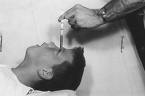
It gets worse. Freeman decided that there was a simpler way to get into the brain than through the top of the skull, as he had done with Rosemary Kennedy. He decided that the skull was thinner behind the eye and that he could make an incision there with an ice pick. Freeman “would hammer the ice pick into the skull just above the tear duct and wiggle it around.”

transorbital lobotomy

transorbital lobotomy

He began to travel around the nation in his own personal van, which he called his “lobotomobile”, hawking this new procedure which he performed with a gold ice pick, and training other doctors in his methods. He even performed a few lobotomies in hotel rooms. Before he was stopped and the lobotomy discredited, Walter Freeman had performed over 3,500 lobotomies. His medical license was revoked when one of his patients died during a lobotomy. Nevertheless, he continued to tour the country in his lobotomobile, visiting his former patients, until his death from cancer in 1972.

Read Full Post »

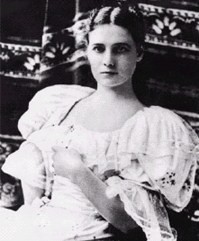
Nellie Bly (1864-1922)

Nellie Bly (1864-1922)

I’ve been thinking about the very different lives of reporter Nellie Bly and Rosemary Kennedy. Although over fifty years separated these women, both found themselves at the age of 23 at the mercy of mental health “professionals.” Nellie Bly placed herself in a dangerous lunatic asylum as an investigative journalist because she was desperate to land a job in a world that didn’t welcome female professionals. How else was an uneducated woman to earn a living in 1887?

Bly was the thirteenth of her wealthy father’s fifteen children, her mother being her father’s second wife. When Bly was six, her father died, failing to make specific provisions for Nellie, her mother, and her two brothers. Like many other great women, Nellie Bly (like Annie Oakley) took it upon herself to find a way to take care of her family. She ran a boarding house with her mother and marveled that her uneducated brothers were able to find jobs as clerks and drummers yet, because she was an uneducated woman, she could only aspire to be a chambermaid or washer-woman. Thus it was Nellie’s poverty and the absence of a father that lead her to have herself committed, at the age of 23, to an insane asylum.

But the converse was true of Rosemary Kennedy. Rosemary landed in a mental institution because she was rich and had a father. She had the misfortune to be born “mildly mentally retarded, into a family dominated by her driven and ruthlessly ambitious father,” Joseph P. Kennedy. Rosemary had been living in a convent to keep her out of the public eye, but, as she developed as a young woman, she had begun sneaking out to see boys, and Kennedy was worried that she might damage his famous family’s reputation.

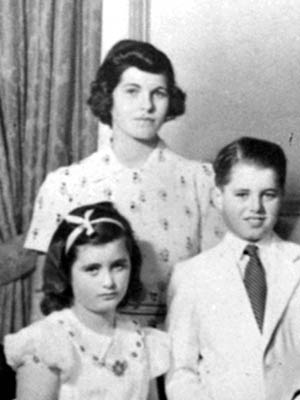
Rosemary Kennedy (back) (1918-2005), with sister Jean and brother Robert

Rosemary Kennedy (back) (1918-2005), with sister Jean and brother Robert

In an attempt to settle her down, her father, without telling his wife, used his money and powerful connections to arrange for his 23-year-old learning-disabled daughter Rosemary to undergo experimental brain surgery, one of the first prefrontal lobotomies ever performed. The operation took place in 1941, but, according to the historian Doris Kearns Goodwin, “something went terribly wrong.” Rosemary emerged from surgery not better, but far worse. She regressed to a state of helpless infancy and was confined to a mental asylum for the rest of her life until her death in 2005. Nellie Bly’s story, though, has a happy ending. She walked out of the asylum a free woman and an international celebrity.

To read more on the Kennedys on this site, scroll down the right sidebar to “Categories – People – Kennedys.”

Read Full Post »

victorian-letters-dover-clip-art-freeellie Bly was put on the island boat and sent to Blackwell’s Island. For ten days, she experienced firsthand the horrors of being locked up in cruel and inhumane conditions.  Upon her arrival, she was fed a disgusting meal of pink watery tea, prunes, and bread that was dirty and black and mostly dried dough. She found a spider in the slice given her. She didn’t eat it. Later she learned that the nurses didn’t like it when you didn’t eat your food. They might beat you for that.
After sitting in that long, freezing dining hall on bare yellow benches for what seemed an eternity, Bly and the other women in her ward were marched in two lines into a freezing cold, wet bathroom. As everyone looked on, the nurses stripped Bly of every bit of her clothing. They took away her dress, her skirts, her shoes, her stockings, and her hat. She then was forced to bathe in an ice-cold tub and be scrubbed by one of the craziest women in the ward.

“My teeth chattered and my limbs were goose-fleshed and blue with cold,” Nellie wrote later of the experience. “Suddenly I got, one after the other, three buckets of water over my head –  ice-cold water, too, into my eyes, my ears, my nose and my mouth.”

The nurses then put her, dripping wet, into a short flannel slip and locked her in an individual cell for the night. She couldn’t sleep. She kept picturing what would happen should a fire break out in the asylum. Every door was locked individually and bars covered the high windows. Should the building burn, there was no way the nurses or doctors could possibly unlock each door before the flames would engulf the building. She and the others would roast to death.

The asylum was spotlessly clean but it wasn’t the nurses who kept it so. The patients did all the work. There was little to distract the patients’ mind from the terrible cold and gnawing hunger. There were no books. The inmates did enjoy their short walks around the beautiful grounds. It was on one of those walks that Nellie Bly passed the kitchen and got a glimpse at the sort of food being prepared for the nurses and doctors: melons and grapes and all sorts of fruits, beautiful white bread and nice meats.

Bly complained to the doctors about the thin clothing issued to the patients, the intolerable cold, and the inedible food, but nothing came of it. It was only after her release ten days later that Nellie Bly would be able to draw attention to the neglect and abuse of people with mental disorders and others unfortunate enough to be sentenced to the asylum. Her expose of the conditions within the Lunatic Asylum, published in the World and later in book form,  Ten Days in a Mad-House , caused a sensation. Nellie Bly became an instant celebrity. madhouse-cvr 

The public demanded to know how Nellie Bly had managed to hoodwink four physicians into believing she was insane. A grand jury launched an investigation into the claims made in Bly’s report and recommended the changes she had proposed, prompting an $850,000 increase in the budget of the Department of Public Charities and Corrections for the treatment of the insane.

nellie-bly-signature1

Read Full Post »

charles-dickens2One day, during my stay in New York, I paid a visit to the different public institutions on Long Island, or Rhode Island: I forget which. One of them is a Lunatic Asylum. The building is handsome; and is remarkable for a spacious and elegant staircase. The whole structure is not yet finished, but it is already one of considerable size and extent, and is capable of accommodating a very large number of patients.
blackswells-island-lunatic-asylum

I cannot say that I derived much comfort from the inspection of this charity.The different wards might have been cleaner and better ordered; I saw nothing of that salutary system which had impressed me so favourably elsewhere; and everything had a lounging, listless, madhouse air, which was very painful. The moping idiot, cowering down with long dishevelled hair; the gibbering maniac, with his hideous laugh and pointed finger; the vacant eye, the fierce wild face, the gloomy picking of the hands and lips, and munching of the nails: there they were all, without disguise, in naked ugliness and horror. In the dining room, a bare, dull, dreary place, with nothing for the eye to rest on but the empty walls, a woman was locked up alone. She was bent, they told me, on committing suicide. If anything could have strengthened her in her resolution, it would certainly have been the insupportable monotony of such an existence. The terrible crowd with which these halls and galleries were filled, so shocked me, that I abridged my stay within the shortest limits, and declined to see that portion of the building in which the refractory and violent were under closer restraint.

 I have no doubt that the gentleman who presided over this establishment at the time I write of, was competent to manage it, and had done all in his power to promote its usefulness: but will lit be believed that the miserable strife of Party feeling is carried even into this sad refuge of afflicted and degraded humanity? Will it be believed that the eyes which are to watch over and control the wanderings of minds on which the most dreadful visitation to which our nature is exposed has fallen, must wear the glasses of some wretched side in Politics? Will it be believed that the governor of such a house as this, is appointed, and deposed, and changed perpetually, as Parties fluctuate and vary, and as their despicable weathercocks are blown this way or that? A hundred times in every week, some new most paltry exhibition of that narrow-minded and injurious Party Spirit, which is the Simoom of America, sickening and blighting everything of wholesome life within its reach, was forced upon my notice; but I never turned my back upon it with feelings of such deep disgust and measureless contempt, as when I crossed the threshold of this madhouse.

http://nyc10044.com/timeln/dickens.html

Read Full Post »

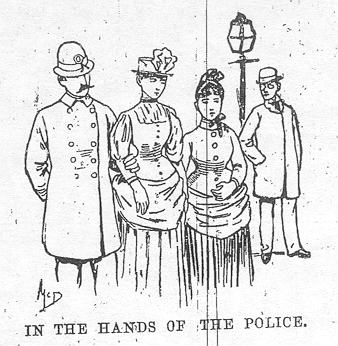
Nellie Bly could have won an Academy Award for her impersonation of a lunatic. On the morning of Saturday, September 24, 1887, within twenty-four hours of checking into the Temporary Home for Females at No. 84 Second Avenue, the police were called to escort “Nellie Brown” to the Essex police station. The assistant matron of the boardinghouse told the police that “Nellie Brown” had so terrified her female boarders with her crazy rantings that they feared being murdered in her beds. Bly claimed that all the women in the house were crazy. She had forgotten who she was, she said, and lost her trunks. She acted confused, vague, but not dangerous.
nellie-bly-in-the-hands-of-the-police1

The police took Bly before Judge Duffy who ordered her sent to Bellevue Hospital for examination, where Dr. William C. Braisted, head of the insane pavilion there, said Bly was “undoubtedly insane.” (1) There she passed two freezing cold nights, remembering that “all night long we were kept awake by the talk of the nurses and their heavy walking through the uncarpeted halls.” Nellie, being Nellie, complained to the nurses and the doctors about the lack of heat in the institution and the poor conditions. She was told that she could expect no kindness in the place as it was a charitable institution!

The stay at Bellevue was temporary though. The next day – Monday – a boat was expected. It would take Nellie Bly away permanently to Blackwell’s Island Lunatic Asylum for Women.

Just think. The speed of the thing was dizzying. On Thursday Nellie Bly had been sitting in the offices of the New York World contemplating the assignment of posing as an insane woman to gain admittance into an institution. It seemed an impossible hurdle – to be declared insane and committed for life to an insane asylum. Yet it was a mere three days later and Nellie Bly – a completely normal person – was being committed for life to an insane asylum – on the notorious Blackwell’s Island. How many other unfortunates had also suffered this fate?

(1) Kroeger, Brooke. Nelly Bly. (New York: Random House, 1994)

Next: Nellie being Nellie

Read Full Post »

Nellie Bly accepted the assignment. The task was frightening – to get herself committed to an asylum, to live among the lunatics for a week or so, then to write an expose on the conditions there – and she was nervous. But not about her skills as a writer. Her knack for including the telling detail made her articles compelling reading. No, she was nervous because she did not think she could pull off convincing the doctors that she was insane.

Bly had never known a crazy person. Just how did a crazy person look, she wondered.

nellie-practices-insanity4“So I flew to the mirror and examined my face,” she wrote later. “I remembered all I had read of the doings of crazy people, how first of all they have staring eyes, and so I opened mine as wide as possible and stared unblinkingly at my own reflection.” She began to sweat nervously, which unfortunately took the curl out of her Victorian bangs. Over and over again, she practiced her crazy face in the mirror. She ended up staying up all night, rehearsing her new role, thinking about her new mission, and reading scores of ghost stories to put her in a lunatic frame of mind.
When morning came, she bathed, bid her soap and toothbrush a fond farewell, and put on nondescript clothing. Then she went out into the street in search of a boarding house where she could begin her charade as the little lost and nutty Nellie Brown from Cuba.

Next: Inside the Madhouse

Read Full Post »

nellie-blyIt had been four months since she’d left Pittsburgh for New York yet Elizabeth Jane Cochran, or “Nellie Bly,” as her byline read, still hadn’t landed a job as a newspaper reporter. She had left the Pittsburgh Dispatch because she was tired of being assigned to the ladies’ pages – writing the society column, reviewing operas, and reporting on the latest women’s fashions.

It was now September of 1887. Bly was running out of money – and then she lost her purse, losing the little bit of money she had left. “I was penniless,” she wrote later, yet she still was not willing to return her former position in Pittsburgh, an industrial city so ugly, said a writer for the Atlantic Monthly, that it was “like looking into hell with the lid off.” New York was the center of the publishing world, a world dominated by men, a fact not lost on Bly. She had to be clever, very clever, to convince a newspaper why they should hire her, a woman, and not a man.

So Bly made up a list of clever story ideas, sure to boost any newspaper’s circulation. Then she borrowed cabfare from her landlady and headed to Park Row, home to the city’s newspaper offices. She managed to talk her way into the office of the managing editor of the New York World Colonel John Cockerill. She took out her list of ideas. She offered to sail steerage class from Europe to America so she could report firsthand the experiences of an immigrant.

Cockerill didn’t like her idea, but he must have recognized Bly’s potential, because he proposed an even wilder assignment. Why didn’t Bly fake insanity, he asked, and get herself committed to the Women’s Lunatic Asylum? As an undercover agent, Bly could witness for herself and later report on the rumored abuses suffered by the inmates at the hands of a sadistic staff.

The notorious Women’s Lunatic Asylum was set on the 120-acre sliver of land called Blackwell’s Island in the East River. It was surrounded by prisons and charity institutions. If Bly accepted the assignment, she would be asking for trouble. It could be dangerous. Bly had never been around crazy people before. Could she pull it off? What if she got sent to Blackwell’s Island, got locked up in the asylum with a bunch of lunatics and couldn’t get out?

http://en.wikipedia.org/wiki/Nellie_Bly

Kroeger, Brooke. Nellie Bly. (New York: Random House, 1994)

http://www.pbs.org/wgbh/amex/world/

Next: Nellie decides.

Read Full Post »

Releasing Lunatics from their Chains (Robert-fleury)

Releasing Lunatics from their Chains (Robert-fleury)

I was recalling something my grandmother told me about a “field trip” she and her sister Maurine took to Austin, Texas, back in the 1920’s. Both Grandmother and Aunt Maurine were young and single, living in Lufkin, Texas. They had heard all about the state lunatic asylum and wanted to see it for themselves. I think they were hoping to spot a flesh and blood lunatic. The trip was a real highlight.

The two took the train all alone from East Texas to Austin to visit the asylum.

 “It’s lucky they weren’t captured,” says my sister Loise.

I’ve seen the maps of Austin from those days. The important buildings are marked, including the University of Texas, the State Capital, and the State Lunatic Asylum.  True, the Lunatic Asylum was a garden spot and people other than my relatives were drawn to it for good reasons. But I think novels like Jane Eyre give us an insight into attitudes toward the mentally ill. They were weird, scary, and dangerous.

Evidently the Texas State Lunatic Asylum was ahead of its time in its compassionate approach toward the mentally ill. The asylum movement in America and Europe at that time “strived to provide a healthy diet, exercise, fresh air, adequate rest, a strict daily routine, social contact, and a kind but firm approach,” according to the website of the Texas Dept. of State Health Services (1). No longer flogging the patient or tossing cold water on him, the treatment for the mentally ill in the first half of the twentieth century was still far from humane. 

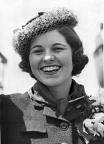
Rosemary Kennedy

Rosemary Kennedy

In 1941, Joseph Kennedy authorized a frontal lobotomy for his beautiful special needs daughter Rosemary, who was proving to be a bit of an embarrassment to him when she tripped curtseying to the Queen of England.

According to Dr. Watts, a surgeon assisting in the lobotomy of Rosemary Kennedy: 

“We went through the top of the head, I think she was awake. She had a mild tranquilizer. I made a surgical incision in the brain through the skull. It was near the front. It was on both sides. We just made a small incision, no more than an inch.” The instrument Dr. Watts used looked like a butter knife. He swung it up and down to cut brain tissue. “We put an instrument inside,” he said. As Dr. Watts cut, Dr. Freeman put questions to Rosemary. For example, he asked her to recite the Lord’s Prayer or sing “God Bless America” or count backwards. … “We made an estimate on how far to cut based on how she responded.” … When she began to become incoherent, they stopped.” (2)

1. http://www.dshs.state.tx.us/mhhospitals/AustinSH/ASH_About.shtm

2. http://en.wikipedia.org/wiki/Rosemary_Kennedy

NEXT: Stunt reporter for THE NEW YORK WORLD Nellie Bly writes TEN DAYS IN A MAD-HOUSE

Read Full Post »

« Newer Posts