Feeds:
Posts
Comments

Archive for the ‘TOPICS’ Category

Early Kansas settlers had a rough time of it. For the first twenty years of Kansas settlement, homesteaders had to battle hot winds, drought, Indian raids, and hailstorms to save their crops. But the year 1874 promised to be different. “In the spring of 1874,” wrote Mrs. Everett Rorabaugh, “the farmers began their farming with high hopes, some breaking the sod for sod corn, others…sowing spring wheat, corn, and cane, and with plenty of rain everyone… [was] talking about the bumper crop they were going to have….”

Rocky Mountain Locust, or grasshopper

But, by July, happy anticipation had turned to despair in when hordes of crop-eating grasshoppers descended upon Kansas. “August 1, 1874,” explained Mary Lyon, “is a day that will always be remembered…For several days there had been quite a few hoppers around, but this day, there was a haze in the air and the sun was veiled….They began, toward night, dropping to earth, and it seemed as if we were in a big snowstorm where the air was filled with enormous-sized flakes.” (1) The snowflake-like appearance was due to the whitish wings of the grasshopper, or Rocky Mountain locust.

The grasshoppers then dropped to the ground, crawling over the fields in a solid body, eating every green thing that was growing. Hillsides looked as if water were running down them the hoppers were so thick. They devastated the crops. When they had eaten the fields bare, leaving not a sprig of grass, they would pile up by fence posts and eat the bark off the posts.

Wishful Thinking

Wishful Thinking

“They devoured every green thing but the prairie grass,” continued Mary Lyon. “They ate the leaves and young twigs off our young fruit trees, and seemed to relish the green peaches on the trees, but left the pit hanging….I thought to save some of my garden by covering it with gunny sacks, but the hoppers regarded that as a huge joke, and…ate their way through. The cabbage and lettuce disappeared the first afternoon….The garden was soon devoured.”

When the grasshoppers had cleared the land of vegetation, they ate the clothes drying on the clotheslines and curtains hanging in the windows. Adelheit Viets remembered the day the grasshoppers came to her farm. “The storm of grasshoppers came one Sunday. I remember that I was wearing a dress of white with a green stripe. The grasshoppers settled on me and ate up every bit of green stripe in that dress before anything could be done about it.” (1)

The insect hordes moved into barns and houses. Besides devouring food in cupboards, barrels, and bins, they attacked anything made of wood. They particularly craved sweaty things, eating the handles of pitchforks and the leather harnesses of horses.

300px-book_littlehousebanksofpcIn her book, On the Banks of Plum Creek, Laura Ingalls Wilder recalls the creepy feeling of the huge grasshoppers clinging to her clothes, writhing and squishing beneath her bare feet and the sound of “millions of jaws biting and chewing” as they destroyed her family’s fields in Minnesota. (2) The stench of the oily insects was hideous.

When the grasshoppers were done, they rose with a humming that sounded like distant thunder, casting a shadow on the ground for a few seconds just as a cloud does when passing between you and the sun. Then they moved on, relentlessly in search of food. As they made their way cross-country, they landed on railroad tracks, making the tracks so slippery that the wheels of the train would only spin and an hour’s sweeping was needed to move their bodies out of the way.

Grasshoppers warming themselves on railroad tracks did stop trains but not exactly like this.

Grasshoppers warming themselves on railroad tracks did stop trains but not exactly like this.

By September, the plague had moved eastward out of Kansas, leaving a state devastated by insects. The corn crop was nearly gone and the wheat crop substantially damaged. Gardens and fruit trees were totaled. Water in ponds, streams, and wells were polluted. Cows and chickens that had gorged on the grasshoppers became useless as food as did fish caught in streams. The meat smelled and tasted like grasshoppers. Chickens ate so many of the hoppers that egg yolks were red. Without a crop and livestock, pioneer farmers were destroyed.

Although Kansas governor Thomas A. Osborn pledged to provide relief to needy citizens, angry and discouraged pioneers fled Kansas by the hundreds in trains and by covered wagon. “In God we trusted; in Kansas we busted,” was a popular slogan painted on the sides of the wagons headed back east. For those who stayed behind, state governments and the U.S. Army distributed food rations to affected Kansans as wells as to others in the Dakota and Colorado territories, Minnesota, Iowa, and Nebraska, other places caught in the path of the grasshopper migration.

Families also needed clothes, many having only flour sacks to wear. So the government distributed old Civil War uniforms. For years after the grasshopper plagues, pioneer women and men could still be seen wearing these military uniforms while out working in their fields. (3)

grasshopper-swarmLocust plagues long haunted American farmers, and they may do so again. In the 19th Century, black clouds of Rocky Mountain locusts swept across the plains almost every summer, leaving only stubble where crops once stood.

Inset map: The 1874 swarm (shown in red) was the largest ever recorded: 1,800 miles long and 110 miles wide, it caused the equivalent of $650 million of damage. Other grasshopper species probably did not swarm, although they experienced major infestations in 1855, 1864, and 1866.

Large map: The U.S. Department of Agriculture releases a “Grass-
hopper Hazard Map” every year showing where infestations
are most likely to occur in the coming summer. In some areas,
grasshopper populations can reach densities of more than 200
per square yard. (Map by Matt Zang, 2003)


(1) Stratton, Joanna L. Pioneer Women: Voices From the Kansas Frontier. (New York: Simon & Schuster, 1981)
(2) “Looking Back at the Days of the Locust,” New York Times, April 23, 2002.
(3) The ‘Hopper Plague of ’74,” True West, August 1990.

Read Full Post »

In the 1840s, many thousands of families left their homes and headed west searching for California gold or a plot of cheap but good Oregon farmland. It was usually the man of the family who got “Western fever” and made the decision to uproot the rest of the family. They loaded up their possessions, stocked up on supplies, and piled into their covered wagon, waving good-bye to loved ones, sometimes forever, and hitting the trail.

Women on the trail had plenty to keep them busy. Charlotte Stearns Pengra, who traveled west in 1853, kept a journal of her trip. One entry read:

I hung out what things were wet in the wagon, made griddle cakes [pancakes], stewed berries, and made tea for supper. After that was over, made two loaves of bread, stewed a pan of apples, prepared potatoes, and meat for breakfast, and mended a pair of pants.”

No matter how bad the weather or how tired the women were, the women always were in charge of preparing everyone’s meals. They cooked over simple stoves or open fires – which required fuel. Twigs and boughs were easy fuel to find for the first week or so on the trail. When they moved into tall-grass country, women and children collected grass – prairie grass, slough grass, or hay – and twisted it into “cats,” which burned well when dry, though it produced a blinding smoke.

A pioneer woman and child gather buffalo chips for fuel for the evening campfire

A pioneer woman and child gather buffalo chips for fuel for the evening campfire

Once the wagon had moved out onto the open prairie, there were no trees and seldom even grass, and the pioneers had to look for an alternate fuel. They found themselves forced to rely upon buffalo dung for fuel. The women and children walked alongside the wagon and gathered the dung in large sacks or gathered it in wheelbarrows. Few women took readily to the task of picking up animal droppings, as evidenced in this excerpt from a popular trail song:

Look at her now with a pout on her lips
As daintily with her fingertips
She picks for the fire some buffalo chips.

The chips – which they called “meadow muffins” – were placed in shallow trenches over which pots were hung on a pole set on two forked sticks. To the pioneers’ surprise, the burning chips produced a hot, clear, and virtually odorless flame. Even better, the lighted chips drove off the mosquitoes. A bushel could be gathered in a minute’s time and three bushels made a good fire. By the time  the pioneer family had traveled farther west and was out of the range of  buffalo herds, the women found themselves wishing the animals had roamed further west, since chips were much preferable to sagebrush, the next available fuel on their journey. Sagebrush burned too quickly for a decent fire.

Peavy, Linda and Smith, Ursula. Pioneer Women: The Lives of Women on the Frontier. Norman: University of Oklahoma Press, 1996.

Read Full Post »

Mary Todd Lincoln in mourning clothes, 1863. Even during the period in 1862 and 1863 when Mrs. Lincoln was in mourning for her son Willie and wore only black, she managed to go further into debt for new clothes. By 1864, she told Elizabeth Keckley: "The President glances at my rich dresses and is happy to believe that the few hundred dollars that I obtain from him supply all my wants. I must dress in costly materials. The people scrutinize every article that I wear with critical curiosity... If he is elected, I can keep him in ignorance of my affairs, but if he is defeated, then the bills will be sent."3 Only on January 1, 1865 did she completely shed her mourning attire.

Mary Todd Lincoln in mourning clothes, 1863. Even during the period in 1862 and 1863 when Mrs. Lincoln was in mourning for her son Willie and wore only black, she managed to go further into debt for new clothes. By 1864, she told Elizabeth Keckley: "The President glances at my rich dresses and is happy to believe that the few hundred dollars that I obtain from him supply all my wants. I must dress in costly materials. The people scrutinize every article that I wear with critical curiosity... If he is elected, I can keep him in ignorance of my affairs, but if he is defeated, then the bills will be sent." Only on January 1, 1865 did she completely shed her mourning attire.

After her son Willie’s death at age eleven on February 20, 1862,  Mary Todd Lincoln went into deep mourning. She traded in her sparkling jewels, frilly white and colorful gowns, and flowered bonnets made fashionable by her icon the French Empress Eugénie (click to read earlier post) for widow’s weeds of dull black crepe. Her stylish White House parties were put to the side. Gaiety gave way to sadness. Mary had lost her favorite son, the perfect one, the one she considered most like her husband.

After Willie died, Mary’s youngest son, eight-year-old Tad, still tossed with the same typhoid fever that killed his brother. He lay critically ill nearby, but Mary, incapacitated by grief, would not and did not rush to his side to nurse him. Meanwhile, Willie’s embalmed body was laid out in the Green Room of the White House and his coffin was open. Mary mustered enough energy to place a sprig of laurel on Willie’s chest before retreating to her bedroom and shutting the door. She took to her bed, weeping and sobbing  in such uncontrolled spasms that she became quite ill.

She did not come out of her bedroom to attend Willie’s funeral and never again entered the Green Room or the second floor guest room where Willie died. She rid the house of all of Willie’s toys and clothes and forbade his and Tad’s best friends, the Taft boys, from ever returning to the White House to play.

During Mary’s tormented period, Abraham, also heartbroken at his son’s death, sent for help. Two of Mary’s  friends, a nurse, and Mary’s sister Elizabeth heeded the calling. One of the friends was the esteemed Washington seamstress Elizabeth Keckley. In memoirs she wrote with a ghostwriter six years later, she recalled a day when President Lincoln led his distraught wife (whom he called “Mother”) to the window, pointed to the lunatic asylum at a distance from the White House, and said,

 “Mother, do you see that large white building on the hill yonder? Try and control your grief or it will drive you mad and we may have to send you there.”

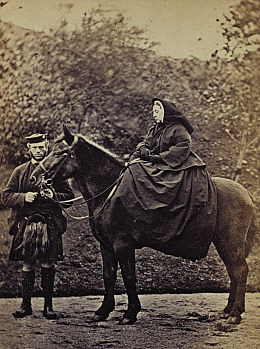
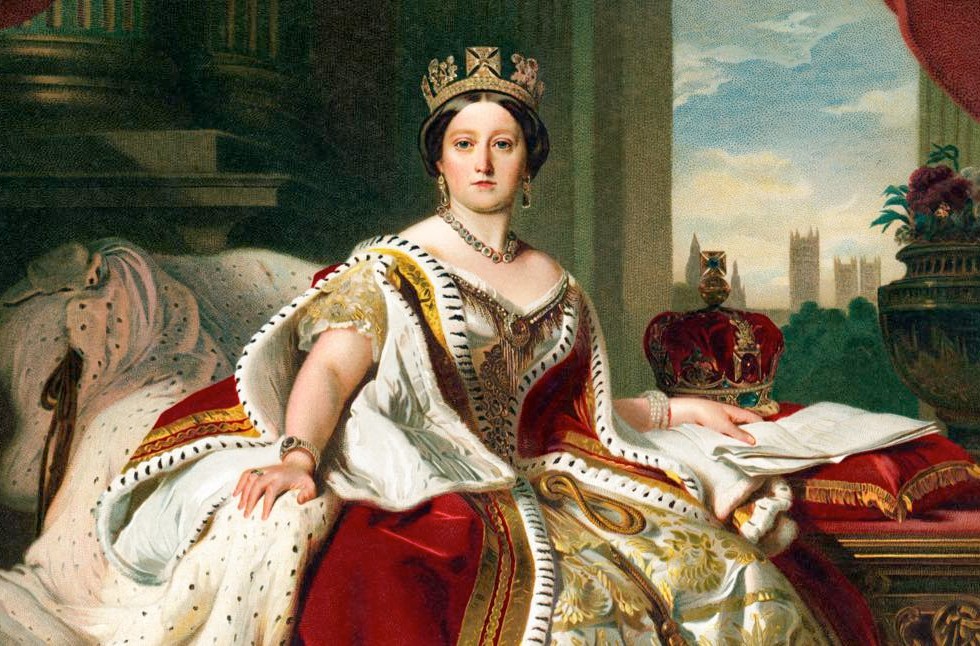
The recently widowed Queen Victoria wearing mourning clothes at Balmoral, Scotland, 1863. She is riding "Fyvie" and is accompanied by her faithful servant John Brown. Her husband, Prince Albert died in December of 1861 of typhoid fever or perhaps cancer of the stomach. For forty more years, the rest of Victoria's life, she wore black widow's weeds. Suspicion was aroused by Victoria's partiality to John Brown as a servant; most of the members of the Royal Household referred to him as "the Queen's stallion" and defamatory pamphlets referred to her a "Mrs. Brown." A 1997 film with Judy Dench titled "Mrs. Brown" was about the possible love affair.

The recently widowed Queen Victoria wearing mourning clothes at Balmoral, Scotland, 1863. She is riding "Fyvie" and is accompanied by her faithful servant John Brown. Her husband, Prince Albert, died in December of 1861 of typhoid fever or perhaps cancer of the stomach. For forty more years, the rest of Victoria's life, she wore black widow's weeds. Suspicion was aroused by Victoria's partiality to John Brown as a servant; most of the members of the Royal Household referred to him as "the Queen's stallion" and defamatory pamphlets referred to her as "Mrs. Brown." A 1997 film with Judy Dench titled "Mrs. Brown" was about their rumored love affair.

It was three weeks before Mary could even be persuaded to get up out of  bed and put on her mourning clothes. Queen Victoria (1819-1901) now became the First Lady’s fashion model. Victoria’s husband Prince Albert had died unexpectedly just three months earlier and Victoria had plunged herself and her entire staff into the deep black dress of mourning. Following Victoria’s lead and further compounding her debt to clothing merchants (click to read an earlier post), Mary Lincoln ordered an entire new wardrobe of dull black crepe dresses, bonnets, and weeping veils.

For more than a year, six months longer than was called for in the mourning manuals of the day, Mary wore first-degree mourning. Her black crepe straw bonnet was so heavily veiled that she could not turn her head, which gave her an odd appearance as she was always facing forward. She became a very public mourner. She wanted to draw attention to her grief as if she was the only one who had lost a child at a time when Civil War soldiers were dying in record numbers from Mississippi to Maryland on the nation’s bloody battlefields.  During her mourning, she cancelled the Saturday afternoon Marine Band Concerts held on the White House lawn, explaining that, “When we are in sorrow, quiet is necessary.”  She bought black jet jewelry to accent her sooty “widow’s weeds” and used writing paper with the thickest margins of black.

Finally, in 1863, Mary ordered another new wardrobe, running up yet more bills, and moved into the stage known as half-mourning, exchanging her lusterless black for fabric in lavender, gray, and somber purples with a little touch of white at the wrist. (1)


Click here to access my related post, “The Madness of Mary Lincoln.” Also, for more posts on the Lincolns, view the drop down menu, “Categories,” in the left column, find at the top, Abraham and Mary Todd Lincoln, and click.

(1) Baker, Jean H. Mary Todd Lincoln: A Biography. (New York: W.W. Norton & Company, 1987)

Read Full Post »

Ferdinand and Imelda Marcos with U.S. President Ronald Reagan

Ferdinand and Imelda Marcos with U.S. President Ronald Reagan

For most of you, the names Ferdinand and Imelda Marcos won’t ring any bells. But from 1965 to 1986, Ferdinand was the President and Imelda the First Lady of the Philippines. In those 21 years, Ferdinand, with Imelda’s help, managed to rack up an astonishing record of abuses common to dictators – human rights violations, assassinations, corruption, embezzlement of public funds – and held onto power through the imposition of martial law, the abolition of the constitution, and the appointment of political cronies, including Imelda, a former beauty queen, to prominent posts.

Finally, in 1986, a people’s coup toppled the Marcos regime and the Marcoses were forced to flee their palace and the country. They were given safe passage by the Reagan Administration to Hawaii. In the palace, Imelda left behind 15 mink coats, 508 gowns, 888 handbags and 1060 pairs of shoes, some say 2700 pairs. It was estimated that the Marcos family was worth $35 billion.

Three years later, still in exile in Hawaii, Ferdinand was dead at 72 of complications from lupus. Imelda wanted Ferdinand to be buried in the Philippines but his body was refused entry. So Imelda kept the body in a refrigerated mausoleum in Oahu, complete with soft music, wheeling him out over the years for a birthday party and an anniversary celebration. (1) The power company soon threatened to suspend power for the costly tomb when thousands of dollars in electric bills went unpaid but, at the last minute, a friend came forward and picked up the tab.

In 2001, twelve years after his death, the Philippine government allowed Ferdinand’s corpse to return to his homeland and Imelda with it. Imelda went to work building a tomb in the national cemetery where Filipino heroes are buried. But fierce opposition broke out and blocked the former president’s burial. Ferdinand’s remains were then temporarily housed at a mansion in Batac, Ilocos Norte Province, in an air conditioned room. Eventually the corpse was moved to their present location in the Marcos family mausoleum in the village cemetery in Batac.

Former First Lady of the Philippines Imelda Marcos kisses the crystal coffin of her deceased husband, former President Ferdinand Marcos

Former First Lady of the Philippines kisses the crystal coffin of her deceased husband, former President Ferdinand Marcos

The once-ruthless dictator is now a shrunken fellow dressed in a barong tagalog and black slacks lying in a glass viewing case inside a refrigerated crypt in a stone room with soft lights and church music. He is on perpetual view. A steady flow of visitors file past him. There his restless corpse will remain, above ground, unless Imelda gets her way and the government relents, according him a government-sponsored burial with full military honors.

A visitor to the mausoleum says that the corpse of Ferdinand Marcos, according to Filipino burial tradition, lies shoeless in the coffin. He swears that Marcos’ face and hands, however, don’t look very natural, even for a corpse. Speculation is that the real corpse is under the glass coffin, and that the figure on display is a dummy. The family claims this is not so, that the corpse looks waxy because it has to be waxed periodically for preservation.

(1) Verdery, Katherine. The Political Lives of Dead Bodies. (New York: Columbia University Press, 2000)


Read Full Post »

Eva Duarte de Peron, First Lady of Argentina (1946-1952)

Eva Duarte de Peron, First Lady of Argentina (1946-1952)

At 8:52 p.m. on the night of July 26, 1952, all radio broadcasts in Argentina were interrupted for an emergency announcement: First Lady Eva Peron – “the Spiritual Leader of the Nation” – was dead of cancer at 33. All activity came to an abrupt halt. Movies stopped playing. Shops closed. Restaurants were emptied of patrons. Argentina went into mourning.

The enormous public display of grief took the government by surprise. Crowds gathered outside the official presidential residence, congesting the streets for ten blocks in any direction. In a panic to be near Eva Peron’s body when it was being moved, eight people were crushed to death in the pressing throngs and 2,000 were treated for injuries at area hospitals. The streets of Buenos Aires were overflowing with tall stacks of flowers laid in remembrance for the people’s beloved Evita. Although she never held an official political office, Eva Peron (1919-1952) was eventually given an official funeral worthy of a head of state. To the poor of Argentina, Senora Evita was a saint.

The Body of Eva Peron Being Carried Through the Honor Guard to the building of the General Labor Federation in Buenos Aires to Lie in State (Aug. 13, 1952)

The Body of Eva Peron Being Carried Through the Honor Guard to the building of the General Labor Federation in Buenos Aires to Lie in State (Aug. 13, 1952)

Before Eva had died, her husband, Argentine President Juan Domingo Peron (1895-1974), had contacted the famed embalmer, Dr. Pedro Ara, whose work was referred to as “the art of death,” to preserve Eva’s body. Dr. Ara’s technique of replacing the corpse’s blood with glycerine, which preserved all organs, created a lifelike appearance. Eva weighed only eighty pounds at death and was severely burned from radiation treatments but Dr. Ara was able to recreate her former beauty and give her an embalmment equal to that of Lenin. It has been suggested that Dr. Ara fell in love with Eva’s body. Plans were made to build a marble monument to Evita’s honor larger than the Statue of Liberty. During the construction her embalmed body lay in state for two years.

Then President Peron was overthrown and the body of Eva Peron stolen. For sixteen years, the whereabouts of Eva’s body remained a mystery. Juan fled to Spain in exile. Finally, in 1971, Eva’s body was discovered in a grave under a false name outside of Rome. It was exhumed and flown to Spain where Juan Peron kept the corpse in an open casket on the dining room table in his villa. Juan was now married to third wife Isabel who combed the corpse’s hair in a daily devotion and, at Juan’s request, was rumored to occasionally lie inside the coffin next to Evita to absorb some of her political magic.

In 1974, Juan returned to power as president of Argentina. Upon his death, wife Isabel succeeded him. Isabel returned Eva’s body to Argentina where it was briefly displayed next to Juan’s body.

Bodies of Juan and Eva Peron Lying in State (c. 1974-76)

Bodies of Juan and Eva Peron Lying in State (c. 1974-76)

Isabel was overthrown in 1976. The new military leaders had Eva Peron’s body safely buried in the Duarte family tomb under three plates of steel in the Recoleta Cemetery in Buenos Aires. The tomb was said to be secure enough to withstand a nuclear attack or a restless corpse.

Now read “Eva Peron’s Restless Corpse Part 2.”


Read Full Post »

Robert McGee

Robert McGee

In my last post, I wrote about the scalping of Texas settler, Josiah Wilbarger, who lived to tell the tale. I’ve come across another scalping survivor account, that of teamster Robert McGee, who agreed with Josiah Wilbarger who said the scalping sounded like “distant thunder. The following is excerpted from the blog, The Road to Samarkand:

Somewhere on the plains of western Kansas in the summer of 1864, a wagon train was carrying supplies to Fort Union, New Mexico. As they stopped for an evening meal, they were attacked by a group from the Brule Sioux Indians allegedly led by Chief Little Turtle himself. The soldiers charged with protecting the wagon train had been held up and consequently the wagon teamsters were entirely unprepared for such an attack. Every member of the caravan was brutalized and executed in various grisly ways. When a government scouting party found them, they discovered that Robert McGee, a 13 year old driver, had miraculously survived. He was whisked off to an infirmary where he gradually recovered and became one of the few people in history to have survived being scalped.

Read Full Post »


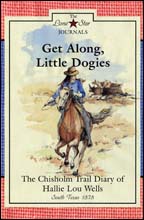
The following is an excerpt from my book, Get Along, Little Dogies: The Chisholm Trail Diary of Hallie Lou WellsAlthough it is fiction, the book is historically authentic, and the event it recounts really did happen in August, 1844, outside Austin, Texas, near Pecan Springs. The narrator is a young woman named Hallie Wells who is traveling up the Chisholm Trail on a cattle drive with some cowboys: 

Get Along, Little Dogies by Lisa Waller Rogers

Get Along, Little Dogies by Lisa Waller Rogers


Sunday, May 12, 1878
Northeast of Austin at Wilbarger Creek

Late at night

This was a golden day. I want to write about it before the memory fades. The lamplight already grows dim.

Today we didn’t travel. It was a true Sabbath, a day of rest – except for Mrs. Bubbies, our bell cow. She gave birth to two heifers this morning. When we resume travel, Joe One-Wing will toss the calves into the supply wagon with the other calves born on the trail. He’ll put loose sacks on them so that their scents won’t get mixed with the other calves as they jostle along the trail. In that way, Mrs. Bubbies will recognize her young and give them milk every evening when we break for camp.

We’re starting to feel like a family. Tonight, after dinner, the off-duty cowboys hung their saddles in the low live oak branches and spread bedding for us to sit on. We sat around the campfire. Cookie even got in the mood and passed around tin plates of “bread and lick” (molasses). John R. read a Bible passage aloud. Will and Henry serenaded us with banjo and a fife. Jeb played “Get Along, Little Dogies” on his harmonica. Will took my hand and we danced a slow waltz. The cows loved the music. They made a soft lowing sound. It was like a big city symphony! We wanted to laugh but that would have made those crazy cows stampede for sure.

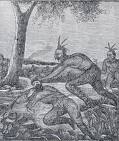
The Scalping of Josiah Wilbarger, a woodcut by T.J. Owen, AKA O. Henry, found in Indian Depredations in Texas, 1889

The Scalping of Josiah Wilbarger, a woodcut by T.J. Owen, AKA O. Henry, found in Indian Depredations in Texas, 1889

Joe One-Wing told a scary story. We’re camped beside Wilbarger Creek, named for a brave pioneer named Josiah Wilbarger. Just a few miles from here, Josiah was attacked by Comanches and scalped. The Indians left him for dead.

The Indians were mistaken. Josiah was not dead. He managed to drag himself to some springs, drink, and bath his aching head. With his fingernails, he dug until he found some snails to eat. Then he crawled over to a live oak and collapsed.

Around midnight, he heard a voice softly calling his name. He awoke to see his dear sister, Margaret, walking toward him. “Josiah,” she said, pointing to the southeast. “Help will come from that direction.” Then she vanished into thin air.

At that same moment, six miles to the southeast, Sarah Hornsby, was having a strange dream. In the dream, she saw her neighbor, Josiah Wilbarger, leaning against a an oak tree, soaked in blood and dying. She awakened her husband, Reuben, and told him her incredible vision. Reuben immediately organized a search party.

The men found Josiah exactly where Sarah had said. He was taken home and nursed back to health. Slowly, Josiah began to recover from his many injuries. Three months passed. One day, a letter arrived for him from Missouri. The letter told him that his sister, Margaret, had died. The mail had been very slow. Margaret had died three months before. She had died the very night she had appeared to Josiah at midnight. It had been her spirit that gave Sarah Hornsby the marvelous dream that saved her brother.

Josiah’s wound never really healed. His wife made him little caps to cover the hole in his head. However, he lived another eleven years until one day he bumped his head on the door frame. Wilbarger County, Texas, was established in 1858 to honor Josiah and his brother Mathias. The bodies of Josiah Wilbarger and his wife are buried in the State Cemetery at Austin.

Read Full Post »

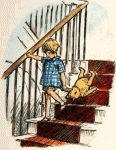
Christopher Robin with Winnie-the-Pooh illustration by E.H. Shepard

Christopher Robin with Winnie-the-Pooh illustration by E.H. Shepard

Reuters new service released this announcement on 01/09/09:

“The first official sequel to the original Winnie-the-Pooh books will appear in October, its publishers said on Saturday, more than 80 years after the honey-loving bear first appeared in print.”Return to the Hundred Acre Wood” is the follow up to A.A. Milne’s “Winnie-the-Pooh” and “The House At Pooh Corner,” which were famously illustrated by E.H. Shepard.

The new book, published by Egmont Publishing in Britain and Penguin imprint Dutton Children’s Books in the United States, will be written by David Benedictus, [and] Mark Burgess, who has already drawn classic children’s characters including Paddington Bear and Winnie-the-Pooh, is to provide the illustrations.”

This new Pooh illustrator Mark Burgess has illustrated several children’s picture books and many of teddy bears, but my limited Internet search has not turned up any of Winnie-the-Pooh. Following the classic work of original Pooh illustrator E.H. Shepard will be a tall order for Burgess. According to The Star Phoenix on January 14, 2009, a collection of Shepard’s drawings for the original Pooh books sold for almost $2 million in London last month.

E.H. Shepard is also famous as the original illustrator of The Wind in the Willows by Kenneth Grahame. Like Christopher Robin Milne, Shepard came to resent Winnie-the-Pooh, feeling that his illustrations for the Milne books overshadowed his other work.

The Wind in the Willows illustration by E.H. Shepard

The Wind in the Willows illustration by E.H. Shepard

Read Full Post »

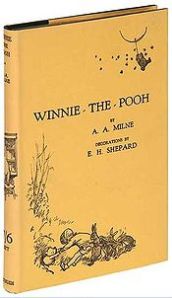
winniethepooh-bookThis is the story of how A.A. Milne came to write the stories of Winnie-the-Pooh, or just plain Winnie the Pooh, as Disney would have it.

It was the beginning of World War I. A Canadian lieutenant, Harry Colebourn, a veterinarian in Winnipeg,  offered his services to his country. He was already a trained officer attached to the 34th Regiment of Cavalry, and received orders to leave with the regiment on a train for Valcartier, Quebec, and then take a ship to England. While en route to Valcartier, he was detached from the 34th Regiment and transferred to  the Canadian Army Veterinary Corps.

On August 24, 1914, the train stopped at White River, Ontario, an important stop for all trains. Here they would take on coal and water as well as clean out the cinders. The trains carried men and horses, as horses were vital in the war effort. During the four-to-six hour stop, the horses would get off the train to be watered and exercised. Troops would drill along Winnipeg Street where the train station was located.

It was on the train platform that Lieutenant Colebourn noticed a man with a female black bear cub on a leash. It was not an uncommon sight for the times; several people had pet bears back then. Many old photos show bears leashed and posing with family members. Lieutenant Colebourn talked to the man and found out he was a trapper. The trapper told the lieutenant that he had killed the cub’s mother. The lieutenant, being a vet, knew that the cub had little chance now of surviving in the wild without its mother. So he paid the trapper $20 for the cub and took it back with him to the train. He named his new companion, “Winnie,” after his hometown of Winnipeg.

From Gaspe Bay, he and Winnie embarked for England aboard the S.S. Manitou with the rest of the troops, where they headed to a military encampment in Southern England on the Salisbury Plain (home to Stonehenge).

Lt. Harry Colebourn and Winnie

Lt. Harry Colebourn and Winnie.

Winnie became the mascot of the C.A.V.C. while the company remained in England. She became a pet to many of the soldiers, following them around like a tame dog. She slept under Harry’s cot in his tent. Sometimes she would climb the center pole of the tent in the night and give it a shake. But, as Winnie grew older and bigger, the men began to worry that the shaking would make the tent collapse in the night with them in it. From then on, they slept with Winnie tethered to a pole outside the tent.

But it was wartime. Soon the brigade was ordered to France. Harry, now a captain, could not take Winnie with him to the battlefront. On December the ninth of that same fall, Harry took Winnie to the London Zoo. It was his full intention to return for her after the war and return with her to Canada. Harry was very faithful to Winnie. When on leave from war duty, he made trips to London to visit Winnie in the zoo.

Winnie continued to capture the hearts of all those who met her. She became a very popular attraction at the London Zoo.  It was said that people would knock on her cage door and she would open it and come out. She would allow children to ride on her back and she would eat from their hands. Her attendants considered her trustworthy. No other bears were allowed such contact with the visitors to the zoo.

The war ended in 1918 but Harry didn’t take Winnie out of the London Zoo. Instead he donated her as a gesture of appreciation to the zoo for caring for Winnie through the war years and he returned to Winnipeg alone. Living in London at that time was author A.A. Milne. 

Christopher Robin Milne and Winnie at the London Zoo c.1924
Christopher Robin Milne and Winnie at the London Zoo c. 1924

On August 21, 1921, Milne’s son, Christopher Robin, or “Billy Moon,” as he later referred to himself, had his first birthday. Milne gave him an Alpha Farnell stuffed teddy bear which came to be known as “Edward.”  From 1924 on, Milne and his son began to visit Winnie the bear in the London Zoo. Christopher Robin became very attached to Winnie. He was even allowed inside the cage to feed Winnie condensed milk. Soon Christopher Robin’s stuffed bear underwent a name change. Although a boy, “Edward” soon became known as Winnie.

Inspired by both the zoo bear Winnie and his son’s stuffed bear of the same name, author Milne began to write and publish his Pooh’s Classics. In 1926 the first and best know of the series called Winnie-the-Pooh, was published, the additional name “Pooh,” being borrowed from the name of a swan. Milne’s characters are mostly inspired by Christopher Robin’s stuffed animals, among them Piglet, Tigger, and Eeyore. These toys are now on display at the New York Public Library.

At first, Christopher Robin enjoyed the fame his father’s books brought him, but, as he grew older, he became resentful. He felt his father was exploiting his childhood for personal gain.

Read Full Post »

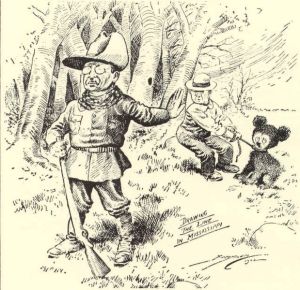
11/16/1902 Washington Post cartoon by Clifford Berryman, "Drawing the Line in Mississippi"

11/16/1902 Washington Post cartoon by Clifford Berryman, "Drawing the Line in Mississippi"

Everyone knows that the teddy bear is named after the twenty-sixth president of the United States, Theodore “Teddy” Roosevelt, but they may not know why.

It happened in November of 1902. Teddy Roosevelt was on a bear-hunting trip through Louisiana and Mississippi. It was an “exasperating” hunt, said Roosevelt, and after five days, he never got a shot. Out of pity, his companions corraled and roped a bear for his prey. But Roosevelt refused to kill a defenseless animal. The press printed the story and the public applauded their president’s restraint. But the story really caught fire when a political cartoon appeared on the front page of the Washington Post two days later, with cartoonist Clifford Berryman portraying Roosevelt as “turning away with disgust, with sloped rifle,” from a “very black bear being roped around the neck by a very white catcher.” (1)

Berryman was commenting on Roosevelt’s race relations. Roosevelt thought that “negroes” as a group were far inferior to whites. He, however, also believed that individual blacks could rise to social heights. In 1901, he became the first president to invite a black man to the White House when he sat down to dinner with African-American educator Booker T. Washington.

Anyway, whether or not the readers of the Post picked up on Berryman’s allegory is not what we remember today. What is recalled is that the cartoon sparked a full-scale teddy bear craze. (2) The public fell in love with the cartoon bear. People wrote and begged Berryman to draw more “bear cartoons,” which he did. In subsequent cartoons, he made the bear rounder, smaller, and cuter, and thus all the more endearing with its prickly pear ears,  imploring eyes, and scraggly fur.

Skip to a candy and toy shop in Brooklyn. Shop owner  Morris Michtom had seen Berryman’s cartoon. He asked his wife Rose to create a stuffed bear like the one in the cartoon.

That night, Rose cut and stuffed a piece of plush velvet into the shape of a bear, sewed on shoe button eyes and handed it to Morris to display in the shop window. He labeled it, “Teddy’s bear.” (3)

To Michtom’s surprise, not just one but a dozen customers wanted to buy the bears. Michtom received Roosevelt’s permission to use his name on his product and began the mass production of the cuddly toy bears which sold for $1.50.

Oregon family c.1900 with prized family teddy bear

Oregon family c.1900 with prized family teddy bear

Today the teddy bear craze is still going strong and we think of teddy bears as being toys for children. But, back at the beginning, women bought the teddy bears for themselves, made them clothes they read about in Ladies’ Home Journal, and carried them with them everywhere.

(1) Morris, Edmund. Theodore Rex. Random House: New York, 2001.
(2) History.com: http://www.history.com/home.do
(3) Jewish Virtual Library: www.jewishvirtuallibrary.org

Read Full Post »

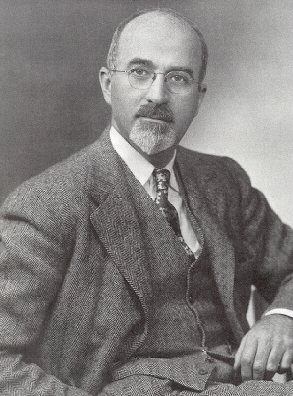
Dr. Walter Freeman, the ice pick lobotomist

Dr. Walter Freeman, the ice pick lobotomist

I’d fully intended to move away from the subject of insane asylums and talk about a cowgirl from Oklahoma by the name of Lucille Mulhall. But I cannot in good conscience leave the subject without telling what I’ve learned about the barbaric brain surgeon responsible for Rosemary Kennedy’s lobotomy, the operation that permanently incapacitated her at the young age of 23. Rosemary had been acting in an agitated behavior, according to her father, Joseph P. Kennedy, throwing fits and showing interest in boys, and he sought an operation to settle her down. Two doctors were in the operating room that day in 1941: Dr. Walter Freeman, the director of the laboratories at St. Elizabeth’s Hospital in Washington, D.C., together with his partner, James W. Watts, MD, from the University of Virginia.

Dr. Freeman was obsessed with finding a cure for mental illness. In the day before psychiatric drugs, mentally ill patients were shuttered away in institutions like St. Elizabeth’s. Shock therapy, pioneered in the thirties, though not completely successful, had effectively reduced some psychiatric symptoms in agitated patients, rendering them calmer for a time following treatment. Psychiatrists like Dr. Freeman wanted to find the locus of mental illness of the brain. They understood that there were regions of the brain and were looking for surgical answers instead of just locking people up for life. Freeman, however, was not a surgeon but a neurologist. He was wildly ambitious and longed to achieve the lasting fame of his grandfather, a pioneer brain surgeon, once the president of the American Medical Association. Freeman was determined to find a procedure that would root out the defect in the brain that he believed responsible for mental illness.

Freeman discovered the work of a Portuguese neurologist named Egas Moniz who had performed a radical new operation on a group of 20 mental patients. By taking small corings of their brains, Moniz asserted, it had been possible to rid a third of these patients of their symptoms. Moniz didn’t explain why this worked. He had a crude notion that people “who are mentally ill are sort of obsessed, he called them fixed ideas. And that these fixed ideas probably resided in some way in the frontal lobes.”

Along with Dr. Watts, Freeman began to perform lobotomies, or surgeries on the frontal lobes. After several operations, Dr. Freeman called his operation a success. According to Edward Shorter, Medical Historian, “Freeman’s definition of success is that the patients are no longer agitated. That doesn’t mean that you’re cured, that means they could be discharged from the asylum, but they were incapable of carrying on normal social life. They were usually demobilized and lacking in energy. And they were that on a permanent basis.” Many had to be retaught how to use the toilet. They were definitely not the same persons they were before the operation.

Why didn’t the medical establishment stop Drs. Freeman and Watts from performing this radical and untested procedure? This was back in the day when it was considered unethical for doctors to criticize their peers – plus, Dr. Freeman manipulated the press in his favor. He proclaimed he’d found a cure for mental illness. Soon he was receiving glowing reviews. The Washington Star called prefrontal lobotomy “One of the greatest surgical innovations of this generation.” The New York Times called it “surgery of the soul,” and declared it “history making.”

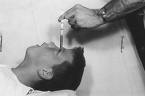
It gets worse. Freeman decided that there was a simpler way to get into the brain than through the top of the skull, as he had done with Rosemary Kennedy. He decided that the skull was thinner behind the eye and that he could make an incision there with an ice pick. Freeman “would hammer the ice pick into the skull just above the tear duct and wiggle it around.”

transorbital lobotomy

transorbital lobotomy

He began to travel around the nation in his own personal van, which he called his “lobotomobile”, hawking this new procedure which he performed with a gold ice pick, and training other doctors in his methods. He even performed a few lobotomies in hotel rooms. Before he was stopped and the lobotomy discredited, Walter Freeman had performed over 3,500 lobotomies. His medical license was revoked when one of his patients died during a lobotomy. Nevertheless, he continued to tour the country in his lobotomobile, visiting his former patients, until his death from cancer in 1972.

Read Full Post »

Releasing Lunatics from their Chains (Robert-fleury)

Releasing Lunatics from their Chains (Robert-fleury)

I was recalling something my grandmother told me about a “field trip” she and her sister Maurine took to Austin, Texas, back in the 1920’s. Both Grandmother and Aunt Maurine were young and single, living in Lufkin, Texas. They had heard all about the state lunatic asylum and wanted to see it for themselves. I think they were hoping to spot a flesh and blood lunatic. The trip was a real highlight.

The two took the train all alone from East Texas to Austin to visit the asylum.

 “It’s lucky they weren’t captured,” says my sister Loise.

I’ve seen the maps of Austin from those days. The important buildings are marked, including the University of Texas, the State Capital, and the State Lunatic Asylum.  True, the Lunatic Asylum was a garden spot and people other than my relatives were drawn to it for good reasons. But I think novels like Jane Eyre give us an insight into attitudes toward the mentally ill. They were weird, scary, and dangerous.

Evidently the Texas State Lunatic Asylum was ahead of its time in its compassionate approach toward the mentally ill. The asylum movement in America and Europe at that time “strived to provide a healthy diet, exercise, fresh air, adequate rest, a strict daily routine, social contact, and a kind but firm approach,” according to the website of the Texas Dept. of State Health Services (1). No longer flogging the patient or tossing cold water on him, the treatment for the mentally ill in the first half of the twentieth century was still far from humane. 

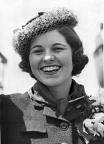
Rosemary Kennedy

Rosemary Kennedy

In 1941, Joseph Kennedy authorized a frontal lobotomy for his beautiful special needs daughter Rosemary, who was proving to be a bit of an embarrassment to him when she tripped curtseying to the Queen of England.

According to Dr. Watts, a surgeon assisting in the lobotomy of Rosemary Kennedy: 

“We went through the top of the head, I think she was awake. She had a mild tranquilizer. I made a surgical incision in the brain through the skull. It was near the front. It was on both sides. We just made a small incision, no more than an inch.” The instrument Dr. Watts used looked like a butter knife. He swung it up and down to cut brain tissue. “We put an instrument inside,” he said. As Dr. Watts cut, Dr. Freeman put questions to Rosemary. For example, he asked her to recite the Lord’s Prayer or sing “God Bless America” or count backwards. … “We made an estimate on how far to cut based on how she responded.” … When she began to become incoherent, they stopped.” (2)

1. http://www.dshs.state.tx.us/mhhospitals/AustinSH/ASH_About.shtm

2. http://en.wikipedia.org/wiki/Rosemary_Kennedy

NEXT: Stunt reporter for THE NEW YORK WORLD Nellie Bly writes TEN DAYS IN A MAD-HOUSE

Read Full Post »

« Newer Posts