Feeds:
Posts
Comments

Archive for 2009

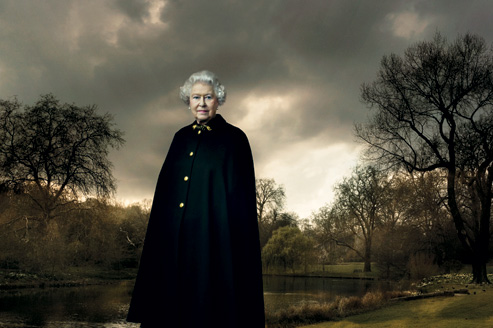
photo of Queen Elizabeth II at Buckingham Palace, March 28, 2007, by Annie Leibovitz

Annie Leibovitz photographed Queen Elizabeth. Here’s what she had to say about that experience.
Excerpted from Annie Leibovitz at Work, by Annie Leibovitz, published by Random House © 2008

The Queen

In 2007, a few weeks before Queen Elizabeth visited the United States for the 400th anniversary of the founding of Jamestown, I was asked to take her portrait. I was the first American to be asked by the Palace to make an official portrait of the Queen, which was very flattering. I felt honored. I also felt that because I was an American I had an advantage over every other photographer or painter who had made a portrait of her. It was O.K. for me to be reverent. The British are conflicted about what they think of the monarch. If a British portraitist is reverent, he’s perceived to be doting. I could do something traditional.

It’s ironic that the sitting with the Queen became controversial. I’m rather proud of having been in control of a complicated shoot. The controversy arose about two months after the pictures were published, when the BBC claimed that the Queen had walked out while we were shooting. This was completely untrue, and although they retracted the claim and issued an apology to the Queen and to me almost immediately, the scandal had a life of its own. The story, which came to be referred to as Queengate, wouldn’t die. Eventually the head of BBC One resigned over it.

When I was preparing for the shoot, I thought about using the landscape around Balmoral Castle, in Scotland. I brought this up in the very first conference call with the Palace. I said that Americans thought of the Queen as an outdoorswoman. I had been influenced by Helen Mirren’s performance in The Queen and I couldn’t help mentioning how much I liked her character in that film. There was a long silence on the other end of the line.

The second idea I had, after Balmoral, was to photograph the Queen on horseback. I asked where she rode and they said she went riding every Saturday at Windsor Castle. I said that I would love to see her in her riding clothes, and in a later conversation I asked if she could stop during her weekend ride and get off her horse and mount it again. That is, could I do a portrait of her in the trees. They said, No, it was not possible. She just rode the horse and came back, and, anyway, she didn’t wear riding clothes anymore. A few days later they said it was going to be Buckingham Palace and no horses.

I realized that I was going to need some time on the ground for this. When we arrived in London, we went straight to the palace and were shown all the rooms, including the throne room—everywhere except the private quarters. And then we scouted the back. There was a wintery sky and the trees didn’t have leaves. It was an appropriate mood for this moment in the Queen’s life. There was no way, however, that she was going to stand outside in formal attire.

For a sitting like this you don’t put all your eggs in one basket. You try to have as many options as possible. I kept thinking that somehow I would get the Queen outside, but I began choosing formal outfits. I narrowed the robes down to a very handsome Order of the Garter cape, but then we were told that she could wear only a white dress under it. We were lobbying for a gold dress. I was also hoping for a dress with more body to it. The Queen wears very streamlined dresses now that she’s older, and I wanted her in something with more volume. But she didn’t have anything like that. Finally everyone agreed that she could wear a gold-and-white dress under the Order of the Garter robe. The Queen was 80 years old. She was sturdy, but putting on and taking off a lot of heavy clothes is tiring, and she had to be dressed in layers to expedite things. The gold-white dress became the base.

I was still upset that I couldn’t get her outside. It was so beautiful out there. And it wasn’t cold or raining or anything. I began thinking about what Cecil Beaton had done. He brought in flowered backdrops. Beaton was big on backdrops. He made very stagy portraits. Perhaps because the pictures were made in black and white you don’t notice the backdrops. They sort of go out of focus. I realized that I could do something similar digitally. I decided to photograph the garden and the trees for a backdrop.

The Palace had given us 25 minutes with the Queen, so there had to be a battle plan. I chose a grand reception room, the White Drawing Room, as the principal setting because of the light from the tall windows. Supplementary lights had been pre-set so that when the Queen moved from one spot to another all we needed to do was switch them on. We had constructed a gray canvas backdrop in an anteroom, and she was to come in there wearing the Order of the Garter robe and the dress, but no tiara. The first shot was to be made on a balcony, with the sky behind her. That sky could be digitally exchanged later for the pictures I had taken in the gardens the day before. I didn’t want her to be wearing a tiara in the gardens.

The morning of the shoot, the Queen came walking down the hall very purposefully. She was definitely a force. This was all being taped by the BBC for a documentary. I would never have agreed to their being there if I felt I had any choice, but they had been following her around for months. Their microphone picked up her saying, “I’ve had enough of dressing like this, thank you very much,” as she marched down the hall. Later, when segments of footage for the BBC were edited for a promotional film, it appeared as if the Queen were stomping out of the photo session rather than going into it. Thus the brouhaha.

The Queen was about 20 minutes late, which we thought was a little strange. When that happens, you never know if it can be made up on the other end. My five-year-old daughter, Sarah, had come with us, and she curtsied and offered the Queen flowers, and I introduced my team. At this point I was in shock. The Queen had the tiara on. That was not the plan. It was supposed to be added later. The dresser knew that. The Queen started saying, “I don’t have much time. I don’t have much time,” and I took her to the first setup and showed her the pictures of the gardens. I think she understood what we had in mind. Then I walked her into the drawing room, probably sooner than I would have if things had been going well. She composed herself when I took some pictures.

I knew how tight everything was, especially with the loss of 20 minutes, and I asked the Queen if she would remove the tiara. (I used the word “crown,” which was a faux pas.) I suggested that a less dressy look might be better. And she said, “Less dressy! What do you think this is?” I thought she was being funny. English humor. But I noticed that the dresser and everyone else who had been working with her were staying about 20 feet away from her.

We removed the big robe, and I took the picture of the Queen looking out the window, and then I said, Listen, I was a little thrown when you first came in, and I have one more picture I’d like to try, with an admiral’s boat cloak. I was thinking of one of Cecil Beaton’s last pictures of the Queen. A very stark and simple and strong portrait in which she’s wearing a boat cloak. We went back into the anteroom, where the gray canvas backdrop had been set up, and she took off the tiara and put on the cloak. That’s the shot we digitally imposed on pictures of the garden.

Right after we finished, I went up to the press secretary and said how much I loved the Queen. How feisty she was. Later I mentioned to a couple of friends that she had been a bit cranky, but it was nothing unusual. What was remarkable about the shoot, and I wrote the Queen a note about this later, was something the BBC missed: her resolve, her devotion to duty. She stayed until I said it was over. Until I said, “Thank you.” We were finished a little before our allotted 25 minutes were up.


Readers, for more on this episode, read my post, “The Queen is Mad.”

Read Full Post »

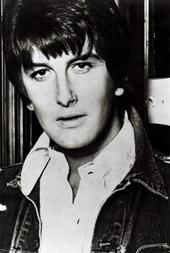
John Lennon, right, from a scene in the fantastically funny film, "A Hard Day's Night." Lennon is "sniffing a coke" while sitting next to Wilfrid Brambell who plays Paul McCartney's grandfather, constantly referred to as "a clean old man" and the source of great trouble to the Beatles in the show.

John Lennon, right, from a scene in the fantastically funny film, "A Hard Day's Night" (1965). Traveling on a train, Lennon sits next to Wilfrid Brambell, who plays Paul McCartney's grandfather. John is "sniffing coke." Paul's grandfather is constantly referred to as "a clean old man." In fact, he is not, and is the source of great trouble to the Beatles, in particular, Ringo, in this pseudo rock documentary.

Beatle John Lennon (1940-1980) had a witty sense of humor. During live performances of “I Want to Hold Your Hand,” Lennon often changed the words to “I want to hold your gland,” because of the difficulty hearing the vocals above the noise of screaming audiences in the grip of Beatlemania.

At the Royal Variety Show in 1963—in the presence of members of the British royalty, including Her Majesty Queen Elizabeth the Queen Mother, Princess Margaret, and Lord Snowdon —Lennon quipped to the largely upper-crust audience:

“For our next song, I’d like to ask for your help. For the people in the cheaper seats, clap your hands … and the rest of you, if you’ll just rattle your jewelry.”

 
A clip from this London performance is shown below, with the Beatles singing, “With Love From Me to You,” “Until There Was You,” and “Twist and Shout.” Paul makes a joke before “Until There Was You,” referring to American singer Sophie Tucker as a group (she was large). John makes his jewelry comment before playing my all-time favorite “Twist and Shout.” Enjoy.

Read Full Post »

Salvador Dali grew a flamboyant moustache, waxed and up-turned, styled after , influenced by seventeenth-century Spanish master painter Diego Velázquez

Salvador Dalí grew a flamboyant moustache, waxed and up-turned, influenced by seventeenth-century Spanish master painter Diego Velázquez. The moustache became Dalí's trademark look.

In 1953, Spanish-born Surrealist painter Salvador Dalí (1904-1989) wrote:

“Every morning upon awakening, I experience a supreme pleasure: that of being Salvador Dalí, and I ask myself, wonderstruck, what prodigious thing will he do today, this Salvador Dalí….”

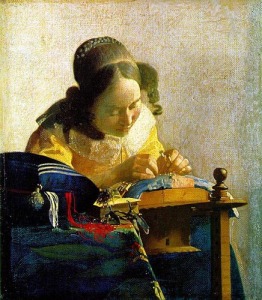
Salvador Dalí found deep meaning in Jan Vermeer's painting, "The Lacemaker" (ca. 1669-70)

Salvador Dalí found deep meaning in Jan Vermeer's painting, "The Lacemaker" (ca. 1669-70)

In December 1955, that “prodigious thing” meant that he was to borrow a friend’s white Rolls Royce Phantom II, fill it to the roof with 500 kg of cauliflower, and drive it to the Sorbonne in Paris. Then he would disembark and enter the school to give a lecture he’d impossibly titled, ‘Phenomenological Aspects of the Paranoiac Critical Method:’ 

“Some 2,000 ecstatic listeners were soon sharing Salvador’s Dalirium. Planting his elbows on a lecture table strewn with bread crumbs, Dalí blandly explained: “All emotion comes to me through the elbow.” Then he announced his latest finding in critical paranoia. The gamy meat of it: “Everything departs from the rhinoceros horn! Everything departs from [Dutch Master] Jan Vermeer’s The Lacemaker! Everything ends up in the cauliflower!” The rub, apologized Dalí, is that cauliflowers are too small to prove this theory conclusively.” (1)

As Dalí’s fame grew, his stunts and outrageous pronouncements became more frequent. He was an endless self-promoter, grandiose and pompous. He felt impelled, he admitted, to accumulate millions of dollars. He loved money. To keep the contracts coming, he was determined to keep himself in the public eye. His art and behavior were designed to provoke a response.

Salvador Dalí's most famouse painting, "The Persistence of Memory," 1931. His inspiration for the three melting watches came to him when he had a headache. His wife Gala had gone to the movies with friends and Dalí, ill, had stayed at home. He sat at the kitchen table for a long time, staring at the melting Camembert cheese. Before going to bed, he entered his studio and looked at the landscape he was working on - and decided to add three melting watches.

Salvador Dalí's most famous painting, "The Persistence of Memory," 1931. His inspiration for the drooping timepieces came to him one night when he had a headache. His wife Gala had gone to the movies with friends while Dalí, ill, had stayed behind at home. He sat at the kitchen table for a long time, staring at the melting Camembert cheese. Before going to bed, he entered his studio and looked at the landscape he had been working on - and - Voila! - decided to add three melting watches.

He delighted in playing the buffoon. While Dalí’s pranks were often funny, one was certainly dangerous. Once he donned a deep-sea diving suit before giving a lecture. The helmet was soundproof so no one could hear him. Dalí began to thrash about, flailing his arms soundlessly. The audience roared with laughter, thinking it was part of Dalí’s act. But he was suffocating inside the helmet. It was not until he almost fainted that he was rescued. Accused of going too far,  Dalí would often reply, “It’s the only place I ever wanted to go.”

Sometimes his stunts were offensive, such as when he and wife Gala appeared at a New York costume party dressed as the Lindbergh baby and his kidnapper. Other spectacles bordered on the criminal, like when he discovered that his Bonwit Teller window display in Manhattan had been rearranged. He became so enraged that he hurled a bathtub through the plate glass window and crashed, with the tub, inside the store.

Dalí created The Mae West Lips Sofa (1937) in the same shocking-pink color introduced by fashion designer Elsa Schiaparellli

Dalí created The Mae West Lips Sofa (1937) in the same shocking-pink color introduced by fashion designer Elsa Schiaparelli.

Dalí was endlessly creative in many genres other than painting. He created jewelry, designed clothes (see my post: “Elsa Schiaparelli: Shocking-Pink“) and furniture, painted sets for ballets and plays, wrote fiction, created window displays for department stores, and produced the dream sequence for director Alfred Hitchcock’s “Spellbound.He recorded a TV ad for Lanvin chocolates, designed the Chupa Chups candy labels, and was interviewed on TV in 1958 by Mike Wallace – during which Dalí imperiously referred to himself in the third person.

(1) TIME, Dec. 26, 1955

(2) “The Surreal World of Salvador Dali,” Smithsonian magazine, April 2005.

Read Full Post »

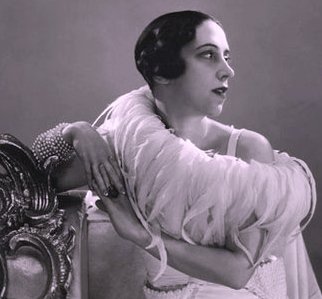
Italian-born fashion designer Elsa Schiaparelli in the 1930s

Italian-born fashion designer Elsa Schiaparelli in the 1930s

Between the two world wars, fashion design was dominated by two extraordinary pioneers, Gabrielle Chanel and Elsa Schiaparelli (1890-1973). Whereas Coco Chanel was a craftswoman who considered dressmaking a profession, Schiaparelli, on the other hand, regarded her work as art and herself as an artist.  

Schiaparelli’s designs were heavily influenced by artists in the dada and surrealist movements, particularly by Salvador Dali.  While Chanel’s clothes were known for their simplicity, Schiaparelli’s were known for their daring.

“Shocking-pink” was Schiaparelli’s signature color. She described hot pink as “life-giving, like all the light and the birds and the fish in the world put together, a color of China and Peru but not of the West.”

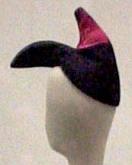
Schiaparelli shoe-hat which debuted in her Fall-Winter 1937-38 collection

Schiaparelli shoe-hat which debuted in her Fall-Winter 1937-38 collection

The designs Schiaparelli created in collaboration with Dali are among her best known. One of her most memorable designs created with Dali is known as the “shoe-hat” (shown here). Note that the hat is shaped like a woman’s high-heeled shoe, with the heel standing straight up and the toe tilted over the wearer’s forehead. The heel is of a shocking-pink color. This hat was worn by Singer sewing machine heiress Daisy Fellowes, among others.

Daisy Fellowes was one of Schiaparelli’s best clients. Fellowes was a French-American heiress with a taste for expensive jewels and clothes and a reputation for cutting remarks. “Though a footnote today, for nearly 50 years, Fellowes, the daughter of a French duke and granddaughter of the sewing-machine magnate Isaac Merritt Singer, was the trans-Atlantic fete set’s No. 1 bad girl.” She was also editor in chief of French Harper’s Bazaar, a philanthropist who donated her salary to an orphanage, and the author of a few sexy romance novels.

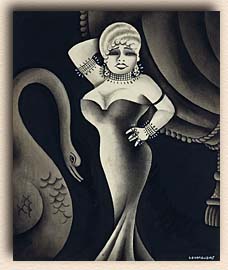
movie siren Mae West (1893-1980) by Miguel Covarrubias, 1928, for the New Yorker

a caricature of the American movie actress, the provocative Mae West (1893-1980) by Miguel Covarrubias, 1928, for the New Yorker magazine

Among other jewels purchased at Cartier‘s shop at 13 rue de la Paix in Paris, Fellowes owned a stunning 17.27ct pink diamond  called the Tête de Belier (Ram’s Head). It was Fellowes’ pink diamond that inspired the color known as shocking-pink or hot pink. Elsa Schiaparelli took note of the diamond, using shocking pink for the box design of her 1937 perfume which she named “Shocking.” The packaging of the box, designed by Leonor Fini, was also notable for the bottle in the shape of a woman’s torso. The shape was inspired by another of Schiaparelli’s celebrity clients, the American screen actress Mae West.

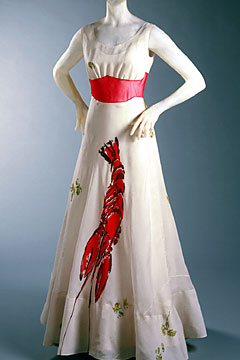
The Lobster Dress by Elsa Schiaparelli

The Lobster Dress by Elsa Schiaparelli

Another of the Schiaparelli/Dali designs is the iconic “Lobster Dress” which debuted in Schiaparelli’s Summer/Fall 1937 Collection. The Lobster dress is a simple white silk evening dress with a crimson waistband featuring a large lobster painted (by Dali) onto the skirt.It is rumored that Dali wanted to apply real mayonnaise to the lobster on the dress but that Schiaparelli objected.

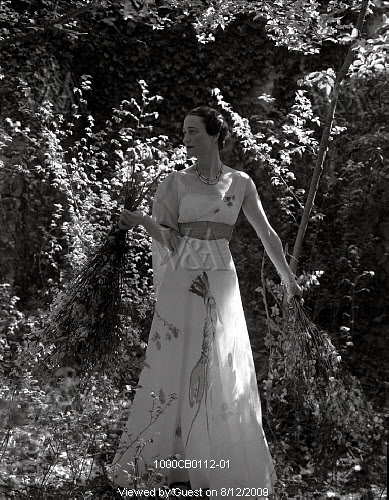
Dali’s lobster design for Schiaparelli was then interpreted into a fabric print by the leading silk designer Sache. It was famously worn by Wallis Warfield Simpson in a series of photographs by Cecil Beaton taken at the Château de Candé shortly before her marriage to Edward VIII. (shown here)

Wallis Simpson, the Duchess of Windsor (1895-1986), photo Cecil Beaton (1904-80). UK, early 20th century.

Wallis Simpson, the Duchess of Windsor (1895-1986), photo Cecil Beaton (1904-80). UK, early 20th century.

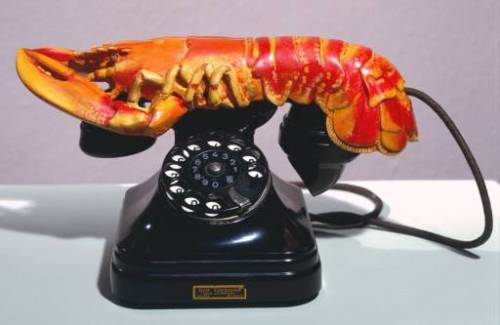
 Dali had been incorporating lobsters into his mixed media creations since 1934, most famously with “Lobster Telephone” (1936).

"Lobster Telephone," by Salvador Dali, 1936

"Lobster Telephone," by Salvador Dali, 1936

To see more of Schiaparelli’s fashion designs, click here.

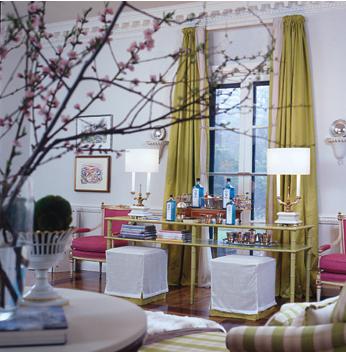
A modern room with touches of Schiaparelli pink in the two chairs and flowers in foreground

A modern room with touches of Schiaparelli pink in the two chairs and flowers in foreground

Read Full Post »

Ancient Egyptian bust on display at Chicago's Field Museum. It bears a striking resemblance to pop star Michael Jackson, complete with disfigured nose

Ancient Egyptian bust on display at Chicago's Field Museum. It bears a striking resemblance to pop star Michael Jackson, complete with disfigured nose

Busted: Statue’s a Dead Ringer for Jacko


The Pharaoh of Pop doesn’t quite have the same ring to it as King of Pop, but visitors to Chicago’s Field Museum could swear that’s Jacko’s face on a 3,000-year-old Egyptian bust. 

 The spitting image limestone sculpture has been on display at the museum since 1988, but recently started drawing attention because of its likeness to Jacko — complete with disfigured nose.

Unfortunately the bust, which was carved sometime between 1550 B.C. and 1050 B.C., is of a woman and MJ likely never had the chance to see the statuette.
 
“I have no idea whether Jackson ever visited the museum,” a Field spokesperson said to the Sun-Times‘ Michael Sneed. “But the similarity between the limestone statue of a woman – which is about 3,000 years old — and Jackson is astounding.”
 
Interestingly, Jackson cast himself as an interloper in ancient Egypt in his video for “Remember the Time,” so maybe he sensed some Egyptian roots

Read Full Post »

Full Moon Through the Trees

Full Moon Through the Trees

Last night, just before bed, Katie called me outside to look at the moon. I didn’t want to do it; I was tired, but she insisted, so I went. She took me into the backyard and pointed at the corner of the yard, behind the live oak near my bedroom.

“Up there!” she said. “See it?”

Well, I didn’t, but she made me keep looking.  She scooted me to the right and had me stand on my toes. I craned my neck to see. Then I finally saw it, a full moon hung low in the sky, just over the roof, stuck in the live oak branches, like an errant volleyball. The moon was more white than yellow, not very big, and veiled in smoky haze. With the live oak branches scratching the moon, cloaked in night mist, it looked like a scene right out of a scary vampire movie . It was spooky.  But what intrigued me more was the look that moon looked down and gave me.

Yes, there was a face in the moon – the face of a woman. For just an instant, that moon’s face smiled down on me in a Cheshire Cat kind of way. Then a thin cloud floated across the moon and the face was gone forever.

The Cheshire Cat from Alice in Wonderland. The cat disappeared, little by little, but the smile was the last to go

The Cheshire Cat from Alice in Wonderland. The cat disappeared, little by little, but the smile was the last to go

I am not alone. The poet Robert Louis Stevenson (1850-1894) also saw a woman in the moon.

The Moon


The moon has a face like the clock in the hall;

She shines on thieves on the garden wall,

On streets and fields and harbour quays,

And birdies asleep in the forks of the trees.


The squalling cat and the squeaking mouse,

The howling dog by the door of the house,

The bat that lies in bed at noon,

All love to be out by the light of the moon.


But all of the things that belong to the day

Cuddle to sleep to be out of her way

And flowers and children close their eyes

Till up in the morning the sun shall arise.

from A Child’s Garden of Verses by Robert Louis Stevenson

Read Full Post »

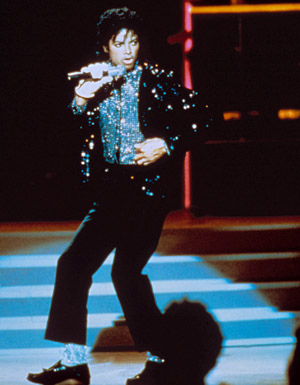
Michael Jackson unveiled his moonwalk dance on March 25, 1983, when he performed his hit song, "Billie Jean," on the TV special, Motown 25: Yesterday, Today, Forever

Michael Jackson unveiled his moonwalk dance on March 25, 1983, when he performed his hit song, "Billie Jean," on the TV special, Motown 25: Yesterday, Today, Forever

I was 29 years old when Michael Jackson and his brothers blew through Texas with their 1984 summer Victory Tour. It was July. I was a fifth-grade school teacher during the regular year. During the summer I was waiting tables at the Night Hawk Steakhouse. Michael Jackson’s record-setting album and video, “Thriller,” was a huge hit.

On Fridays during the school year, I gave my students a treat. At lunchtime, I ordered out for pizza. Then I rolled a TV on a tall stand into my classroom, turned out the lights, shut the blinds, and showed my students the “Thriller” video. We got up out of our chairs and danced. Michael Jackson gave us the chills. We just couldn’t get enough of his energy.

Back to the Victory Tour. It was July 15, 1984 – a Sunday – and I’d just finished my wait shift at the Night Hawk. I clocked out then jumped into my un-air-conditioned Honda and headed South to my apartment. I turned on the radio. The announcer was talking about how exciting the Victory Tour was. Michael Jackson was in Dallas! He had performed Friday and Saturday nights. He was to perform just one more night at Texas Stadium before continuing on his tour. Hasting’s on the Drag across from U.T. still had tickets.

I exited IH 35 and headed straight to Hastings, bought a ticket, raced home, changed clothes, and hit IH 35 for Dallas. When I got there, I realized what a crummy seat I had. The concert started and the lights went down real low, low enough, I discovered, for me to jump over a concrete wall, hunker down, and slither all the way down to the wheelchair section at the front of the stage undetected. A mother sitting in a front row seat gestured to me to come over. She was holding a child in her arms and offered me the empty seat to her right. I took it. I watched the show from a front row seat.

The show was great.  Michael Jackson performed all the songs from the tour, but what I most remember was watching him moondance to “Billie Jean.” Wow. He didn’t sing “Thriller,” which confused me at the time. Now I understand that he didn’t think the choreography translated well into a stage song.

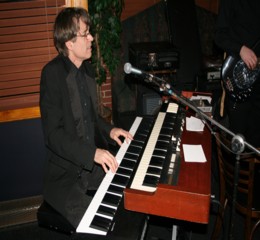
Curtis Jerome Haynes

Curtis Jerome Haynes

On a previous post, I’ve written about Marcel Marceau‘s influence on Michael Jackson’s moonwalk (“Michael Jackson and the Moonwalk“). Here’s a video sent to me via an old friend, musician Curtis Jerome Haynes, showing the origins of the moonwalk. Some of the “Origins of the Moonwalk” dancers featured in the video are Cab Calloway, Fred Astaire, and Sammy Davis, Jr.

In reference to the youtube clip shown below, Curtis Haynes writes that, 

Missing from the montage are James Brown, the Nicholas Brothers, and Marcel Marceau.”

Thanks, Curtis!

Readers, for more on this blog on Michael Jackson, click here.

Read Full Post »

This post is dedicated to my faithful and kind readers in the Philippines – such good people. May God bless Tita Cory.

This just in from the Associated Press:

Corazon Aquino, Philippines president, dead at 76

By HRVOJE HRANJSKI, Associated Press Writer Hrvoje Hranjski, Associated Press Writer –

Fri Jul 31, 7:08 pm ET

Former Philippine President Corazon Aquino, who is suffering from colon cancer, have her picture taken with students before a mass and tribute to herself and her late husband Benigno "Ninoy" Aquino Jr. in Quezon City, Metro Manila, August 17, 2008

Former Philippine President Corazon Aquino, who was undergoing treatment for colon cancer, had her picture taken with students before a mass and tribute to herself and her late husband Benigno "Ninoy" Aquino Jr. in Quezon City, Metro Manila, August 17, 2008. Corazon Aquino died on August 1, 2009.

MANILA, Philippines – Former President Corazon Aquino, who swept away a dictator with a “people power” revolt and then sustained democracy by fighting off seven coup attempts in six years, died on Saturday, her son said. She was 76.

The uprising she led in 1986 ended the repressive 20-year regime of Ferdinand Marcos and inspired nonviolent protests across the globe, including those that ended Communist rule in eastern Europe.

But she struggled in office to meet high public expectations. Her land redistribution program fell short of ending economic domination by the landed elite, including her own family. Her leadership, especially in social and economic reform, was often indecisive, leaving many of her closest allies disillusioned by the end of her term.

Still, the bespectacled, smiling woman in her trademark yellow dress remained beloved in the Philippines, where she was affectionately referred to as “Tita (Auntie) Cory.”

Former President Corazon Aquino's favorite color was all around Metro Manila on Saturday as the nation mourned the death of its beloved first female president and hero of the People Power revolt that restored democracy in the country.

Yellow - Former President Corazon Aquino's favorite color - was all around Metro Manila on Saturday as the nation mourned the death of its beloved first female president and hero of the People Power revolt that restored democracy in the country. Even streetsweepers went about their chores with yellow ribbons tied around their heads in respect to "Cory" Aquino.


“She was headstrong and single-minded in one goal, and that was to remove all vestiges of an entrenched dictatorship,” Raul C. Pangalangan, former dean of the Law School at the University of the Philippines, said earlier this month. “We all owe her in a big way.”

Her son, Sen. Benigno “Noynoy” or Aquino III, said his mother died at 3:18 a.m. Saturday (1918 GMT Friday).

Aquino was diagnosed with advanced colon cancer last year and confined to a Manila hospital for more than a month. Her son said the cancer had spread to other organs and she was too weak to continue her chemotherapy.

Supporters have been holding daily prayers for Aquino in churches in Manila and throughout the country for a month. Masses were scheduled for later Saturday, and yellow ribbons were tied on trees around her neighborhood in Quezon city.

President Gloria Macapagal Arroyo, who is on an official visit to the United States, said in a statement that “the entire nation is mourning” Aquino’s demise. Arroyo declared a period of national mourning and announced a state funeral would be held for the late president.

TV stations on Saturday were running footage of Aquino’s years together with prayers while her former aides and supporters offered condolences.

“Today our country has lost a mother,” said former President Joseph Estrada, calling Aquino “a woman of both strength and graciousness.”

Even the exiled Communist Party founder Jose Maria Sison, whom Aquino freed from jail in 1986, paid tribute from the Netherlands.

Aquino’s unlikely rise began in 1983 when her husband, opposition leader Benigno “Ninoy” Aquino Jr., was assassinated on the tarmac of Manila’s international airport as he returned from exile in the United States to challenge Marcos, his longtime adversary.

The killing enraged many Filipinos and unleashed a broad-based opposition movement that thrust Aquino into the role of national leader.

“I don’t know anything about the presidency,” she declared in 1985, a year before she agreed to run against Marcos, uniting the fractious opposition, the business community, and later the armed forces to drive the dictator out.

Maria Corazon Cojuangco was born on Jan. 25, 1933, into a wealthy, politically powerful family in Paniqui, about 75 miles (120 kilometers) north of Manila.

She attended private school in Manila and earned a degree in French from the College of Mount St. Vincent in New York. In 1954 she married Ninoy Aquino, the fiercely ambitious scion of another political family. He rose from provincial governor to senator and finally opposition leader.

Marcos, elected president in 1965, declared martial law in 1972 to avoid term limits. He abolished the Congress and jailed Aquino’s husband and thousands of opponents, journalists and activists without charges. Aquino became her husband’s political stand-in, confidant, message carrier and spokeswoman.

A military tribunal sentenced her husband to death for alleged links to communist rebels but, under pressure from U.S. President Jimmy Carter, Marcos allowed him to leave in May 1980 for heart surgery in the U.S.

It was the start of a three-year exile. With her husband at Harvard University holding court with fellow exiles, academics, journalists and visitors from Manila, Aquino was the quiet homemaker, raising their five children and serving tea. Away from the hurly-burly of Philippine politics, she described the period as the best of their marriage.

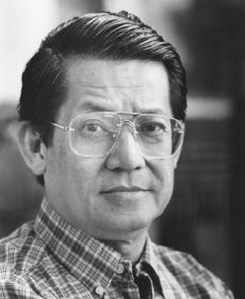
Benigno (Ninoy) Aquino, Corazon Aquino's husband, was the leader of the Filipino opposition to Ferdinand Marcos. He was shot dead in 1983 as he returned to the Philippines.

Benigno (Ninoy) Aquino, Corazon Aquino's husband, was the leader of the Filipino opposition to Ferdinand Marcos. He was shot dead in 1983 as he returned to the Philippines.

The halcyon days ended when her husband decided to return to regroup the opposition. While she and the children remained in Boston, he flew to Manila, where he was shot as he descended the stairs from the plane.

The government blamed a suspected communist rebel, but subsequent investigations pointed to a soldier who was escorting him from the plane on Aug. 21, 1983.

Aquino heard of the assassination in a phone call from a Japanese journalist. She recalled gathering the children and, as a deeply religious woman, praying for strength.

“During Ninoy’s incarceration and before my presidency, I used to ask why it had always to be us to make the sacrifice,” she said in a 2007 interview with The Philippine Star newspaper. “And then, when Ninoy died, I would say, ‘Why does it have to be me now?’ It seemed like we were always the sacrificial lamb.”

She returned to the Philippines three days later. One week after that, she led the largest funeral procession Manila had seen. Crowd estimates ranged as high as 2 million.

With public opposition mounting against Marcos, he stunned the nation in November 1985 by calling a snap election in a bid to shore up his mandate. The opposition, including then Manila Archbishop Cardinal Jaime L. Sin, urged Aquino to run.

After a fierce campaign, the vote was held on Feb. 7, 1986. The National Assembly declared Marcos the winner, but journalists, foreign observers and church leaders alleged massive fraud.

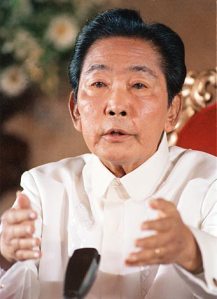
Ferdinand Marcos was elected president of the Philippines in 1965. In 1972 he imposed martial law and seized dictatorial powers. A massive four-day protest known as the People Power Movement forced him from office in 1986 and restored democracy in the Philippines.

Ferdinand Marcos was elected president of the Philippines in 1965. In 1972 he imposed martial law and seized dictatorial powers. A massive four-day protest known as the People Power Movement forced him from office in 1986 and restored democracy in the Philippines.

With the result in dispute, a group of military officers mutinied against Marcos on Feb. 22 and holed up with a small force in a military camp in Manila.

Over the following three days, hundreds of thousands of Filipinos responded to a call by the Roman Catholic Church to jam the broad highway in front of the camp to prevent an attack by Marcos forces.

On the third day, against the advice of her security detail, Aquino appeared at the rally alongside the mutineers, led by Defense Minister Juan Ponce Enrile and Lt. Gen. Fidel Ramos, the military vice chief of staff and Marcos’ cousin.

From a makeshift platform, she declared: “For the first time in the history of the world, a civilian population has been called to defend the military.”

The military chiefs pledged their loyalty to Aquino and charged that Marcos had won the election by fraud.

U.S. President Ronald Reagan, a longtime supporter of Marcos, called on him to resign. “Attempts to prolong the life of the present regime by violence are futile,” the White House said. American officials offered to fly Marcos out of the Philippines.

On Feb. 25, Marcos and his family went to the U.S.-run Clark Air Base outside Manila and flew to Hawaii, where he died three years later.

The same day, Aquino was sworn in as the Philippines’ first female leader.

President Ronald Reagan and Philippine President Corazon Aquino meet on September 17, 1986 in the Oval office of the White House in Washington.

President Ronald Reagan and Philippine President Corazon Aquino meet on September 17, 1986 in the Oval office of the White House in Washington.

Over time, the euphoria fizzled as the public became impatient and Aquino more defensive as she struggled to navigate treacherous political waters and build alliances to push her agenda.

“People used to compare me to the ideal president, but he doesn’t exist and never existed. He has never lived,” she said in the 2007 Philippine Star interview.

The right attacked her for making overtures to communist rebels and the left, for protecting the interests of wealthy landowners.

Aquino signed an agrarian reform bill that virtually exempted large plantations like her family’s sugar plantation from being distributed to landless farmers.

When farmers protested outside the Malacanang Presidential Palace on Jan. 22, 1987, troops opened fire, killing 13 and wounding 100.

The bloodshed scuttled talks with communist rebels, who had galvanized opposition to Marcos but weren’t satisfied with Aquino either.

As recently as 2004, at least seven workers were killed in clashes with police and soldiers at the family’s plantation, Hacienda Luisita, over its refusal to distribute its land.

Aquino also attempted to negotiate with Muslim separatists in the southern Philippines, but made little progress.

Behind the public image of the frail, vulnerable widow, Aquino was an iron-willed woman who dismissed criticism as the carping of jealous rivals. She knew she had to act tough to earn respect in the Philippines’ macho culture.

“When I am just with a few close friends, I tell them, ‘OK, you don’t like me? Look at the alternatives,’ and that shuts them up,” she told America’s NBC television in a 1987 interview.

Her term was punctuated by repeated coup attempts — most staged by the same clique of officers who had risen up against Marcos and felt they had been denied their fair share of power. The most serious attempt came in December 1989 when only a flyover by U.S. jets prevented mutinous troops from toppling her.

Leery of damaging relations with the United States, Aquino tried in vain to block a historic Senate vote to force the U.S. out of its two major bases in the Philippines.

In the end, the U.S. Air Force pulled out of Clark Air Base in 1991 after the eruption of Mount Pinatubo forced its evacuation and left it heavily damaged. The last American vessel left Subic Bay Naval Base in November 1992.

former First Lady of the Philippines Imelda Marcos debuts her new line of accessories, 2006

former First Lady of the Philippines Imelda Marcos debuts her new line of accessories, 2006

After stepping down in 1992, Aquino remained active in social and political causes.Until diagnosed with colon cancer in March 2008, she joined rallies calling for the resignation of President Arroyo  over allegations of vote-rigging and corruption.

She kept her distance from another famous widow, flamboyant former first lady Imelda Marcos, who was allowed to return to the Philippines in 1991.

Marcos has called Aquino a usurper and dictator, though she later led prayers for Aquino in July 2009 when the latter was hospitalized. The two never made peace.


For more on Imelda and Ferdinand Marcos on this blog:

Look under “Categories” in column at right.

Read Full Post »

Carla Bruni's famous backside, photographed by Helmut Newton, long before she became First Lady of France
Carla Bruni’s famous backside, photographed by Helmut Newton, long before she became First Lady of France

 Bob Colacello of Vanity Fair magazine interviewed Carla Bruni for this November 1992 article titled “La Dolce Carla”:

It’s no wonder 24-year-old Carla Bruni has been linked, fairly or not, to several famous older men with names like Jagger, Clapton, and Trump. When the author caught up with the Italian model on the Riviera, he found her as smart and beautiful as she is charming and, well, beautiful.

Carla Bruni, the 24-year-old Italian-born model who may or may not have broken up Mick Jagger’s 15-year union with Jerry Hall, comes to the door of her parents’ house near Saint-Tropez wearing a bathing suit of van Gogh sunflowers on a blue Lycra field, cut extra high in the rear, making her long and sinuous legs seem even longer and more sinuous.

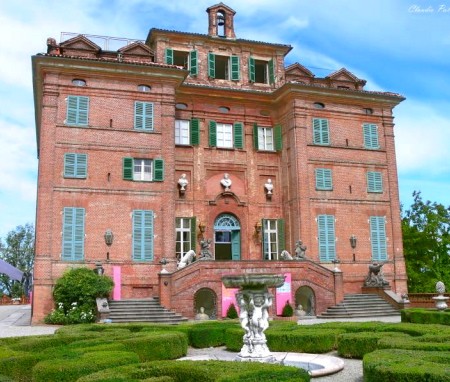
Carla Bruni Sarkozy's family home: the 40-room Castello di Castagneto Po, near Turin, Italy

Carla Bruni Sarkozy's family home: the 40-room Castello di Castagneto Po, near Turin, Italy

The handsome Art Deco villa of the Bruni-Tedeschi family stands amid cypresses and pines atop a private peninsula that juts into the Mediterranean, which can be seen and heard slapping the rocky coast a few hundred feet below. On one side of the dahlia-lined gravel driveway, her brother Virginio’s vintage Citroëns gleam in the afternoon sun. It is a scene straight out of The Garden of the Finzi-Continis—until Carla Bruni picks up my not-so-light suitcase, throws it over her shoulder, and carries it up the stairs.

Carla Bruni is not your typical high-priced international mannequin—all pouts and poses—though she does make a million dollars a year, has been on the covers of Harpers & Queen, Italian Elle, and Marie Claire, and can be seen this month gliding down some 70 runways at the Paris, Milan, and New York ready-to-wear collections. Nor is she your typical highborn Northern Italian heiress—all yips and orders. Her family is rich; their lire come from the CEAT electric-cable company of Turin. But her father, Alberto Bruni-Tedeschi, is a composer of atonal music; her mother, Marisa, is a concert pianist. “They were more original, eccentric, and open than the real bourgeoisie of Turin. They could have been like that, but they weren’t, because they were artists before everything,” says Carla, curled up after dinner in their impressively well-stocked library, smoking a cigarette and stroking her cat George Sand. She has changed into a teal-blue neo-hippie macramé sweater and black semi-see-through Azzedine Alaïa bell-bottoms, but she is still barefoot, and with her straight, tawny hair, parted in the middle, she is a bit Julie Christie, a bit Pilar Crespi.

Carla Bruni as international model

Carla Bruni as international fashion model

When Carla was five, the family moved to Paris, where she now has an apartment of her own facing the Bois de Boulogne. At 19, she dropped out of art-and-architecture studies at the University of Paris and signed up with City, the modeling agency. “The first ad campaign I did was Guess? jeans. It was scandalous, because I was sitting on the knee of this old man,” she notes in a low, throaty tone that is all the more seductive because it is so matter-of-fact.

She prefers older men in real life, “men who are superior to me,” as she puts it, and has been linked in the media to three very different men in their 40s: Eric Clapton, Donald Trump, and now Mick Jagger. She admits that she had a “strong relationship” with Clapton three years ago, but is cutting on the subject of the financially troubled real-estate developer. She maintains that she only had tea with Trump three times (always chaperoned by His Royal Highness Prince Dimitri of Yugoslavia) before awaking one morning to the People-magazine headline trump says goodbye marla, hello carla. “I didn’t have even any thought of the beginning of an affair with him. Nothing, nothing, nothing. That’s why I’m so rude in my denials. I don’t know what clicked in his head. I think it’s about the need for constant publicity. It was really disturbing.… It gives me the reputation of this woman who is running after married men.”

Mick Jagger and wife Jerry Hall. Hall filed for divorce from Jagger in 1992, calling him Jagger is a "lying, cheating, no-good slimeball." Jerry Hall is a Texas native.

Mick Jagger and wife Jerry Hall. Hall filed for divorce from Jagger in 1992, calling him a "lying, cheating, no-good slimeball." Jerry Hall is a Texas native.

She is absolutely mum on Mick, though the press has reported, and close friends of the Jaggers’ claim, that she has been having an affair with him for well over a year. “I’m using the old Japanese proverb,” she tells me with open-eyed insouciance, “ ‘Turn your tongue a hundred times in your mouth before saying anything.’ ” Has she met Mick? “Once.” Did she rendezvous in Thailand with him the day after Jerry Hall gave birth to their third child? “No.” Then why has Hall publicly denounced Bruni as the cause of her problems with Mick? (Hall is said to be so jealous of Bruni that at a rock concert in London this summer she poured a mug of beer on Jean Pigozzi’s head and drove him from the backstage V.I.P. area, accusing him of having entertained Mick and Carla at his Cap d’Antibes compound.) Bruni’s reply: “Ask her.” I try a different tack. What is her favorite Rolling Stones song? “Who? What are you talking about?” She lowers her lids over her cool blue eyes, then raises them again and whispers, “ ‘Jumpin’ Jack Flash.’ ”

Although she’s being coy about Jagger, what’s refreshing about Carla Bruni is her frank intelligence. She is as convincing on Stendhal’s “crystallization of love” as she is on the essential silliness of modeling (“Most of my work is about moisturizing”). And after three scandals in as many summers, she knows what the fame game is all about. “A knife has two sides,” she says, “the good side and the bad side. The good side is that the publicity is going to bring me more work and more money. The bad side is that it hurts.” She concludes playfully, “Maybe I can get a subscription to scandals. Once a year. Every time my modeling rate goes down. Whom am I going to get next year? Hmmm.””

For more on Carla Bruni on this blog, click “Carla Bruni Sings at Nelson Mandela Birthday Concert” and “Carla Bruni, Love Child.”

Read Full Post »

Jackie looking good in a trench coat. What is the Jackie O look? classic and refined

Jackie looking good in a trench coat. What is the Jackie O look? classic and refined

This is the week of what would have been Jacqueline Kennedy Onassis’ (1929-1994) eightieth birthday. Blogs, magazines, newspapers, and TV programs are celebrating her life and style – particulary her style. She was – and is – a fashion icon. Those of you in doubt of her lasting appeal need only to google the phrase, “the Jackie Kennedy Look,” and see how many sites are dedicated to this ideal.

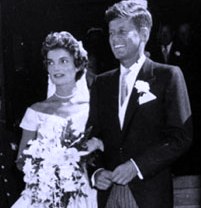
What is her attraction? Exactly what is “the Jackie Kennedy Look”? Is it a hairstyle? It couldn’t be that; Jackie’s hairstyle over the years changed radically, going from a curly, soft, and cropped bob on her wedding day (shown below)

They were married on September 12, 1953, at St. Mary's Church in Newport, Rhode Island. The wedding was performed by Archbishop Richard Cushing. The wedding was considered the social event of the season with an estimated 700 guests at the ceremony and 900 at the lavish reception that followed at Hammersmith Farm.

Jacqueline Bouvier and then-Senator John Fitzgerald Kennedy were married on September 12, 1953, at St. Mary's Church in Newport, Rhode Island. The wedding was performed by Archbishop Richard Cushing. The wedding was considered the social event of the season with an estimated 700 guests at the ceremony and 900 at the lavish reception that followed at Hammersmith Farm.

to a crisp bouffant at her husband John Kennedy‘s inauguration as the 35th President of the United States (below)


First Lady Jackie Kennedy at President John F. Kennedy's 1961 inauguration. Seen here with, at left, then-Vice President Lyndon B. Johnson and, at right, her husband, President Kennedy.

First Lady Jackie Kennedy at President John F. Kennedy's 1961 inauguration. Seen here with, at left, then-Vice President Lyndon B. Johnson and, at right, her husband, President Kennedy.

to a long, loose, and straight un-style when island-hopping with Greek shipping tycoon husband #2  Ari Onassis. (below).

Jackie and Ari Onassis in 1969, Jackie, in a festive summer print, and husband Aristotle Onassis leave an Athens nightclub at 7 a.m. after celebrating Jackie's 40th birthday.

Jackie Kennedy Onassis, in a festive summer print, and husband Aristotle Onassis leave an Athens nightclub at 7 a.m. after celebrating Jackie's 40th birthday, 1969.

Not that Jackie Kennedy’s hairstyles didn’t set fashion trends. Her 1961 inauguration hairdo, the bouffant, defined by the Oxford Dictionary, as [hair] “styled so as to stand out from the head in a rounded shape,” from the French word for ‘swelling,’ swept the nation in popularity. Her short, dark locks were teased, sprayed, and curled by her hairdresser, Mr. Kenneth of Lilly Dache, New York.

When Jackie Kennedy was First Lady (1961-1963), a rumor spread that she wore wigs from time to time, which Jackie’s spokespeople denied vehemently. Unfortunately, though, the rumor was proved true when sister-in-law Joan Kennedy blurted out in an interview:

“You know, Jackie talked me into wearing a wig. She has three of them, and she wears them a lot, especially for traveling. I tried one, but it just felt silly.”

Then, if it wasn’t her hair that defined the Jackie Kennedy look, perhaps it was her clothes. Consider her signature look…


First Lady Jackie Kennedy displays her trademark chic - pillbox hat, pearls, and stylish suit

First Lady Jackie Kennedy displays her trademark chic - pillbox hat, pearls, and stylish suit

formal, for day: the pillbox hat, pearls, the three-quarter length sleeves, the boxy Chanel suit jacket with A-line skirt

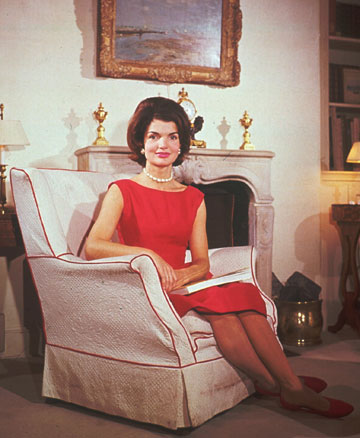
First Lady Jackie Kennedy at home in the White House. She is remembered for her love for all things French which found expression in her dedicated and loving restoration of the White House.

First Lady Jackie Kennedy at home in the White House. She is remembered for her love for all things tasteful (and French) which found expression in her dedicated and loving restoration of the White House.

 informal, for day: the sleeveless silk sheath accented by a single strand of pearls at the throat

on their way to a dinner with the French cultural minister, April 1962. Mrs. Kennedy wears a gown designed by Oleg Cassini.

First Lady Jackie Kennedy as she was dressed for dinner with the French cultural minister, April 1962. Mrs. Kennedy wears a gown designed by Oleg Cassini.

informal, for night: a fabulous gown by designers such as Oleg Cassini completed by elbow-length white gloves and a clutch bag

But these were Jackie’s looks from the White House years, when she posed, posture perfect like a princess, beaming a happy smile. But then her husband was murdered and Camelot was no more. Her life changed and, with it, her wardrobe.

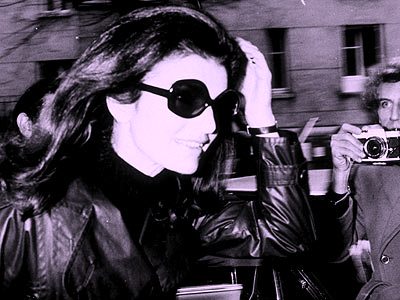
After she married Onassis, she became “Jackie O” and was photographed strolling the streets of Europe, slumming in casual attire -sexy capri pants with flat, strappy sandals. After Onassis’ death, she moved to New York to become a book editor for Doubleday. When she was seen on the streets, she kept her head down to avoid recognition, ducking the press, hiding behind those ubiquitous, bug-eyed, dark glasses and sometimes concealing her famous head under a scarf.

Jackie O in 1975, the year her second husband Aristotle Onassis died

Jackie O in 1975, the year her second husband Aristotle Onassis died

No, the Jackie Kennedy Look can’t be summed up by pointing to a hairstyle or style of dress – they were too variable.  Granted, whether First Lady, international playgirl, New York socialite, or career publisher, Jackie Kennedy had style, to be sure, a strong fashion sense, showing up largely as a preference for clean, uncluttered lines and simplicity. But she had an indescribable personal quality, too, a  je ne sais quoi, the French would say, a quality that transcended all the changes she made to her wardrobe and hair – the quintessential Jackie O – that keeps us fixated on her well into another century.

What was it that made Jackie such an icon that we still want to look at photos of her, though she has been gone so long?

One need only consult the TV comedy “Seinfeld” for the answer to this little conundrum. In the 87th episode known as “The Chaperone,” character Elaine Benes (played by Julia Louis-Dreyfus) seeks a job at Doubleday as a book editor, following in the steps of Jackie Kennedy Onassis.

 Elaine does not get the job. Read the Seinfeld script below to find out why Elaine was rejected by Doubleday:

New scene – Elaine at her job interview at Doubleday with Mrs. Landis.

LANDIS: Of course, Jackie O. was a great lady. Those are going to be some tough shoes to fill. Everyone loved her. She had such…grace.

ELAINE (gushing): Yes! Grace!

LANDIS: Not many people have grace.

ELAINE: Well, you know, grace is a tough one. I like to think I have a little grace…not as much as Jackie –

LANDIS: You can’t have “a little grace.” You either have grace, or you…don’t.

ELAINE: O.K., fine, I have…no grace.

LANDIS: And you can’t acquire grace.

ELAINE: Well, I have no intention of “getting” grace.

LANDIS: Grace isn’t something you can pick up at the market.

ELAINE (fed up): All right, all right, look – I don’t have grace, I don’t want grace…I don’t even say grace, O.K.?

LANDIS: Thank you for coming in.

ELAINE: Yeah, yeah, right.

LANDIS: We’ll make our choice in a few days, and we’ll let you know.

ELAINE (stands up): I have no chance, do I?

LANDIS: No. <They shake hands.>


Elaine Benes (Seinfeld) has no grace.

Elaine Benes (from TV series" Seinfeld) has no grace. Jackie Kennedy Onassis had grace.

Read Full Post »

For the past two years. Michael Jackson used an IV drug to put him to sleep.

For the past two years. Michael Jackson used an IV drug to put him to sleep.

From the Daily Mail online:

“Michael Jackson regularly received the anesthetic propofol on a drip and relied on it like an alarm clock, investigators have revealed.

A doctor would administer it when Jackson went to sleep, then stop the IV drip when the singer wanted to wake up, the unnamed official told the Associated Press.

On June 25, the day Jackson died, Dr. Conrad Murray gave him the drug through an IV sometime after midnight, the official said.

The official also provided a glimpse into how the pop star was living in the weeks before he died, describing the room in which Jackson slept in his rented Beverly Hills mansion as outfitted with oxygen tanks and an IV drip.

Another of Jackson’s bedrooms was a shambles, with clothes and other items strewn about and handwritten notes stuck on the walls.

One read: ‘Children are sweet and innocent.’

The temperature upstairs was stiflingly hot when authorities arrived at the singer’s house after his death.

Gas fireplaces and the heating system were on high because Jackson always complained of feeling cold, the official said.

A porcelain girl doll wearing a dress was found on top of the covers of the bed where he slept, the official said.

Police found propofol and other drugs in the home. An IV line and three tanks of oxygen were in the room where Jackson slept, and 15 more oxygen tanks were in a security guard’s shack, the official said.”

Read Full Post »

Click to see:  Hiphop wedding dance jumps from youtube to The Today Show.

soul trainI watched that line dance and it took me way back –  to the 1970s –  to the TV dance show, “Soul Train,” hosted by Don Cornelius. I loved that show. Those kids could dance.  I watched “Soul Train” on Saturday mornings when I was in high school and college. It came on right after “American Bandstand.”
Line dancing ain’t new. We had disco fever forty years ago. Boogie down, baby!

Read Full Post »

The third week in July is set aside for the annual swan count along the Thames.

The third week in July is set aside for the annual swan count along the Thames.

“All swans – unmarked – in open water – belong to the [British] Crown, and have since the Twelfth Century,” says David Barber, Queen Elizabeth’s official swan marker for 16 years. Although, legally, the Queen retains ownership over all unmarked swans in the United Kingdom, the royal British monarch only exercises her rights over a 79-mile stretch of the Thames River. Barber’s job, with the help of a crew in boats, is to annually count the number of unmarked swans in the Thames. This tradition, called “swan-upping,” takes place over a 5-day period the third week in July.

Swan Upping Long Ago - the best way to tag a bird was to sit on it

Swan Upping Long Ago – the best way to tag a bird was to sit on it


The ritual [of swan upping] was first documented in the 12th Century, when the bird was a popular dish at medieval feasts. The monarchy laid claim to the birds, which were a valuable food commodity, and doled out ownership charters in exchange for favors. Up to the mid-1800s, swan marking was akin to cow branding: A unique mark, carved into the beak of a newborn cygnet, designated ownership by a specific, chartered family or organization.

Henry VIII reportedly enjoyed swan at his dinner table. Today, swan eating doesn’t go down so well with many Britons, who live in a country that Dr. Perrins describes as “bird oriented.” In 2005, the Master of the Queen’s Music, Sir Maxwell Davies, made headlines when he found a dead swan on his property and made a terrine of it. Mark McGowan, an activist artist, upset Britons when he ate swan in a performance protest against the queen in 2007.

A Swan Upping Boat on the River Thames in England

A Swan Upping Boat on the River Thames in England today

This week, Mr. Barber’s crew counted and weighed roughly 120 newborn swans. When they come upon a brood, the rowers yell “All up!” and surround the birds with their skiffs. After deftly bringing the swans aboard, the uppers temporarily tie them up.

“The best way is to sit on the bird,” said Robert Dean, a boat builder and three-year veteran of the royal crew, who stood on the Eton dock Monday morning with a bundle of swan ties holstered in his belt. Once the newborn swans are weighed and tagged with identification rings, they are entered into the log and released into the river.

For the swans, it is a painless affair — and it has helped save their lives. In the 1980s, swan upping records helped alert Dr. Perrins to a sharp decline in the swan population on the Thames caused by lead poisoning from fishing weights. After a successful campaign to ban the implements, the number of mute swans returned to normal — about 35,000 across the country today, Dr. Perrins said.

The identification rings used by the swan uppers also assist local rescuers, who use them to return injured birds to their broods after treatment. Swan Lifeline, a local agency that treats about 1,100 sick swans each year, cures common injuries from fishhooks and dog attacks, as well more exotic wounds, as when swans fly through greenhouses accidentally. Working closely with Swan Lifeline, Mr. Barber coordinates the removal of as many as 100 swans before the Henley Royal Regatta on the Thames.” (1)

Queen+Elizabeth+II+Attends+Annual+Swan+Upping+_XgDImnk-EXl

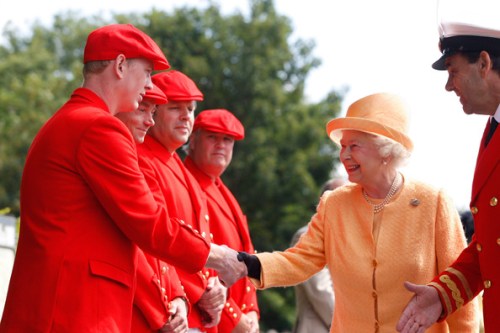
For the first time in her 57-year reign, Queen Elizabeth attended the launch party on July 20.

In the following youtube video, the Queen’s swan marker David Barber explains and demonstrates the practice of swan-upping.

(1) “In Her Majesty’s Service, Loyal Minion Courts,” The Wall Street Journal, July 24, 2009.


Read Full Post »

In this rare 1930 footage, teacher Annie Sullivan shows how she taught the deaf/blind Helen Keller to speak:

Read Full Post »

Gordon Waller (1945-2009)

Gordon Waller (1945-2009)

Gordon Waller, half of the rock duo, Peter and Gordon, that was part of the British Invasion of the Sixties, died Friday, July 17, 2009, in Norwich, Connecticut. He was 64 and lived in Ledyard, Connecticut. His death was announced on the official Peter and Gordon website.

Peter and Gordon were part of a wave of British bands that swept the United States following the success of the Beatles. They toured the United States and appeared on network variety shows, including “The Ed Sullivan Show.” In Gordon Waller’s obituary in The New York Times, writer Douglas Martin describes Peter and Gordon’s vocal harmonies as “reminiscent of the Everly Brothers to their own synthesis of folk, blues and rock ‘n’ roll.”

Jane Asher, sister of Peter Asher of Peter and Gordon. Jane Asher dated Sir Paul McCartney for five years until she tired of Paul's rampant infidelity.

Jane Asher, sister of Peter Asher of Peter and Gordon. Jane Asher dated Sir Paul McCartney for five years until she eventually tired of his rampant infidelity and broke off the relationship.

Although they recorded many successful songs, their most memorable is “A World Without Love” (1964). It was one of several written for them by Sir Paul McCartney. In October, 1963, Peter Asher and Gordon Waller had signed a record contract with EMI. At the time, Peter’s red-haired sister – the lovely Jane Asher – was dating Paul McCartney. Peter (age 19) and Gordon (age 18) asked Paul to give them a song. They knew he was in the middle of writing “A World Without Love” for the Beatles to record. Peter and Gordon asked Paul to finish the tune for them so they could record it. (1)

Peter and GordonIt was recorded on January 21, 1964, at Abbey Road with an arrangement by Geoff Love and production by Norman Newell. It was completed in 5 takes. The tune became a Top 10 hit in Britain, even displacing the Beatles’ own “Can’t Buy Me Love” on the pop charts. It was then issued in the United States on the Capitol label and became one of the top songs of the year. Two more McCartney songs that year brought Peter and Gordon added success: “Nobody I Know” and “I Don’t Want to See You Again.” Click below to watch the video of Peter and Gordon singing “A World Without Love.” Also visit Peter and Gordon at Peter and Gordon myspace to hear more of their music.

(1) The New York Times, “Gordon Waller, 64, a Partner in the Band Peter and Gordon.” Obituaries, July 21, 2009.


Read Full Post »

« Newer Posts - Older Posts »