Feeds:
Posts
Comments

Posts Tagged ‘biographies of royalty’

What’s Prince Philip’s favorite drink? https://www.thedrinksbusiness.com/2012/11/the-royal-familys-favourite-drinks/Check out our quiz to see how much you know about the Royal Family:

1. In which battle did George VI fight?
A. The First Battle of Ypres
B. The Battle of Loos
C. The Battle of Jutland
D. The Battle of Tumbledown

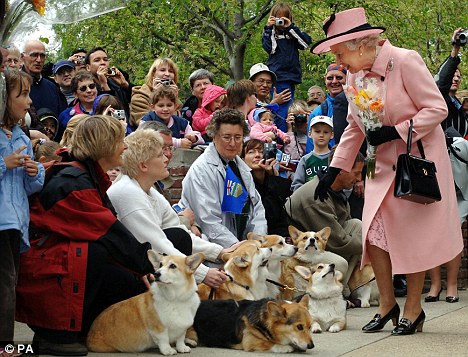
Queen Elizabeth II loves corgis.

2. What was the name of the first royal corgi, which was given to the Queen on her 18th birthday in 1944?

A. Sinbad
B. Susan
C. Senator
D. Sonata 


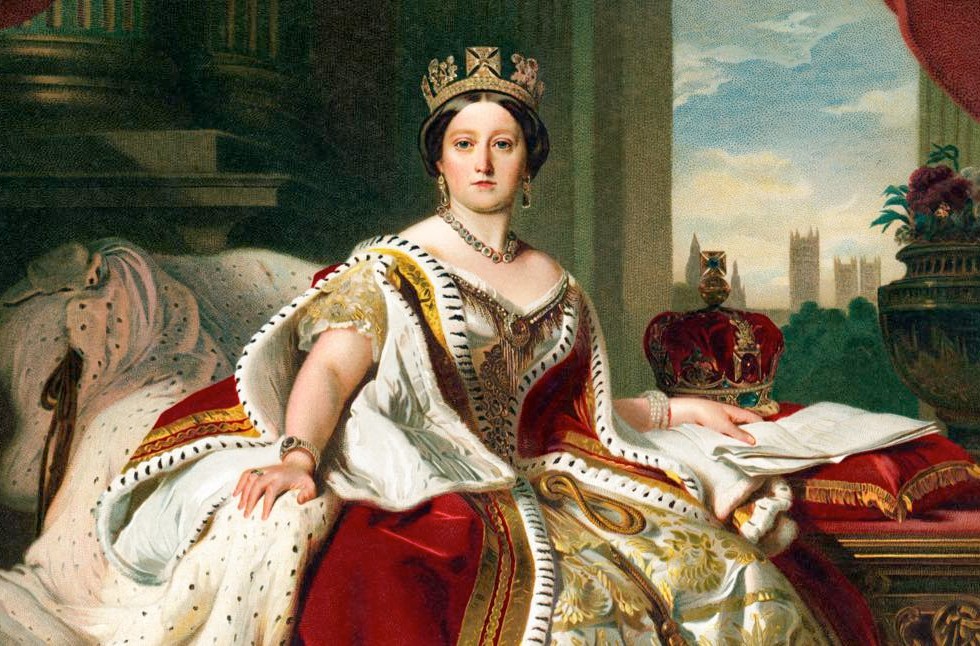
Queen Victoria celebrates her fiftieth year on the throne in 1887 at her Golden Jubilee. Queen Victoria lived from 1819-1901.


3. Who succeeded Queen Victoria?
A. Prince Albert
B. Edward VII
C. George V
D. Edward VIII

4. Of how many countries is the Queen head of state?
A. Four
B. Eight
C. 16
D. 21

5. What title did the British monarch also have until 1947?
A. King of India
B. Imperial Sovereign
C. Monarch of Asia
D. Emperor of India

6. In which naval engagement during World War II was Prince Philip mentioned in despatches?
A. Battle of Cape Matapan
B. Battle of Cape Potsandpans
C. Battle of Cape Cod
D. Battle of Barents Sea

The Duchess and Duke of Windsor in exile in France, years after the Duke AKA King Edward VIII abdicated the British throne in 1936.

7. What was Edward VIII’s relationship to his successor, George VI?
A. First cousin
B. Father
C. Elder brother
D. Younger brother

8. What was the Queen Mother’s maiden name?
A. Lady Elizabeth Bowes-Lyon
B. Lady Elizabeth Glamis
C. Lady Elizabeth Bows
D. The Countess of Strathmore

9. Which king reigned throughout World War I?
A. Edward VII
B. George V
C. George VI
D. George VII


10. What relation is Prince Charles to George VI?
A. Maternal grandson
B. Paternal grandson
C. Maternal nephew
D. Paternal great-grandson

11. How old was the Queen when she came to the throne?
A. 55
B. 45
C. 35
D. 25

12. Who did the Duke and Duchess of Windsor meet at Berchtesgaden in 1937?
A. Adolf Hitler
B. Charlie Chaplin
C. Tsar of Russia
D. Winston Churchill

13. In which war did Prince Andrew fight as a helicopter pilot?
A. Gulf War
B. Iraq War
C. Falklands War
D. Korean War

14. What was the name of the royal yacht decommissioned in 1997?
A. Britannia
B. Queen Elizabeth
C. Elizabeth and Philip
D. Queen Mary

15. What is Prince Philip’s favorite drink?
A. Bass
B. Brandy (Greek, of course)
C. Boddingtons
D. Bacardi

16. In which war did the Royal Family change their dynastic title from Saxe-Coburg to Windsor?
A. Boer War
B. World War I
C. World War II
D. Cold War


17. What was the maiden name of Diana, Princess of Wales?
A. Lady Diana Spencer
B. Diana, Lady Spencer
C. The Lady Diana
D. The Lady Spencer

18. Why is Prince Michael of Kent not in the line of succession to the throne?
A. He converted to Islam
B. He married a Roman Catholic
C. He became a Zoroastrian
D. He married without the Queen’s permission

19. What was the name of the most famous of Edward VII’s mistresses when he was Prince of Wales?
A. Lily Crabtree
B. Nell Gwynn
C. Mary Robinson
D. Lillie Langtry

20. Which monarch of the House of Windsor has reigned the longest?
A. Edward VII
B. George V
C. George VI
D. Elizabeth II


21. How old was the Queen Mother when she died in 2002?
A. 90
B. 95
C. 75
D. 101

22. Where was the then Princess Elizabeth staying when she heard of the death of her father George VI in 1952?
A. Treetops Game Reserve in Kenya
B. Stardust Casino in Las Vegas
C. Government House in Auckland, New Zealand
D. Ice Station Zebra in Antarctica

23. What post does the monarch hold in the Church of England?
A. Supreme Pontiff
B. Senior Governor
C. Supreme Ruler
D. Supreme Governor

Queen Elizabeth’s little sister, Princess Margaret, enjoying her bath.

24. Who did the Queen’s sister marry?

A. Antony Armstrong-Andrews, Lord Snowdon
B. Andrew Armstrong-Jones, Lord Mountbatten
C. Andrew Armstrong-Jones, Lord Snowdon
D. Antony Armstrong-Jones, Lord Snowdon 

25. What was Prince Edward Albert Christian George Andrew Patrick, later Edward VIII, called by his family?
A. Edward
B. Bertie
C. Albert
D. David

26. Who was prime minister at the time of the Abdication Crisis?
A Stanley Baldwin
B Neville Chamberlain
C Winston Churchill
D Ramsay Macdonald

Queen Elizabeth II is greeted by Winston and Clementine Churchill as she arrives for a dinner given at 10 Downing Street on April 4, 1955. In leading his guests in the loyal toast to Her Majesty, Churchill noted that as a young cavalry officer he had proposed similar toasts during the reign of her great-great grandmother, Queen Victoria. He resigned as Prime Minister on the following day.

27. How many prime ministers have served under the Queen?
A. 13
B. 10
C. 14
D. 12

28. Who is The Keeper of the Royal Conscience?
A. The Archbishop of Canterbury
B. Prince Philip
C. The Prince of Wales
D. Ken Clarke


This is a repost.

ANSWERS: 1 C. 2 B. 3 B. 4 C. 5 D. 6 A. 7 C. 8 A. 9 B. 10 A. 11 D. 12 A. 13 C. 14 A. 15 C. 16 B. 17 A. 18 B. 19 D. 20 D. 21 D. 22 A. 23 D. 24 D. 25 D. 26 A. 27 A. 28 D (as Lord Chancellor).

Source: The Daily Mail, Jan. 11, 2011

Readers: For more on the British Royal Family on this blog, click here.
11th January 2011

Read Full Post »

“The Landing of H.R.H. the Princess Alexandra at Gravesend, March 7, 1863,” by Henry Nelson O’Neil, 1864.

When Princess Alexandra of Denmark arrived on English soil in 1863 to marry the Prince of Wales, the heir of Queen Victoria, she was the very picture of modesty. No jewelry was visible and she wore a handmade bonnet. Alexandra may have been Danish royalty, but she wasn’t rich. Matter of fact, her family had lived on handouts to get by. She was shy, kind, and very beautiful. Everyone loved her immediately.

Queen Victoria, 1873

Queen Victoria of Great Britain, 1873

When Alexandra joined the British royal family, over two years had passed since Queen Victoria‘s husband, Prince Albert, had died.  Yet Victoria was still plunged into deep mourning. Victoria had wished she had died with her beloved Albert. Upon his death, she had renounced all pleasures and vowed to wear dreary black crape dresses the rest of her life as a token of mourning. She spent many of her waking hours kneeling in Albert’s carefully-preserved bedroom, crying and pleading with God to help her. (See “Queen Victoria in the Blue Room with a Bust.”)

Alexandra discovered that Victoria had amassed an enormous jewelry collection.  But, after Albert’s death, the Queen had became convinced that excessive display of jewels awakened anti-monarchial feelings in the English people. Princess Alexandra tried to convince her to wear her pretty, glittering things but to no avail. Famously, Victoria refused to wear a crown to the Thanksgiving service honoring her 1887 Golden Jubilee. The Queen of Great Britain arrived at the state ceremony wearing a bonnet.

Whereas Victoria had renounced all pleasures, Princess Alexandra had just begun to live. She had grown up poor and now she was rich and the future Queen of England! She was not about to be sucked into Victorian mourning dress. Although her husband, “Bertie,” was a serial adulterer, Alexandra accepted his infidelity and got on with her life, moving with him from party to party with the artsy crowd. Dressing herself in fine jewels and frivolous clothes became her passion – and she indulged herself completely.

Queen Alexandra at her Coronation, 1902

Initially, Princess (later Queen) Alexandra adopted dog collar chokers, called a ‘collier de chien’ to cover a small scar on her neck. For state and formal occasions, though, she plastered herself from head to waist in necklaces, tiaras, ribbons, sashes, and brooches of pearls, diamonds, and other jewels. Her long strings of pearls became her signature look. Alexandra became quite popular and women copied her style and bearing. American tycoon Cornelius Vanderbilt, Jr., remarked that:

Queen Alexandra “possessed the world’s most perfect shoulders and bosom for the display of jewels.”


This is a repost.
 

Readers: “Queen Victoria’s Tiny Crown” follows this post.

Read Full Post »

Lady Diana Spencer was understandably nervous about marrying Charles, Prince of Wales (b. 1948).  Following their February 24, 1981, engagement announcement, Diana’s whole world was turned upside down. In a flash, nineteen-year-old Diana went from part-time nanny and nursery school teacher to the future Queen of England. Two days later, she kissed freedom goodbye forever. “Shy Di” moved out of her flat at No. 60 Coleburne Court, said a hasty goodbye to her 3 giddy roommates, and moved into Buckingham Palace, where she was sequestered for the five months leading up to her July 29 wedding, protected from the press. (1)

In their first public appearance together following their February 1981 engagement announcement, Lady Diana Spencer and Prince Charles attended a Royal Opera benefit at London’s Goldsmith Hall. Lady Diana shocked the crowd by appearing in a low-cut, strapless black taffeta evening gown. “The Dress” made headlines: “Lady Di Takes the Plunge,” screamed the front page of The Daily Mirror, with splendid photos of “Shy Di” spilling out of her revealing gown.

Throughout the spring, the Palace courtiers gave Diana lessons on how to be a princess. They advised her of her royal engagements, which would average 170 a year and would include Ascot, Trooping the Color, Badminton Horse Trials, Opening of Parliament, Chelsea Flower Show, Wimbledon, hospital benefits, charities, and anything for the military. They guided her through the maze of royal rules: wear hats in public and bright colors to stand out; wave from the elbow, not the wrist; never use a public lavatory.

‘The worst thing about being a princess,’ said Diana years later, ‘is having to pee.'”(1)

They handed her stacks of history books to read about her future role as Princess of Wales.

27th March 1981: Charles, Prince of Wales, his fiancee Lady Diana Spencer, and Queen Elizabeth II at Buckingham Palace, London, after she gave her consent for their wedding.

It was all too much for Diana. She longed to be with Charles, who was often unavailable, having embarked on a 5-week tour of the United States, Australia, and New Zealand, among his other royal duties.  The Royal Family – when they were at the Palace, each with their own separate apartments – did nothing to help her feel at home. In fairness, each of the royals did have their own very busy schedules. Nevertheless, Diana was cut off from ordinary companionship. She felt insecure, lonely, and afraid.

 I missed my girls [roommates] so much I wanted to go back there and sit and giggle and borrow clothes and chat about silly things, just being in  my safe shell again….I couldn’t believe how cold everyone was [at Buckingham Palace].” (2)

Lady Diana Spencer (l.) walks with Camilla Parker-Bowles at Ludlow Racecourse in 1980, where Prince Charles was competing.

Along with palace isolation and wedding jitters, Diana agonized over whether Charles was still in love with his married mistress, Camilla Parker Bowles, although Charles swore their affair was a thing of the past. How could that be true, wondered Diana. Camilla telephoned Charles constantly and he always took her calls in private. Camilla and her husband were often included as weekend house guests at Sandringham, the royal family country house. Camilla haunted Diana and Charles’s courtship days.

Diana befriended Charles’s righthand man, Michael Colborne, peppering him with questions about Charles’s relationship with Camilla. Diana became bulimic from the worry and lost twenty pounds in just three months. She became weak and emotionally labile.


Camilla Shand as a debutante in 1965. She and Prince Charles met in 1970 and considered marriage. Lord Louis Mountbatten advised Charles against marrying the love of his life, citing Camilla’s wild past and lack of aristocratic lineage.

Her fears over Camilla increased when, tucked among the wedding presents in the office Diana shared with Colborne, Diana discovered a curious little parcel. Over fierce objections from Colborne, she opened it, only to discover a gold bracelet with a lapis pendant engraved with the initials “F” and “G” entwined.

Diana became enraged. She knew the significance of the two letters: earlier friends had informed her that “F” and “G” stood for “Fred and Gladys,” the pet nicknames Charles and Camilla had for each other. Diana pressed Colborne about the gift:

‘I know it’s for Camilla,’ she said. ‘So why won’t you admit it? What does it mean? Why is Charles doing this?'” (2)

Colborne refused to answer any more questions, other than to admit that he had ordered the gift at Charles’s request. Diana was livid with jealousy.

She confronted Charles. He said he had indeed ordered the bracelet from Asprey’s for Camilla and was going to give it to her in person to signal the end of their relationship. He maintained it was a farewell gift but Diana didn’t believe him. They quarreled and she withdrew in tears.
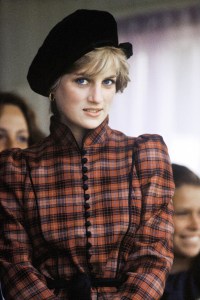
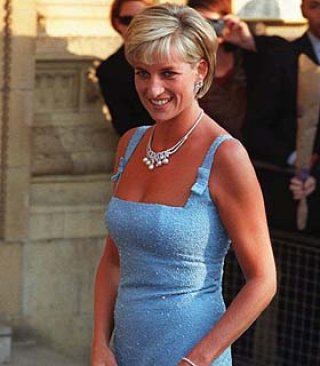
Diana, Princess of Wales (1961-1997) in an undated photo.

The wedding day was bearing down on Diana like a freight train. Her fairytale was morphing into a nightmare. There wasn’t time enough to process all the change that was taking place in her young life.

Her weight plummeted. She became wisp-thin. Her bridal gown with its 25-foot train, puffy sleeves, and ivory taffeta was almost ready, although the dressmakers had to keep taking in the seams due to Diana’s dramatic weight loss.  Between the first and last fittings, Diana’s waist shrank from 29 inches to 23-and-a-half inches.

In June, two weeks before her wedding, Diana attended Ascot Week where she was treated by the public and the media like an international film star.

Lady Diana attends Royal Ascot for the first time, June 1981.

Everyone was fascinated with this new breed of royalty. Diana was fresh, lovely, and natural. She had a real English rose complexion. Her larkiness was such a refreshing change of pace from the stodgy Royal Family with all their rules and stiffness.

But the crush of the crowd and the press, who trailed her at every outing, distressed Diana:

‘During tea at the back of the royal box at the races she was practically in tears and had to be escorted home early.'” (3)

Lady Diana Spencer watches Prince Charles play polo at Tidworth during their engagement. The wedding is four days later. Photo: July 25, 1981

On Monday, July 28, 1981, the day before her wedding, Diana lunched with her sisters while Charles met with Camilla with the gift. Diana confided to her sisters that she didn’t want to marry someone who was still in love with his mistress.

‘It’s bad luck, Duch,’ said her sister Sarah, using the family nickname for Diana. “Your face is on the tea towels, so you’re too late to chicken out now.”” (2)

It was too late to chicken out by the time Lady Diana Spencer considered breaking her engagement to Prince Charles. Her face was on the tea-towels already.

As Sarah pointed out, it was too late. England was awash in kitchy wedding memorabilia featuring the royal couple’s photos. London was crawling with tourists and international journalists and television crews. Sadly, there was no turning back for Diana.

The wedding went ahead as scheduled at St. Paul’s Cathedral. The Queen had sent 2,500 invitations to friends, families, and heads of state, plus the crowned heads of Europe. The ceremony was telecast to 750 million people. On that July day, Lady Diana Spencer (1961-1997) became newly titled as Diana, Princess of Wales. She outranked all other women in the realm, except Queen Elizabeth II and the Queen Mother. (1)

Wedding Bells chimed on July 29, 1981, when Lady Diana Spencer married Charles, Prince of Wales, at St. Paul’s Cathedral in London.

Diana was right to have been worried about Camilla breaking up her marriage. Shortly after marrying Diana – some say five years later, others, that they never stopped seeing each other –  the Prince resumed his relationship with Camilla. The marriage was long over before the royal Wales divorced in 1996.

(1) Kelley, Kitty. The Royals. New York: Warner Books, Inc., 1997.

(2) Morton, Andrew. Diana – Her True Story – In Her Own Words. Michael O’Mara Books, Ltd., 2003.

(3) Bradford, Sarah. Elizabeth: A Biography of Her Majesty The Queen. New York: Riverhead Books, 1996.

Readers: For more on Princess Diana, click here.

This is a repost.

Read Full Post »

Landing in Ottawa, Canada, Prince William and Catherine begin the Royal Tour of 2011, their first tour as husband and wife.

Prince William and Catherine, the Duke and Duchess of Cambridge, are in Canada today, the first leg of the Royal Tour 2011 of North America. For more, click here.

For more about the British Royal Family on this blog, Lisa’s History Room, click here.

Read Full Post »

This week's current Newsweek cover featuring a fantasy image of what Princess Diana, had she lived, might have looked like at age 50. The image has sparked tremendous backlash.

The Daily Beast has provided a photo gallery of Princess Diana over the years. Had she lived, she would have turned 50 today, July 1, 2011: “Princess Diana’s 50th Birthday.”

Newsweek’s Tina Brown has written a really strange futuristic look at what Diana might have been like at 50: “Diana at 50.”

For other posts on Diana on this blog, Lisa’s History Room, click here.

Read Full Post »

The Crowned Romanovs, Nicholas II and Alexandra Feodorovna, 1896 image

On May 26, 1896, the coronation of Tsar Nicholas II was held in Moscow. Four days later, the traditional public festival was to be held at a field five miles north of the city. At the invitation of the new tsar, every Russian was welcome.  As Tsar Nicholas II was the absolute ruler of 1/6 of the earth and more than 120 million people, many people were expected. (3) All were promised free food, beer, gifts, and entertainment.  The tsar himself was to appear at the central pavillion to watch the parade and greet his people.

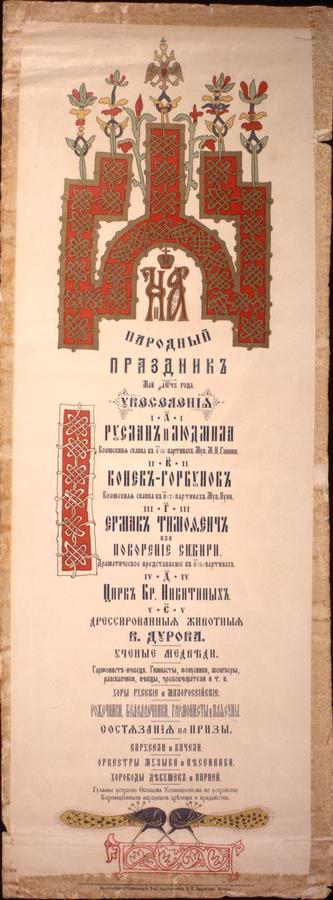
The Khodynka Program of Events

Khodynka Field was the site selected for the popular celebration because it was the only place large enough to contain the expected crowd. However, Khodynka Field was not a natural fairground; it was a training ground for troops of the Moscow garrison. The field was crisscrossed by a network of shallow trenches used for moving troops and artillery and pitted with holes. Therefore, in preparation for the festival, wooden stalls, reviewing stands, and entertainment stages had to be built as well as bridges to span the enormous ditches. Barricades – really just skimpy wooden railings – protected the site from the crowds.

Khodynka Field is being prepared for the May 26, 1896, post coronation celebration for Russian Tsar Nicholas II.

Thrilled by the coronation and excited by the prospect of the carnival to be held at Khodynka Field, the people were “stirred up and restive.” (1) The night before, thousands thronged to the area and camped out in the open, waiting for dawn, when the turnstiles would open and they could enter the fairgrounds. As the group waited, a rumor began to spread

that there would not be enough gifts or food to go around. They had been promised sausage, bread rolls, sweets, nuts, gingerbread and a precious keepsake – a pink enamel mug bearing the arms of the city of Moscow and the words “In memory of the Holy Coronation,” all wrapped together in a colored kerchief stamped with the tsar and tsarina’s pictures.” (1)

More and more people came. There was much jostling and crowding. “The crush was so great a bullet could not have slipped through.” (2) Over the course of the night, made anxious by rumors of shortages, people pushed toward the barricades that guarded the entrance to the fairground in order to be the first in line when the gates opened.

It was sometime just before dawn when the barricades fell. The crowd surged forward, stampeding onto the meadow, rushing toward the food stalls. The patrol of 100 mounted Cossacks could not even begin to control the “mass of people half a million strong.” Khodynka Field, with its open trenches, became a deathtrap:

People by the thousands fell in a ditch and ended standing literally on their heads at the bottom. Others fell straight after them and more, and more….” (1)

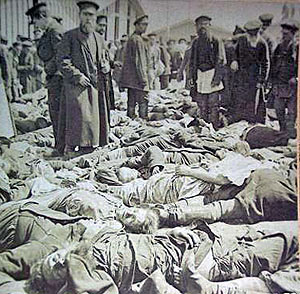
Others, knocked down in the pandemonium, were trampled to death or mutilated by the incessant forward motion of the crowd. In minutes, Khodynka Field resembled a  battlefield, strewn with carnage. People were fainting,  gasping for air, vomiting, writhing, screaming, bleeding, lying dead or dying. Thousands were wounded, over 1300 were dead.

Trampled bodies cover Khodynka Field prior to the post-coronation celebration of Tsar Nicholas II of Russia, May 30, 1896.

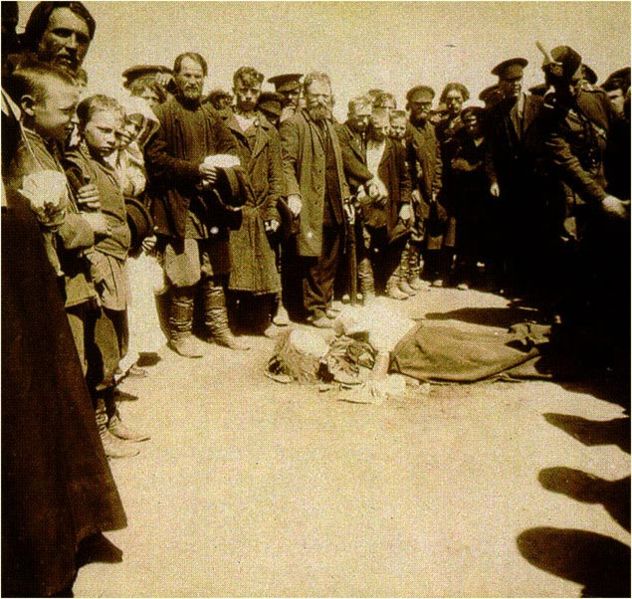
Russians standing in the Khodynka Field in the aftermath of the riot that killed over 1300 Russians, May 30, 1896.

By 10:30 a.m., Tsar Nicholas II was told of the Khodynka catastrophe. He was shocked and sorrowful. Out of respect to the victims, his first inclination was to cancel the day’s activities which included not only his appearance at the Khodynka Field but a ball at the French embassy. But he gave into his advisors, his uncles, and kept to the official schedule.  After all, France was Russia’s only European ally, he was reminded, and Russia could not afford to offend France. Besides, to adorn the ball, the French government had gone to great lengths, sending priceless tapestries and treasures of silver plate from Paris and Versaillles, along with 100,000 roses from the south of France. (3)

So the day went forward as planned. Bodies were carted off from the Khodynka Field where the tsar made his traditional appearance as if nothing had happened.

The celebration at Khodynka Field, parades and all, went on, despite the morning's carnage.

The French “ball was opened by the Majesties dancing a quadrille,” said the Minister of Finance.

The "Coronation Cup" given away at the Khodynka Field post-coronation celebration for Tsar Nicholas II. It has come to be known as the "Cup of Sorrows," commemorating the tragedy of 1300 people trampled to death that day in May of 1896.

Outward appearances aside, both the tsar and tsarina were deeply affected by the events at Khodynka. They visited the wounded in the hospitals. They paid for the burial of the dead. From the Tsar’s private purse, each victim’s family was remunerated. But no act of kindness could erase the terrible event from the Russian national consciousness. Many felt that the Khodynka Field Massacre was an omen that the reign of Tsar Nicholas II would not be a happy one. The tsar earned the nickname “Bloody Nicholas.”

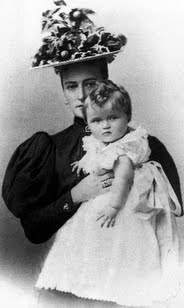
Russian Empress Alexandra with her firstborn, daughter Olga, in 1896.

Secretly, throughout those long and difficult days, Empress Alexandra, the tsarina,  had been expecting a child, her second after Olga. After the Khodynka tragedy, the Empress was greatly distressed and suffered a miscarriage.  The lost baby was a boy, who, had he lived, would have become the male heir in line for the Russian throne, the boy everyone was clamoring for Alexandra to give birth to.

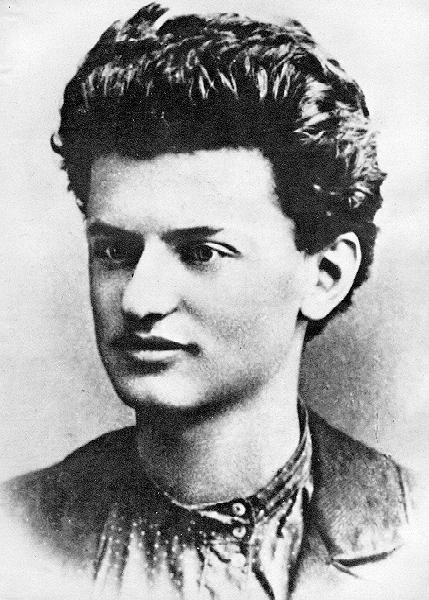
1897 photo of Russian Revolutionary Leon Trotsky, born Lew Dawidowich Bronstein

Shortly after Khodynka, Leon Trotsky began his Marxist political activity against Imperial Russia.  Bread and circuses would not longer pacify the tsar’s people. The revolution had begun.

 (1) Erickson, Carolly. Alexandra: The Last Tsarina. New York: St. Martin’s Press, 2001.

(2) Radzinsky, Edward. The Last Tsar: The Life and Death of Nicholas II. New York: Doubleday, 1992.

(3) Massie, Robert K. Nicholas and Alexandra. New York: Dell Publishing Co., 1967.

Readers: For more on the Russian Royal Family, click here.

Read Full Post »
Tsar Nicholas II of Russia

The reign of Tsar Nicholas II of Russia (1894-1918) was doomed from the start. To begin with, “Nicky” never wanted to succeed his father as tsar. So when his 49-year-old father, Tsar Alexander III, died suddenly in November 1894, thrusting him onto the throne,  Nicky was ill-disposed to rule. Instead of grabbing the reins of power, Nicky, 26, was consumed by grief. He wrote of his late father:

“It was the death of a saint! Lord, help us in these terrible days!” 


Shown here with his wife Marie, Tsar Alexander III of Russia was built like a peasant. Tall and hulking, his huge body swayed when he walked. Within the palace walls, he privately dressed like a lowly laborer, wearing baggy trousers, soft blousy shirts, and a sheepskin jacket. He wore his clothes until the seams ripped only to turn around and have them patched by his royal valet. He possessed the strength of Hercules, able to bend a solid silver ruble using only his thumb.

Nicky could not collect his thoughts and act – and action was desperately needed. His first actions as tsar would set the tone of his reign. The Russian people – some of whom had been dangerously agitating for the abolition of the monarchy – needed to be told of the passing of the tsar. A funeral needed to be planned. Ministers needed to be consulted, meetings held.

Pressing as these matters were, Nicholas attended to none of them. Swallowed up in self-pity, he openly bemoaned his fate as the new tsar, pathetically begging others to help him.  So lost was he in his own personal fugue that he consoled neither his mother nor his sisters.  Sinking under the crushing weight of his weakness, he hid in the comfort of his fiance, Princess Alix of Hesse, and did nothing.

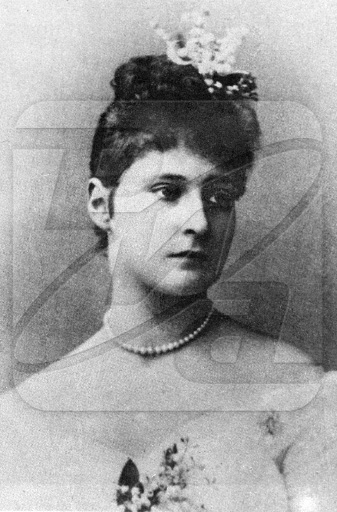
The German princess Alix of Hesse, engaged to Tsar Nicholas II of Russia. She was his rock.

Meanwhile,  Mother Nature was on the move.  The tsar’s corpse, still in the Livadia Palace on the Black Sea, stank horribly and had to be carried by Nicky and his uncles out of the house and into “a little corner” where it could be embalmed. Strangely,

the face of the dead tsar, which was turning black with corruption, appeared to be smiling, as if it were about to laugh”

at his firstborn son’s idiocy. Tsar Alexander had wanted to pass on the crown to his second son, Michael, whom he considered the only one of the three imperial sons to possess the self-confidence of one born to rule. The old tsar knew that his son Nicky was soft and easily swayed by others.

Alas, Nicky’s weaknesses would be his – and his family’s – downfall.

Source:  Erickson, Carolly. Alexandra: The Last Tsarina. New York: St. Martin’s Press, 2001

Readers: For more on Nicholas and Alexandra on this blog, click here.

Read Full Post »

Crowds massed in Red Square for the Coronation of Tsar Nicholas II, May 26, 1896. The Russian people were filled with coronation excitement; they were particularly enthusiastic about the public festival held four days later for the citizens. Staged in a huge meadow north of Moscow, everyone was promised free food, beer, and souvenirs.

The days preceding the coronation of Nicholas II as Russian Tsar were full of dizzying excitement. Moscow was decorated with banners proclaiming, “God Save the Tsar” and “Glory, Glory to Our Russian Tsar.” There were open air concerts with choirs singing, bells ringing, parades marching, and cannons booming – joyful noise heralding the crowning of the newest Emperor of Russia. Nicholas was from the royal House of Romanovs which had ruled Russia as tsars, or caesars, since 1614.

The festivities kept Nicholas and Alexandra feverishly busy: breakfasts for 200 guests, meetings with special foreign envoys, nightly banquets and balls, state visits and musicales, a visit to the Bolshoi Ballet (where Nicholas’ former mistress Mathilde Kchessinske was the featured dancer in the “The Pearl”).

Alexandra was exhausted from her demanding social schedule – although she tried her best not to show it. Alix was very maternal and consumed with the care of her first baby, Olga, only five months old. Unusual for the times, Alix  nursed Olga herself. She also was newly pregnant and suffering from morning sickness.

Alix was exceptionally anxious about this second pregnancy. She was under enormous pressure to produce a male heir to the Russian throne. Maybe this baby would be a boy, she prayed. Maybe that would convince her mother-in-law to like her!

Tsar Nicholas II and the Tsarina Alexandra hold their first child, Olga, born November 16, 1895. Nicholas was delighted by the birth of his first daughter but the Russian royals expressed their dissatisfaction that Alexandra had not given birth to a boy. The most vocal of the lot was Marie Feodorovna, the Dowager-Empress, Nicholas's mother. She was Alexandra's sharpest critic and fostered ugly gossip about her among the courtiers.

The Dowager Empress Marie Feodorovna and her son Tsar Nicholas II of Russia, 1896. The Dowager Empress was surprised to be a widow at the age of 46, suddenly demoted from Queen of Russia. She disliked being upstaged by her daughter-in-law, Alexandra, who she considered unfit to be Empress of Russia. She had to be ordered by the court to share the Crown Jewels with Alexandra! Marie known as "Minnie" was from Denmark. She and Alexandra were polar opposites: Minnie loved court society while Alexandra preferred lying on the chaise in her Mauve Boudoir, embroidering, with her many beautiful children scattered about her.

The Russian Empire at the turn of the century was huge. The United States could be dropped into it and still leave room for China and India. When his father died in November 1894, Tsar Nicholas II became the ruler of an empire that bordered Turkey, Persia, Afghanistan, Mongolia, and China while Poland, the Baltic States, and Finland were Russian territories. More than a hundred nationalities owed allegiance to him.

Russia in 1894, the year Nicholas II became Tsar.

Due to generations of Romanovs marrying other Western royal families, Nicholas II himself was less than 100th-part Russian. Alexandra, the former Alix of Hesse, was part English, part German. The Russian people did not trust Alexandra; they thought she was a German spy and hated her English ways. (1)

Coronation day began early with the traditional procession through the streets of Moscow. Nicholas, atop his white steed, rode in first, accompanied by many cavalry squadrons, amid the peeling of thousands of church bells. Next came the carriage bearing his mother. The crowd cheered loudly as the sovereign and his mother passed by. They were both wildly adored by the Russian people.

Next in line came Alexandra’s coach. It was greeted with a

hush – an eloquent silence that stung like a blow, reducing Alexandra to tears. Silence – an ominous silence. Not open jeering, or insults, but the quiet of rejection.” (2)

The Romanovs proceed through the streets of Moscow to the Cathedral of the Assumption for the Coronation, May 26, 1896. The crowds cheered when Nicholas then his mother passed by. Ominous silence fell, however, when Empress Alexandra's coach passed by. The Russian people were suspicious of her German roots.

Sources:

(1) PBS

(2) Erickson, Carolly. Alexandra: The Last Tsarina. New York: St. Martin’s Press, 2000.

(3) Massie, Robert K. Nicholas and Alexandra. New York: Dell Publishing, 1967.

Readers: For more on the Russian royal family on this blog, click here.

Read Full Post »
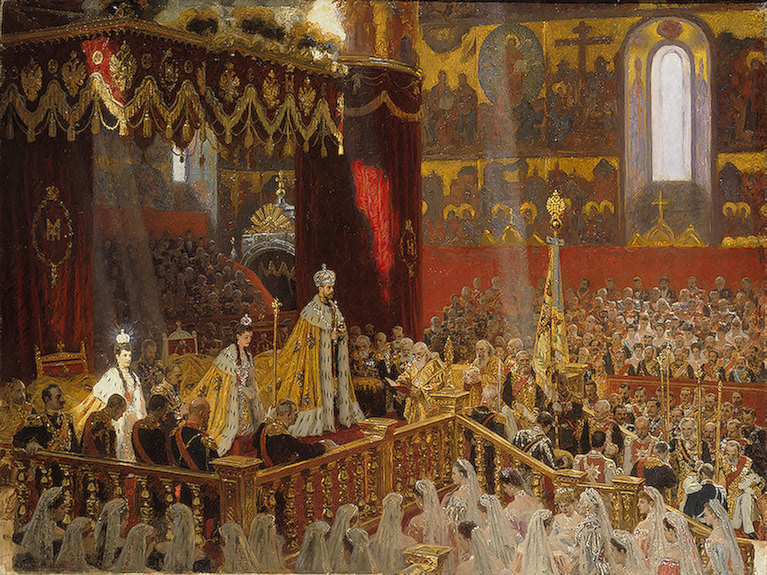
1896 Coronation of Nicholas II and Alexandra Fyodorovna. 1898, Laurits Tuxen

On May 26, 1896, Nicholas and Alexandra were crowned Tsar and Tsarina of Russia in the Uspenski Cathedral in Moscow.  It was one of the most magnificent pageants in Russian history. Over 7,000 guests from across the globe, including most of Europe’s royalty, attended. The celebrations lasted for two weeks.

The newly-crowned Romanov Emperor Nicholas II and Empress Alexandra Fyodorovna, 1896

At Easter 1897, Tsar Nicholas II presented his wife with a fabulous Easter egg to commemorate the coronation.

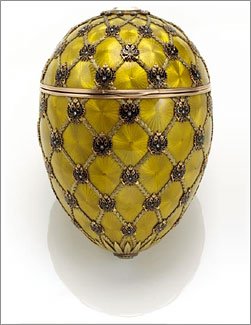
Faberge's Coronation Egg (1897)

Nicholas was in the habit of giving his wife an Imperial Easter egg every year. But the Coronation Egg (1897) was larger and more lavish than any before. The surface was enameled primrose yellow in a field of starbursts. Trellised with bands of laurel made of gold, each intersection was marked by Imperial eagles bearing tiny diamonds on their chests.

Created by the court jeweler, Peter Carl Faberge, the exquisitely handcrafted egg had a tiny surprise inside:

a precise reproduction – under 4 inches long – of the 18th Century coach that carried Alexandra to her coronation.”

Faberge's Coronation Egg (1897): The Surprise

Working all day and into the night, seven days a week, it took approximately 15 months just to handcraft the carriage!  It was barely finished in time to be presented to the Empress. (1)
 

Close-up of the miniature carriage from the Faberge Coronation Egg

Readers, for more on Nicholas and Alexandra on this blog, click here.

To see more Faberge Imperial Egg history, click here.

Read Full Post »
Peterhof Palace, St. Petersburg, Russia

They first met at the 1884 wedding of his uncle to her sister. She called him Nicky; he called her “Alix” or “Sunny.”  Although Alix was only 12, she knew at that moment that Nicky was “The One.” It was on this occasion she carved their names on the window of the Peterhof Palace.

Alix of Hesse as a young girl ca. 1878

After the wedding, Alix bid her sister and Nicky goodbye, returning to the Darmstadt Palace in Germany which was her home. Alix was a royal princess.

Alix of Hesse ca. 1888

Young Nicholas II of Russia, before he ascended the throne in 1894

Five more years would pass before Princess Alix would return to Russia and see Nicky again. During that visit, the two fell even more deeply in love. Nicky was determined to make Alix his bride.

But Nicky’s parents wouldn’t hear of Nicky marrying a German princess. They hated Germans as did almost every Russian. But Nicky’s parents weren’t just any Russians.  Nicky’s parents were the Romanov rulers of Russia: Tsar Alexander III and Tsarina Marie Feodorovna . They were the Royal Emperor and Empress. Nicky – Nicholas Alexandrovich- being their oldest son – was the Tsarevitch – the heir to the Russian throne.

Alix returned to Germany.

Princess Alix of Hesse, seated, prepares for her first ball. 1889.

More years passed. Love letters written in English flew back and forth between the lovesick pair.

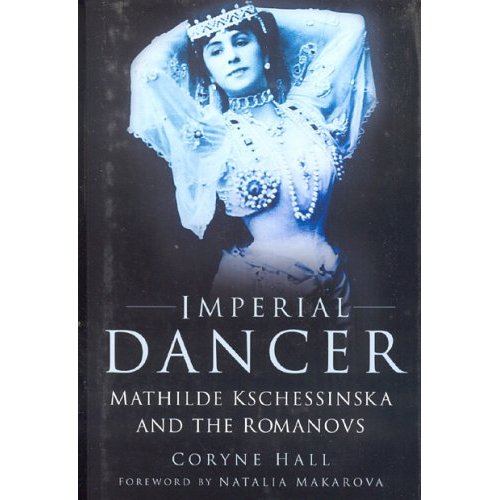
Meanwhile, Nicky carried on a torrid and scandalous three-year affair with the famous Russian ballerina, Mathilda Kschessinska.

Mathilde Kschessinska (1872-1971)

Nevertheless, Nicky’s heart still belonged to Alix.  He wrote in his diary:

It is my dream to one day marry Alix H. I have loved her for a long time, but more deeply and strongly since 1889 when she spent six weeks in Petersburg. For a long time, I have resisted my feeling that my dearest dream will come true.”

Nicky’s parents continued to wage a fierce campaign to find Nicky a suitable bride. The Tsar hoped to land a bigger catch for his son than Princess Alix (even though she was his godchild!), parading a series of royal princesses in front of his son. But Nicky stood firmly against each proposed match, declaring flat out to his folks that he’d become a monk rather than marry anyone ugly and boring when he could have the tall and lovely blue-eyed beauty Princess Alix as his wife and royal consort.

Queen Victoria of the United Kingdom comforts her German granddaughters, the Princesses of Hesse; left to right, Victoria, Ella, and, the youngest, Alix. Their mother, Princess Alice, had just died. Alice was Victoria's second daughter.

Meanwhile, alone in Germany, Alix was equally resolute to marry Nicky, doing her own bit in  turning down royal suitors. She even stood up to her domineering grandmother, Queen Victoria of the United Kingdom, when the Queen tried to marry her off to her grandson, the Duke of Clarence. Alix declined to marry the Duke stating to “Granny” that she did not love him. Victoria – notorious for her royal matchmaking – surprisingly

“was proud of Alix for standing up to her, something many people, including her own son, the Prince of Wales did not do.”

 
For five years, Tsar Alexander III had stood firmly against his son’s wishes. But, in 1894, he became ill and relented, the couple announcing their engagement in April of 1894.

1894 official engagement photo of Princess Alix of Hesse (later Alexandra Feodorovna) and Tsarevitch Nicholas (later Tsar) of Russia

Princess Alix of Hesse-Darmstadt and by Rhine & Tsarevich Nicholas Alexandrovich, London, 1894

Alix, as a requirement for the engagement, converted from Lutheranism to the Russian Orthodox religion and took the Russian name “Alexandra Feodorovna” to strengthen her appeal to the Russian people. Nicholas and Alexandra planned a spring 1895 wedding.

But their plans were thrown in disarray by Alexander’s sudden death in November and Nicholas’s subsequent ascension to the throne as His Imperial Majesty, Tsar Nicholas II. Nicholas insisted that the wedding date be moved forward, as he wanted Alix by his side to help him rule. They married a swift three weeks later. He was 26.  Alix, now called Empress Alexandra,was 22.

Wedding of Russian Emperor Nicholas II (1868-1918) and Grand Princess Alexandra Fedorovna (1872-1918) by Laurits Tuxen, 1895

Read Full Post »

Dodi Al Fayed looks over Princess Diana’s shoulder just minutes before the two of them will die in a Paris tunnel.

Keith Allen, the director of the controversial film, “Unlawful Killing,” is interviewed today by the UK Daily Mail regarding his decision to include in the “documentary” a previously unseen and graphic black and white photo of Princess Diana as she lay dying August 31, 1997.  The photo was probably sold by one of the paparazzi in the Paris tunnel with her at the time of her fatal car crash. (1)

“Unlawful Killing” debuts tomorrow at the Cannes Film Festival. Allen defends his tasteless use of the disturbing photo of the much beloved princess on the heels of the Royal Wedding:

The photo is not used in the film for the purpose of shock. It is included as evidence, because it shows clearly that, although Diana had been injured in the crash, she was alert and very much alive. I repeat: it is not a picture of a dying woman.

As medical evidence presented at the inquest confirmed, if Diana had been taken promptly to hospital by Dr Jean-Marc Martino, she could well have survived.

Instead, due to a series of delays that have never been properly explained, it took one hour and 43 minutes to get her to a hospital just a couple of miles away, by which time her life was ebbing away.

We briefly use one photograph as part of a sequence which asks: why was she not taken to hospital more quickly? What took place within Dr Martino’s ambulance (inside which she remained for well over an hour)? Why is Dr Martino’s evidence greatly at variance with the known facts? And why did no official inquiry ever interview (or even name) most of other people in the ambulance?

Surely, if the inquest and police enquiries were as ‘thorough’ and ‘open’ as the voices of authority insist, that is the very least they would have done?

My film is not about a conspiracy before the crash, but about a conspiracy after the crash, culminating in a six-month inquest which (it is my contention) sought to bury the truth, rather than reveal it. I don’t know whether I’ll convince you or not, but I hope you’ll reserve judgement until you have seen it for yourselves.

Admittedly, that’s difficult at the moment, because the film cannot be shown in the UK (mainly because the questions it asks about the conduct of the coroner and police chiefs could lead to us all being imprisoned under contempt of court laws). But it will soon be showing widely throughout the world, so many of you will be able to see it elsewhere.” (2)

Allen admits that “Unlawful Killing” is backed by Mohamed Al Fayed, the former owner of Harrods Department Store in London.  Al Fayed is the  father of  Dodi Fayed, Diana’s lover, who also died in the Paris crash.

Summer 1997: Dodi Al Fayed and Princess Diana

Mohamed Al Fayed is convinced that Dodi and Diana were murdered by a collaboration between the British spy agency M16 and Queen Elizabeth’s husband, Prince Philip.

Mohamed Al Fayed has pursued his elaborate conspiracy theory for over a decade, memorably presenting it at an official British inquest into the deaths of Dodi and Diana. (3) However, on April 7, 2008, the jury released an official statement that sharply dismissed Al Fayed’s claim:

Diana and Dodi were unlawfully killed by the grossly negligent driving of chauffeur Henri Paul and the paparazzi. Though the official verdict implicated the pursuing vehicles, the jury also named the intoxication of the driver and the victims’ decisions to not wear seat-belts as contributing factors to their deaths. Additionally, the Mercedes had been travelling at over twice the legal speed limit of that particular section of road and had long since left the paparazzi vehicles far behind by the time the accident occurred.” (4)

Princess Diana (1961-1997). Mohamed Al Fayed created many myths about his son Dodi and Princess Diana’s romance, particularly that they were getting ready to announce their wedding plans. He even went so far as to claim that Diana was pregnant at the time of her death. The British inquest into Diana’s death concluded that she was not pregnant at the end.

(1) The Daily Mail

(2) The Daily Mail

(3)The New York Times

(4) Wiki

Readers: Check out “Diana’s Death Photos Leaked, Part 1 “The Shrine at Harrods,” and other posts on the British Royal Family on this blog.

Read Full Post »

Newspapers chronicle the August 31, 1997 Paris car crash that killed Princess Diana.

“A shocking paparazzi photo of a dying Princess Diana could be shown for the first time on Friday in a documentary at the Cannes Film Festival.

The 90-minute documentary about her fatal car accident, called “Unlawful Killing,” includes a graphic, black-and-white close-up of the princess taken moments after the Mercedes she was riding in crashed in a Paris underpass.

One of the movie’s financial backers is former Harrods department store owner Mohamed Al Fayed, whose son Dodi died in the car with Diana.

British media report that he didn’t know the image of Diana’s face would be included in the movie and plans to stop it from being shown.”

This photo released in 2008 shows Princess Diana in the backseat of the Mercedes roaring away from the Paris Ritz before the fatal accident. Diana glances back at the pursuing paparrazzi. Dodi Al Fayed sits next to her. In front of Al Fayed is the driver, Henri Paul. Seated also upfront is Al Fayed's bodyguard, Trevor Rees-Jones (The Daily Mail)

For details and photos of the 1997 crash, click here.

Now Read: Princess Diana: Death Photo Leaked, Part  2

Readers: I have written many posts on Princess Diana and the British Royal Family. For more background on Diana’s death, please read, “The Shrine at  Harrod’s.” For other posts on the British Royal Family, click here.

Read Full Post »
In its coverage of the fashion displayed by guests at the British Royal Wedding of William and Catherine, The New York Times wrote that the outfits of the guests “were generally tasteful and royal-friendly. A few things stuck out. The exotic costumes of foreign dignitaries, seeming throwbacks to imperial times. The hats worn by the ladies, which resembled, variously

overturned buckets, flowerpots, lampshades, fezzes, salad plates, tea cozies, flying saucers, abstract artworks or, in one case, a pile of feathers. There were also a number of fascinators, decorative shapes with flowers or feathers, that are stuck in one’s hair but are not hats.”

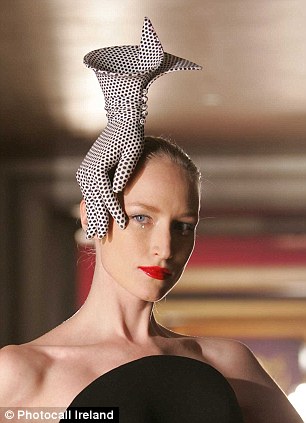
It now appears that 36 of the wild headpieces worn at the royal wedding can be traced to a single eccentric Irish milliner, Philip Treacy, referred to by the UK’s The Daily Mail as the man “responsible for all this fashion roadkill.” 

In this 1999 photo, milliner Philip Treacy poses with the late hat fancier Isabella Blow

Princesses Eugenie and Beatrice arrive at Westminster Abbey for the Royal Wedding in their much-ridiculed hats by Philip Treacy. Beatrice's hat was described in the Daily Mail as "beige pretzel-like" and Eugenie's as a "catastrophic confection...with a rose the color of dried blood."

For more pictures of royal wedding hats on this blog, click here.

Princess Beatrice wore this Treacy creation to another wedding. A swarm of butterflies seems to be attacking her head.

At another fancy occasion, Princess Eugenie wears a feather headpiece designed by Philip Treacy

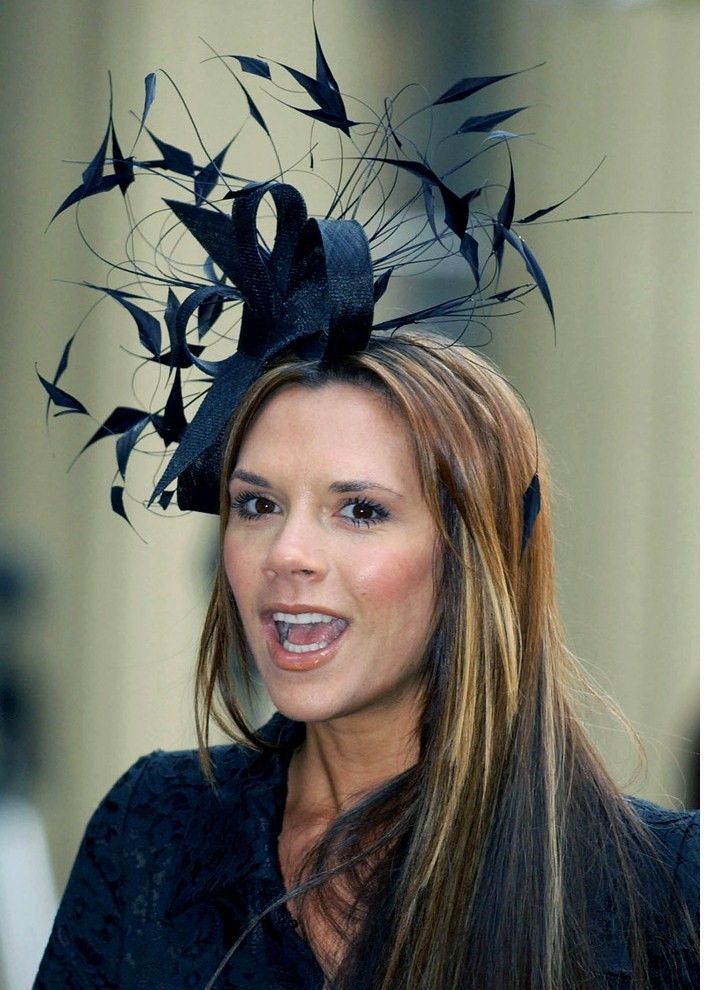
Victoria Beckham wore one of Philip Treacy's creations to her husband David's O.B.E. ceremony. Note that Mrs. Beckham is showing her teeth, something rarely seen in her photos.

David and Victoria Beckham arrive at Westminster Abbey for the royal wedding. Victoria is wearing one of Treacy's hats, perched precariously on the front of her head. Though almost seven months pregnant with their fourth child, she opts for fashion footwear, wearing sky-high Christian Louboutin heels. David proudly wears his O.B.E. - but on the wrong lapel!

Once inside the Abbey, you can see that David Beckham has switched his O.B.E. medal from his right lapel to the left one - the correct one. Someone must have mentioned the faux pas and he made the swap. He's chatting up a Beefeater, rather nervously, I think!

While we are on the subject of propriety, let me mention that several people have remarked that Kate Middleton chose to wear a wedding gown with sleeves so that she didn’t bare her arms in the Abbey, which is firmly against the dress code.

Royal Wedding: William and Catherine are shown in the Abbey with best man Prince Harry of Wales and maid-of-honor Pippa Middleton.

I checked this out and there seems to be no such rule, at least in writing. Here is the dress code recorded on the Abbey website:

There is no specific dress code for the Abbey. For services we ask that you dress in a respectful manner, although we are aware that some people are on holiday – bear in mind that during the winter months it can become quite cold inside.


Besides, if Abbey rules require covered arms, then how was Pippa Middleton exempt?

Newsweek magazine clarified the matter. Royal protocol requires that the arms of a royal bride must be covered.

Prince William wore the scarlet coat of an Irish Guards mounted officer, the uniform of his senior honorary army appointment. He wore gold sword slings, but no sword. Although unconfirmed, my sources report that no weapons are allowed in the Abbey.

Back to the mad hatter and more of his crazy, over-the-top designs for The Rich and Famous:

American Actress Sarah Jessica Parker wears a Philip Treacy design. Saloon girl? More unpleasant things have been said about this hat like, "What do you get when you cross a small cowpat with a pair of yellow butterflies, a sickly green rose and a clump of brown chicken feathers?" (the Daily Mail)

British model Jade Parfit allows another Philip Treacy odd creation to rest on her right ear.

You knew it was coming.

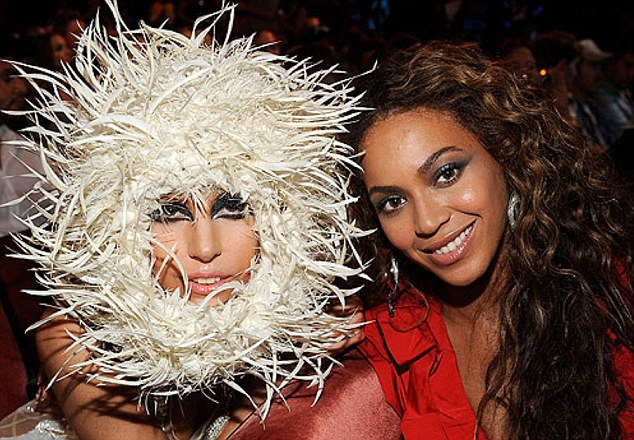
That's Lady Gaga in the wreath by Treacy with Beyonce.


Jodie Kidd wears a Treacy saucer hat with pheasant feather antennae.

In this 2005 photo, Prince Charles and Camilla Parker-Bowles, newly-minted as the Duchess of Cornwall, are just married. She wears a Philip Treacy "wheatsheaf halo" hat for which Prince Charles later awarded him an honorary O.B.E. Camilla is so chummy with Treacy that she sent Treacy's dog a Christmas card every year until the dog's death. At the dog's funeral, Grace Jones sang and Kate Moss sent flowers. (the Daily Mail)

Readers: 


On this site, read, “Kate Rocks the Fascinator.”

For more pictures of Catherine, the Duchess of Cambridge (Kate Middleton) in hats, click here.

For more posts on the British Royal Family and the Royal Wedding, click here.

Read Full Post »
William and Kate drive Prince Charles' Aston Martin through the streets of London on their wedding day, thrilling the crowds.

Following a post-nuptials luncheon buffet for 650 guests given by Queen Elizabeth II at Buckingham Palace, Prince William took his new bride Kate out for a spin in his father’s vintage Aston Martin. The crowd in the street was taken by surprise to see the royal couple, the newly-christened Duke and Duchess of Cambridge, appear on the streets so spontaneously, and sent up mighty cheers, applause, and laughter as the 41-year-old blue sportscar rolled by. William and Kate waved and smiled as they passed the wildly exuberant crowds lining the curbs, waving British flags.

On the front of the car was a large red letter “L”  which stands for “learners permit” bordered by 4 red hearts. Red, white, and blue ribbons and bows decorated the front bonnet. White bows and colored party balloons -two bearing the initials C and W and others shaped like hearts and stars – fluttered gaily from the rear bumper. The novelty license plate proclaimed JU5T WED.

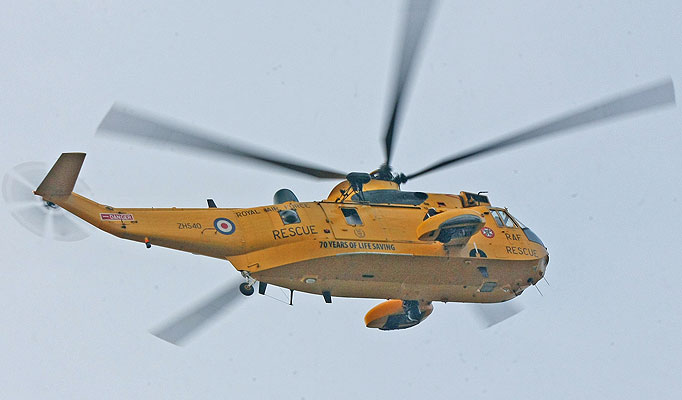
Prince William is distracted from his driving as an RAF helicopter salutes him overhead. Note the special license plate for his wedding day.

The royal car is said to have been specially decorated by that fun-loving prankster Prince Harry.

Best man Prince Harry waves to the crowd as he makes the journey by carriage procession to Buckingham Palace following the Royal Wedding of his brother, Prince William, to the lovely Miss Catherine Middleton.

A Range Rover followed close behind the snazzy convertible. Overhead a yellow Sea King Search and Rescue helicopter with the B Flight 22 Squadron did a flyby to honor the Prince on his wedding day. Prince William is an RAF Search and Rescue helicopter pilot with the same squadron based in Anglesey, Wales.  

RAF colleagues of Prince William did a flyby over Buckingham Palace on his wedding day.

The couple, who had just that morning exchanged televised wedding vows at Westminster Abbey before a worldwide audience of millions, were on their way up the Mall, 500 yards away, to Clarence House, where they would change their clothes for the night’s festivities.

William had already changed clothes once. He had worn a red Irish Guards tunic as he tied the knot but, for the drive down the Mall, had swapped the tunic for an Irish Guards frock coat. In the open auto, Kate still wore the Alexander McQueen wedding dress 

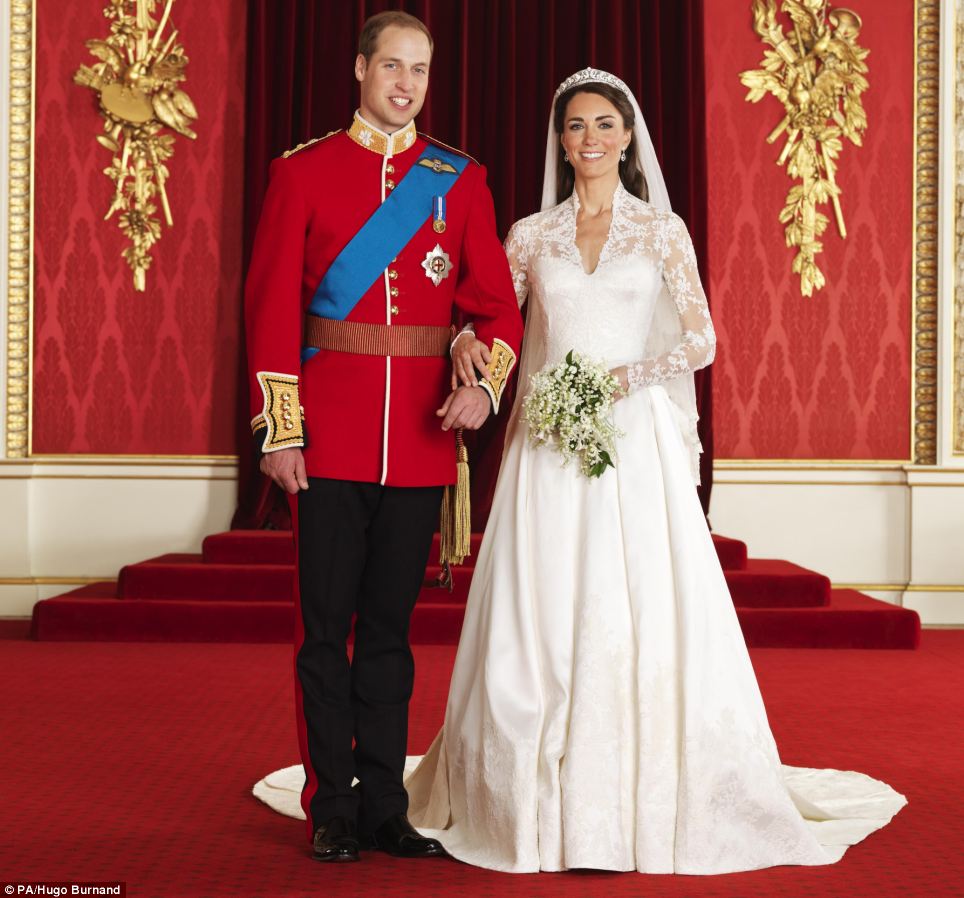
Prince William and the former Miss Kate Middleton, now known as the Duke and Duchess of Cambridge, pose joyously for their official wedding pictures in the Throne Room at Buckingham Palace. April 29, 2011

“a glorious sweep of ivory and white silk gazar with hand-embroidered English and French Chantilly lace and 58 organza-covered buttons snaking up the back. It had a discreet v-neck, long lace sleeves and a train that measured nearly nine feet long. Middleton’s slender waistline was emphasized by the gown’s narrow bodice and slight padding at the hips—a nod to Victorian style.”

As for that spiffy sportscar….

Queen Elizabeth had given the Seychelles blue Aston Martin Volante DB6 MKII to her son Prince Charles in 1969 as a 21st birthday gift. The Prince of Wales -who is environmentally sensitive – converted it to run on sustainable fuel in 2008. It now uses E85 bioethanol, made from English wine wastage. The car is said to be roughly valued at £350,000.

Below is an old photo of Prince Charles taking his wife at the time, Princess Diana, William’s late mother, for a spin in the same Aston Martin convertible.

In this undated photo, Prince Charles and Princess Diana are seen driving away in the Prince's blue Aston Martin.

Readers: For more on the British Royal Family and the Royal Wedding, click here.

Read Full Post »

Newlyweds William and Kate pose in the Throne Room at Buckingham Palace with his family on our left, her family, the Middletons on our right, and members of the wedding party. On Kate's right include at far right, Kate's sister Philippa, brother James, mother Carole, and father Michael. To the far left of the picture is William's stepmother, Camilla, Duchess of Cornwall, father, Charles, Prince of Wales, brother Prince Harry, and grandparents, seated, Prince Philip and Queen Elizabeth II.

On April 29, 2011 at 8 a.m., the day Prince William of Wales married Kate Middleton, officials at Buckingham Palace announced that, in accordance with royal tradition and on recognition of the day by Queen Elizabeth, William was created Duke of Cambridge, Earl of Strathearn and Baron Carrickfergus. The Queen gave Kate a new princess title: Her Royal Highness Princess William Arthur Philip Louis, Duchess of Cambridge, Countess of Strathearn, Baroness Carrickfergus. 

Even though Kate now has an official princess title, she will not and cannot be called Princess Catherine. Why not?  Unlike the majority of royal brides, and in contrast to most previous consorts-in-waiting for over 350 years, Catherine does not come from a royal or aristocratic background and therefore has no title of her own. Some of the royals — Princess Margaret, Princess Beatrice and Princess Eugenie, for example — can use the designation because they were born into blue blood clan. 


May 6, 1985: Princess Diana holds baby Prince Harry, Prince Charles holds toddler Prince William.

Princess Diana was a blue blood when she married William’s father, Prince Charles. She was never officially declared “Princess Diana.” She styled herself in this fashion, much as the Queen’s mother became “Queen Elizabeth the Queen Mother” when he daughter assumed the throne. 

None of this is set in stone, however, as the Queen could make Kate a “Princess of the United Kingdom,” which would then entitle her to be called Princess Catherine. 

Could we then call her Princess Kate? 

Readers, for more on the British royal wedding and family, click here.

Read Full Post »

Older Posts »