Feeds:
Posts
Comments

Archive for the ‘PEOPLE’ Category

penny

penny-with-lincoln-memorial

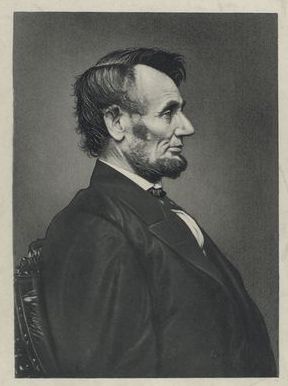
In one week, the nation will celebrate the 200th birthday of our most revered president, Abraham Lincoln (February 12, 1809 – April 14, 1865). To commemorate the birthday of our 16th president and the issuing of the first penny a century ago, the U.S. Mint is issuing four new pennies. The “heads” side of the penny bearing Lincoln’s image remains the same while the “tails” side will alternate four new designs which represent the four major aspects of President Lincoln’s life:

Birth and early childhood in Kentucky (1809-1816)
Formative years in Indiana (1816-1830)
Professional Life in Illinois (1830-1861)
Presidency in Washington, DC (1861-1865)

Click here to see the unveiling of the images of the new coins at a ceremony held last September in Washington, D.C.

I hadn’t intended to write about Abe Lincoln today. Rather, for days now, I’ve gorged myself reading about his wife Mary, hoping soon to come to the end of the book and Internet material on her and get down to blogging. Well that is an impossible task. There is no end of Lincolnology. At last count, there were upward of 15,000 books about Abe and Mary, more than about any other person except Jesus.

A visit to the official website of the Lincoln Bicentennial assures me that I can blog all year on the Lincolns and be in step with the rest of the country, as celebrations and exhibits go on for the next eleven months.

While I was googling the image of the Lincoln Memorial which I present here, I got all misty-eyed.

Lincoln statue within the Lincoln Memorial

Lincoln statue within the Lincoln Memorial

What a great man Abraham Lincoln was. After reading about his life with Mary, I come away with even more admiration. What a difficult woman Mary was and so selfish, too (see my Feb. 3, 2009 blog below). I’ll give her credit for her abolitionist efforts but what a drag she was on our president during the darkest time of our nation’s history! She was jealous of his time away from her. He was running the country!

When I was in elementary school, February was the month we celebrated two presidents’ birthdays – Lincoln’s on the 12th and Washington’s on the 22nd. This was before there was an official “Presidents’ Day,” a day set aside to celebrate the birth of all presidents and before February became “Black History Month.” My teachers would always have a beautiful bulletin board displayed with a calendar, white doilies with red hearts for Valentine’s Day, and black cardboard cut-outs of Lincoln’s and Washington’s silhouettes. I love February.

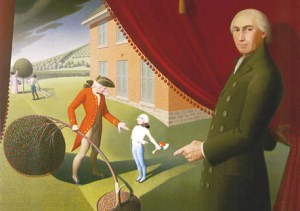
I learned that Lincoln was poor and lived in a log cabin, that he was humble, gave speeches outdoors, and chopped firewood. We heard the Mason Weems fable that Washington could not lie to his father about chopping down a cherry tree.

washington_cherry-tree

My birthday comes two days after Washington’s. As a result, I’ve always had cherry pie instead of cake for my special dessert, because of George chopping down that cherry tree. On one birthday, my grandmother Mimi made cherry tarts for my guests and me and we went to the movies to see Lucille Ball and Bob Hope in the comedy, “Fancy Pants.”

Back to the Lincoln penny, isn’t it ironic that a president who grew up “friendless, uneducated, penniless…” should find himself commemorated on a penny? Happy Early Birthday, Abe. You rock.

5-lincoln-m

Read Full Post »

Ty, the company that makes Beanie Babies, is honoring First Lady Michelle Obama’s wishes and dropping the names “Marvelous Malia” and “Sweet Sasha” from its Ty Girlz collection. CEO Ty Warner still maintains that the dolls weren’t intended to look like Malia and Sasha Obama. The dolls will be renamed Mariah and Sydney.

Read Full Post »

Dina Vierny in January 1944 with the sculptor Aristide Maillol.

Dina Vierny in January 1944 with the sculptor Aristide Maillol.

I came across this fascinating obituary by William Grimes in yesterday’s New York Times:
“Dina Vierny, the model whose ample flesh and soft curves inspired the sculptor Aristide Maillol, rejuvenating his career, and who eventually founded a museum dedicated to his work, died on Jan. 20 in Paris. She was 89.

Her death was announced by the Fondation Dina Vierny-Musée Maillol, which she founded in 1995.

In the same period when she was modeling, Ms. Vierny, who had joined the Resistance early on during World War II, led refugees from Nazism across the Pyrenees into Spain as part of an American organization operating out of Marseille.

Ms. Vierny was a 15-year-old lycée student in Paris when she met Maillol, in the mid-1930s. The architect Jean-Claude Dondel, a friend of her father’s, decided that she would make the perfect model for the artist, who was 73 and in the professional doldrums.

“Mademoiselle, it is said that you look like a Maillol and a Renoir,” Maillol wrote to her. “I’d be satisfied with a Renoir.”

For the next 10 years, until his death in a car accident in 1944, Ms. Vierny was Maillol’s muse, posing for monumental works of sculpture that belied her modest height of 5 feet 2 inches. By mutual agreement, the relationship was strictly artistic.

Maillol threw himself into his sculpture with renewed energy and, at Ms. Vierny’s urging, began painting again. After his death, she worked tirelessly to promote his art and enhance his reputation, eventually creating the Maillol Museum and donating 18 sculptures to the French government on the condition that they be placed in the Jardin des Tuileries. She later added two more.

Ms. Vierny was born in Kishinev, in what is now Moldova, in 1919 and was taken by her parents to France when she was a child. Her father, who played the piano at movie houses, made a modest living while opening his home to an entertaining collection of artists and writers.

Ms. Vierny, who was intent on studying physics and chemistry, took to the role of artist’s muse reluctantly at first, posing during school vacations and glancing sideways at her schoolbooks on a nearby stand. The generous modeling fees and Maillol’s sense of fun won her over.

For the first two years, though, she kept her clothes on, not out of modesty — she and her friends belonged to a nudist club — but because of Maillol’s timidity. She herself later proposed that he try some nude studies. “Since he never asked, I figured he would never have the courage,” she told National Public Radio last year.
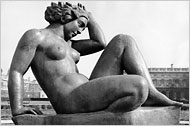
The Mountain,” one of Maillol’s depictions of Ms. Vierny

The Mountain,” one of Maillol’s depictions of Ms. Vierny

Her Rubenesque figure and jet-black hair indeed made her, as Dondel had predicted, “a living Maillol,” memorialized in works like “The Seated Bather,” “The Mountain,” “Air,” “The River,” and “Harmony,” his last, unfinished sculpture. Maillol also turned to her as a subject for drawings and painted portraits, like “Dina With a Scarf,” now in the Maillol Museum.

In 1939, Maillol took refuge at his home in Banyuls-sur-Mer, at the foot of the eastern Pyrenees. There, Ms. Vierny, who had already begun working for a Resistance group in Paris, was approached by the Harvard-educated classicist Varian Fry, whose organization in Marseille helped smuggle refugees from occupied France into Spain. Unbeknownst to Maillol, she began working as a guide, identifiable to her fleeing charges by her red dress. The work was doubly dangerous because she was Jewish.

Ms. Vierny soon began dozing off at her posing sessions. The story came out, and Maillol, a native of the region, showed her secret shortcuts, smugglers’ routes and goat paths to use. After several months of working for the Comité Fry, Ms. Vierny was arrested by the French police, who seized her correspondence with her friends in the Surrealist movement but failed to notice stacks of forged passports in her room.

A lawyer hired by Maillol won her acquittal at trial, and to keep her out of harm’s way the artist sent her to pose for Matisse in Nice. “I am sending you the subject of my work,” Maillol told Matisse, “whom you will reduce to a line.”

Matisse did several drawings and proposed an ambitious painting that he called a “Matisse Olympia,” after the famous painting by Manet. When Maillol heard that the project would take at least six months, he hastily recalled her to Banyuls.

She also posed for Dufy and for Bonnard, who used her as the model for “Somber Nude.”

In 1943, Ms. Vierny was again arrested, this time by the Gestapo, in Paris. She was released after six months in prison when Maillol appealed to Arno Breker, Hitler’s favorite sculptor.

After the war, Ms. Vierny opened an art gallery in Paris, where she exhibited Maillol’s work, as well as that of others. After traveling to the Soviet Union in the 1960s, she began collecting and showing work by dissident artists like Ilya Kabakov and Erik Bulatov.

A passionate and unpredictable collector, Ms. Vierny accumulated no fewer than 90 antique carriages, including the omnibus that Toulouse-Lautrec used to pick up his friends and the carriage used by Chateaubriand when he was ambassador to Italy.

In the early 1970s, Ms. Vierny decided to start a Maillol museum. She began buying up apartments on the Rue de Grenelle in Paris, selling off her collection of 654 dolls along the way. In 1995 she opened the Fondation Dina Vierny-Musée Maillol, whose permanent collection also includes work by Degas, Kandinsky, Picasso, Duchamp and assorted naïve artists, yet another of Ms. Vierny’s enthusiasms.

It was at the museum that Ms. Vierny lived the rest of her life. She is survived by her two sons, Olivier Lorquin, the director of the Maillol Museum, and the art historian Bertrand Lorquin, its curator. The Maillol connection continues after her death. It may even have preceded her birth.

“One day, I was climbing up an almond tree and Maillol turned to my father,” Ms. Vierny told The Independent of London in 1996. “He said to him, ‘You made her, but it was I who invented her.’ And he really did believe that he had invented me. He said that he had been drawing my features for 20 years before my birth.”

Read Full Post »
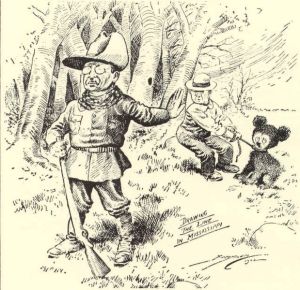
11/16/1902 Washington Post cartoon by Clifford Berryman, "Drawing the Line in Mississippi"

11/16/1902 Washington Post cartoon by Clifford Berryman, "Drawing the Line in Mississippi"

Everyone knows that the teddy bear is named after the twenty-sixth president of the United States, Theodore “Teddy” Roosevelt, but they may not know why.

It happened in November of 1902. Teddy Roosevelt was on a bear-hunting trip through Louisiana and Mississippi. It was an “exasperating” hunt, said Roosevelt, and after five days, he never got a shot. Out of pity, his companions corraled and roped a bear for his prey. But Roosevelt refused to kill a defenseless animal. The press printed the story and the public applauded their president’s restraint. But the story really caught fire when a political cartoon appeared on the front page of the Washington Post two days later, with cartoonist Clifford Berryman portraying Roosevelt as “turning away with disgust, with sloped rifle,” from a “very black bear being roped around the neck by a very white catcher.” (1)

Berryman was commenting on Roosevelt’s race relations. Roosevelt thought that “negroes” as a group were far inferior to whites. He, however, also believed that individual blacks could rise to social heights. In 1901, he became the first president to invite a black man to the White House when he sat down to dinner with African-American educator Booker T. Washington.

Anyway, whether or not the readers of the Post picked up on Berryman’s allegory is not what we remember today. What is recalled is that the cartoon sparked a full-scale teddy bear craze. (2) The public fell in love with the cartoon bear. People wrote and begged Berryman to draw more “bear cartoons,” which he did. In subsequent cartoons, he made the bear rounder, smaller, and cuter, and thus all the more endearing with its prickly pear ears,  imploring eyes, and scraggly fur.

Skip to a candy and toy shop in Brooklyn. Shop owner  Morris Michtom had seen Berryman’s cartoon. He asked his wife Rose to create a stuffed bear like the one in the cartoon.

That night, Rose cut and stuffed a piece of plush velvet into the shape of a bear, sewed on shoe button eyes and handed it to Morris to display in the shop window. He labeled it, “Teddy’s bear.” (3)

To Michtom’s surprise, not just one but a dozen customers wanted to buy the bears. Michtom received Roosevelt’s permission to use his name on his product and began the mass production of the cuddly toy bears which sold for $1.50.

Oregon family c.1900 with prized family teddy bear

Oregon family c.1900 with prized family teddy bear

Today the teddy bear craze is still going strong and we think of teddy bears as being toys for children. But, back at the beginning, women bought the teddy bears for themselves, made them clothes they read about in Ladies’ Home Journal, and carried them with them everywhere.

(1) Morris, Edmund. Theodore Rex. Random House: New York, 2001.
(2) History.com: http://www.history.com/home.do
(3) Jewish Virtual Library: www.jewishvirtuallibrary.org

Read Full Post »

Ty, the maker of Beanie Babies, is introducing two new Ty Girlz dolls named Marvelous Malia and Sweet Sasha

Ty Girlz dolls named Marvelous Malia and Sweet Sasha

The Obama Girls are hot and Ty, the maker of Beanie Babies, is riding the wave. They just came out with two new dolls, Marvelous Malia and Sweet Sasha, that are obviously modeled after the two new First Daughters, though the toy company denies it . However, the soft brown-skinned dolls appear to be the only African-American ones in the 30-doll Ty Girlz collection.
These little dolls are darling. Kids are going to love them. They will be infinitely more fun to play with than the presidential paper dolls Dover produces.
Dover Publications

Dover Publications

Read Full Post »

annie-oakley-poster1I was just at Randall’s picking up some Haagen-Dazs chocolate ice cream for Katie, O’Doul’s for Tom, and mango sorbet for myself when I happened to glance at the magazine rack at the checkout stand. “Oprah’s Cocaine Relapse!” shouted the headline on the National Enquirer. “Stedman furious as her secret lover TELLS ALL. PLUS: THE SHOCKING VIDEO!”

How ironic. I’d just been reading about Annie Oakley, eager to blog about her, and not sure where to start, her life is so rich with stories. Leave it to the National Enquirer to give me the nudge. I’d write about the media libel that almost took down Annie Oakley’s reputation. Who’d have thought that Oprah Winfrey and Annie Oakley would have something in common?

Actually, that’s not so strange. Annie Oakley (1860-1926) was, in her day, as big a superstar as Oprah Winfrey is today. As most everyone knows, Annie Oakley was to shooting what Lucille Mulhall (see last post, “America’s First Cowgirl”) was to roping. For 17 years, she received second billing as an expert markswoman with Buffalo Bill’s Wild West Show, at a time when women were largely restricted to home, church, and school. In 1887, she set sail with the troupe to England where they performed for Queen Victoria’s Golden Jubilee. For six months, they remained in Europe. Royalty from all over Europe came to see the show and Annie Oakley was one of its biggest attractions. She shot glass balls that her husband Frank Butler sent skyward. She charmed the audience with her girl-like antics. “The loudest applause of the night is reserved for Miss Annie Oakley, because her shooting entertainment is clever, precise, and dramatic,” a London reviewer wrote. (1)

Annie Oakley never walked onto the stage. She skipped in, bowing, waving, and throwing kisses. She had some thrilling riding tricks but her most famous antic involved shooting a target with the aid of a handheld mirror. She would turn her back on her target and take aim at it by looking in the mirror. Sometimes the target was an apple sitting on the head of her dog, Dave. Then she would prop her shotgun over her right shoulder, aim it behind her, and shoot without turning around. When she hit the target, when she almost always did, she would do a little jumpkick then skip happily out of the arena. The audiences loved it. If she missed the target, though, she would turn her face to the crowd and pout dramatically. The audiences loved that, too.

No doubt about it. Annie Oakley was an entertainer. But she never lost sight that she was foremost a lady. As an athlete, she might have been more comfortable in pants but she refused to wear them, considering them unladylike, and wore A-line or pleated skirts instead. Her costumes were always wholesome, her legs below her short skirt covered entirely by dark, pearl-button leggings, and her shirt longsleeved, covering neck and wrists. Her starched white blouse with its high collar gave her a prim look. She was considered by her friends as “straitlaced.” (1)

When she traveled, she and Frank shared a tent, which Annie made homey with knick-knacks, photographs, a welcome mat, and sometimes a white picket fence. Annie Oakley took great care to keep up respectability.

annie-oakley-in-tent5
So it came as a great shock to her when she learned of an article that appeared in two Chicago newspapers on August 11, 1903, smearing her good name. The papers reported that someone by the name of Annie Oakley was in a Chicago jail after pleading guilty to stealing “the trousers of a negro” to get money to buy cocaine. (2) “ANNIE OAKLEY ASKS COURT FOR MERCY–Famous Woman Crack Shot…Steals to Secure Cocaine,” screamed one headline.The bogus story was picked up by newspapers nationwide.

At the time, Annie was 42 years old and had just finished starring in The Western Girl. Any plans she may have had of continuing her acting career on the stage came to an abrupt halt. She filed lawsuits against 55 newspapers for blackening her good name. She spent the next seven years testifying in court about the damage done to her reputation by the false newspaper articles. She won 54 of the 55 lawsuits. The woman who had been arrested that August day turned out to have been an impostor posing as Annie Oakley who had confessed to the crime. Her name was Maude Fontenella. She had once performed in a burlesque Wild West show as “Any Oakley.” It was the fault of a Chicago reporter named Ernest Stout who filed the false story, saying that the police inspector had verified that the woman was the real Annie Oakley. (2) Annie Oakley was neither a thief nor a drug addict.

The scandal behind her, the verdicts just, Annie went back on the road with another wild west show, though now she wore a brown wig. Her hair had turned completely white.

I’ve read the National Enquirer on Oprah. It seems that Oprah has admitted on TV to past cocaine use. But, fortunately, in these modern times, her past indiscretion did not ruin her reputaiton.

(1) Macy, Sue. Bull’s Eye: A Photobiography of Annie Oakley. National Geographic Society: Washington, D.C., 2001.
(2) Kasper, Shirl. Annie Oakley. The University of Oklahoma Press: Norman, 1992.

Read Full Post »

Lucille Mulhall (1885-1940)

Lucille Mulhall (1885-1940)

Lucille Mulhall was an authentic cowgirl who found fame in both wild west shows and the rodeo circuit. She interests me for several reasons. For one, humorist Will Rogers began his career as a cowboy on her father Zack Mulhall’s Oklahoma ranch, later joining Mulhall’s wild west show, billed as the “Cherokee Kid.”

It was Will Rogers who claimed that the term “cowgirl” was first coined (circa 1900) to describe Lucille Mulhall and her ranch skills. Lucille is famous for many reasons, largely because she could rope and ride like none other. She could rope eight men riding abreast (1). She was the most famous cowgirl of her time, catching both Teddy Roosevelt’s eye (who invited her to the White House) and Geronimo’s (who gave her a beaded vest and a decorated bow).

But I started researching Lucille Mulhall largely because of a reference in many sources to her uncanny ability as a horse trainer. She could train horses to do things others couldn’t. Of her unique ability, Lucille Mulhall said,

My system of training consists of three things – patience, perseverence, and gentleness. Gentleness I consider one of the greatest factors in successful training….Governor, the horse I ride in our exhibitions,…has nearly forty tricks….He can shoot a gun; pull off a man’s coat and put it on again; can roll a barrel; can walk up stairs and down again – a difficult feat; is perfect in the march and the Spanish trot; extends the forelegs so that an easy mount may be made; kneels, lies down and sits up; indeed, he…does nearly everything but talk.

I’d love to have seen Governor’s tricks, especially the one when he pulls off a man’s coat. But what is unclear is whether or not Governor is pulling the coat off his own body or some man’s!

(1) Alter, Judy. Wild West Shows: Rough Riders and Sure Shots Watts: New York, 1997.

Read Full Post »

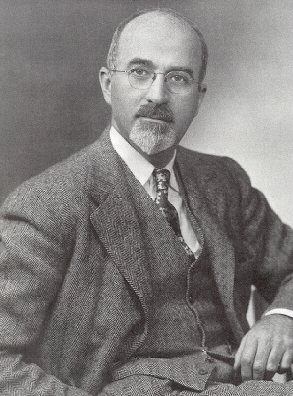
Dr. Walter Freeman, the ice pick lobotomist

Dr. Walter Freeman, the ice pick lobotomist

I’d fully intended to move away from the subject of insane asylums and talk about a cowgirl from Oklahoma by the name of Lucille Mulhall. But I cannot in good conscience leave the subject without telling what I’ve learned about the barbaric brain surgeon responsible for Rosemary Kennedy’s lobotomy, the operation that permanently incapacitated her at the young age of 23. Rosemary had been acting in an agitated behavior, according to her father, Joseph P. Kennedy, throwing fits and showing interest in boys, and he sought an operation to settle her down. Two doctors were in the operating room that day in 1941: Dr. Walter Freeman, the director of the laboratories at St. Elizabeth’s Hospital in Washington, D.C., together with his partner, James W. Watts, MD, from the University of Virginia.

Dr. Freeman was obsessed with finding a cure for mental illness. In the day before psychiatric drugs, mentally ill patients were shuttered away in institutions like St. Elizabeth’s. Shock therapy, pioneered in the thirties, though not completely successful, had effectively reduced some psychiatric symptoms in agitated patients, rendering them calmer for a time following treatment. Psychiatrists like Dr. Freeman wanted to find the locus of mental illness of the brain. They understood that there were regions of the brain and were looking for surgical answers instead of just locking people up for life. Freeman, however, was not a surgeon but a neurologist. He was wildly ambitious and longed to achieve the lasting fame of his grandfather, a pioneer brain surgeon, once the president of the American Medical Association. Freeman was determined to find a procedure that would root out the defect in the brain that he believed responsible for mental illness.

Freeman discovered the work of a Portuguese neurologist named Egas Moniz who had performed a radical new operation on a group of 20 mental patients. By taking small corings of their brains, Moniz asserted, it had been possible to rid a third of these patients of their symptoms. Moniz didn’t explain why this worked. He had a crude notion that people “who are mentally ill are sort of obsessed, he called them fixed ideas. And that these fixed ideas probably resided in some way in the frontal lobes.”

Along with Dr. Watts, Freeman began to perform lobotomies, or surgeries on the frontal lobes. After several operations, Dr. Freeman called his operation a success. According to Edward Shorter, Medical Historian, “Freeman’s definition of success is that the patients are no longer agitated. That doesn’t mean that you’re cured, that means they could be discharged from the asylum, but they were incapable of carrying on normal social life. They were usually demobilized and lacking in energy. And they were that on a permanent basis.” Many had to be retaught how to use the toilet. They were definitely not the same persons they were before the operation.

Why didn’t the medical establishment stop Drs. Freeman and Watts from performing this radical and untested procedure? This was back in the day when it was considered unethical for doctors to criticize their peers – plus, Dr. Freeman manipulated the press in his favor. He proclaimed he’d found a cure for mental illness. Soon he was receiving glowing reviews. The Washington Star called prefrontal lobotomy “One of the greatest surgical innovations of this generation.” The New York Times called it “surgery of the soul,” and declared it “history making.”

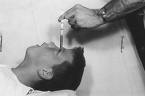
It gets worse. Freeman decided that there was a simpler way to get into the brain than through the top of the skull, as he had done with Rosemary Kennedy. He decided that the skull was thinner behind the eye and that he could make an incision there with an ice pick. Freeman “would hammer the ice pick into the skull just above the tear duct and wiggle it around.”

transorbital lobotomy

transorbital lobotomy

He began to travel around the nation in his own personal van, which he called his “lobotomobile”, hawking this new procedure which he performed with a gold ice pick, and training other doctors in his methods. He even performed a few lobotomies in hotel rooms. Before he was stopped and the lobotomy discredited, Walter Freeman had performed over 3,500 lobotomies. His medical license was revoked when one of his patients died during a lobotomy. Nevertheless, he continued to tour the country in his lobotomobile, visiting his former patients, until his death from cancer in 1972.

Read Full Post »

Releasing Lunatics from their Chains (Robert-fleury)

Releasing Lunatics from their Chains (Robert-fleury)

I was recalling something my grandmother told me about a “field trip” she and her sister Maurine took to Austin, Texas, back in the 1920’s. Both Grandmother and Aunt Maurine were young and single, living in Lufkin, Texas. They had heard all about the state lunatic asylum and wanted to see it for themselves. I think they were hoping to spot a flesh and blood lunatic. The trip was a real highlight.

The two took the train all alone from East Texas to Austin to visit the asylum.

 “It’s lucky they weren’t captured,” says my sister Loise.

I’ve seen the maps of Austin from those days. The important buildings are marked, including the University of Texas, the State Capital, and the State Lunatic Asylum.  True, the Lunatic Asylum was a garden spot and people other than my relatives were drawn to it for good reasons. But I think novels like Jane Eyre give us an insight into attitudes toward the mentally ill. They were weird, scary, and dangerous.

Evidently the Texas State Lunatic Asylum was ahead of its time in its compassionate approach toward the mentally ill. The asylum movement in America and Europe at that time “strived to provide a healthy diet, exercise, fresh air, adequate rest, a strict daily routine, social contact, and a kind but firm approach,” according to the website of the Texas Dept. of State Health Services (1). No longer flogging the patient or tossing cold water on him, the treatment for the mentally ill in the first half of the twentieth century was still far from humane. 

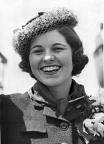
Rosemary Kennedy

Rosemary Kennedy

In 1941, Joseph Kennedy authorized a frontal lobotomy for his beautiful special needs daughter Rosemary, who was proving to be a bit of an embarrassment to him when she tripped curtseying to the Queen of England.

According to Dr. Watts, a surgeon assisting in the lobotomy of Rosemary Kennedy: 

“We went through the top of the head, I think she was awake. She had a mild tranquilizer. I made a surgical incision in the brain through the skull. It was near the front. It was on both sides. We just made a small incision, no more than an inch.” The instrument Dr. Watts used looked like a butter knife. He swung it up and down to cut brain tissue. “We put an instrument inside,” he said. As Dr. Watts cut, Dr. Freeman put questions to Rosemary. For example, he asked her to recite the Lord’s Prayer or sing “God Bless America” or count backwards. … “We made an estimate on how far to cut based on how she responded.” … When she began to become incoherent, they stopped.” (2)

1. http://www.dshs.state.tx.us/mhhospitals/AustinSH/ASH_About.shtm

2. http://en.wikipedia.org/wiki/Rosemary_Kennedy

NEXT: Stunt reporter for THE NEW YORK WORLD Nellie Bly writes TEN DAYS IN A MAD-HOUSE

Read Full Post »

« Newer Posts