Feeds:
Posts
Comments

Archive for the ‘British Royal Family/Nobles’ Category

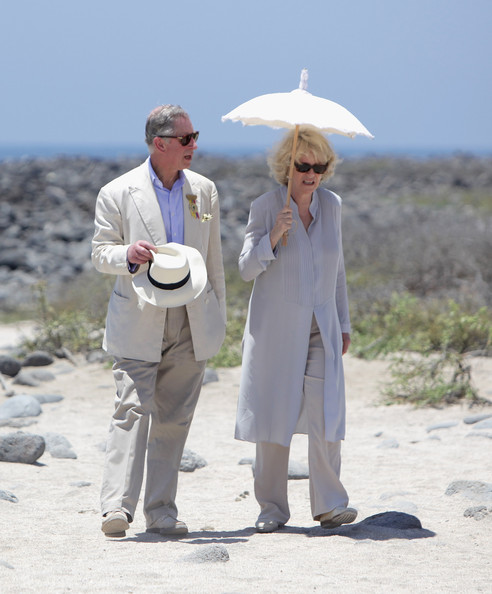
HRH Prince Charles, Prince of Wales and his wife Camilla, Duchess of Cornwall, walk along the beach on North Seymour Island on the second day of a tour of the Galapagos on March 17, 2009 in Galapagos, Ecuador.

Charles, the Prince of Wales has indicated for the first time that his second wife, the Duchess of Cornwall, nee Camilla Parker Bowles, could become “Queen Camilla” when he ascends to the throne. 

Until now, the Prince has always stuck to the line that his wife will be known as Princess Consort when he is king. 

But in an interview on the US television channel NBC, he suggested the Duchess “could be” given the title of Queen. 

The proposed title of Princess Consort was concocted under the previous Labour government to minimize controversy when the Prince married his unpopular second wife in 2005. Camilla was Charles’s mistress during his marriage to the late Princess Diana, and is blamed for the break-up of their marriage.

from multiple sources, including the Associated Press

Read Full Post »

Prince William of Great Britain and Catherine Middleton announce their engagement on November 16, 2010, in a side room at Clarence House, London.

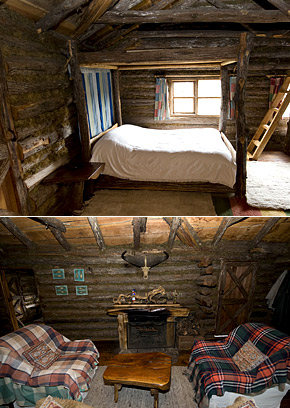
This is the site of Prince William's October 20 proposal to Kate Middleton: at one of Kenya's stark Rutundu Log Cabins near Lake Rutundu on Africa's second highest peak. With no electricity, the couple, both 28, celebrated their engagement by a roaring fire and a bottle of bubbly. In an interview, the prince revealed that he had been carrying around the heirloom engagement ring in his knapsack for three weeks, all the time worried he might lose the irreplaceable relic that belonged to his late mother, Princess Diana.

The interior of the rustic Kenyan cabin where William proposed to Kate on Oct. 20, 2010.

Kate Middleton attended the University of St. Andrews in Scotland, where she received an Art History Degree and met her future husband, Prince William, heir to the British throne. The university claims to be "Britain's top match-making university," asserting that 10 percent of its students met the person with whom they would eventually settle down.

“Kate’s Obstacle Course” by Tina Brown:

“The future princess not only fulfilled Prince William’s requirements, she persuaded the Queen her future granddaughter-in-law is nothing like Diana. Now all the royals have to do is make the wedding of the year look thrifty.

“No one has put in harder training to become a royal bride than the glossy-haired Kate Middleton. The eight-year wait has been fraught with tests she had to pass.

“First, discretion. Prince William’s smiling hostility toward the press is his non-negotiable core value. I am told he is so protective of his privacy he has been known to plant false tips with friends he distrusts and watch the media to see if they play out. William went ballistic at Christmas last year, when he suspected Kate might have been aware the tabloid snapper Niraj Tanna was lurking near a tennis court where she was playing on the Duchy of Cornwall estate, and that she graced the interloper with a camera-ready smile. Even her family has kept mum with no unruly relatives going rogue. The only telltale sign of possible impending nuptials has been Carole Middleton’s sudden suspicious determination to shed poundage on a prawn and cottage cheese diet.

“Second, virtue. The delicate issue of premarital experience has been managed by Kate with quiet dexterity. Her one known boyfriend before William at university, 22-year-old gifted cricketer Rupert Finch, never talked. Thirty years ago, Prince Charles had to go as young as 19 to find, in Lady Diana Spencer, something almost extinct in post-feminist times, a girl with a history and no past. But Diana’s shy virginity concealed a time bomb: her wounded, insatiable need for love.

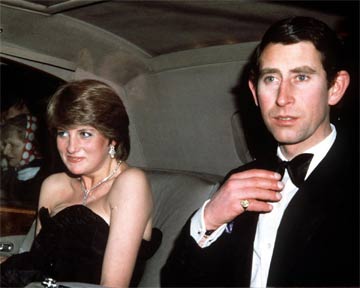
A month after announcing their engagment, Lady Diana Spencer and Prince Charles attend a 1981 dinner at Goldsmith Hall. Diana was 19.

“There is nothing wounded about Kate. She’s from wholesome middle-class stock. She’s great ballast for William who, beneath his royal aplomb, is wounded too. She’s mastered the art of being what seems a contradiction in terms—appropriately edgy; the odd flash of midriff or nocturnal thigh in a too-short skirt for a nightclub excursion sexy but solid; middlebrow, not elitist. The only controversial thing she has ever done is wear sequined hot-pants and take a spill with her legs in the air at a Day-Glo Midnight Roller Disco charity event in South London, for which she did about two years’ penance.

September 2008: Kate Middleton arrives at the Day-Glo Midnight Roller Disco Charity event in South London in disco sequins, tiny shorts, and ready to roller skate.

Kate Middleton falls on the floor in a most unladylike sprawl. It was rumored that the Queen thought Kate was a show-off.

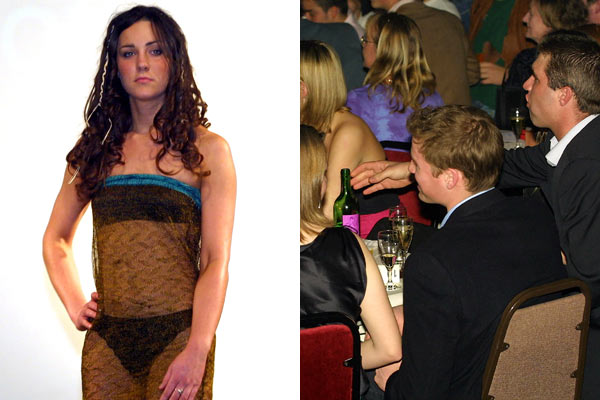
Kate Middleton has been embroiled in more than one sexy fashion faux pas. A case in point: the 2002 charity fashion event for St. Andrew's College at which she modeled this see-through "frock." Both Kate and Prince William were students at St. Andrew's at the time, and "Wills" was in the audience that night. Although he had met Kate before the $325-a-plate event, when he saw her on the catwalk, he was smitten.

“In the couple’s wedding interview, you could see the outline of their successful dynamic. William said he tried to impress Kate with his cooking, but the food would start burning, and ‘Kate would come to the rescue and take charge.’

“Third, patience. It’s taken close to a decade to reel William in. Kate has had to endure the ridicule of being Waity Katie even among the royals themselves. ‘They have been practicing long enough,’ Prince Charles said heartily at Poundbury, his model village in Devon, where he was when the news broke.

‘It’s brilliant news. It has taken them a very long time,’ commented Queen Elizabeth, who, in her business-like way had tried to get this over and done with last June before the impending calendar crush of Philip‘s 90th, her Diamond Jubilee, and the 2012 Olympics.

“In order not to fuel rumors as the perpetual princess in waiting, Kate rarely emerged with William in public of late unless it was one of those innumerable country weddings of all their mutual friends. What could she possibly have been doing all those years of trying to look busy? As she put it in the engagement interview, ‘working really hard’ at the family business that sells children’s toys and paraphernalia based in Ashampstead, near their home in Berkshire. Now that she’s engaged to be married to the second in line to the throne, her life is about to get more boring still. The palace machine will take over. The portcullis will come down.

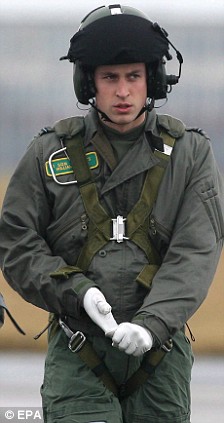
Prince William is a RAF search-and-rescue helicopter pilot.

“William is a RAF search-and-rescue helicopter pilot at RAF Valley on the island of Anglesey, and the happy couple will live in a remote farmhouse in North Wales, where there is 33 inches of rain a year. There she can tend to the urgent priority of royal wife, the speedy manufacture of the heir and the spare.

“But that’s “appropriate” too. In the dire mood of the upcoming austerity cuts, England needs the joy of a royal wedding as badly as it did 30 years ago, when we watched enthralled as Charles and Di tied the knot. But she needs it on a budget. The fact that Kate’s a “commoner” is suddenly a PR boon for the royals. With an Old Etonian prime minister and a savage round of economic cutbacks, a pedigreed royal bride would be a hard message to sell to a grumpy press and parliament. Now all the royals have to do is make the wedding of the year look thrifty—perhaps the Guards’ Chapel, where William and Harry held a service to mark the 10th anniversary of their mother’s death, instead of Westminster Abbey?—and preferably green.

“Now that she’s engaged to be married to the second in line to the throne, her life is about to get more boring still.

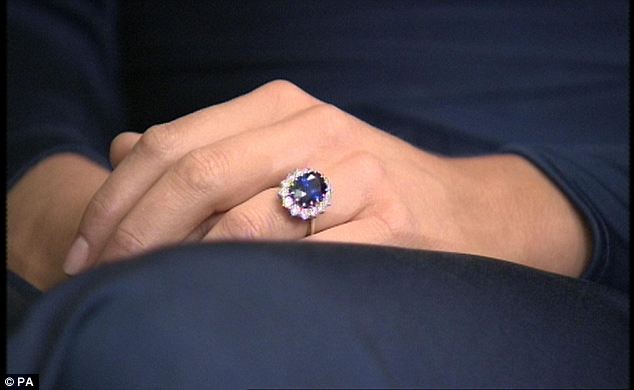
“Most important still, Kate’s perseverance and resilience has persuaded the queen that her future granddaughter-in-law is nothing at all like Her, like Diana, the golden-haired Rebecca of the Royal House of Windsor. When William chose to bestow on Kate his mother’s 18-carat oval blue sapphire-and-diamond engagement ring, it was not only a token of love but a thrilling gesture of confident daring.

Kate Middleton's engagement ring belonged to Princess Diana

“After Diana’s death in 1997, the 15-year-old prince told his father he wanted the ring for his future engagement. He said Tuesday the ring represented a time his parents were happy. Now, after all the years the royal establishment have spent trying to erase that magical disruption known as Diana, England’s future king showed the world in the strongest, most personal way he knew how that he was determined to bring his mother back.”

Source: The Daily Beast

Read Full Post »

Princess Diana, 1997

Following her 1996 divorce from Prince Charles, Princess Diana downsized her life. She reduced her Kensington Palace staff to cleaner, cook, and dresser with Paul Burrell filling in the gaps as her man Friday. The police, not the Royal Protection Squad, accompanied her to public events. She pared down the list of charities she supported from 100 to 6.  

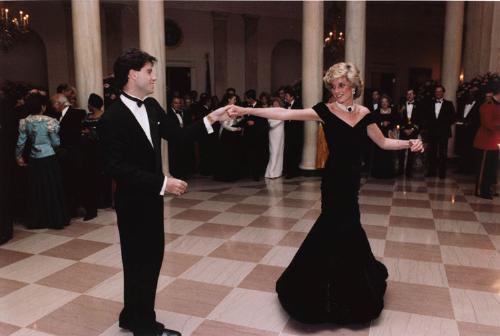
She culled her wardrobe, throwing out dresses that reminded her of her previous life, famously donating 79 of them to charity at a June 1997 Christie’s auction, including the black dress she wore while dancing with actor John Travolta at the White House in 1985.

American Actor John Travolta and Princess Diana of Great Britain dance at the White House, 1985.

She changed her friends. She dumped old confidante Elton John after he acted as a go-between with her and fashion designer Gianni Versace for Versace’s 1997 coffee-table book Rock and Royalty.  Diana blamed John for carelessly placing a photograph of the Princess and her sons in the book amid a portfolio of semi-nude male models, which Diana rightly feared would upset the Queen

In July 1997, Diana did make up with Elton John, consoling him at Versace’s memorial service. 

Princess Diana comforts rock star Elton John at the 1997 memorial for slain fashion designer Gianni Versace

By the end of August, Diana, too, would be dead, and John would play the piano at her funeral. In 2008, John reflected on Princess Diana’s last year:

I think in the end…Diana trusted the wrong people. She didn’t trust the people she should have trusted, her true friends. I always thought the people that really felt for her and really were true to her she just was a bit airy fairy towards in the end.”

Fergie was another of Diana’s old friends that got the heave-ho in the last year of her life. This rupture was also a result of the publication of a book.

Back in 1985, Sarah, the Duchess of York, and Princess Diana were close friends.

In her memoir, My Story: by Sarah, the Duchess of York, the divorced duchess shared that she and Diana wore the same size of shoes and often shared them.  Fergie claimed that she caught a verruca—a plantar wart – after wearing a pair of Diana’s shoes.

Diana was aghast that her old friend and former sister-in-law would portray her in such unflattering detail just to make a buck. Despite Fergie’s repeated apologies, Diana would not forgive her. She never spoke to Fergie again.

Brown, Tina. “Diana’s Final Heartbreak,” Vanity Fair, July 2007.

For more on Princess Diana, click here.

Read Full Post »

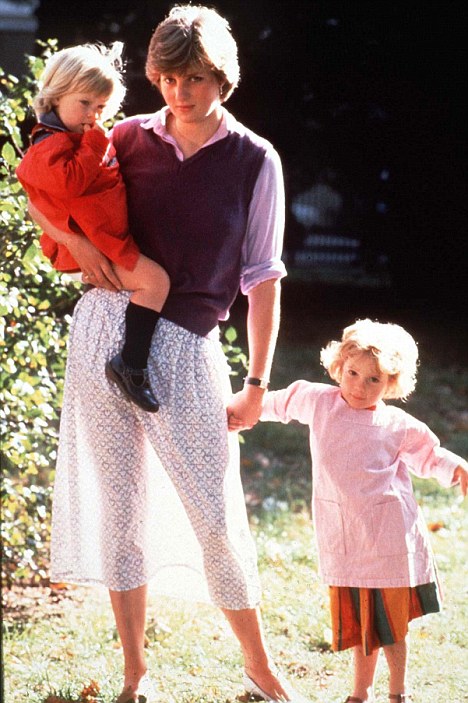
Lady Diana Spencer was a nanny and nursery school teacher prior to her marriage to Charles, Prince of Wales. Photo: fall, 1980

Lady Diana Spencer was understandably nervous about marrying Charles, Prince of Wales (b. 1948).  Following their February 24, 1981, engagement announcement, Diana’s whole world was turned upside down. In a flash, nineteen-year-old Diana went from part-time nanny and nursery school teacher to the future Queen of England. Two days later, she kissed freedom goodbye forever. “Shy Di” moved out of her flat at No. 60 Coleburne Court, said a hasty goodbye to her 3 giddy roommates, and moved into Buckingham Palace, where she was sequestered for the five months leading up to her July 29 wedding, protected from the press. (1)

In their first public appearance together following their February 1981 engagement announcement, Lady Diana Spencer and Prince Charles attended a Royal Opera benefit at London's Goldsmith Hall. Lady Diana shocked the crowd by appearing in a low-cut, strapless black taffeta evening gown. "The Dress" made headlines: "Lady Di Takes the Plunge," screamed the front page of The Daily Mirror, with splendid photos of "Shy Di" spilling out of her revealing gown.

Throughout the spring, the Palace courtiers gave Diana lessons on how to be a princess. They advised her of her royal engagements, which would average 170 a year and would include Ascot, Trooping the Color, Badminton Horse Trials, Opening of Parliament, Chelsea Flower Show, Wimbledon, hospital benefits, charities, and anything for the military. They guided her through the maze of royal rules: wear hats in public and bright colors to stand out; wave from the elbow, not the wrist; never use a public lavatory.

‘The worst thing about being a princess,’ said Diana years later, ‘is having to pee.'”(1)

They handed her stacks of history books to read about her future role as Princess of Wales.

27th March 1981: Charles, Prince of Wales, his fiancee Lady Diana Spencer, and Queen Elizabeth II at Buckingham Palace, London, after she gave her consent for their wedding.

It was all too much for Diana. She longed to be with Charles, who was often unavailable, having embarked on a 5-week tour of the United States, Australia, and New Zealand, among his other royal duties.  The Royal Family – when they were at the Palace, each with their own separate apartments – did nothing to help her feel at home. In fairness, each of the royals did have their own very busy schedules. Nevertheless, Diana was cut off from ordinary companionship. She felt insecure, lonely, and afraid.

 I missed my girls [roommates] so much I wanted to go back there and sit and giggle and borrow clothes and chat about silly things, just being in  my safe shell again….I couldn’t believe how cold everyone was [at Buckingham Palace].” (2)

Lady Diana Spencer (l.) walks with Camilla Parker-Bowles at Ludlow Racecourse in 1980, where Prince Charles was competing.

Along with palace isolation and wedding jitters, Diana agonized over whether Charles was still in love with his married mistress, Camilla Parker Bowles, although Charles swore their affair was a thing of the past. How could that be true, wondered Diana. Camilla telephoned Charles constantly and he always took her calls in private. Camilla and her husband were often included as weekend house guests at Sandringham, the royal family country house. Camilla haunted Diana and Charles’s courtship days. 

Diana befriended Charles’s righthand man, Michael Colborne, peppering him with questions about Charles’s relationship with Camilla. Diana became bulimic from the worry and lost twenty pounds in just three months. She became weak and emotionally labile. 


Camilla Shand as a debutante in 1965. She and Prince Charles met in 1970 and considered marriage. Lord Louis Mountbatten advised Charles against marrying the love of his life, citing Camilla's wild past and lack of aristocratic lineage.

Her fears over Camilla increased when, tucked among the wedding presents in the office Diana shared with Colborne, Diana discovered a curious little parcel. Over fierce objections from Colborne, she opened it, only to discover a gold bracelet with a lapis pendant engraved with the initials “F” and “G” entwined.

Diana became enraged. She knew the significance of the two letters: earlier friends had informed her that “F” and “G” stood for “Fred and Gladys,” the pet nicknames Charles and Camilla had for each other. Diana pressed Colborne about the gift:

‘I know it’s for Camilla,’ she said. ‘So why won’t you admit it? What does it mean? Why is Charles doing this?'” (2)

Colborne refused to answer any more questions, other than to admit that he had ordered the gift at Charles’s request. Diana was livid with jealousy. 

She confronted Charles. He said he had indeed ordered the bracelet from Asprey’s for Camilla and was going to give it to her in person to signal the end of their relationship. He maintained it was a farewell gift but Diana didn’t believe him. They quarreled and she withdrew in tears.
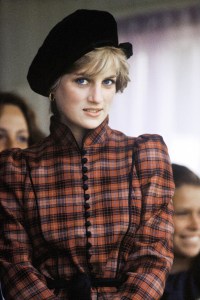
Diana, Princess of Wales (1961-1997) in an undated photo.

The wedding day was bearing down on Diana like a freight train. Her fairytale was morphing into a nightmare. There wasn’t time enough to process all the change that was taking place in her young life.

Her weight plummeted. She became wisp-thin. Her bridal gown with its 25-foot train, puffy sleeves, and ivory taffeta was almost ready, although the dressmakers had to keep taking in the seams due to Diana’s dramatic weight loss.  Between the first and last fittings, Diana’s waist shrank from 29 inches to 23-and-a-half inches.

In June, two weeks before her wedding, Diana attended Ascot Week where she was treated by the public and the media like an international film star.

Lady Diana attends Royal Ascot for the first time, June 1981.

Everyone was fascinated with this new breed of royalty. Diana was fresh, lovely, and natural. She had a real English rose complexion. Her larkiness was such a refreshing change of pace from the stodgy Royal Family with all their rules and stiffness.

But the crush of the crowd and the press, who trailed her at every outing, distressed Diana:

‘During tea at the back of the royal box at the races she was practically in tears and had to be escorted home early.'” (3)

Lady Diana Spencer watches Prince Charles play polo at Tidworth during their engagement. The wedding is four days later. Photo: July 25, 1981

On Monday, July 28, 1981, the day before her wedding, Diana lunched with her sisters while Charles met with Camilla with the gift. Diana confided to her sisters that she didn’t want to marry someone who was still in love with his mistress.

‘It’s bad luck, Duch,’ said her sister Sarah, using the family nickname for Diana. “Your face is on the tea towels, so you’re too late to chicken out now.”” (2)

It was too late to chicken out by the time Lady Diana Spencer considered breaking her engagement to Prince Charles. Her face was on the tea-towels already.

As Sarah pointed out, it was too late. England was awash in kitchy wedding memorabilia featuring the royal couple’s photos. London was crawling with tourists and international journalists and television crews. Sadly, there was no turning back for Diana.

The wedding went ahead as scheduled at St. Paul’s Cathedral. The Queen had sent 2,500 invitations to friends, families, and heads of state, plus the crowned heads of Europe. The ceremony was telecast to 750 million people. On that July day, Lady Diana Spencer (1961-1997) became newly titled as Diana, Princess of Wales. She outranked all other women in the realm, except Queen Elizabeth II and the Queen Mother. (1)

Wedding Bells chimed on July 29, 1981, when Lady Diana Spencer married Charles, Prince of Wales, at St. Paul's Cathedral in London.

Diana was right to have been worried about Camilla breaking up her marriage. Shortly after marrying Diana – some say five years later, others, that they never stopped seeing each other –  the Prince resumed his relationship with Camilla. The marriage was long over before the royal Wales divorced in 1996.

(1) Kelley, Kitty. The Royals. New York: Warner Books, Inc., 1997.

(2) Morton, Andrew. Diana – Her True Story – In Her Own Words. Michael O’Mara Books, Ltd., 2003.

(3) Bradford, Sarah. Elizabeth: A Biography of Her Majesty The Queen. New York: Riverhead Books, 1996.

Readers: For more on Princess Diana, click here.


Read Full Post »
 

U.S. President Jimmy Carter (right) visits Buckingham Palace in May, 1977, and is greeted (l to r) by Queen Elizabeth II, Prince Philip, and the Queen Mother. Let me just point out that both Elizabeth and her mum are carrying purses. The Queen is never without her purse. The Queen Mum's purse blends so nicely with her frock they look cut from the same cloth! Although the Queen wears both gloves, her mother has taken off her right glove, presumably to shake Carter's hand - but he has something else in mind for her! (Lisa's History Room)

U.S. President Jimmy Carter only visited the British Royal Family once during his presidency but, in that short time, he made a very strong impression. In London for an economic summit in May, 1977, Queen Elizabeth II invited Carter to Buckingham Palace. While meeting her and other members of the royal family, Carter broke protocol and kissed the Queen’s mother right smack on the lips. 

Carter’s Southern hospitality did not sit well with the Queen Mother (1900-2002) who snapped,

Nobody has done that since my husband died.”(1)

Her husband, King George VI, died in 1952.

The Queen Mother took an instant dislike to the former peanut farmer from Georgia. Later, she wrote about the unpleasant encounter. Evidently, she had seen Carter leaning in for a smooch and had tried to dodge his ample lips:

 I took a sharp step backwards – not quite far enough.” (2)

While there are no obligatory ways to greet the Queen and the royal family, often a man bows his head or simply shakes hands. An American is not required to bow or curtsy. Planting a kiss on the royal lips is definitely out of bounds!

(1) www.mirror.co.uk

(2) Shawcross, William. The Queen Mother: The Official Biography. 2009

READERS: For more posts on the British Royal Family, click here.

For more on Jimmy Carter, click here.

Read Full Post »
Princess Diana and lover Dodi Al Fayed in the summer of 1997.

“The more I hear and read and think about Diana’s and Dodi’s deaths in the Pont d’Alma tunnel, in Paris, on August 31, 1997, in what is possibly the world’s most famous car crash, the more I doubt the truth of their great romance. If it was anything at all, it was a flirt, a fling…. Like the conspiracy theory surrounding their deaths, their romance, too, was orchestrated by Mohamed Al Fayed [Dodi’s father]. The shrine to the eternal love of Dodi and Diana, in Harrods, the most famous of English department stores, owned by Al Fayed [until May 2010], is a popular tourist attraction. People line up to look at it. They speak in whispers, as if they were in church…. 

“The shrine, which is tacky but curiously touching, consists of a fountain, two large portraits—one of Dodi and one of Diana—and floor-lamp-size candles, the scent of lilies in the air. Under a glass pyramid is a crystal glass from which one of them had drunk champagne in the Imperial Suite of the Ritz Hotel just before they died, and the so-called engagement ring, which Dodi had bought that afternoon at the jewelry shop down the street from the Ritz. Diana never wore it.

They had been romantically involved with each other for less than a month. 

Harrods shrine for Princess Diana & Dodi Fayed. Harrods' former owner, Mohamed Al Fayed, is Dodi's father. At the six-month inquest of Dodi and Diana's death (2007-2008), Al Fayed testified of his belief in a vast conspiracy by the British Royal Family under the direction of Prince Philip to murder Princess Diana. The inquest into Princess Diana's death that was carried out at the Royal Courts of Justice in London concluded she and her boyfriend Dodi Fayed were killed by gross negligence of their driver, who was speeding and was more than three times over French drunk driving limit. (Lisa's History Room)

Pakistani-born cardiologist, Hasnat Khan (b. 1960), who was purported to be the love of Princess Diana's life. They met in London in 1995 and carried on an affair until he ended the relationship. No photographs exist of the couple. (Lisa's History Room)

“All was not as it seemed in the love department of the famous Dodi-Diana romance. Several friends of Diana’s told me she was downhearted after the breakup of her romance with Hasnat Khan, the Pakistani surgeon, with whom she was still in love. They say Khan ended his serious relationship with Diana because, as a respected doctor, he could not stand the publicity that overwhelmed her life…. 

“What is rarely mentioned, although it is well known, is the existence of a beautiful American model named Kelly Fisher, who wore on her left hand an enormous and very expensive engagement ring. She says her fiancé had bought her a mansion in Malibu, where they would live after their marriage. She had tentatively set the date of August 9, 1997, for the wedding, nearly a month off. Her fiancé was Dodi Al Fayed. 

American underwear model Kelly Fisher, who claimed to be Dodi Al Fayed's fiancee. Dec. 2007 (Lisa's History Room)

“The two – Dodi and Kelly Fisher – were in Paris together on July 14, when Dodi was summoned by his father to join Princess Diana 

on the Jonikal,the yacht Mohamed Al Fayed had reportedly purchased for $20 million the day after the Princess accepted his invitation for a sailing trip with her sons, William and Harry.

Princess Diana on the Jonikal, the yacht Mohamed Al Fayed bought exclusively to entertain her. July 1997 (Lisa's History Room)

Kelly was left behind in Paris, though a few days later she was flown to St. Tropez and transported to another Al Fayed yacht. There she languished during the day while waiting for evening visits from Dodi. 

“Diana returned to the Jonikal in August. The fact that she came back for a second visit so soon really shows her loneliness more than it does a passion for Dodi. Her two sons were at Balmoral, one of the Queen’s castles, with their father, Prince Charles, and their grandparents the Queen and Prince Philip, as was their August habit. Diana wasn’t being invited around to the great English estates for long weekends. She had become too famous. It was too difficult to have her stay. Strangers gathered at the gates to get a glimpse of her. Helicopters hovered. She really had no place to go.

Charles, the Prince of Wales (center) is flanked by his two sons, Princes William or "Wills" (l) and Henry or "Harry." This photo, taken by the boys' nanny at the royal estate Balmoral in Scotland, was their 1996 Christmas card. In that year, Prince Charles and Princess Diana divorced.

“The Jonikal invitations were perfect. A splendid yacht. A helicopter. A private plane. Guards to keep the paparazzi at bay. She probably knew that she was being used by a social climber for his and his son’s advancement in London society, but in high society it was a fair deal. Each benefited.

Princess Diana and Dodi Al Fayed on the Jonikal July/August 1997 (Lisa's History Room)

This photo of Diana, Princess of Wales, kissing Dodi Al Fayed appeared in the Sunday Mirror on August 10, 1997, as she vacationed on Dodi's father's yacht, the Jonikal. Three weeks later, Dodi and Di would be killed in a car accident in Paris. (Lisa's History Room)

“The shrine to the eternal love of Diana and Dodi, on view at Harrods, doesn’t have quite the same impact once you hear about Kelly’s role in the story. It’s still tacky, but it’s no longer touching. It’s calculated. What Al Fayed has created is a shrine to himself: “Look at how I have suffered” is the message…. 

“Dodi loved taking movie stars to Hollywood parties and premieres and being photographed with them. He once said to his friend, former gossip columnist Jack Martin, 

‘When do you think I’ll go out with a girl so famous I’ll get my picture on the cover of People?’

“… ‘Well, he got his wish.’ said Jack. ‘A little late, though.'”

Princess Diana graces the cover of the August 25, 1997, issue of People Magazine. (Lisa's History Room)

source:  “Two Ladies, Two Yachts, and a Billionaire,” by Dominick Dunne, May 2008, Vanity Fair.

Readers: For more posts on this blog about the British Royal Family, click here.  See, in particular, “Princess Diana: Death Photos Leaked.”

Read Full Post »

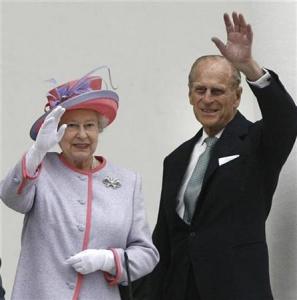
Queen Elizabeth and her consort Prince Philip visit Richmond, Virginia, May 3, 2007.

Prince Philip of England’s upbringing was far from normal. He was born June 10, 1921, on a kitchen table on the Greek island of Corfu in a house that had no electricity, hot water, or indoor plumbing. The only son and fifth and final child of Princess Alice of Battenberg and Prince Andrew of Greece and Denmark was christened Prince Philippos of Greece and Denmark. The platinum blond toddler learned sign language to communicate with his deaf mother.

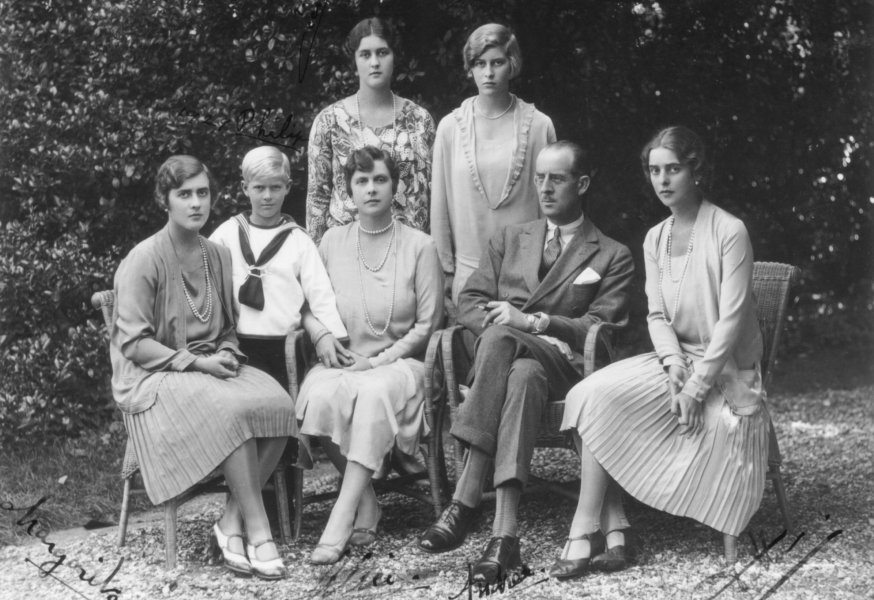
Prince Philip (center) with parents, ca. 1923 (Lisa’s History Room)

Prince Philip of Greece’s father was a professional soldier in the Greek Army. With the Greek defeat in Asia Minor in 1922, Prince Andrew was accused of treason; he was tried, convicted, and jailed and faced possible execution by firing squad. Princess Alice (known as Princess Andrew to English speakers) appealed to her British relative, King George V, for help. Remembering what had happened to his Russian cousin the Tsar when he had refused his cry for rescue, the King quickly dispatched the HMS Calypso to remove Andrew, his wife, their four daughters, and Baby Philip from Greece. Prince Andrew boarded the ship carrying his 18-month-old son in an orange crate. They sailed for France.

For the next eight years, Prince Philip’s family lived in exile in Paris. Philip learned to speak English, French, and German, but no Greek. His family was royal – but not rich – and depended upon the charity of relatives and friends to feed, house, clothe, and educate them while in exile from their mother country.

Prince Philip of England’s family poses for a photograph October 1928. A young Prince Philip stands to the right of his mother, Princess Alice and Prince Andrew of Greece and Denmark. From left to right are Philip’s sisters, all Princesses of Greece & Denmark: Margarita, Theodora, Sophie, and Cecilie.

In 1930-31, the family fell completely apart. All four of Philip’s sisters, who were educated in Germany, married German noblemen and moved to Germany. Then Prince Andrew abandoned his wife and Philip and ran off to live with his mistress on her yacht anchored in the Mediterranean off Monte Carlo where Andrew quickly became addicted to the gaming tables.

Philip’s mother collapsed under the strain. She suffered a nervous breakdown and was institutionalized in Switzerland at the famed Bellevue Sanatorium. That left little Philip all alone in Paris, with no one to care for him. He was only nine.

Philip was then sent to England to be cared for by his maternal grandmother.  But then she died. Next he moved in with his Uncle George, who, by 1938, was dead also. Philip was 17 at the time.

Then another of his maternal uncles, Lord Louis Mountbatten, British sea lord and the last Viceroy of India stepped in and took Philip under his wing. “Uncle Dickie” took an intense interest in his promising nephew. He made grand plans for him.

Prince Philip as a young midshipman in the Royal Navy, ca. late 1930s

Even though Philip was a Greek citizen, Uncle Dickie pulled a few strings so that Philip could join the Royal Navy as a midshipman. Then Uncle Dickie began to pave the way for Philip to marry the future Queen of England. In 1939, he arranged for Philip to entertain King George VI‘s two daughters, Princesses Elizabeth and Margaret, while the King and Queen Elizabeth toured Dartmouth Naval College.

When Princess Elizabeth met Philip, she was only 13. She fell head-over-heels in love with the tall, handsome, and athletic young man. The two became pen pals and wrote constantly to one another during the next six years of world war. He celebrated the Christmas of 1943 with her and her family at their Scottish estate, Balmoral. The press hailed the romance as the love match of the century.

I

In this July, 1951 photo (a year before King George VI’s death and Princess Elizabeth’s ascension to the British throne), Princess Elizabeth and her mother, Queen Elizabeth, arrive at Westminster Abbey to attend the wedding of Lady Caroline Montagu-Douglas-Scott to Mr. Ian Hedworth Gilmour. Princess Elizabeth’s mother – who styled herself “Queen Elizabeth, the Queen Mother,” after her daughter became Queen Elizabeth II – had a fussy, overdressed sense of fashion. Her hats were generally broadbrimmed, trimmed in lace or swaths of chiffon, or piled high with feathers. Her neckline was often V-shaped and adorned with her trademark triple strand of pearls. Her dresses were feminine, flirty, and accented by enormous brooches and rings. As she aged, she dressed in fruity colors like pink, lime, and yellow. Her dresses and hats always matched in color. Her girlish style, peaches-and-cream complexion, pudginess, and sunny smile suggested a sweetness and wholesomeness that made her extremely popular at home and abroad. The Queen Mother, nee Elizabeth Bowes-Lyon, died in her sleep in 2002 at the age of 101. (Lisa’s History Room)

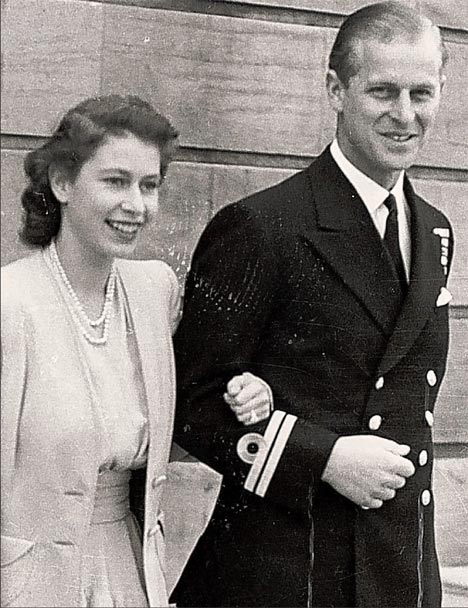
It was no surprise when, on July 9, 1947, the Palace announced that Prince Philip of Greece and Princess Elizabeth of Great Britain were officially engaged. Philip was 26; Elizabeth, 21. The wedding was set for November 20, 1947, at Westminster Abbey. The King and Queen were not wild about the idea of Elizabeth marrying before the age of 25, but it didn’t matter what they wanted. Elizabeth wanted Philip and she was going to have him.

Princess Elizabeth of Great Britain and Prince Philip of Greece announce their engagement, July 9, 1947. (Lisa’s History Room)

Buckingham Palace shifted into high gear planning the royal wedding:

“This was not simple a marriage ceremony, but an affair of state that would focus world attention on the British monarchy. Consequently the King and Queen told him [Prince Philip] that his sisters and their German husbands, some of whom had supported Hitler’s Third Reich, could not possibly be included. So they remained in Germany and listened to the service on the radio.” (1)

Still focused on the guest list, the Queen addressed the issue of Philip’s mother, Princess Andrew, whom she considered “pleasant but odd.” Although Philip’s mother had had nothing to do with Philip since he was 9, Princess Andrew had nevertheless been quite busy while others raised her son. After several years of Swiss therapy in the early 1930s, she had rejoined society and taken up charitable works. During WWII, she saved a Jewish family named Cohen from being sent to the death camp by sheltering them in her Greek home.

After the war, Princess Andrew founded a religious order called the Christian Sisterhood of Martha and Mary dedicated to helping the sick and the needy in Greece. Princess Andrew became a nun, taking a vow of celibacy, although she had born 5 children. She had a habit – a nun’s habit – that she wore all the time. It consisted of a drab gray robe, white wimple, cord, and rosary beads. She was commonly referred to as “Sister Andrew.”

Queen Elizabeth was understandably terrified that Princess Andrew would show up at the wedding at Westminster Abbey wearing her nun’s habit and embarrassing the family in a large way. The Queen pressed the issue with Philip. As a result, Princess Andrew appeared at her son’s wedding wearing a demure hat and a simple silk dress, which the Queen later described as “very pretty and most appropriate.”

Princess Elizabeth and Prince Philip marry on November 20, 1947

Six years later King George VI was dead. Elizabeth and Philip returned to Westminster Abbey for Elizabeth to be crowned Queen.

The coronation was held on June 2, 1953 and televised, at Elizabeth’s request, so that all her subjects could see her crowned. Twenty million viewers watched the seven-hour BBC-TV marathon. The ceremony began as the guests began their stately procession down the long aisle of Westminster Abbey, ahead of the Queen, to take their seats.

Prince Philip’s mother was among the guests. She turned heads as she processed up the aisle wearing a long grey dress and a flowing head-dress that looked remarkably like a nun’s habit! She had had it especially made for the coronation.

Princess Andrew of Greece and Denmark, Prince Philip’s mother (bottom left) processes down the aisle of Westminster Abbey for her daughter-in-law Elizabeth’s coronation as Queen Regnant of Great Britain. June 1953. Princess Andrew is dressed in an outfit resembling her usual attire – a nun’s habit. (Lisa’s History Room)

Princess Andrew, 1965

Princess Andrew died at Buckingham Palace in 1969. According to her wishes, she was buried in Gethsemane on the Mount of Olives in Jerusalem. On October 31, 1994, Princess Andrew’s two surviving children, Prince Philip and Sophie, Princess George of Hanover, went to Yad Vashem, the Holocaust Memorial, in Jerusalem to witness a ceremony honouring their mother. Princess Andrew was called “Righteous among the Nations” for having hidden a Jewish family in her home in Athens during WWII.

(1) Kelley, Kitty. The Royals. New York: Warner Books, Inc., 1997.

Read Full Post »

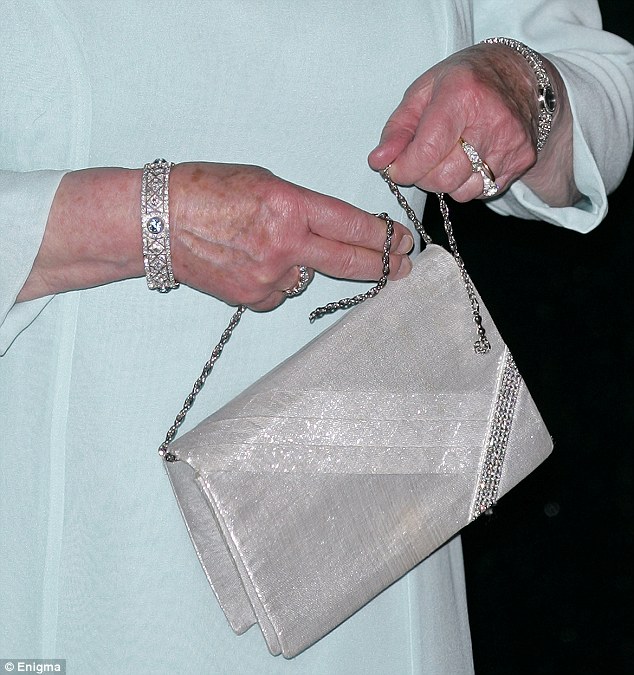
Queen Elizabeth II of England suffered two wardrobe malfunctions at a private party in London for her cousin King Constantine of Greece. A fellow guest spilled something on her beautiful blue gown, leaving huge stains running down the right side, then the chain link strap on her silver handbag broke. (June 3, 2010)

Two nights ago, Queen Elizabeth II of Great Britain helped King Constantine of Greece celebrate his 70th birthday and, at the party, had not one but two fashion mishaps. Someone – a fellow guest, possibly, or a waiter maybe – spilled what is purported to be coffee on the 84-year-old British monarch’s pale blue floor length gown, staining it permanently. Then, on top of that, the metal strap on the Queen’s ever-present handbag broke in half.

Queen Elizabeth clutches the broken strap of her evening handbag at King Constantine's 70th birthday party in a private London home.

Poor Queen! Where were all those ladies-in-waiting when she needed them most? Couldn’t someone have thrown a cloak over the Queen’s dress to hide the stains or stood in front of her to block her from the paparazzi’s unrelenting snaps?

If the Queen was ruffled by being uncharacteristically messy, she didn’t show it. Her Majesty – who is always neat, clean, and fastidiously turned-out – held high the royal chin throughout the terrible, horrible, no-good, very bad night and had a very good time, thank you, in spite of her multiple fashion faux-pas. Jolly brave, Elizabeth partied for hours alongside fellow royals — including son Prince Andrew, daughter Princess Anne, Queen Sofia of Spain, and Crown Prince Pavlos of Greece, who hosted the bash at his London home.

King Constantine of Greece escorts his cousin Queen Elizabeth down the steps at the end of his 70th birthday party. Despite the obvious food stains running down the Queen's dress and the broken strap of her glittery evening bag, the Queen maintained her always noble demeanor.

Read Full Post »

Sarah Ferguson watches polo at Windsor with Princess Diana, in 1985, the year before she married into the British Royal Family and became the Duchess of York

Sarah Ferguson –  “Fergie” –  and Princess Diana (1961-1997) knew each other for six years before Fergie married Prince Andrew in 1986 and became a member of the Royal Family. The two women had first met on the polo circuit, as Diana’s husband Prince Charles was an avid player and Fergie’s father, Sir Ronald Ferguson, was the Prince’s polo manager.

Soon after meeting, Diana and Fergie (b. 1959) became fast friends. The timid and reserved Diana was intoxicated by Fergie’s loud and breezy energy:

“The two girls would burn up the telephone wires trading gossip and irreverent royal tidbits they could share with no one else.” (1)

Since Diana’s 1981 wedding to Charles, she had been starved of fun. Diana thought about how lovely it would be to have Fergie as a mate in the Royal Family. In June of 1985, Diana decided to play royal matchmaker and make it happen. She wangled an invitation for Fergie to not only attend the Queen’s Ascot Week house party at Windsor Castle , but managed also to get the boisterous redhead seated next to the Queen’s second son, the 25-year-old Prince Andrew, a very eligible bachelor and second in line for the throne.

Sarah, the Duchess of York ("Fergie") and Diana, Princess of Wales, 1987

Within an hour of meeting Fergie, Andrew was “chatting her up” and “flirtatiously coaxing a merry-eyed Ms. Ferguson to eat every one of the chocolate profiteroles [cream puffs] on her plate.” (1) A year later, Fergie and Andrew were married at Westminster Abbey as the Duke and Duchess of York. Di had gotten her ally in the family.

This commemorative stamp was issued in Great Britain in 1986 to commemorate the Royal Wedding of Prince Andrew to Miss Sarah Ferguson. They became the Duke and Duchess of York.

 
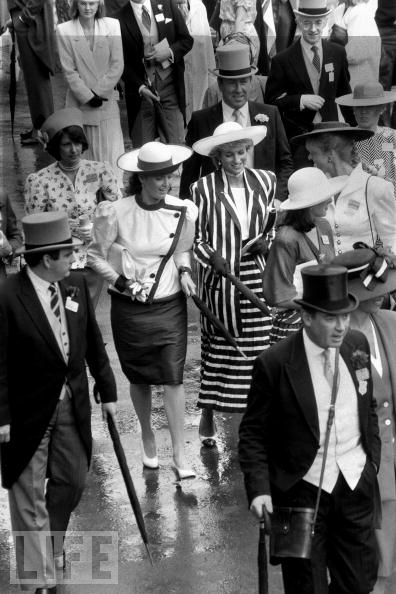
Encouraged by Fergie’s wildness, Diana began to loosen up publicly. She became a bit of a royal daredevil. Memorably, in June 1987, she and Fergie were photographed at Royal Ascot poking Fergie’s old school friend Lulu in the behind with their umbrellas, called “brollies” in England.  (2) 

Sarah Ferguson, the Duchess of York (l), and Princess Diana (r) attend the Royal Ascot, June 1987.

The Ascot Umbrella Caper – dubbed “the Brolly Folly” – drew public scorn. Woodrow Wyatt recorded in his memoirs that his wife saw Diana at Ascot

fooling about in the most childish manner, pulling people’s hair and tweaking them.”

The Sun reported the incident, referring to Fergie and Diana caustically as “silly, simpering girls.” It was the first of many desperate attempts Diana and Fergie made to “unstiffen” royal protocol. 

Over time, the fallout from the bad press would affect Diana and Fergie differently. Diana would weather the public criticism better than Fergie. With Diana’s tragic death, charity work, and sad marriage, the public has been more forgiving of her wild days. The late Princess Diana is lovingly remembered today as the People’s Princess.

Fergie, however, at age 50, continues to court disaster with her impetuous ways and money woes. Matter of fact, with the latest bribery scandal and “Oprah” TV appearance, the Duchess of York is being referred to in the press as the Duchess of Disaster. 


An image made from video shows the Duchess of York apparently selling access to ex-husband Prince Andrew for 500,000 British pounds to an undercover reporter from the UK tabloid, "News of the World." (foxnews.com_May 24, 2010)

(1) Brown, Tina. The Diana Chronicles. New York: Doubleday, 2007.

(2) “Births, Deaths, & Marriages.” Thirty Years of Majesty. Vol. 31, No. 5.

Read Full Post »
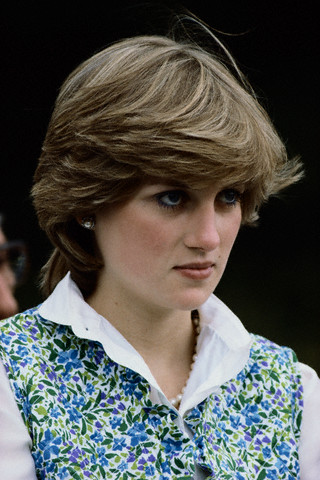
quoted from 

The Duchess of York’s Toe Scandal

Sarah Ferguson and Prince Andrew wave to the crowds following their 1986 wedding at Westminster Abbey, London.

“By 1992, the marriage between [British] Prince Andrew and Sarah Ferguson [Fergie] (the Duke and Duchess of York) was faltering. The Duchess was with various men including Texan multimillionaire Steve Wyatt, while her husband was away on royal duties. They agreed to separate in January 1992, but in August 1992, surreptitiously taken photographs of John Bryan, an American financial manager — apparently in the act of sucking on the toes of a topless Sarah in Southern France — were published in the British tabloid The Daily Mirror.

John Bryan sucks the toes of a topless Duchess of York, August, 1992, the Daily Mirror.

“The Duchess was at Balmoral [Scotland] with the rest of the Royal Family when the story broke. Prince Philip handed her a copy of the paper and quipped “there but for the grace of God go I.” (Notoriously picky Duke of Edinburgh liked Sarah as much as he detested Diana). The Queen was less amused; the Queen’s private secretary told the Duchess that she might feel better if she left immediately to London, effectively banishing her from the royal household. She would never be reinvited back to Balmoral until 2008. The only feeble defense both Fergie and John Bryan could muster up was that he hadn’t been sucking her toes, he was simply kissing the instep of her foot.”

Read Full Post »

Diana, Princess of Wales

The late Diana, Princess of Wales (1961-1997), once remarked that, in marrying Prince Charles and having two sons with him, she had genetically given the British Royal family “chins.” She felt that she had a very prominent chin and that the Royal Windsors were lacking in this facial feature. Her sons, Princes William (b. 1982) and Henry (b. 1984), known as “the Heir and the Spare,” are in line for the British throne.

Queen Elizabeth II is shown wearing a lime green suit in this 1960s era photo with husband Prince Philip, the Duke of Edinburgh, and their four children, l to r: Andrew, Edward, Charles, and Anne.

Tragically, Diana didn’t live to see her boys grown into tall, strapping fellows setting new records not for chins but for height. This genetic trait was likely passed down to them through Diana’s Spencer family and their grandfather Prince Philip, the Duke of Edinburgh, who was 6′ at his prime. Princess Diana, at 5’10” & 3/4″, was almost 2  inches taller than her former husband.


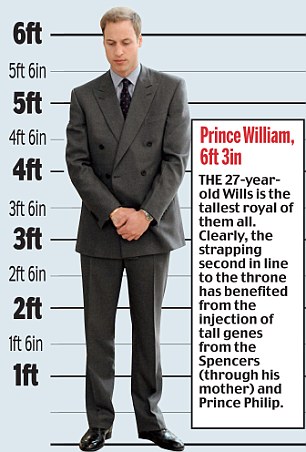
At 6’3″, Prince William of Wales, second in line for the British throne, is set to become the tallest monarch in history. His brother, Prince Henry of Wales (known as Prince Harry), is right up there with him, measuring in at 6’2″.

The Great Seal of Edward I who served as the British monarch from 1272-1307

The record for the tallest British monarch has been held by Edward I, 6’2″, known as “Longshanks” for his long legs. An expert horseman, he took the throne in 1272.

More modernly, though, the British monarchs have erred on the short side. Queen Elizabeth II, who took the throne in 1953, is only 5’4″. Her great grandmother Queen Victoria, who reigned from 1837-1901, was even more petite. She was only 5 feet tall and very stocky. At her death in 1901, Queen Victoria boasted a 50″ waist.

Queen Victoria was quite stout. With her afternoon "cuppa" tea, she fancied a sponge cake slathered with jam and whipped cream. This classic (high-calorie) British cake is known as the "Victoria Sponge."

Should Prince William decide to marry his long-time girlfriend, the 5’10” Kate Middleton, their children likely would be taller than the average royal.

Kate Middleton (black hat) is shown with Prince Harry of Wales and Camilla, Duchess of Cornwall (white hat), at the June 16, 2008 installation of Kate's boyfriend Prince William of Wales in the Order of the Garter.

Here’s how the current royals and their significant others measure up:

Men ———————————– Ladies
Prince William (6ft 3in) ——– Kate Middleton (5ft 10in)
Prince Harry (6th 2in) ——— Chelsy Davy (5ft 8in)
Prince Philip = (5ft 11in) ——– The Queen (5ft 4in)
Prince Charles = (5ft 9in) ——- Camilla, the Duchess of Cornwall (5ft 8in), Diana (5ft, 10 & 3/4 in)

Source: Article Daily Mail

Read Full Post »

Britain's Princess Diana and Prince Charles wave to the cameras and onlookers following their fairytale wedding in July 1981 at St. Paul's Cathedral, London. To everyone, the smiling royals in the glass coach seemed like a dream couple.

Princess Diana‘s wedding tiara gave her a “cracking headache” said her brother, Charles Spencer, in an interview on the American program, “Entertainment Tonight.” 

Charles, the 9th Earl Spencer, described how he was able to spend some time with Diana, Princess of Wales, after her marriage to Britain’s Prince Charles on July 29, 1981. The royal wedding at St. Paul’s Cathedral in London was watched by an estimated global TV audience of 750 million. Spencer recalled being with his sister that memorable day: 

”In the evening we all went to a sort of semi-private party and she was there and she seemed incredibly relaxed and happy and I just remember she had a cracking headache too, because she wasn’t used to wearing a tiara all morning,” said the aristocrat during the interview posted on the U.S. show’s website. 

Diana’s wedding tiara – which is known now as the “Spencer Tiara” – is a Spencer family piece with an elaborate design of stylized flowers decorated with diamonds in silver settings. Princess Diana (1961-1997) wore this and other tiaras (or coronets) many times during her lifetime. 

Princess Diana wears the Spencer tiara at a 1983 dinner banquet in New Zealand.

Earl Spencer added that he still has a piece of his sister’s wedding cake with her name on it. 

Readers: You might also enjoy “Waity Katie and ‘The Ring.'” 

For more posts on the British Royal Monarchy, scroll down the right sidebar to “Categories”/”Royalty.”

Jewelry Lovers, you might try “Queen Victoria’s Tiny Crown” and “Queen Alexandra’s Royal Bosom.”

Read Full Post »

British royal Prince William of Wales and his girlfriend Kate Middleton at the 2009 Audi Polo Match

Is Prince William of Wales finally going to propose to his girlfriend of nine years, Kate Middleton? Tina Brown, Editor-in-Chief of The Daily Beast, says so. She predicts the engagement will be announced by Buckingham Palace on June 3 or 4 of this year.

Kate Middleton – known as “Waity Katie”  in the British press – has dated Prince William since they met in 2001 at the University of St. Andrew’s in Scotland. They have been together almost continuously, even living together. (1)

Woolworth's High Street Store in Great Britain anticipated a 2007 royal wedding between Kate Middleton and Prince William of Wales. They were so sure a ceremony was imminent that they unveiled designs for mugs, thimbles, mouse mats, and even sweets bearing a picture of the Prince and his sweetheart in 2006. Unfortunately, Kate and William broke up shortly after this announcement and Woolworth's was forced to scrap this line of merchandise. It is unlikely the product line will be revived as William no longer resembles the 2006 photo. He no longer sports a boyish look as his hairline has receded considerably since then.

Tina Brown’s column has caused a surge in speculation, Brown, the famous ex-Vanity Fair and ex-New Yorker editor and best-selling biographer of William’s mother, Princess Diana, is known to have excellent sources in Buckingham Palace, although the Palace has denied her prediction. Nevertheless, British tabloids like The Daily Mail went nuts thinking about a royal wedding in the future with headlines like,

“She’ll Wear Diana’s Tiara!”

Diana, Princess of Wales (1961-1997), wears her Cambridge Love Knot Tiara

Americans got feverishly excited, too. People magazine put William and Kate on the cover last month under the headline, “The Next Princess!” Inside, was a report that William was overheard calling Kate’s father “Dad” while they were all on a ski holiday in the French Alps in March 2010. (2)

(2) “A Date for William & Kate?” USA TODAY, May 13, 2010.

Readers: You might also enjoy “Princess Diana’s Wedding Tiara.”  For more posts on the British Royal Monarchy, scroll down the right sidebar to “Categories”/”Royalty.”

Read Full Post »

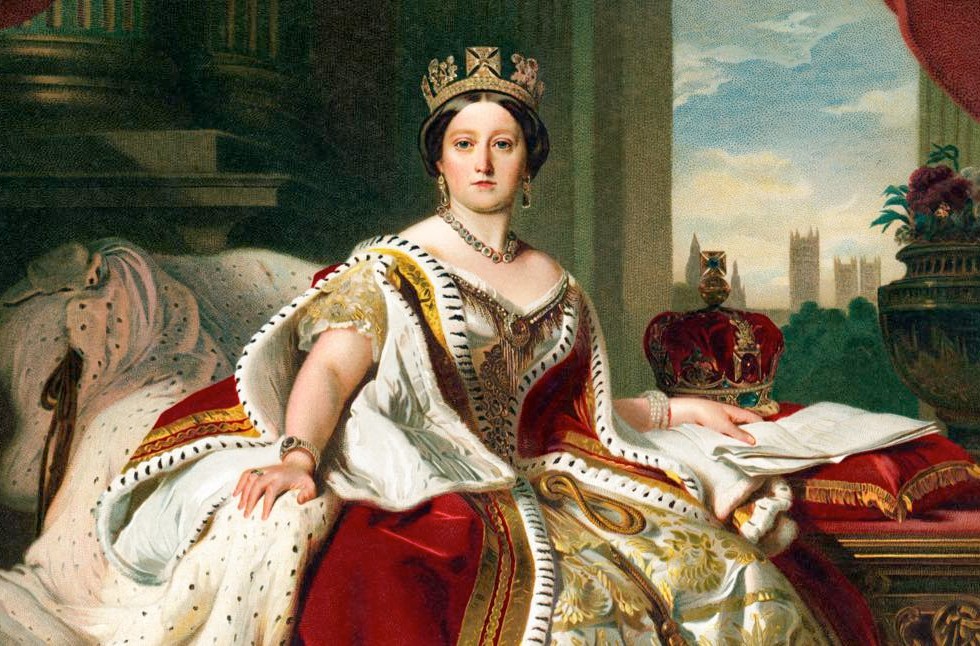
Queen Victoria at her Golden Jubilee, 1887. Note the tiny crown atop her mourning veil.

In my previous post, “Queen Alexandra’s Royal Bosom,” I mention that Queen Victoria refused to wear a crown to the Thanksgiving service at Westminster Abbey that was part of her Golden Jubilee celebration in June, 1887. She did, however, consent to wear a crown for her official Jubilee photograph (shown here), which we may assume she wore to the banquet celebrating her 50 years on the British throne. Fifty European Kings and princes and the American author Samuel Clemens (AKA Mark Twain) attended.

After her husband Prince Albert’s death in 1861, the Queen had largely disappeared from public view. She had vowed to publicly mourn her husband until her death and wear nothing but black widow’s weeds and her white lace mourning veil. In 1870, under government pressure, Victoria began to appear in public again. But she refused to wear her Imperial State Crown again, for several reasons. Chiefly, it was too big and heavy and was impossible to wear with her mourning veil.

The Imperial State Crown of Great Britain worn by Queen Victoria at her coronation. It includes a base of four crosses pattée alternating with four fleurs-de-lis, above which are four half-arches surmounted by a cross. Inside is a velvet cap with an ermine border. The Imperial State Crown includes several precious gems, including: 2,868 diamonds, 273 pearls, 17 sapphires, 11 emeralds, and 5 rubies.

Queen Victoria shown wearing the Imperial State Crown at her Coronation, 1837

Consequently, a new crown, a small one, was designed for the Queen. It sat atop her mourning veil. The Queen was satisfied and so was the government. Wearing the tiny crown atop her veil allowed her to look like both a widow and a queen.

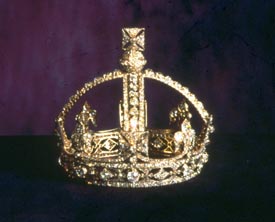
“The crown followed standard design for British crowns. It was made up of four half-arches, which met at a monde, on which sat a cross. Each half-arch ran from the monde down to a cross pattee along the band at the bottom. Between each cross pattee was a fleur-de-lis. However, because of its small size (9 centimeters across and 10 centimeters high) Victoria’s small diamond crown possesses no internal cloth cap. The crown was manufactured by R & S Garrard & Company.”
 

Queen Victoria's Small Diamond Crown created in 1870 measures 3.7 inches (9.9 cm) high and 3.4 inches (9 cm) in diameter. It was worn atop a widow's cap. The silver crown was made in 1870, using some 1,300 diamonds from a large necklace and other jewelry in the Queen's personal collection. Queen Victoria's Small Diamond Crown remains on show in the Jewel House in the Tower of London.

Read Full Post »

"The Landing of H.R.H. the Princess Alexandra at Gravesend, March 7, 1863," by Henry Nelson O'Neil, 1864.

When Princess Alexandra of Denmark arrived on English soil in 1863 to marry the Prince of Wales, the heir of Queen Victoria, she was the very picture of modesty. No jewelry was visible and she wore a handmade bonnet. Alexandra may have been Danish royalty, but she wasn’t rich. Matter of fact, her family had lived on handouts to get by. She was shy, kind, and very beautiful. Everyone loved her immediately.

Queen Victoria, 1873

Queen Victoria of Great Britain, 1873

When Alexandra joined the British royal family, over two years had passed since Queen Victoria‘s husband, Prince Albert, had died.  Yet Victoria was still plunged into deep mourning. Victoria had wished she had died with her beloved Albert. Upon his death, she had renounced all pleasures and vowed to wear dreary black crape dresses the rest of her life as a token of mourning. She spent many of her waking hours kneeling in Albert’s carefully-preserved bedroom, crying and pleading with God to help her. (See “Queen Victoria in the Blue Room with a Bust.”)

Alexandra discovered that Victoria had amassed an enormous jewelry collection.  But, after Albert’s death, the Queen had became convinced that excessive display of jewels awakened anti-monarchial feelings in the English people. Princess Alexandra tried to convince her to wear her pretty, glittering things but to no avail. Famously, Victoria refused to wear a crown to the Thanksgiving service honoring her 1887 Golden Jubilee. The Queen of Great Britain arrived at the state ceremony wearing a bonnet.

Whereas Victoria had renounced all pleasures, Princess Alexandra had just begun to live. She had grown up poor and now she was rich and the future Queen of England! She was not about to be sucked into Victorian mourning dress. Although her husband, “Bertie,” was a serial adulterer, Alexandra accepted his infidelity and got on with her life, moving with him from party to party with the artsy crowd. Dressing herself in fine jewels and frivolous clothes became her passion – and she indulged herself completely.

Queen Alexandra at her Coronation, 1902

Initially, Princess (later Queen) Alexandra adopted dog collar chokers, called a ‘collier de chien’ to cover a small scar on her neck. For state and formal occasions, though, she plastered herself from head to waist in necklaces, tiaras, ribbons, sashes, and brooches of pearls, diamonds, and other jewels. Her long strings of pearls became her signature look. Alexandra became quite popular and women copied her style and bearing. American tycoon Cornelius Vanderbilt, Jr., remarked that:

Queen Alexandra “possessed the world’s most perfect shoulders and bosom for the display of jewels.”
 

Readers: “Queen Victoria’s Tiny Crown” follows this post.

Read Full Post »

« Newer Posts - Older Posts »