Feeds:
Posts
Comments

Archive for the ‘POLITICS & GOV'T’ Category

Jackie Kennedy wears the famous pink suit in this 1962 photo. She is looking at plans for Lafayette Square.

President John F. Kennedy looked out the window of his Fort Worth, Texas, hotel suite. The November sky was dark and threatening. It looked like rain. Forecasters predicted cool weather. The president advised his wife Jackie to dress warmly for the long and demanding day and personally selected her oufit. He chose a pink wool suit with three-quarter-length sleeves and a blue underblouse. To it, Jackie added a pink pillbox hat and white gloves.   

Jackie, 34,  had worn the suit before – she called its color “raspberry” – and it was one of the president’s favorites.  He had told mutual friend Susan Mary Alsop that Jackie, his wife of ten years, looked “ravishing in it.” (1)   

President and Mrs. Kennedy at the White House, October 1962. Jackie Kennedy is wearing the pink wool Chez Ninon she wore in Dallas, November 22, 1963

Jacqueline Kennedy‘s pink suit was made in 1961 by the New York dress salon, Chez Ninon. It was a copy of a Chanel pink boucle wool suit trimmed with a navy blue collar. (1)   
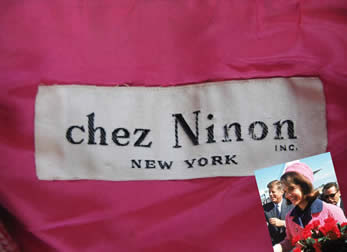
   

Jackie Kennedy was a style icon. People noticed what she wore. Kennedy critics were quick to pounce when Jackie wore Paris fashions. Jack urged his wife to buy American and she did. Such a move was both financially and politically savvy. The Chez Ninon knockoff cost between $800 and $1,000 compared to over $10,000 for a custom-made Chanel suit.  Plus, he and Jackie were in Texas with Vice President Lyndon Johnson and wife Lady Bird to officially kick off their 1964 presidential campaign. They had to minimize the fallout from Jackie’s expensive French taste.   

Jackie’s pink suit was a hit at the Fort Worth breakfast that morning. The president beamed at the attention she drew, noting that “nobody notices what Lyndon and I wear.” A short plane ride later, they were disembarking at Dallas Love Field to a promising reception. Jackie was presented red roses.   
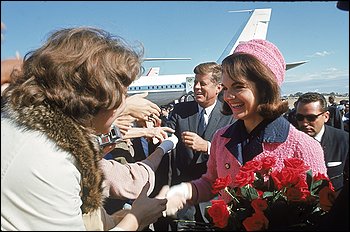
President John F. Kennedy and First Lady Jackie Kennedy arrive at Love Field in Dallas, Texas, on November 22, 1963.

The sun had come out and the day had become unseasonably warm. The Kennedys climbed into the back seat of the presidential limousine to begin the winding 11-mile route through downtown Dallas where the president was to speak at a Trade Mart luncheon. Texas Governor John Connally and wife Nellie got into the jumpseat in front of the Kennedys and behind the driver and two Secret Service agents.   

The presidential limo was a midnight blue 1961 Lincoln that had been flown in from Washington, D.C. Because the weather was so nice, the plastic bubble top had been removed and the bullet-proof side windows were rolled down. This is how President Kennedy preferred to ride. At 11:50 a.m., the 12-car motorcade with its motorcycle escort and Secret Service attendants left the airport “on its rendevous with fate.” It was November 22, 1963. (2)   

The crowds lined the parade route so thickly that the motorcade moved at a crawl of only 6-7 miles an hour. The president clearly loved the warm Texas welcome, smiling and waving at all the friendly faces.   

JFK and Jackie ride in the presidential limo through the streets of Dallas, November 22, 1963. Texas Governor John Connally sits up front.

The temperature was 76 degrees. The sun was blindingly hot. Jackie was wearing wool.  She shielded her eyes from the big Texas sun with her trademark sunglasses.   

The people shouted, “Jack, Jackie!” recalled Nellie Connally. “They seemed to want her as much as they wanted him.” She could hear Jack say to Jackie,” Take your glasses off….When you’re riding in a car like this, in a parade, if you have your dark glasses on, you might as well have stayed at home.”
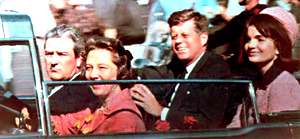
November 22, 1963: Up front, Texas Governor John Connally and wife Nellie ride with the President and Mrs. Kennedy through downtown Dallas.

Nellie Connally smiled to know that Texans were treating their president with such courtesy. She turned to him and said,   

Mr. President, you can’t say that Dallas doesn’t love you.” (3)

Thirty seconds later, at 12:30 p.m., three shots rang out. The 35th President of the United States was shot. As the car sped toward Parkland Hospital, Kennedy slumped in his wife’s lap, his blood and brain fragments staining her pink wool suit, gloves, stockings.  Jackie crawled out the back of the limo for help from the Secret Service riding in the car behind them.

In an image from the Zapruder film, a fatally-wounded President Kennedy slumps over as Secret Service agent Clint Hill leaps onto the president’s car and pushes Jacqueline Kennedy back.

At the hospital, the doctors worked feverishly to save the president but it was futile. President Kennedy was declared dead, his once vital body loaded limply into a coffin. Jackie accompanied his body to Dallas Love Field where it was loaded onto Air Force One to be flown to Washington.

In her bedroom on board the plane, Jackie’s personal assistant had laid out a fresh outfit for the First Lady. Despite urging from staffers and handlers to “clean up her appearance,” Jackie  refused to get out of her bloodied clothes. She shook her head hard:

No, let them see what they’ve done.”  

Just hours after her husband's assassination, widow Jackie Kennedy stands next to Lyndon Johnson on Air Force One as he is sworn in as the 36th President of the United States. Although her personal assistant laid out a fresh change of clothes on her bed aboard the plane, Jackie refused to change out of her blood-spattered clothing. Also aboard Air Force One was the casket carrying the body of President John F. Kennedy, age 46.

Somehow, that was one of the most poignant sights,” Mrs. Johnson later wrote, “that immaculate woman exquisitely dressed, and caked in blood.”  

At Andrews Air Force Base in Washington, D.C., JFK's brother Attorney General Bobby Kennedy meets Jackie Kennedy when she arrives on Air Force One with the coffin carrying her slain husband's body. Note Jackie's bloodstained suit. Her left leg is caked in blood.

It was not until 5 a.m. the next morning at the White House that Jackie took off the bloodied suit, bathed, and changed outfits. Her mother put the suit in a plastic bag and stored it in her house for many years.   

The suit was never cleaned and never will be. It sits today, unfolded and shielded from light, in an acid-free container in a windowless room somewhere inside the National Archives and Records Administration’s complex in Maryland; the precise location is kept secret. The temperature hovers between 65 and 68 degrees; the humidity is 40 percent; the air is changed six times an hour. (4)  

Meanwhile, the whereabouts of the pink pillbox hat remain a mystery. It has never been found.  Somewhere inside Parkland Hospital, the hat came off.  Jackie’s personal secretary, Mary Gallagher recalls:

While standing there I was handed Jackie’s pillbox hat and couldn’t help noticing the strands of her hair beneath the hat pin. I could almost visualize her yanking it from her head.”

What happened to the hat after that is unknown. Mary Gallagher lost track of it.

(1) Source   

(2) Source   

(3) Source   

(4) Source: The Los Angeles Times, Jan. 30, 2011. 

Readers: For more on Jackie Kennedy, click here.

Read Full Post »

The U.S. Secret Service provided security for Pope Benedict XVI at the Papal Mass in Washington, D.C., on April 17, 2008. Although the agents have no official uniform and can be seen wearing anything from tuxedos to blue jeans, they are often identified by their dark sunglasses, listening devices, and lapel pins bearing the agency's gold star logo.

The United States Secret Service uses code names to refer to the President of the United States, his family, other officials, and places. Originally, these code names were designed to protect sensitive communications, back in the day before restricted communications were routinely encrypted. Nowadays, there is no need to keep these names secret. Nevertheless, The Secret Service who guards the First Family and other U.S. officials continues to use the code names for clarity, brevity, and tradition. (1)

The U.S. Secret Service Star Logo. The U.S. Secret Service protects the President and First Family, other officials of the U.S. government, and visiting dignitaries.

General Code Names

President of the United States:  POTUS

First Lady of the United States:  FLOTUS

Vice President of the United States:  VPOTUS

The Obamas

Barack:  Renegade

Michelle:  Renaissance

Malia:  Radiance

Sasha:  Rosebud

The Bushes

George W.:  Tumbler

Laura:  Tempo

Barbara:  Turquoise

Jenna:  Twinkle

The Clintons

Bill:  Eagle

Hillary:  Evergreen

Chelsea:  Energy

The Bushes

George H.:  Timberwolf

Barbara:  Tranquility

The Carters

Jimmy:  Deacon

Rosalynn:  Dancer

Amy:  Dynamo

Secret Service agents respond to the assassination attempt on President Ronald Reagan by John Hinckley Jr. on March 30, 1981. President Reagan took a bullet in the abdomen but made a full recovery.

The Reagans

Ronald:  Rawhide

Nancy:  Rainbow

The Fords

Gerald:  Passkey

Betty:  Pinafore

The Nixons

Richard:  Searchlight

Pat:  Starlight

The Johnsons

Lyndon:  Volunteer

Lady Bird:  Victoria

Lynda Bird:  Velvet

Luci Baines:  Venus


A motorcade carries President John F. Kennedy and First Lady Jackie Kennedy through the streets of Dallas, Texas, on November 22, 1963. Texas Governor John Connally and wife Nellie ride in front of the Kennedys.

Secret Service agent Clint Hill stood on the running board of the car behind the Kennedy’s limo.
Agent Hill heard the first shot that hit President Kennedy. Mr Hill is the figure in the famous Zapruder film of the killing which shows him climbing onto the back of the president’s limousine. “I heard the first shot, saw the president grab his throat, lurch left, and I knew something was wrong,” recalled Hill in the book, The Kennedy Detail. Jackie Kennedy can be seen crawling out the back of the car onto the trunk to get help for her slain husband, slumped in the seat.

Agent Hill got in the back seat with Mrs. Kennedy and the president and shielded them with his body on the way to Parkland Hospital.

The Kennedys

John F.:  Lancer

Jackie:  Lace

Caroline:  Lyric

John Jr.:  Lark

Other Individuals

Queen Elizabeth II:  Kittyhawk, Redfern

Prince Charles:  Unicorn

Frank Sinatra:  Napoleon

Pope John Paul II:  Halo

Sarah Palin:  Denali

John McCain:  Phoenix

Places

The White House:  Castle

The Capitol:  Punchbowl


(1)  Source: Wiki “Secret Service Codename

Read Full Post »

May 6 1985: Princess Diana, Prince Charles and their sons Harry and William on board royal yacht Britannia in Venice.

It’s 1985. Prince Charles and Princess Diana have been married close to five years. He’s 37; she’s 24. They have two young and healthy sons. Charles and Di have everything. They are rich and famous and, by all rights, should be happy. They seem happy in most photos. But they are not. Their marriage is in trouble but it will be another 11 years before it crashes for good.

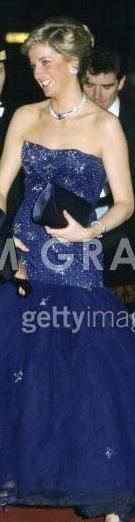
Princess Diana arrives at the Royal Opera House, London. Dec. 1985

It’s December – Christmastime – and the two of them are out on the town together in London. It’s a special night. They are seated at the Royal Box at the Royal Opera House at Covent Garden. It’s a VIP evening for “Friends of Covent Garden,” composed of skits and entertainment for special patrons. Silly things happen at this event – dancers sing, singers dance, and, occasionally, a celebrity might turn up on stage unexpectedly and wow the audience. Just the previous year, matter of fact, Charles and Di had done that very thing. They had performed a skit together – as Romeo and Juliet –  and the Prince had sung an ad jingle, “Just One Cornetto.”

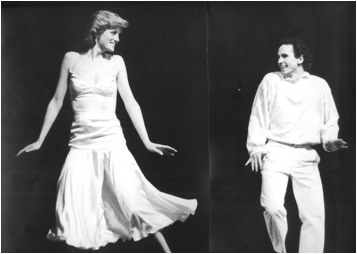
Back to December 1985. The show is drawing to a close. Imagine Charles’s surprise when, just two numbers before the end of the show, Diana slips from the Royal Box and, minutes later, emerges on stage. She is going to perform! She wears a slinky white dress and begins dancing seductively to Billy Joel’s “Uptown Girl.” 

Princess Diana and Wayne Sleep dance to Billy Joel's "Uptown Girl" at Covent Garden, December 1985.

Uptown Girl

She’s been living in her uptown world

I bet she’s never had a backstreet guy

I bet her mama never told her why

Diana – at 5’10” – towers over her dance partner, Wayne Sleep. At 5’2″, Sleep is the shortest dancer ever admitted into the Royal Ballet School. He recalled his pas de deux with the princess that night

The Prince nearly fell out of his chair, especially when [Diana] did the kicks over my head….I was worried she’d fall apart under the spotlight, but she totally carried it off. Not many people could handle being under such scrutiny in front of an insiderly audience on that huge Covent Garden stage. She showed natural star quality.” (1)

Everyone – except Charles – is thrilled by Diana’s performance. She receives a standing ovation and eight curtain calls. At a reception afterwards, Sleep recalled that Charles was aloof, making it embarrassingly clear that he disapproved of Diana’s performance (or was he just plain jealous because he wasn’t asked to participate?). Diana had rehearsed for weeks in secret and was performing just to please Charles. Again, her efforts fall short. Of course, we know now why she couldn’t please him. He didn’t need her. He had Camilla.

Where did Diana get the personal courage to perform a seductive dance in front of 2,600 people?  Well, thank Nancy Reagan for giving Di the opportunity to shine at something she was good at. Just a month before, Diana had danced with John Travolta (at Nancy’s request) at a gala White House dinner given by the Reagans, dazzling Washington and the world with her youthful beauty, dancing grace, and sex appeal.

John Travolta and Princess Diana dance in the East Room of the White House, November 1986. Standing up to welcome Prince Charles and Princess Diana, President Reagan, in after-dinner remarks, flubbed the princess's name. Standing up in welcome, the president offered a toast to Prince Charles and "his lovely lady, Princess David."

By the time she returned to London, everyone was abuzz with Diana’s splashy American visit:

The Princess of Wales had become a walking monument – British opinion polls said she was the country’s greatest tourist attraction….One national survey calculated that from 1983-1985, she had generated $66.6 million in revenue from magazines, books, and tourists.” (2)

“Shy Di looking up through the eyelashes” had gone off to America but Confident Di had returned in her place. She made Buckingham Palace nervous – and with good reason. It could no longer control her.

(1) Brown, Tina. The Diana Chronicles. New York: Doubleday, 2007.

(2) Kelley, Kitty. The Royals. New York: Warner Books, Inc., 1997.

Readers: For more on Princess Diana and the British Royal Family, click here.

Read Full Post »
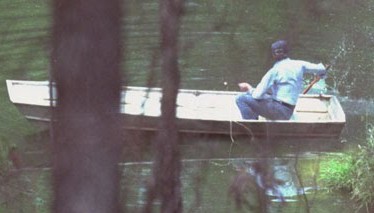
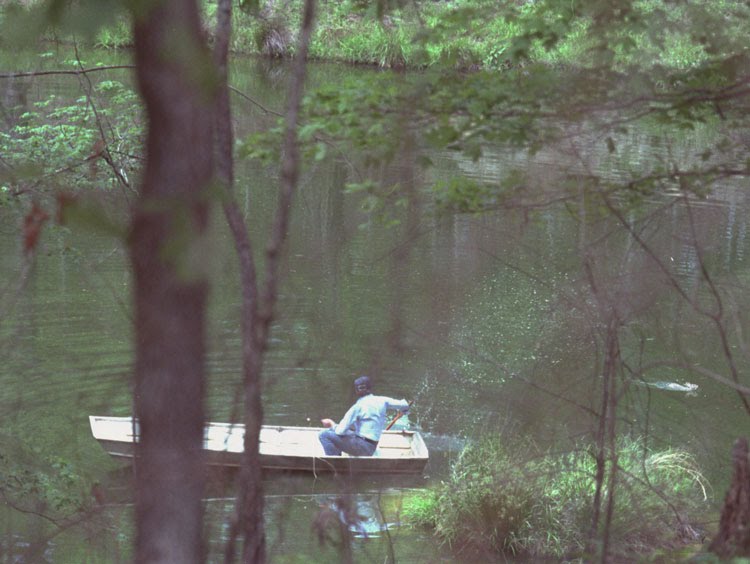
It was late in the day on April 20, 1979, and U.S. President Jimmy Carter was enjoying a needed break from the pressures of the presidency. While vacationing at his farm in Plains, Georgia, he decided to take in some fishing and relax. Solo, he pushed off in a canoe onto a pond that was on his property.   

Jimmy Carter fishing solo on a pond on his property, April 20, 1997


All was peaceful until he noticed a large animal swimming toward his boat. As it swam closer, the president could see that it was a rabbit. But this rabbit was no sweet little cottontail bunny. This swimming rabbit was one of those big, “splay-footed things that we called swamp rabbits when I was growing up,” said Carter’s press secretary, Jody Powell, who also hailed from Georgia. (1)   

Swamp rabbits swim in the waters of the Southern United States. They are also incredibly fast runners, reaching speeds of up to 45 m.p.h., running in a zigzag pattern to escape enemies. Although they weigh generally between 4-6 lbs., some swamp rabbits are reported to weigh as much as ten pounds.


Something was clearly wrong with this particular swamp rabbit. It made strange hissing noises, flared its nostrils, and gnashed its teeth. Not only that, but it soon became alarmingly clear to Carter that the wet and angry animal was determined to climb inside the boat with him! 

Carter, in great distress, used his oars to shoo the obviously deranged animal away from the boat, splashing water at it. The animal eventually was deterred from climbing in with the president and swam away. Meanwhile, a White House staffer on shore snapped a photograph.   

President Jimmy Carter is photographed fishing on a pond on his farm in Plains, Georgia, on April 20, 1979. In the far right corner, there is a ripple of water indicating a swamp rabbit swimming away from the President's canoe.


When Carter returned to the White House, he shared his story with a number of his aides, some of whom refused to believe that swimming rabbits exist. Carter ordered a print of the image and also an enlargement to prove his tale.  

a close-up of Jimmy Carter's swamp rabbit   

Unfortunately, months later, Jody Powell casually decided to share this mildly-amusing presidential yarn with a reporter for the Associated Press. The press went wild with the story. On August 29, 1979, The Washington Post ran it on the front page titled, 

“President Attacked by Rabbit.”

Because the White House refused to release a photo of the incident,  the newspapers came up with their own illustrations – spoofs. The Washington Post used a cartoon parody of the “Jaws” movie poster labeled “PAWS.” 

The New York Times reported that the President beat back the rabbit with his oars. It became the president’s nightmare. For a full week, Carter had to explain his behavior at town hall meetings, press conferences, and meetings with editors. Carter repeatedly stated that he had not used his oars to beat the animal, but to splash water at him to back away.   

The rabbit dust-up was incredibly damaging to the Carter presidency and was used by his political opponents to defeat him in the 1980 election. Carter biographer Douglas Brinkley says,  

It just played up the Carter flake factor…. I mean, he had to deal with Russia and the Ayatollah and here he was supposedly fighting off a rabbit.”


A cartoon spoofs President Jimmy Carter fighting off a killer rabbit.


(1) Powell, Jody. The Other Side of the Story. 1986 

READERS: For more on Jimmy Carter, click here.

Read Full Post »


U.S. President Jimmy Carter (right) visits Buckingham Palace in May, 1977, and is greeted (l to r) by Queen Elizabeth II, Prince Philip, and the Queen Mother. Let me just point out that both Elizabeth and her mum are carrying purses. The Queen is never without her purse. The Queen Mum's purse blends so nicely with her frock they look cut from the same cloth! Although the Queen wears both gloves, her mother has taken off her right glove, presumably to shake Carter's hand - but he has something else in mind for her! (Lisa's History Room)

U.S. President Jimmy Carter only visited the British Royal Family once during his presidency but, in that short time, he made a very strong impression. In London for an economic summit in May, 1977, Queen Elizabeth II invited Carter to Buckingham Palace. While meeting her and other members of the royal family, Carter broke protocol and kissed the Queen’s mother right smack on the lips. 

Carter’s Southern hospitality did not sit well with the Queen Mother (1900-2002) who snapped,

Nobody has done that since my husband died.”(1)

Her husband, King George VI, died in 1952.

The Queen Mother took an instant dislike to the former peanut farmer from Georgia. Later, she wrote about the unpleasant encounter. Evidently, she had seen Carter leaning in for a smooch and had tried to dodge his ample lips:

 I took a sharp step backwards – not quite far enough.” (2)

While there are no obligatory ways to greet the Queen and the royal family, often a man bows his head or simply shakes hands. An American is not required to bow or curtsy. Planting a kiss on the royal lips is definitely out of bounds!

(1) www.mirror.co.uk

(2) Shawcross, William. The Queen Mother: The Official Biography. 2009

READERS: For more posts on the British Royal Family, click here.

For more on Jimmy Carter, click here.

Read Full Post »

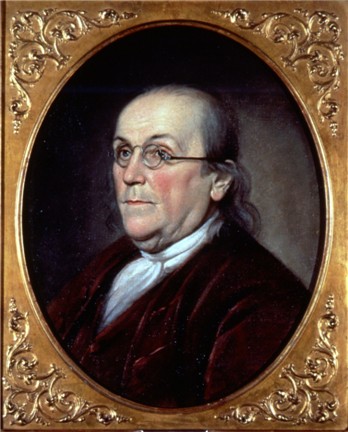
"Benjamin Franklin," by Charles Willson Peale, 1785. Franklin was alive when Peale painted this portrait; he would live another 5 years, dying in 1790 at the age of 84. Franklin wrote a mock epitaph for himself in doggerel verse. (Lisa's History Room)

At the age of 28,  Benjamin Franklin wrote this mock epitaph. (1) Over the years, he wrote different versions and passed them out to friends. 

The Body of

 B. Franklin, Printer;

Like the Cover of an old Book,

Its Contents torn out,

And stript of its Lettering and Gilding,

Lies here, Food for Worms.

But the Work shall not be wholly lost:

For it will, as he believ’d, appear once more,

In a new & more perfect Edition,

Corrected and amended

By the Author. 

It is interesting to note that Franklin (1706-1790) – Founding Father of the United States of America, foreign diplomat, statesman, author, soldier, scientist, author, inventor, printer – a true Renaissance man, a polymath – chose to refer to himself simply as a “printer” and liken his dead body to an old book:

“The Body of B. Franklin, Printer; Like the Cover of an old Book, Its Contents torn out, And stript of its Lettering and Gilding, Lies here, Food for Worms.”

Benjamin Franklin loved books. He was very smart. Soon after he learned how to talk, he taught himself how to read. It soon became his favorite pasttime. (2) But there were no lending libraries in his hometown of Boston. There were ten bookstores there, but books were expensive and hard to come by, as most of them came from Europe. And there were really no children’s stories. Benjamin’s father – a soap and candle maker – did not have many books at home, only serious religious diatribes and the Bible. No matter; Benjamin read them anyway. 

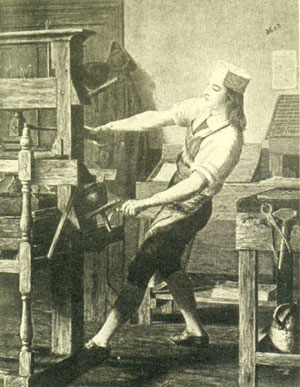
Engraving based on "The Young Franklin" by E. Wood Perry, showing Benjamin Franklin working a press in his brother's shop in Boston where he worked from 1718-1723.

Because Benjamin was so bookish, his father apprenticed him to a printer – Benjamin’s brother, James. At age 12, Benjamin reluctantly signed a contract to work for nine years, in exchange for room, board, and a little salary. Although he hated working for James, printing turned out to be Benjamin’s true calling. In the print shop, he came into contact with citizens who had private libraries in their homes. He made friends with these men and borrowed their books. He formed friendships with other “bookish lads.”

He also read books that were freshly printed in his brother’s shop. At the end of a workday, Benjamin often would take the new books home with him and stay up all night reading. The next day, he handed them over to customers, fresh and clean, none the worse for wear.

Benjamin read a book on vegetarianism and decided to become a vegetarian. In this way, he learned to eat cheaply –

“no more than a biscuit or a slice of bread, a handful of raisins, or a tart from the pastry-cook’s, and a glass of water…” (3)

 so he could spend part of his food allowance on books and thus build a book collection of his own. He wrote:

“From a child I was fond of reading, and all the little money that came into my hands was ever laid out in books.” (3)

At age 17,  Benjamin was tired of working for his brother James and ran off to Philadelphia, seeking a fresh start in a new city. He found work as a printer and formed a circle of friends who liked to argue and read books. The group was called the Junto. It was through the Junto that, in 1731 in Philadelphia, Franklin founded the first subscription library in America.

(1) Autograph ms: Yale University Library

(2) Adler, David A. B. Franklin, Printer. New York: Holiday House, 2001.

(3) The Autobiography of Benjamin Franklin.

Read Full Post »

Imelda Marcos (b. 1929), “one of the ten richest women in the world” (Cosmopolitan magazine, December, 1975)

In December, 1975, Cosmopolitan magazine named Imelda Marcos, the First Lady of the Phillippines, as one of the ten richest women in the world. It even went a step further and speculated that Imelda was perhaps the richest woman in the world, richer than Queen Elizabeth II of Great Britain.

Everyone knew Imelda was rich; she made sure of that. She had an insatiable desire for expensive things and flaunted them. No one at the time really knew where she got all the money that she spent so impulsively. She was, after all, unemployed and had no independent wealth. In addition, her husband, the dictator, Ferdinand Marcos, had made less than $5,000 a year for the last ten years in office.

Nonetheless, there was Imelda, spending $40,000 on a Honolulu shopping spree in 1974, without trying anything on. Her excess knew no limits and she spared herself no luxury:

“Another report had Imelda and a gaggle of friends demanding Bloomingdale’s in New York be closed for a private shopping extravaganza, then marching through the store pointing to desired items and saying, ‘Mine. Mine. Mine. Mine.’”(1) She was referred to by one sales clerk as ‘the Mine Girl.’

Imelda Marcos from a Vanity Fair interview, 2007

Imelda Marcos from a Vanity Fair interview, 2007

Responding to criticism of her self-indulgence and the spending of public money for high-profile projects that did nothing to alleviate the poverty of the Filipinos, Imelda remarked that is was her “duty” to be “some kind of light, a star to give [the poor] guidelines.”

By 1981, Imelda’s personal popularity was at an all-time high. She jetsetted around the globe, shopping and hobnobbing with celebrities such as the perennially-tanned American actor George Hamilton.

After having secured the Miss Universe Pageant for the Philippines in 1974 – which necessitated the rapid construction of the 10,000-seat Folks Art Center – Imelda continued to indulge her “edifice complex,” building 14 luxury hotels, a multimillion-dollar Nutrition Center, Convention Center, Heart Center and, in 1981, the infamous Manila Film Center.

Imelda Marcos designed the Manila Film Center after the Greek Parthenon, shown here.

Imelda wanted Manila to rival Cannes as a world film capital. At the cost of $25 million, Imelda approved plans for the Manila Film Center to be built to host an international film festival. Opening night was set for January 18, 1982. The project was grandiose and expensive; the building on Manila Bay was designed to look like the Parthenon.

Delays hampered the progress. As the deadline drew nearer, it required 4,000 workers, working in 3 shifts, around the clock, if the building was going to be ready.

Then, at 3 a.m. on November 17, the upper scaffold collapsed and sent workers falling into wet cement. A witness said that some of the workers were impaled on upright steel bars.

Imelda was contacted about the accident. She was told that the recovery of the bodies would take alot of  time – time, evidently, that Imelda didn’t want to give up. She ordered the construction to continue as planned and that the bodies – maybe as many as 169 – be covered with cement. It is believed that many of those who fell into the cement may have been buried alive.

The full story has never been told, as news crews, rescuers, and ambulance teams were barred from the scene for nine full hours, while the government, under martial law, prepared its official version of events, censoring all news and silencing all witnesses.

Despite all, the festival opened on schedule on January18, 1981, and had among its guests Brooke Shields, Franco Nero, Ben Kingsley, and Robert Duvall. The first film shown in the theater was the tasteful bioepic, “Gandhi.”  Unknowingly, the stars partied atop a mausoleum of dead workers.

Brooke Shields (b. 1965) was only 16 years old when she traveled to Manila for the international film festival as the guest of First Lady Imelda Marcos.

“During opening night, Imelda ‘strode on stage in a Joe Salazar black and emerald green terno with a hemline thick with layer upon layer of peacock feathers.’ “Some said there were diamonds embedded in the skirt.

The next year, as a result of the accident scandal, the government withheld $5 million in festival funding. Imelda was in a fix. She had to pay for the festival somehow, so she ran pornography films in the festival’s second and, understandably, last year.

(1) Klaffke, Pamela. Spree: A Cultural History of Shopping.

Readers: For more on Imelda and Ferdinand Marcos on this blog, click here.   

A close-up of Imelda Marcos looking into a gold-plated compact mirror, her first name encrusted in diamonds. Called the ‘Steel Butterfly,’ Imelda Marcos was the beautiful wife and confidante of Philippine dictator Ferdinand Marcos. The Marcos regime (1965-86) was marked by notorious corruption, political repression, and financial improprieties of the highest order.

For other resources, click here.


Read Full Post »

J

Justine Lévy, the French author of "Nothing Serious" (titled "Rien de Grave" in France,) a thinly-veiled fictional account based on Ms. Lévy’s bad encounter with husband-stealer Carla Bruni, whom she calls "The Terminator."

“On Wednesday evening, Sept. 21, 2005, the designer Diane von Furstenberg hosted a cocktail party in honor of Justine Lévy, the author of Nothing Serious (titled Rien de Grave in France), a roman à clef based on Ms. Lévy’s recent, sensational personal life.

Ms. Lévy, 31, is the dewy daughter of the French celebrity-philosopher Bernard-Henri Lévy, and her book whipped up quite a scandal in France, illuminating certain universal truths about men, women and sex, and even jostling The Da Vinci Code from the best-seller list in the process.

…Ms. Lévy had a rather tragic encounter with the supermodel-cum-chanteuse Carla Bruni—the Angelina Jolie of Europe.

Ms. Lévy was married to a rising philosopher named Raphaël Enthoven, who was the son of her father’s best friend, Jean-Paul. She had a late-term abortion at the insistence of her career-obsessed husband and went through a messy two-year addiction to amphetamines.

That was before Ms. Bruni arrived on the scene. Ms. Bruni had somewhat of a home-wrecking reputation and was credited in the press with causing Mick Jagger’s split from his wife. In 2003, she remade herself into a pop singer and won the 2004 Victoires de la Musique in France.

Carla Bruni sings at the 2004 Victoires de la Musique in France

She was also, at one point, the mistress of Ms. Lévy’s father-in-law. She dumped the father for the son [Raphaël], shattering Ms. Lévy’s Raphaël Enthoven Jr. were married and have a son, Aurélien, born in 2001.]

Carla Bruni, former husband Raphaël Enthoven, and their son, Aurélien, circa 2003-2004

Nothing Serious, …published … by Melville House, is a fictionalized version of this story, with characters thinly disguised through pseudonyms. Of the Ms. Bruni–type character, the book’s femme-bot ‘Paula,’ Ms. Lévy writes:

‘I thought she was beautiful and dangerous with that immobile face, as if sculpted out of wax, when she smiled her bones sort of moved to reveal her teeth …. I thought she was beautiful and bionic, with the look of a killer,”’referring to her as the ‘Terminator.”

…(of Bruni, Lévy said):

 ‘If I see her, I kill her.’ “(1)

(1) Kolhatkar, Sheelah.  “It’s A Chattefight As Novelist Levy Nips Carla Bruni”. The New York Observer, October 2, 2005.

Read Full Post »

Italian model Marpessa, Prince Dimitri of Yugoslavia, Carla Bruni, and Cindy Crawford at a Versace gala, 1992. Photo: Marina Garnier

Back in 1992, Carla Bruni (b. 1967) – First Lady of France, Italian heiress, international supermodel, singer – was romantically linked to Rolling Stones rocker Mick Jagger.

Jerry Hall and Mick Jagger

Jerry Hall and Mick Jagger

At the time, Jagger was married to supermodel Jerry Hall, who blamed Carla for the breakup of her marriage.

“Hall is said to be so jealous of Bruni that at a rock concert in London this summer she poured a mug of beer on Jean Pigozzi’s head and drove him from the backstage V.I.P. area, accusing him of having entertained Mick and Carla at his Cap d’Antibes compound.” (1)

Nevertheless, when interviewed by Bob Colacello of Vanity Fair that November, Bruni vigorously denied having an affair with Mick, although the press and close friends confirmed the affair.

At the time of the interview, Carla was flying high as an international supermodel, making over a million dollars a year. She had been on the covers of Harpers & Queen, Italian Elle, and Marie Claire, and was seen that month gliding down about 70 runways at the Paris, Milan, and New York ready-to-wear collections.

The video clip below shows Carla Bruni (Sarkozy) on the runway 1991-1995. Fashion designers featured include Dior, Versace, Chanel, Chantal Thomas.

Before Jagger, Bruni had been linked romantically linked to Donald Trump (when married to Marla Maples) and Eric Clapton.

Carla Bruni and Eric Clapton at a benefit for rain forests about 1992.

Clearly, the publicity had not hurt her career, Bruni confessed to Vanity Fair:

“‘A knife has two sides, the good side and the bad side. The good side is that the publicity is going to bring me more work and more money. The bad side is that it hurts….

Maybe I can get a subscription to scandals. Once a year. Every time my modeling rate goes down. Whom am I going to get next year? Hmmm.'”(1)

(1) Colacello, Bob.  “La Dolce Carla.” Vanity Fair, November, 1992.

Readers: For more on Carla Bruni, click here.

Read Full Post »

Carla Bruni and Arno Klarsfeld at a 1995 Gianni Versace show.

First Lady of France Carla Bruni-Sarkozy was raised as the daughter of Italian concert pianist Marisa Borini and industrialist and classical composer Alberto Bruni-Tedeschi. However, in a 2008 interview published in Vanity Fair magazine, Bruni-Sarkozy revealed a bombshell: Her biological father is not really Bruni-Tedeschi.

Carla found out about her illegitimate birth in 1996, at age 28, when her legal father, Bruni-Tedeschi, was gravely ill. He summoned Carla to his deathbed and spilled the long-kept secret:  Genetically, he revealed, Carla was not his daughter. Rather, he went on, she is the love child born of an affair his wife conducted for six years with a man half her age. Carla’s biological father is the Italian-born, Brazilian grocery magnate Maurizio Remmert, who, as a young classical guitarist, met Marisa Borini when the two played in a quintet together.

How did Carla react to the news?

 “It was not a shock, and that is how I knew it was true, because I felt calm when he told me that,” says Carla. “I think lies are toxic for children, much more than a bad truth. Sometimes lies, when you are growing up, make you walk in a funny way to adapt. But I felt relieved. Isn’t it strange? I stopped feeling weird.”

Carla Bruni with mother Marisa Borini

Although Bruni-Tedeschi asked her not to tell her mother of their conversation, Carla did anyway, confronting her mother about a year later, after her father’s death. Her mother confirmed the truth, saying:

“What did you expect me to do? Go into the nursery to announce this to you?”

(That should tell us a little bit about Marisa, the mother….)

Carla Bruni's 2 millionnaire dads: Alberto Bruni Tedeschi (left) said on his deathbed that Maurizio Remmert (right) is Carla's real dad.

In 2008, Carla’s biological dad Remmert broke his 40-year silence on the matter and confirmed that he is Carla’s real dad. Remmert lives in São Paulo, where he is a grocery magnate, and Carla is in frequent contact with him. Since learning the painful truth, Carla has been through years of therapy.

Also check out these related posts:

“Carla Bruni Sings at Nelson Mandela Birthday Concert” and “Carla Bruni, Homewrecker?”

Read Full Post »

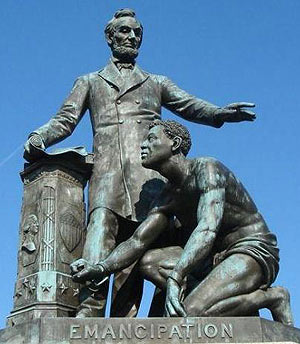
Freedmen’s Monument, Lincoln Park, Washington, D.C.; sculptor, Thomas Ball. The sculpture was funded solely from freed slaves, primarily from African-American Union veterans, to pay homage to the American president who had issued the Emancipation Proclamation, thus liberating them from bondage in the Confederate States. The statue was dedicated on April 14, 1876, 11 years after Abraham Lincoln's assassination by the Confederate rebel John Wilkes Booth. Abolitionist and former slave Frederick Douglass delivered the dedication speech.

Oration in Memory of Abraham Lincoln

Frederick Douglass delivered a speech at the unveiling of the Freedmen’s Monument in Memory of Abraham Lincoln at Lincoln Park, Washington, D.C., on April 14, 1876. This is the conclusion of what Douglass said to the crowd:


“Fellow-citizens, the fourteenth day of April, 1865, of which this is the eleventh anniversary, is now and will ever remain a memorable day in the annals of this Republic. It was on the evening of this day, while a fierce and sanguinary rebellion was in the last stages of its desolating power; while its armies were broken and scattered before the invincible armies of Grant and Sherman; while a great nation, torn and rent by war, was already beginning to raise to the skies loud anthems of joy at the dawn of peace, it was startled, amazed, and overwhelmed by the crowning crime of slavery–the assassination of Abraham Lincoln. It was a new crime, a pure act of malice. No purpose of the rebellion was to be served by it. It was the simple gratification of a hell-black spirit of revenge. But it has done good after all. It has filled the country with a deeper abhorrence of slavery and a deeper love for the great liberator.

Had Abraham Lincoln died from any of the numerous ills to which flesh is heir; had he reached that good old age of which his vigorous constitution and his temperate habits gave promise; had he been permitted to see the end of his great work; had the solemn curtain of death come down but gradually–we should still have been smitten with a heavy grief, and treasured his name lovingly. But dying as he did die, by the red hand of violence, killed, assassinated, taken off without warning, not because of personal hate–for no man who knew Abraham Lincoln could hate him–but because of his fidelity to union and liberty, he is doubly dear to us, and his memory will be precious forever.”

Abolitionist and former slave Frederick Douglass, daguerrotype, 1855. Douglass recruited black men to serve in the Union Army during the Civil War.

Readers, I’ve posted many articles on Abe Lincoln. Scroll down the right sidebar to Categories/People/Abraham Lincoln for more! Enjoy.

Also on this blog: “Frederick Douglass, An American Slave.”

Read Full Post »

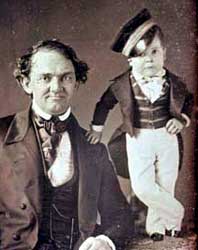
Showman P.T. Barnum (l) with his protegee, "General Tom Thumb" (born as Charles Sherwood Stratton). Daguerrotype by Samuel Root, 1850

The best known of circus pioneer P.T. Barnum‘s performers was Charles Sherwood Stratton (1838-1883), also known as General Tom Thumb. Stratton weighed 9 lbs. 8 oz. at birth, a bouncing baby boy for the time, but stopped growing at six months. When Barnum discovered him at the age of five, Stratton weighed only 15 lbs. and was 25 inches tall. 

“The boy barely came up to the showman’s knees!” (1) 

Barnum wasted no time signing up the boy as a sideshow attraction. His parents happily rented out their child for $7 a week plus room, board, and traveling expenses. Barnum installed the Strattons in a fancy New York City apartment above his museum of human curiosities. Barnum then began transforming Little Charlie into an international celebrity he christened “General Tom Thumb,” recalling the tiny fictional knight of King Arthur’s round table. The knight was so small, he rode a mouse and battled spiders. 

1844 stereograph depicting General Tom Thumb as Napoleon. Although "Tom" was really six at the time, P.T. Barnum promoted him as a 13-year-old.

Barnum taught the little dwarf to dance, sing, and tell jokes while dressed in elaborate costumes as Cupid, Napoleon, and Frederick the Great. At five, Tom learned to drink wine and at seven he took up cigar smoking. Barnum billed Tom Thumb as the “smallest man alive.”  

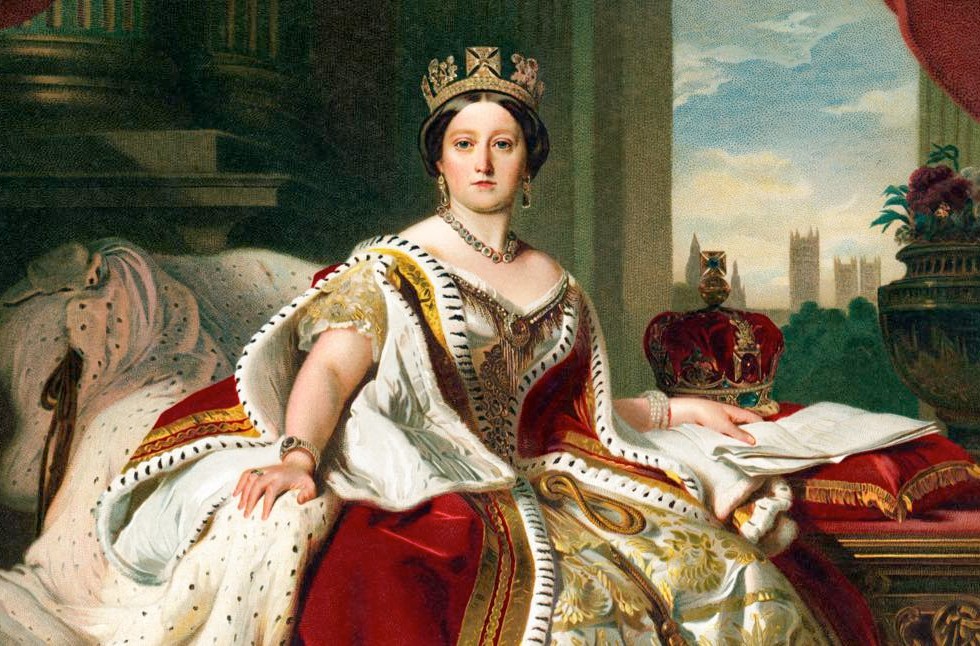
In 1844, Barnum took his young protege on a much-publicised European tour debut. Tom Thumb was a huge sensation, appearing before the crowned heads of Europe and visiting Queen Victoria not once, but twice. Audiences were enchanted with the man-boy whose charm combined innocence with pomposity. Over time, Tom made so many visits to royalty that Barnum had a special carriage built for him. 

“Only 11″ high, it was painted blue and lined with silk. Drawn by ponies only 28″ tall, and driven by children dressed in livery, it caused a sensation wherever it went.” 

Years went by and the money from Tom Thumb’s tours made him a rich man. “The Man in Miniature” moved to a specially-designed mansion for him and his parents in his hometown of Bridgeport, Connecticut. 

Lavinia Warren (1841-1919), photo c. 1855-1865

It was said that, by the age of 19, Tom had been kissed by a million and a half girls.Soon, though, the United States was plunged into the Civil War and Tom wanted more than just kisses from strangers. He began looking for a wife. He found her in the diminutive form of another little person, the charming and very beautiful Lavinia Warren

On February 10, 1863, the two were married at Grace Episcopal Church in New York City. The wedding was front page news. Billed as “the fairy wedding,” it was the social event of the season. People clamored for invitations, yet only two thousand people were invited. 

"The Fairy Wedding" of General Tom Thumb (Charles Stratton) and Lavinia Warren. This is a reenactment of the ceremony staged by photographer Mathew Brady after the Feb. 10, 1863 event.On the left in each picture is the best man, George Washington Morrison Nutt, known as Commodore Nutt, who had courted Lavinia unsuccessfully; Tom Thumb; Lavinia, and Minnie Bump AKA Minnie Warren, Lavinia's younger and even more petite sister


As Tom and Lavinia made their way up the center aisle to the altar, only guests seated along the aisle could see them. Once they arrived at the chancel, women stood on tiptoes and a few climbed on chairs to witness the ceremony. Afterwards, P.T. Barnum staged a reception for the newlyweds at the Metropolitan Hotel. Barnum charged $75 a ticket. Although there was a demand for 15,000 tickets, only 5,000 were sold. 

At the reception, the Strattons stood on a piano to receive their guests. Later on their honeymoon, they traveled to Washington, D.C., to the White House, where President Lincoln gave them a fancy party. In the course of the evening, the president told General Tom Thumb that he had put him completely in the shade, as he [the General] was now the center of all attention. 

(1) Fleming, Candace. The Great and Only Barnum: The Tremendous, Stupendous Life of Showman P.T. Barnum. New York: Schwartz & Wade Books, 2009.

Read Full Post »

Jackie and President Jack Kennedy land at Orly Airport, Paris, on May 31, 1961

It was May 31, 1961, when Air Force One, carrying  American President John and First Lady Jackie Kennedy, landed on the tarmac at Orly Airport in Paris. The president was less than five months into his term of office and this was his first European stop. The Kennedys were greeted by French President Charles DeGaulle and Madame DeGaulle. The contrast between the trim and stylist Americans and their “grizzled” counterparts was striking.

“As soon as the crowds pressed against the airport fences spotted Jackie in her navy-blue silk suit and black velvet pillbox hat, they broke into a rhythmic chant: ‘Vive Jacqui! Vive Jacqui!’ (1)

First Lady Jackie Kennedy is greeted warmly by Parisians on May 31, 1961. Her style was understated: a wool suit, double strand of pearls, and her trademark pillbox hat. The French were captivated by "Zhak-kee."

Hundreds of thousands of people followed their motorcade through the streets of Paris, waving little French and American flags as the open limousine carrying Jack and DeGaulle passed by. When the second car appeared, carrying Jackie and Madame DeGaulle, the crowd sent up a wild roar.  Later, during an official luncheon at the Palais de L’Elysée, Jackie chattered away in French about Louis XVI, the Bourbons, and French geography. DeGaulle turned to Jack Kennedy and said:

‘Your wife knows more French history than any Frenchwoman!’ [He then] turned back to Jackie and did not take his eyes off her for the rest of the meal.” (1)

The Hall of Mirrors at Versailles

The next night was the big event of the three-day visit: a candlelit supper in the Hall of Mirrors at the Palais de Versailles. Jackie wanted to look extra good. But to look good, Jackie had to “feel good” – and Jackie didn’t.  She suffered from migraines and depression since her C-section 6 months earlier.  Jack didn’t feel good either. His back pain was  agonizing.  That’s why, on this trip to Europe, Jack had brought along not just his extra-firm horsehair mattress but New York physician Max Jacobson. Presidential photographer and friend Mark Shaw had referred President Kennedy to Dr. Jacobson. Jacobson’s “miracle injections” instantly stopped Jack Kennedy’s pain. Jack didn’t know what was in the shots – only that they worked.

First Lady Jackie Kennedy wore this graceful Givenchy gown to the June 1, 1961 dinner at the Palace of Versailles.

The night of the Versailles dinner, Max visited Jack Kennedy at the Palais des Affaires Estrangères. Jack occupied a suite of rooms called “the King’s Chamber” in the elegant 19th Century palace on the Quai d’Orsay. The president soaked his back in “a gold-plated bathtub the size of a pingpong table” (2) then Max gave him his customary injection. Max then ambled down the long hallway to the Queen’s Chamber and was admitted to Jackie’s bedroom.

“Jackie sat in front of a mirror, being fussed over by Alexandre, the famous Parisian hairdresser, and a bevy of his assistants….In another part of the room, Jackie’s maid was laying out two different gowns for the evening – one an American design by Oleg Cassini, and the other a French creation by Hubért de Givenchy. Earlier, Jackie had planned to wear the Cassini [Jack preferred her to wear American clothes], but then she was not so sure.”   (2)
 

Alexandre finished with Jackie’s hair and left the room so she could slip into her gown. But first Jackie motioned to Max. She was ready for her shot. The short, dark-haired man with the red cheeks and German accent reached into his black doctor’s bag and withdrew a syringe.

“He injected his magic elixir into her buttock. She was ready for Versailles. She took one last look at the two ball gowns hanging side-by-side…and chose the one she knew would attract the more favorable reaction from the French press [and play up her French bloodline]. She slipped into the Givenchy….” (2)

Jackie Kennedy with French President, Charles de Gaulle, June 1, 1961

Jackie Kennedy dazzled French President Charles DeGaulle at this June 1, 1961, dinner in the Hall of Mirrors at the Palace of Versailles. 150 guests ate a 6-course dinner served on Napoleon's gold-trimmed china. Jackie sported an elaborate topknot with a diamond tiara. Her rhinestone-studded white satin gown with embroidered bodice was by French designer Givenchy.

Jackie dazzled everyone at the dinner, and it is no wonder. Dr. Jacobson’s shots were a mixture of amphetamines, vitamins, painkillers, and human placenta. (3)  The mysterious physician referred to his particular brand of therapy as “miracle tissue regeneration.”

“You feel like Superman,” said writer Truman Capote, one of the high-profile clients who experienced instant euphoria from Dr. Feelgood’s injections of ‘speed.’ “You’re flying. Ideas come at the speed of light. You go 72 hours straight without so much as a coffee break….Then you crash….” (2)

The crash for Dr. Jacobson came in 1969 when his patient and Kennedy friend Mark Shaw died at the young age of 47 due to “acute and chronic intravenous amphetamine poisoning.” The Bureau of Narcotic and Dangerous Drugs discovered that Dr. Jacobson was buying huge quantities of amphetamines in order to deliver high level amphetamine doses to his clients. “Miracle Max” and many of his clients had become amphetamine addicts. Dr. Jacobson’s medical license was revoked in 1975.  

(1) Spoto, Donald. Jacqueline Bouvier Kennedy Onassis: A Life. New York: St. Martin’s Press, 2000.

(2) Klein, Edward. All Too Human: The Love Story of Jack and Jackie Kennedy. New York: Simon & Schuster Inc., 1996.

(3) Leaming, Lawrence. The Kennedy Women: The Saga of An American Family. New York: Random House, 1994.

Read Full Post »

Posted Dec 28th 2009 2:07AM by TMZ Staff

TMZ has obtained a never-before published photograph which appears to show John F. Kennedy on a boat filled with naked women — it’s a photo that could have altered world events.

We believe the photo was taken in the mid-1950s. It shows two naked women jumping off the boat and two more naked women sunning on the top deck. Just below the top deck — a man appearing to be John F. Kennedy is lying on a deck, sunning himself.

a never-before published photograph that appears to show John F. Kennedy on a boat filled with nude women (TMZ)

TMZ had multiple experts examine the photo — all say there is no evidence the picture was Photoshopped. The original print — which is creased — was scanned and examined for evidence of inconsistent lighting, photo composition and other forms of manipulation. The experts all concluded the photo appears authentic.

Professor Jeff Sedlik, a forensic photo expert, says the print appears to be authentic. Sedlik says the photo is printed on paper consistent with what was used in the 1950s. The emulsion on the surface of the print has numerous cracks — the result of aging and handling.

There are numerous articles and books on President John F. Kennedy which mention a 2-week, Mediterranean boating trip that JFK — then a Senator — took in August, 1956, with his brother Ted Kennedy and Senator George Smathers. The trio reportedly entertained a number of women on the yacht. Jackie Kennedy was pregnant at the time and was rushed to the hospital while JFK was on the boat. Doctors performed an emergency C-section, but the infant was stillborn.

Forensic analyst Sedlik superimposed an image of Kennedy taken at the Democratic National Convention in August 1956, just days before Kennedy went on the Mediterranean cruise. Sedlik says the features from the two pics almost precisely sync up. TMZ has also had two Kennedy biographers examine the photo — they also believe JFK is in the picture.

The photo was eventually given to a man who owned a car dealership on the East coast. The man kept it in a drawer for years, and would brag to friends he had an image of JFK on a boat with naked women. The man died 10 years ago and one of his sons inherited the photo.

Had the photo surfaced when John F. Kennedy ran for President in 1960, it could have torpedoed his run, and changed world history.

To see a high resolution image, visit http://www.tmz.com

Read Full Post »

L-R: Actor Robert Wagner, his wife Natalie Wood (1938 - 1981) and host Frank Sinatra (in eyepatch) pose together during a surprise 21st birthday party held for Wood at Romanoff's, Hollywood, California, July 20, 1959. (Photo by Murray Garrett/Getty Images)

It was New Year’s Eve, 1958, and Peter and Pat Kennedy Lawford were celebrating at a private party at Romanoff’s in Beverly Hills, a popular spot with Hollywood stars. The Lawfords sat at the most prestigious table in the room with Frank Sinatra, Natalie Wood, and Robert Wagner. Pat was dazzled by Sinatra’s charm and basked in his attention. Sinatra was thrilled to be in the presence of the sister of the fast-rising Senator John F. Kennedy of Massachusetts.

Host Frank Sinatra (L) wears an eyepatch, laughing with actor Peter Lawford and his wife Patricia Kennedy (1924 - 2006) during a surprise 21st birthday party held for actor Natalie Wood at Romanoff's, Hollywood, California, July 20, 1959. (Photo by Murray Garrett/Getty Images)

Pat had only known Sinatra since August, when she met him at a dinner party at the home of Gary and Rocky Cooper. Since then, Sinatra had swept the Lawfords up into his orbit.

“Sinatra suddenly stood at the center of Pat’s and Peter’s lives.” [1]

Sinatra had become such a fixture in Pat’s world that, by the time she gave  birth on November 4, she decided to give new baby Victoria the middle name of Francis, in honor of her newest and dearest friend, Francis Albert Sinatra. 

The Lawfords not only saw Frank at least twice during the week, but, on many weekends – at Frank’s insistence – they made the 120-mile drive from their Santa Monica home to his Palm Springs estate. The Lawfords always kept the same bedroom at Sinatra’s Rancho Mirage compound. Frank made the Lawfords so at ease that they left some of their casual clothing in the bedroom closet.

Back at Romanoff’s, the new year was blowing in chilly and Pat was wearing a low-cut gown. As the night worn on, she and Natalie grew weary. But Sinatra didn’t want the night to end. He suggested they move the party to his place – two-and-half hours away at Rancho Mirage! Pat gasped at the dread thought. It was only a fifteen minute drive from Romanoff’s to her home!

Peter Lawford recalls the evening:

T

Teen idol Frank Sinatra, caricature by Al Hirschfeld

When [Sinatra] went to the gents’ room, the girls said that it was too chilly to go that night. They preferred driving in the morning, but then we said, ‘Who’s going to tell him?’ Knowing his temper, Pat out and out refused to say anything, and Natalie didn’t even want to be in the same room when he was told. Finally, R.J. [Robert Wagner] insisted that I be the one to do it, so when Frank got back to the table, I explained as gracefully as I could that we’d prefer joining him in the morning.

Well, he went absolutely nuts. ‘If that’s the way you want it, fine,’ he said, slamming his drink on the floor and storming out of the restaurant.

I rang him up the next morning and his valet…answered and whispered hello. He said that Frank was still asleep because he hadn’t gotten to bed until five a.m. Then he said, ‘Oh, Mr. Lawford. What happened last night? I better tell you that he’s pissed. Really pissed off. He went to your closet and took out all the clothes that you and your wife keep here and ripped them into shreds and then threw them into the swimming pool.’ That gives you an idea of Frank’s temper….” (2)

Evidently, Frank first tried to make a bonfire of the Lawford’s clothes.  But the fire wouldn’t get going, so, frustrated,  he tossed everything in the pool. (1)

Peter was distraught at the loss of his favorite aged blue jeans. Pat consoled him. “We’ll age another pair. Just make sure you don’t take them down to Frank’s.” (1)


(1) Leamer, Laurence. The Kennedy Women: The Saga of an American Family. New York: Random House Publishing Group, 1994.

(2) Kelley, Kitty. His Way: The Unauthorized Biography of Frank Sinatra. New York: Bantam Books, 1986.

Readers, for more on Frank Sinatra on Lisa’s History Room, check out: “Sinatra: From Donkey to Elephant”

Readers, for more on Natalie Wood on Lisa’s History room, click here

Read Full Post »

« Newer Posts - Older Posts »