Feeds:
Posts
Comments

Archive for the ‘TOPICS’ Category

"The Weaker Sex, by Charles Dana Gibson, 1903

"The Weaker Sex, by Charles Dana Gibson, 1903

“Illustrator Charles Dana Gibson’s (1867-1944) glamorous, winsome “Gibson girls” set the standard for female beauty in turn-of-the-century America. Here [in the above illustration], however, Gibson parodies his own creations, portraying his traditionally passive paradigms of womanhood as playfully assertive giants toying with a minuscule man.” (1)

(1) Library of Congress “Monstrous Craws & Character Flaws” Exhibit

Read Full Post »

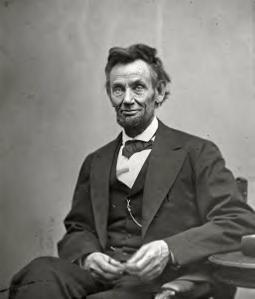
Abraham Lincoln, February 5, 1865. He would live less than 3 more months.

Abraham Lincoln, February 5, 1865. He would live less than 3 more months.

It was the morning of Friday, April 14, 1865, the last full day of Abraham Lincoln’s life. It was a beautiful spring day. The president was looking forward to an evening at the theater. Plays relaxed him, expecially comedy. There were some who looked down on him for being a theater-goer. They considered it lowbrow entertainment, especially for the commander-in-chief. Who were they to deny Lincoln a few minutes away from his troubling thoughts?

But that was all behind him now. The War Between the States was over. The terrible suffering had come to an end. Abe and his wife, Mary, had lost two sons to illness. That afternoon, he and Mary took a leisurely carriage ride. They spoke of the future together. Abraham was very happy. He said to Mary:

“We must both be more cheerful in the future.”

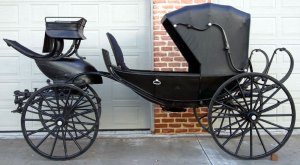
Abraham Lincoln's carriage that took him, Mary, Major Rathbone, and Clara Harris to Ford's Theatre on the night of his assassination. The carriage is a 4-passenger barouche. When the doors are opened, steps unfold.

Abraham Lincoln’s favorite carriage. It was the carriage that took him, Mary, Major Henry Rathbone, and Clara Harris to Ford’s Theatre on the night of Lincoln’s assassination. The carriage is a 4-passenger barouche. When the doors are opened, steps unfold.

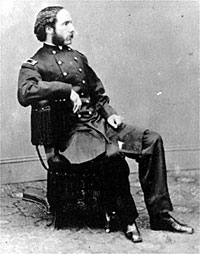
Major Henry Rathbone

Major Henry Rathbone

Shortly after their return to the White House, they dressed for the theater – Ford’s Theater – to see “Our American Cousin” starring Laura Keene. Mary and Abe had had a dickens of a time finding someone to attend the performance with them. They had invited 12 people and all had declined. It was Good Friday, the most solemn day on the Christian calendar, and not a day many folks sought entertainment. Most were busy, some disapproved of theater in general. The Grants – especially Julia, the General’s wife – could not stand the idea of being confined in a theater box with Mary and her explosive temper.

Clara Harris photographed by Mathew Brady, ca. 1860-68.

Clara Harris photographed by Mathew Brady, ca. 1860-68.

Finally, a young couple the Lincolns were fond of – Major Henry Rathbone and Clara Harris – accepted their invitation. Henry and Clara had just become engaged. Oddly enough, Clara was Henry’s stepsister. When Henry’s father died, his mother married Ira Harris, Clara’s father.

The two couples arrived at Ford’s Theater in the president’s carriage after the performance had already begun. As the four entered the presidential box, decorated with American flags and a painting of George Washington, the actors froze on stage. The orchestra struck up “Hail to the Chief.” The audience clapped, cheered, and waved.

“The president,” remembered one theater-goer, “stepped to the box-rail and acknowledged the applause with dignified bows and never-to-be-forgotten smiles.” (1)

The applause died down as the Lincolns, Clara and Henry took their seats. Abraham settled into a rocking chair Ford had brought up from his office especially for him. He sat on the far right of the box. To the left, Mary pulled her chair close to her husband’s, nestling up to him at one point, and slipping her arm through his. On the left side of the box, Clara sat in a stuffed chair. Henry sat on a small sofa behind her and in the back of the box. Mary fretted that Henry couldn’t see the stage well from the sofa and said so.

One of the biggest laughs in the play came in the third act when the male lead delivered this line:

“Don’t know the manners of good society, eh?” he paused. “Well, I guess I know enough to turn you inside out, old gal – you sockdologizing old mantrap.”

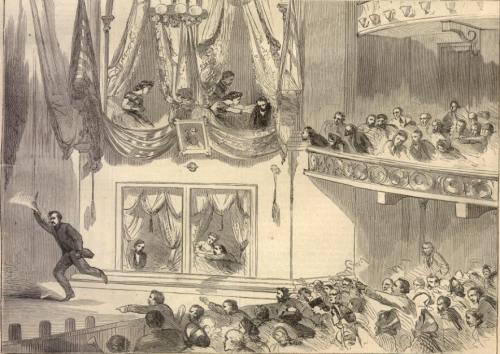
This line always got a big laugh. Tonight was no exception. The audience – including the president – laughed and clapped. They made so much noise that only the people in the box heard the crack of a gunshot, as actor John Wilkes Booth had planned. Booth had crept into the presidential box and, with a derringer, shot the president in the back of the head.

an image of the Lincoln assassination showing, from left to right, Clara Harris, Mary Todd Lincoln, Major Henry Rathbone, President Abraham Lincoln, and John Wilkes Booth

The “Assassination of President A Lincoln” showing, from left to right, Clara Harris, Mary Todd Lincoln, Major Henry Rathbone, President Abraham Lincoln, and John Wilkes Booth

The rest was blue gunsmoke and confusion. The president was slumped forward in his chair with no visible wound. He looked as if he was sleeping. Henry grabbed the gunman who held his gun in one hand and a dagger in the other. Booth dropped the gun and slashed Henry in the arm and the head. Because of Henry’s interference, Booth was unable to make a clean jump out of the presidential box onto the stage below.  Booth caught his foot as he jumped, landing on the stage at a weird angle, and breaking his leg. Henry shouted into the audience, “Stop that man!” Clara yelled, “The president has been shot!”

John Wilkes Booth flees across the stage of Ford's Theater after having assassinated President Lincoln. He shouts "sic semper tyrannis!" (thus always to tyrants" and, perhaps, "The South is avenged."

John Wilkes Booth flees across the stage of Ford’s Theater after having assassinated President Lincoln. He shouts, “Sic semper tyrannis!” (Latin for “Thus it shall ever be for tyrants,” the Virginia state motto) and, perhaps also, “The South is avenged.”

Though Henry was weak from loss of blood and his wounds were serious, the president’s wound was mortal. By the next morning, the president was dead.

Henry survived the attack and, in 1867, he and Clara were married. They had three children. But all was not well with Henry. Perhaps because of his head wound, his mental health rapidly deteriorated. He heard voices and believed he was being persecuted and tortured. He became jealous of his wife’s attention to their children. Clara lived in utter terror of what Henry might do.

Eighteen years after Lincoln’s assassination, Henry Rathbone reenacted Booth’s brutal attack on President Lincoln – within his own home. Armed with knife and pistol, Henry attacked his family, murdering Clara with a pistol, trying to kill his children, then stabbing himself.  He lived and was declared insane. He was institutionalized in Germany for the rest of his life.

(1) Fleming, Candace. The Lincolns: A Scrapbook Look at Abraham and Mary. New York: Random House, Inc., 2008.

Read Full Post »

Boston Corbett (1832-?) photographed in 1865

Boston Corbett (1832-?) photographed in 1865

The man who killed John Wilkes Booth was as mad as a hatter. His name was Boston Corbett. Actually, his name was not originally Boston Corbett, but Thomas T. Corbett. He became a reborn evangelical Christian while in Boston which he took as his new name. He began to wear his hair long like Jesus. He became a religious fanatic.  Those who knew him said he was “different.”  Boston Corbett was as mad as a hatter.

Boston Corbett was as mad as a hatter because he was a hatter – at a time when mercury was used in the felt hatmaking process. Hatmakers breathed the mercury vapors which caused mercury poisoning. Mercury damages the nervous system, producing symptoms such as drooling, twitching, paranoia, hallucinations, and agitation. It was probably mercury poisoning that caused the mental problems that dogged Corbett all his days.

"The Mad Hatter's Tea Party." ="Though he did not create the expression "mad as a hatter," author Lewis Carroll did create the eccentric character in his book, Alice in Wonderland (illustrations by Sir John Tenniel), first released in London in 1865, coincidentally, the year Lincoln was assassination. The hatter in the book is an eccentric fellow with wacky ideas and incoherent speech, attributes attributed to hatters of the day. Mercury was used in hatmaking and its poisonous vapors caused neurological damage on the hatters.

"The Mad Hatter's Tea Party." Though he did not create the expression "mad as a hatter," author Lewis Carroll did create the eccentric character of the hatter in his book, Alice in Wonderland (illustrations by Sir John Tenniel), first released in London in 1865, coincidentally, the year Lincoln was assassinated. The hatter in the book is an eccentric fellow with wacky ideas and incoherent speech, characteristics attributed to many hatters of the day, suffering from mercury poisoning. Mercury was used in hatmaking and its poisonous vapors caused debilitating neurological damage to the hatters, resulting in a complete mental breakdown.

As I was saying, Corbett’s job – daily breathing in the noxious mercury fumes while he made felt hats – was making him go insane. By July 16, 1858, Corbett had become so insane that he picked up a pair of scissors, took off his pants, and castrated himself. After doing the strange deed, he nonchalantly dressed again and went out to a prayer meeting, where he ate heartily and then took a walk. Corbett did, however, end up seeing a doctor to receive treatment for his self-mutilation. (1)

At the outbreak of the Civil War, Corbett enlisted in the Union army. He reenlisted three times and was made sergeant. In the days following President Lincoln’s assassination, he was selected as one of the 26 soldiers in the 16th New York Cavalry commissioned to pursue and capture the fugitive assassin John Wilkes Booth. On April 26, 1865, Corbett and the others cornered Booth and his coconspirator David Herold in a tobacco barn on Richard Garrett’s Virginia farm. Herold  gave himself up.

Lincoln assassin John Wilkes Booth

Lincoln assassin John Wilkes Booth

Booth refused to surrender, so the soldiers set the barn on fire, hoping to smoke him out. Corbett watched Booth through a large crack in the barn wall. As Booth moved about inside the burning barn, Corbett stuck his Colt revolver through the crack and aimed at the unsuspecting Booth, a full 12 feet away. Corbett’s bullet struck Lincoln’s killer in the neck, puncturing his spinal cord. Booth did not die at once.

When Corbett was questioned about his unilateral decision to kill rather than to capture Booth alive, he replied:

“God Almighty directed me.”

 
Back in Washington, Corbett was placed under technical arrest, but Secretary of War Edwin Stanton refused to prosecute the man many considered a hero. Stanton said, “The rebel is dead. The patriot lives.” Corbett collected $1653.85 in reward money.

Famous now, Corbett returned to the hat trade, first in Boston then in Connecticut and New Jersey. Further exposure to mercury caused his already volatile and erratic behavior to escalate. He got into frequent arguments which involved flashing his revolver in men’s faces.

He grew paranoid.

Then, in 1878, he made a radical life change. He moved to Kansas to live in a dugout; his home was nothing more than a hole in a hill with a stone front and a patchwork roof. He lived simply, sleeping on a homemade bed. He bought a flock of sheep. He began to give religious lectures that invariably turned into incoherent rants. He kept a number of firearms.

Improbably, in 1887, Corbett was appointed assistant doorkeeper to the Kansas House of Representatives in Topeka. Shortly after his appointment, he got crosswise with some men, pulled out a gun, threatened them, and got arrested. He was declared insane and sent to the Topeka Asylum for the Insane.

But he didn’t stay there. A little over a year later, he stole a horse that had been left at the asylum entrance and escaped. Little is known about where he went after that. Some say Mexico. He may have become a traveling salesman for a medicine company in Oklahoma Territory and Texas. No one knows what became of the man who killed John Wilkes Booth. That may forever remain a mystery.

(1) The actual hospital record can be read on page 59 of Lincoln and Kennedy: Medical & Ballistic Comparisons of their Assassinations by Dr. John K. Lattimer.

Read Full Post »

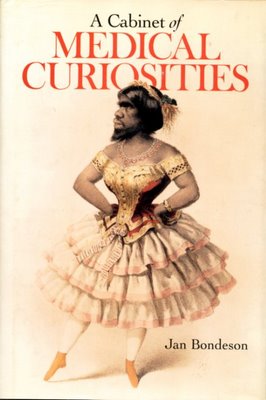
an illustration of Julia Pastrana, a Victorian stage performer who toured Europe, Canada, and the United States billed as the Bearded Lady, the Nondescript, the Ape-Woman.

An illustration of Julia Pastrana, a Victorian stage performer who toured Europe, Canada, and the United States billed as the Bearded or Hairy Lady, the Nondescript, the Ape-Woman, the Marvelous Hybrid or Bear Woman.

Julia Pastrana (1834-1860) was one of the most famous human curiosities of her time, touring Europe, Canada, and the United States in the 1850s as “the Bearded Lady” or the “Ape-Woman.” Born poor in Mexico, she suffered from a rare inherited disorder (hypertrichosis), not understood during the Victorian Age, that caused her entire body to be covered in silky, black hair. Add to that a jutting jaw with huge teeth that made her look positively like a monkey. Yet while grotesque and freakish, she also exuded a feminine grace. She sang Spanish songs sweetly, had slender feet and hands, and displayed a buxom figure at a petite four-and-a-half feet tall. She styled her hair in elaborate coiffures and wore embroidered lace dresses that barely covered her knees. She spoke three languages, cooked, and sewed. In her stage act, she danced a Highland Fling.

When she toured London in 1857 in one of the monster shows popular at the time, she attracted journalists, doctors, and scientific minds. Julia was very popular. It cost 3 shillings to see her in the Regent Gallery, compared to the 6 shillings that a Victorian laborer might earn in a week. Promoted by her avarious manager and new husband, Theodore Lent, Julia was now billed as “The Nondescript,” suggesting that she was a unique species, perhaps “the missing link” between humans and the rest of the animal kingdom. Debate raged in the newspapers as to her origins and her appearance was described at length. She submitted to medical examinations freely and received many distinguished visitors. Charles Darwin mentioned her in his book, The Variation of Animal and Plants under Domestication, writing:

Julia Pastrana, a Spanish dancer, was a remarkably fine woman – she had a thick and masculine beard.”

Julia loved her husband very much and, in 1859 in Moscow, she became pregnant with their first child. Her doctors were worried. Julia’s narrow hips and small frame could mean a difficult childbirth, they warned. On March 20, 1860, Julia gave birth to a hair-covered little boy. He died within 35 hours. Julia died five days later, at age 26.

Theodore Lent was distraught. Julia had been the bank. Now the bank was closed! How was he to live now that his source of income had died? He had a Eureka moment. Why should the bank close? He sent Julia’s corpse and that of his newborn son to Professor Sukolov of Moscow University for embalming. The process took 6 months but the results were amazing. Julia’s mummified remains looked lifelike. He dressed Julia in one of her dancing costumes and his son in a cute sailor suit. He stood them up on a pedestal and took them on a tour, exhibiting them as pickled specimens for 20 years.

Julia Pastrana and son, embalmed, on tour after their deaths

Julia Pastrana and son, embalmed, on tour after their deaths

When touring Sweden, Theodore met another hairy young woman named Zenora who suffered from a condition very similar to Julia. He married her and began touring her as Zenora Pastrana – Julia’s sister. Theodore grew richer and richer. In the 1880s, he and Zenora retired to St. Petersburg where they bought a waxworks museum. Theodore wasn’t able to enjoy his retirement for long because he became ill and was sent to a lunatic asylum where he died.

Over the course of the next 100 years, the mummies changed hands countless times, being sold to German fairs, an Austrian circus, and a Norwegian chamber of horrors. They came out of mothballs in 1970 and went on a short tour of Sweden and Norway. An American tour was aborted due to public outcry over the utter tastlessness of the idea. The mummies were put in storage by Norwegian owner Hans Lund in 1973.

In August of 1976, vandals broke into the storage unit. Julia’s mummified son was mutilated and his remains eaten by mice. Only her body remained. Then in 1979, the storage facility was again broken into and Julia’s body was stolen. It was assumed at the time to be destroyed.

Then, in February of 1990, a Norwegian journalist made a surprise discovery of a mummy in the basement of the Institute of Forensic Medicine in Oslo. It turns out that, back in 1979, the police had responded to a call involving some children who found an arm in a ditch. A search revealed the mummified body of Julia, badly mangled. The police did not know her identity. They took the mummy to the Institute.

It is believed by some, though not confirmed by me at this time, that the remains of Julia Pastrana have rested in a sealed coffin at the Department of Anatomy at Oslo University since 1997. “She is now a buried woman, not an exhibition object. She rests [at peace],” says Professor Gunnar Nicolaysen [translated from Norwegian].

Read Full Post »

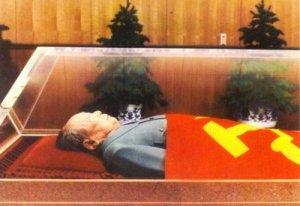
The body of Mao Zedong rests in its crystal coffin.

The body of Mao Zedong rests in its crystal coffin.

In a recent post, “Monster Mao,” I blogged about the Chinese communist leader, Mao Zedong, and his disastrous leadership.

Besides being selfish and cruel, Mao Zedong had some disgusting personal habits. He did not like to bathe. According to his personal physician, Dr. Li, Mao liked young girls and fatty pork. Like many Chinese of his time, Mao Zedong never brushed his teeth. Instead he rinsed with green tea and chewed the leaves. Dr. Li pleaded with his patient to brush but Mao refused, reportedly stating,

“A tiger never brushes his teeth.”

Consequently, Mao’s teeth looked like they were coated with green paint. As he grew older, his teeth fell out and he became toothless.

Mao also loved to chain smoke English cigarettes. Dr. Li begged him to cut down. Mao’s response:

“Smoking is also a form of deep-breathing exercise, don’t you think?”

Read Full Post »

For background information, read my previous post, “Eva Peron’s Restless Corpse.”

Here is part 5 0f 5 of the 1996 A & E “Biography” series on Eva Peron, “Evita: The Woman Behind the Myth.”  Halfway through the tape, you will get an eyeful of Evita.

Read Full Post »

Buckingham Palace

Buckingham Palace

He wasn’t the first person to scale the garden wall of Buckingham Palace. The year before, three German tourists had done it. While there had been others who’d breached Palace security, Michael Fagan was to become one of the most infamous.

1982 Buckingham Palace Intruder Michael Fagan

1982 Buckingham Palace Intruder Michael Fagan

It was 7:15 a.m. on July 9, 1982. Michael Fagan, 31, had been up all night, drinking whisky, and wandering London’s dark streets, brooding. He had just been released from the psychiatric ward at Brixton Prison. The judge had sent him there after he slashed his wrists with a broken bottle during his court hearing on charges that he stabbed his teenage stepson in the neck with a screwdriver. (1)

Fagan was discouraged. He was broke and faced a mountain of debt. His wife was unfaithful. There were problems with his kids and even his mum. The voices in his head told him to go and tell the Queen how unhappy he was and she would help. The voices told him he could do it. These were the same voices that before had talked him into climbing the towers of the bridges across the Thames River and to strip off his clothes and dive into the Grand Union Canal.

A guard at Buckingham Palace

A guard at Buckingham Palace

It was 7:15 on the morning of July 9, 1982 when Fagan, unshaven and dressed in jeans and a dirty t-shirt, gathered up his courage, climbed over the black iron fence of Buckingham Palace, and dropped down on the grounds of the royal residence. No guards noticed. He found an open window and crawled in. But the Queen wasn’t in that room, it held only an old stamp collection (King George V’s $20 million stamp collection). Fagan was not a thief. He wanted only to find the Queen. An alarm was tripped twice, but the policeman at the palace sub-station thought it was malfunctioning and turned it off both times.

Fagan then went back out into the courtyard and spied a 55 foot drainpipe that lead to the second floor. “I climbed it in seconds,” he proudly told interviewers later. “I was a Prince of the Earth.” He pulled back some wire meant to keep pigeons away and crawled in a window. He found himself in the office of Vice Admiral Sir Peter Ashmore, the man responsible for the Queen’s security. He took off his sandals and socks and proceeded to explore the Palace barefoot with dirty hands.

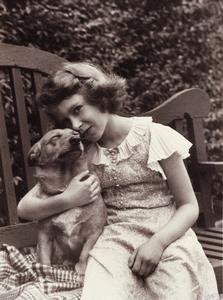
Princess Elizabeth, age 9 or 10, comforts her corgi Dookie, 1936

Princess Elizabeth, age 9 or 10, comforts her corgi Dookie, 1936

This wasn’t the first time Fagan had broken into the Palace. Only the month before, he’d had a practice run. He’d entered through an unlocked window on the roof and wandered about for a half hour. He viewed the royal portraits and rested on the thrones before entering the Postroom, where he drank half a bottle of California white wine before leaving.

On this, his second, visit to the Palace, Fagan was on a mission. He had to find the Queen. He wandered the corridors in search of her, and, on the way, cutting his hand on a glass ashtray. When he spied some dog dishes on the floor, he knew the Queen was near. She was never far from her precious dogs (See previous post, “Queen Elizabeth’s Corgis and Dorgis.”) He passed a housemaid who said, “Good morning,” then entered the Queen’s bedroom.

The Queen awoke to find a strange man sitting on the edge of her bed, cradling a broken ashtray and dripping blood on her bed linens. She kept calm and picked up the phone, asking the operator to summon the police. The operator did call the police but they didn’t come. She pushed the button for a chambermaid yet no one appeared. The armed guard regularly stationed at the Queen’s bedroom door was not at his post; he had taken her dogs out for a walk. Meanwhile, Fagan talked away, still sitting on her bed. He wanted to talk about love but the Queen didn’t. He thought it a coincidence that both he and the Queen had four children. Fagan wanted a cigarette. Again, the Queen called the palace switchboard yet no one responded.

After the Queen had spent ten minutes with the mentally disturbed, bleeding intruder, a chambermaid entered the Queen’s quarters and exclaimed, “Bloody hell, ma’am! What’s he doing in there?” The chambermaid then ran out and woke up a footman who then seized the intruder. The police arrived twelve minutes after the Queen’s first call.

When the public learned of this incident, they were outraged at the lapse of security around their Queen. Prime Minister Margaret Thatcher personally apologized to the Queen and measures were immediately taken to strengthen palace security.

Nevertheless, a 1999 report by the Royal Protection Squad stated that, in the six years previous, at least 6,000 mentally-ill persons had visited British royal residences or written to the royal family. Most of the mentally-disturbed people are harmless, the report stated, but the police guarding royalty are still trained to handle the few intruders who do indeed pose a danger. 

A man protests at Buckingham Palace, insisting upon his right to appear in public naked

A man protests at Buckingham Palace, insisting upon his right to appear in public naked

Over the years, the Royals have attracted unwanted attention from, among others, a group of lesbian anti-nuclear demonstrators who scaled the walls with ladders, and an American paraglider who landed on the roof as a stunt.


(1) Erickson, Carolly. Lilibet: An Intimate Portrait of Elizabeth II. (New York: St. Martin’s, 2004)


For more on Queen Elizabeth II, look in the left column under “Categories – People – Queen Elizabeth II.” I’ve written many posts on the Queen; I hope you enjoy them!

For more on Insane Asylums, scroll to the very bottom of “Categories – The Insane Asylum.”

Read Full Post »

Early Kansas settlers had a rough time of it. For the first twenty years of Kansas settlement, homesteaders had to battle hot winds, drought, Indian raids, and hailstorms to save their crops. But the year 1874 promised to be different. “In the spring of 1874,” wrote Mrs. Everett Rorabaugh, “the farmers began their farming with high hopes, some breaking the sod for sod corn, others…sowing spring wheat, corn, and cane, and with plenty of rain everyone… [was] talking about the bumper crop they were going to have….”

Rocky Mountain Locust, or grasshopper

But, by July, happy anticipation had turned to despair in when hordes of crop-eating grasshoppers descended upon Kansas. “August 1, 1874,” explained Mary Lyon, “is a day that will always be remembered…For several days there had been quite a few hoppers around, but this day, there was a haze in the air and the sun was veiled….They began, toward night, dropping to earth, and it seemed as if we were in a big snowstorm where the air was filled with enormous-sized flakes.” (1) The snowflake-like appearance was due to the whitish wings of the grasshopper, or Rocky Mountain locust.

The grasshoppers then dropped to the ground, crawling over the fields in a solid body, eating every green thing that was growing. Hillsides looked as if water were running down them the hoppers were so thick. They devastated the crops. When they had eaten the fields bare, leaving not a sprig of grass, they would pile up by fence posts and eat the bark off the posts.

Wishful Thinking

Wishful Thinking

“They devoured every green thing but the prairie grass,” continued Mary Lyon. “They ate the leaves and young twigs off our young fruit trees, and seemed to relish the green peaches on the trees, but left the pit hanging….I thought to save some of my garden by covering it with gunny sacks, but the hoppers regarded that as a huge joke, and…ate their way through. The cabbage and lettuce disappeared the first afternoon….The garden was soon devoured.”

When the grasshoppers had cleared the land of vegetation, they ate the clothes drying on the clotheslines and curtains hanging in the windows. Adelheit Viets remembered the day the grasshoppers came to her farm. “The storm of grasshoppers came one Sunday. I remember that I was wearing a dress of white with a green stripe. The grasshoppers settled on me and ate up every bit of green stripe in that dress before anything could be done about it.” (1)

The insect hordes moved into barns and houses. Besides devouring food in cupboards, barrels, and bins, they attacked anything made of wood. They particularly craved sweaty things, eating the handles of pitchforks and the leather harnesses of horses.

300px-book_littlehousebanksofpcIn her book, On the Banks of Plum Creek, Laura Ingalls Wilder recalls the creepy feeling of the huge grasshoppers clinging to her clothes, writhing and squishing beneath her bare feet and the sound of “millions of jaws biting and chewing” as they destroyed her family’s fields in Minnesota. (2) The stench of the oily insects was hideous.

When the grasshoppers were done, they rose with a humming that sounded like distant thunder, casting a shadow on the ground for a few seconds just as a cloud does when passing between you and the sun. Then they moved on, relentlessly in search of food. As they made their way cross-country, they landed on railroad tracks, making the tracks so slippery that the wheels of the train would only spin and an hour’s sweeping was needed to move their bodies out of the way.

Grasshoppers warming themselves on railroad tracks did stop trains but not exactly like this.

Grasshoppers warming themselves on railroad tracks did stop trains but not exactly like this.

By September, the plague had moved eastward out of Kansas, leaving a state devastated by insects. The corn crop was nearly gone and the wheat crop substantially damaged. Gardens and fruit trees were totaled. Water in ponds, streams, and wells were polluted. Cows and chickens that had gorged on the grasshoppers became useless as food as did fish caught in streams. The meat smelled and tasted like grasshoppers. Chickens ate so many of the hoppers that egg yolks were red. Without a crop and livestock, pioneer farmers were destroyed.

Although Kansas governor Thomas A. Osborn pledged to provide relief to needy citizens, angry and discouraged pioneers fled Kansas by the hundreds in trains and by covered wagon. “In God we trusted; in Kansas we busted,” was a popular slogan painted on the sides of the wagons headed back east. For those who stayed behind, state governments and the U.S. Army distributed food rations to affected Kansans as wells as to others in the Dakota and Colorado territories, Minnesota, Iowa, and Nebraska, other places caught in the path of the grasshopper migration.

Families also needed clothes, many having only flour sacks to wear. So the government distributed old Civil War uniforms. For years after the grasshopper plagues, pioneer women and men could still be seen wearing these military uniforms while out working in their fields. (3)

grasshopper-swarmLocust plagues long haunted American farmers, and they may do so again. In the 19th Century, black clouds of Rocky Mountain locusts swept across the plains almost every summer, leaving only stubble where crops once stood.

Inset map: The 1874 swarm (shown in red) was the largest ever recorded: 1,800 miles long and 110 miles wide, it caused the equivalent of $650 million of damage. Other grasshopper species probably did not swarm, although they experienced major infestations in 1855, 1864, and 1866.

Large map: The U.S. Department of Agriculture releases a “Grass-
hopper Hazard Map” every year showing where infestations
are most likely to occur in the coming summer. In some areas,
grasshopper populations can reach densities of more than 200
per square yard. (Map by Matt Zang, 2003)


(1) Stratton, Joanna L. Pioneer Women: Voices From the Kansas Frontier. (New York: Simon & Schuster, 1981)
(2) “Looking Back at the Days of the Locust,” New York Times, April 23, 2002.
(3) The ‘Hopper Plague of ’74,” True West, August 1990.

Read Full Post »

In the 1840s, many thousands of families left their homes and headed west searching for California gold or a plot of cheap but good Oregon farmland. It was usually the man of the family who got “Western fever” and made the decision to uproot the rest of the family. They loaded up their possessions, stocked up on supplies, and piled into their covered wagon, waving good-bye to loved ones, sometimes forever, and hitting the trail.

Women on the trail had plenty to keep them busy. Charlotte Stearns Pengra, who traveled west in 1853, kept a journal of her trip. One entry read:

I hung out what things were wet in the wagon, made griddle cakes [pancakes], stewed berries, and made tea for supper. After that was over, made two loaves of bread, stewed a pan of apples, prepared potatoes, and meat for breakfast, and mended a pair of pants.”

No matter how bad the weather or how tired the women were, the women always were in charge of preparing everyone’s meals. They cooked over simple stoves or open fires – which required fuel. Twigs and boughs were easy fuel to find for the first week or so on the trail. When they moved into tall-grass country, women and children collected grass – prairie grass, slough grass, or hay – and twisted it into “cats,” which burned well when dry, though it produced a blinding smoke.

A pioneer woman and child gather buffalo chips for fuel for the evening campfire

A pioneer woman and child gather buffalo chips for fuel for the evening campfire

Once the wagon had moved out onto the open prairie, there were no trees and seldom even grass, and the pioneers had to look for an alternate fuel. They found themselves forced to rely upon buffalo dung for fuel. The women and children walked alongside the wagon and gathered the dung in large sacks or gathered it in wheelbarrows. Few women took readily to the task of picking up animal droppings, as evidenced in this excerpt from a popular trail song:

Look at her now with a pout on her lips
As daintily with her fingertips
She picks for the fire some buffalo chips.

The chips – which they called “meadow muffins” – were placed in shallow trenches over which pots were hung on a pole set on two forked sticks. To the pioneers’ surprise, the burning chips produced a hot, clear, and virtually odorless flame. Even better, the lighted chips drove off the mosquitoes. A bushel could be gathered in a minute’s time and three bushels made a good fire. By the time  the pioneer family had traveled farther west and was out of the range of  buffalo herds, the women found themselves wishing the animals had roamed further west, since chips were much preferable to sagebrush, the next available fuel on their journey. Sagebrush burned too quickly for a decent fire.

Peavy, Linda and Smith, Ursula. Pioneer Women: The Lives of Women on the Frontier. Norman: University of Oklahoma Press, 1996.

Read Full Post »

Mary Todd Lincoln in mourning clothes, 1863. Even during the period in 1862 and 1863 when Mrs. Lincoln was in mourning for her son Willie and wore only black, she managed to go further into debt for new clothes. By 1864, she told Elizabeth Keckley: "The President glances at my rich dresses and is happy to believe that the few hundred dollars that I obtain from him supply all my wants. I must dress in costly materials. The people scrutinize every article that I wear with critical curiosity... If he is elected, I can keep him in ignorance of my affairs, but if he is defeated, then the bills will be sent."3 Only on January 1, 1865 did she completely shed her mourning attire.

Mary Todd Lincoln in mourning clothes, 1863. Even during the period in 1862 and 1863 when Mrs. Lincoln was in mourning for her son Willie and wore only black, she managed to go further into debt for new clothes. By 1864, she told Elizabeth Keckley: "The President glances at my rich dresses and is happy to believe that the few hundred dollars that I obtain from him supply all my wants. I must dress in costly materials. The people scrutinize every article that I wear with critical curiosity... If he is elected, I can keep him in ignorance of my affairs, but if he is defeated, then the bills will be sent." Only on January 1, 1865 did she completely shed her mourning attire.

After her son Willie’s death at age eleven on February 20, 1862,  Mary Todd Lincoln went into deep mourning. She traded in her sparkling jewels, frilly white and colorful gowns, and flowered bonnets made fashionable by her icon the French Empress Eugénie (click to read earlier post) for widow’s weeds of dull black crepe. Her stylish White House parties were put to the side. Gaiety gave way to sadness. Mary had lost her favorite son, the perfect one, the one she considered most like her husband.

After Willie died, Mary’s youngest son, eight-year-old Tad, still tossed with the same typhoid fever that killed his brother. He lay critically ill nearby, but Mary, incapacitated by grief, would not and did not rush to his side to nurse him. Meanwhile, Willie’s embalmed body was laid out in the Green Room of the White House and his coffin was open. Mary mustered enough energy to place a sprig of laurel on Willie’s chest before retreating to her bedroom and shutting the door. She took to her bed, weeping and sobbing  in such uncontrolled spasms that she became quite ill.

She did not come out of her bedroom to attend Willie’s funeral and never again entered the Green Room or the second floor guest room where Willie died. She rid the house of all of Willie’s toys and clothes and forbade his and Tad’s best friends, the Taft boys, from ever returning to the White House to play.

During Mary’s tormented period, Abraham, also heartbroken at his son’s death, sent for help. Two of Mary’s  friends, a nurse, and Mary’s sister Elizabeth heeded the calling. One of the friends was the esteemed Washington seamstress Elizabeth Keckley. In memoirs she wrote with a ghostwriter six years later, she recalled a day when President Lincoln led his distraught wife (whom he called “Mother”) to the window, pointed to the lunatic asylum at a distance from the White House, and said,

 “Mother, do you see that large white building on the hill yonder? Try and control your grief or it will drive you mad and we may have to send you there.”

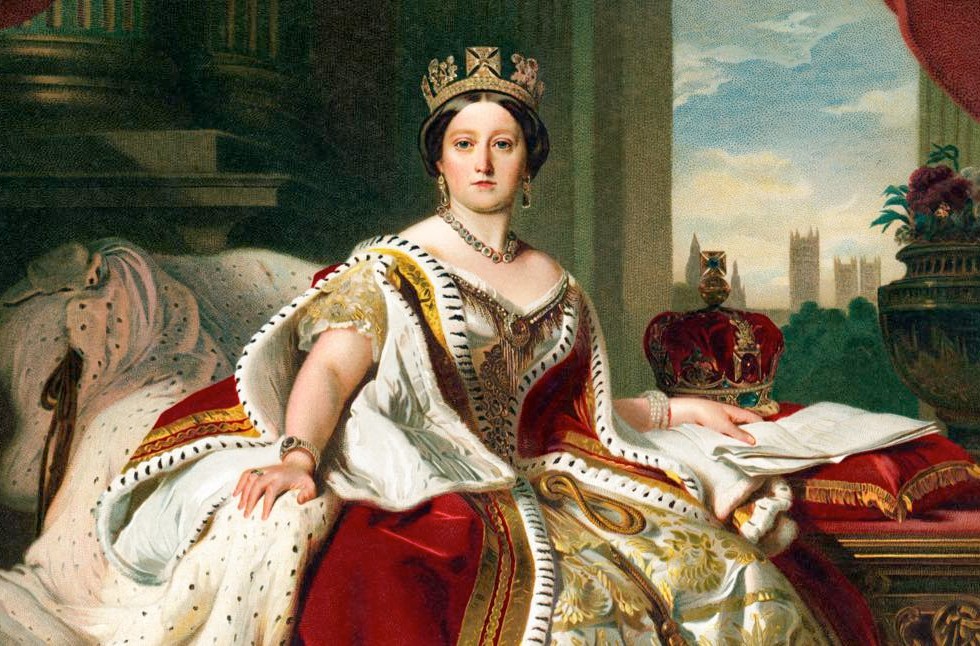
The recently widowed Queen Victoria wearing mourning clothes at Balmoral, Scotland, 1863. She is riding "Fyvie" and is accompanied by her faithful servant John Brown. Her husband, Prince Albert died in December of 1861 of typhoid fever or perhaps cancer of the stomach. For forty more years, the rest of Victoria's life, she wore black widow's weeds. Suspicion was aroused by Victoria's partiality to John Brown as a servant; most of the members of the Royal Household referred to him as "the Queen's stallion" and defamatory pamphlets referred to her a "Mrs. Brown." A 1997 film with Judy Dench titled "Mrs. Brown" was about the possible love affair.

The recently widowed Queen Victoria wearing mourning clothes at Balmoral, Scotland, 1863. She is riding "Fyvie" and is accompanied by her faithful servant John Brown. Her husband, Prince Albert, died in December of 1861 of typhoid fever or perhaps cancer of the stomach. For forty more years, the rest of Victoria's life, she wore black widow's weeds. Suspicion was aroused by Victoria's partiality to John Brown as a servant; most of the members of the Royal Household referred to him as "the Queen's stallion" and defamatory pamphlets referred to her as "Mrs. Brown." A 1997 film with Judy Dench titled "Mrs. Brown" was about their rumored love affair.

It was three weeks before Mary could even be persuaded to get up out of  bed and put on her mourning clothes. Queen Victoria (1819-1901) now became the First Lady’s fashion model. Victoria’s husband Prince Albert had died unexpectedly just three months earlier and Victoria had plunged herself and her entire staff into the deep black dress of mourning. Following Victoria’s lead and further compounding her debt to clothing merchants (click to read an earlier post), Mary Lincoln ordered an entire new wardrobe of dull black crepe dresses, bonnets, and weeping veils.

For more than a year, six months longer than was called for in the mourning manuals of the day, Mary wore first-degree mourning. Her black crepe straw bonnet was so heavily veiled that she could not turn her head, which gave her an odd appearance as she was always facing forward. She became a very public mourner. She wanted to draw attention to her grief as if she was the only one who had lost a child at a time when Civil War soldiers were dying in record numbers from Mississippi to Maryland on the nation’s bloody battlefields.  During her mourning, she cancelled the Saturday afternoon Marine Band Concerts held on the White House lawn, explaining that, “When we are in sorrow, quiet is necessary.”  She bought black jet jewelry to accent her sooty “widow’s weeds” and used writing paper with the thickest margins of black.

Finally, in 1863, Mary ordered another new wardrobe, running up yet more bills, and moved into the stage known as half-mourning, exchanging her lusterless black for fabric in lavender, gray, and somber purples with a little touch of white at the wrist. (1)


Click here to access my related post, “The Madness of Mary Lincoln.” Also, for more posts on the Lincolns, view the drop down menu, “Categories,” in the left column, find at the top, Abraham and Mary Todd Lincoln, and click.

(1) Baker, Jean H. Mary Todd Lincoln: A Biography. (New York: W.W. Norton & Company, 1987)

Read Full Post »

Ferdinand and Imelda Marcos with U.S. President Ronald Reagan

Ferdinand and Imelda Marcos with U.S. President Ronald Reagan

For most of you, the names Ferdinand and Imelda Marcos won’t ring any bells. But from 1965 to 1986, Ferdinand was the President and Imelda the First Lady of the Philippines. In those 21 years, Ferdinand, with Imelda’s help, managed to rack up an astonishing record of abuses common to dictators – human rights violations, assassinations, corruption, embezzlement of public funds – and held onto power through the imposition of martial law, the abolition of the constitution, and the appointment of political cronies, including Imelda, a former beauty queen, to prominent posts.

Finally, in 1986, a people’s coup toppled the Marcos regime and the Marcoses were forced to flee their palace and the country. They were given safe passage by the Reagan Administration to Hawaii. In the palace, Imelda left behind 15 mink coats, 508 gowns, 888 handbags and 1060 pairs of shoes, some say 2700 pairs. It was estimated that the Marcos family was worth $35 billion.

Three years later, still in exile in Hawaii, Ferdinand was dead at 72 of complications from lupus. Imelda wanted Ferdinand to be buried in the Philippines but his body was refused entry. So Imelda kept the body in a refrigerated mausoleum in Oahu, complete with soft music, wheeling him out over the years for a birthday party and an anniversary celebration. (1) The power company soon threatened to suspend power for the costly tomb when thousands of dollars in electric bills went unpaid but, at the last minute, a friend came forward and picked up the tab.

In 2001, twelve years after his death, the Philippine government allowed Ferdinand’s corpse to return to his homeland and Imelda with it. Imelda went to work building a tomb in the national cemetery where Filipino heroes are buried. But fierce opposition broke out and blocked the former president’s burial. Ferdinand’s remains were then temporarily housed at a mansion in Batac, Ilocos Norte Province, in an air conditioned room. Eventually the corpse was moved to their present location in the Marcos family mausoleum in the village cemetery in Batac.

Former First Lady of the Philippines Imelda Marcos kisses the crystal coffin of her deceased husband, former President Ferdinand Marcos

Former First Lady of the Philippines kisses the crystal coffin of her deceased husband, former President Ferdinand Marcos

The once-ruthless dictator is now a shrunken fellow dressed in a barong tagalog and black slacks lying in a glass viewing case inside a refrigerated crypt in a stone room with soft lights and church music. He is on perpetual view. A steady flow of visitors file past him. There his restless corpse will remain, above ground, unless Imelda gets her way and the government relents, according him a government-sponsored burial with full military honors.

A visitor to the mausoleum says that the corpse of Ferdinand Marcos, according to Filipino burial tradition, lies shoeless in the coffin. He swears that Marcos’ face and hands, however, don’t look very natural, even for a corpse. Speculation is that the real corpse is under the glass coffin, and that the figure on display is a dummy. The family claims this is not so, that the corpse looks waxy because it has to be waxed periodically for preservation.

(1) Verdery, Katherine. The Political Lives of Dead Bodies. (New York: Columbia University Press, 2000)


Read Full Post »

Eva Duarte de Peron, First Lady of Argentina (1946-1952)

Eva Duarte de Peron, First Lady of Argentina (1946-1952)

At 8:52 p.m. on the night of July 26, 1952, all radio broadcasts in Argentina were interrupted for an emergency announcement: First Lady Eva Peron – “the Spiritual Leader of the Nation” – was dead of cancer at 33. All activity came to an abrupt halt. Movies stopped playing. Shops closed. Restaurants were emptied of patrons. Argentina went into mourning.

The enormous public display of grief took the government by surprise. Crowds gathered outside the official presidential residence, congesting the streets for ten blocks in any direction. In a panic to be near Eva Peron’s body when it was being moved, eight people were crushed to death in the pressing throngs and 2,000 were treated for injuries at area hospitals. The streets of Buenos Aires were overflowing with tall stacks of flowers laid in remembrance for the people’s beloved Evita. Although she never held an official political office, Eva Peron (1919-1952) was eventually given an official funeral worthy of a head of state. To the poor of Argentina, Senora Evita was a saint.

The Body of Eva Peron Being Carried Through the Honor Guard to the building of the General Labor Federation in Buenos Aires to Lie in State (Aug. 13, 1952)

The Body of Eva Peron Being Carried Through the Honor Guard to the building of the General Labor Federation in Buenos Aires to Lie in State (Aug. 13, 1952)

Before Eva had died, her husband, Argentine President Juan Domingo Peron (1895-1974), had contacted the famed embalmer, Dr. Pedro Ara, whose work was referred to as “the art of death,” to preserve Eva’s body. Dr. Ara’s technique of replacing the corpse’s blood with glycerine, which preserved all organs, created a lifelike appearance. Eva weighed only eighty pounds at death and was severely burned from radiation treatments but Dr. Ara was able to recreate her former beauty and give her an embalmment equal to that of Lenin. It has been suggested that Dr. Ara fell in love with Eva’s body. Plans were made to build a marble monument to Evita’s honor larger than the Statue of Liberty. During the construction her embalmed body lay in state for two years.

Then President Peron was overthrown and the body of Eva Peron stolen. For sixteen years, the whereabouts of Eva’s body remained a mystery. Juan fled to Spain in exile. Finally, in 1971, Eva’s body was discovered in a grave under a false name outside of Rome. It was exhumed and flown to Spain where Juan Peron kept the corpse in an open casket on the dining room table in his villa. Juan was now married to third wife Isabel who combed the corpse’s hair in a daily devotion and, at Juan’s request, was rumored to occasionally lie inside the coffin next to Evita to absorb some of her political magic.

In 1974, Juan returned to power as president of Argentina. Upon his death, wife Isabel succeeded him. Isabel returned Eva’s body to Argentina where it was briefly displayed next to Juan’s body.

Bodies of Juan and Eva Peron Lying in State (c. 1974-76)

Bodies of Juan and Eva Peron Lying in State (c. 1974-76)

Isabel was overthrown in 1976. The new military leaders had Eva Peron’s body safely buried in the Duarte family tomb under three plates of steel in the Recoleta Cemetery in Buenos Aires. The tomb was said to be secure enough to withstand a nuclear attack or a restless corpse.

Now read “Eva Peron’s Restless Corpse Part 2.”


Read Full Post »

Robert McGee

Robert McGee

In my last post, I wrote about the scalping of Texas settler, Josiah Wilbarger, who lived to tell the tale. I’ve come across another scalping survivor account, that of teamster Robert McGee, who agreed with Josiah Wilbarger who said the scalping sounded like “distant thunder. The following is excerpted from the blog, The Road to Samarkand:

Somewhere on the plains of western Kansas in the summer of 1864, a wagon train was carrying supplies to Fort Union, New Mexico. As they stopped for an evening meal, they were attacked by a group from the Brule Sioux Indians allegedly led by Chief Little Turtle himself. The soldiers charged with protecting the wagon train had been held up and consequently the wagon teamsters were entirely unprepared for such an attack. Every member of the caravan was brutalized and executed in various grisly ways. When a government scouting party found them, they discovered that Robert McGee, a 13 year old driver, had miraculously survived. He was whisked off to an infirmary where he gradually recovered and became one of the few people in history to have survived being scalped.

Read Full Post »


The following is an excerpt from my book, Get Along, Little Dogies: The Chisholm Trail Diary of Hallie Lou WellsAlthough it is fiction, the book is historically authentic, and the event it recounts really did happen in August, 1844, outside Austin, Texas, near Pecan Springs. The narrator is a young woman named Hallie Wells who is traveling up the Chisholm Trail on a cattle drive with some cowboys: 

Get Along, Little Dogies by Lisa Waller Rogers

Get Along, Little Dogies by Lisa Waller Rogers


Sunday, May 12, 1878
Northeast of Austin at Wilbarger Creek

Late at night

This was a golden day. I want to write about it before the memory fades. The lamplight already grows dim.

Today we didn’t travel. It was a true Sabbath, a day of rest – except for Mrs. Bubbies, our bell cow. She gave birth to two heifers this morning. When we resume travel, Joe One-Wing will toss the calves into the supply wagon with the other calves born on the trail. He’ll put loose sacks on them so that their scents won’t get mixed with the other calves as they jostle along the trail. In that way, Mrs. Bubbies will recognize her young and give them milk every evening when we break for camp.

We’re starting to feel like a family. Tonight, after dinner, the off-duty cowboys hung their saddles in the low live oak branches and spread bedding for us to sit on. We sat around the campfire. Cookie even got in the mood and passed around tin plates of “bread and lick” (molasses). John R. read a Bible passage aloud. Will and Henry serenaded us with banjo and a fife. Jeb played “Get Along, Little Dogies” on his harmonica. Will took my hand and we danced a slow waltz. The cows loved the music. They made a soft lowing sound. It was like a big city symphony! We wanted to laugh but that would have made those crazy cows stampede for sure.

The Scalping of Josiah Wilbarger, a woodcut by T.J. Owen, AKA O. Henry, found in Indian Depredations in Texas, 1889

The Scalping of Josiah Wilbarger, a woodcut by T.J. Owen, AKA O. Henry, found in Indian Depredations in Texas, 1889

Joe One-Wing told a scary story. We’re camped beside Wilbarger Creek, named for a brave pioneer named Josiah Wilbarger. Just a few miles from here, Josiah was attacked by Comanches and scalped. The Indians left him for dead.

The Indians were mistaken. Josiah was not dead. He managed to drag himself to some springs, drink, and bath his aching head. With his fingernails, he dug until he found some snails to eat. Then he crawled over to a live oak and collapsed.

Around midnight, he heard a voice softly calling his name. He awoke to see his dear sister, Margaret, walking toward him. “Josiah,” she said, pointing to the southeast. “Help will come from that direction.” Then she vanished into thin air.

At that same moment, six miles to the southeast, Sarah Hornsby, was having a strange dream. In the dream, she saw her neighbor, Josiah Wilbarger, leaning against a an oak tree, soaked in blood and dying. She awakened her husband, Reuben, and told him her incredible vision. Reuben immediately organized a search party.

The men found Josiah exactly where Sarah had said. He was taken home and nursed back to health. Slowly, Josiah began to recover from his many injuries. Three months passed. One day, a letter arrived for him from Missouri. The letter told him that his sister, Margaret, had died. The mail had been very slow. Margaret had died three months before. She had died the very night she had appeared to Josiah at midnight. It had been her spirit that gave Sarah Hornsby the marvelous dream that saved her brother.

Josiah’s wound never really healed. His wife made him little caps to cover the hole in his head. However, he lived another eleven years until one day he bumped his head on the door frame. Wilbarger County, Texas, was established in 1858 to honor Josiah and his brother Mathias. The bodies of Josiah Wilbarger and his wife are buried in the State Cemetery at Austin.

Read Full Post »

Regarding some of my recent posts on insane asylums (see sidebar, “Categories: The Insane Asylum”), my neighbor and friend, Karen O’Quin, wrote:

I really liked your blog – thanks for sending!!  I see a theme there.  My experience with Austin State Hospital is that when I first started working at Travis State School in 1967, they only had men there – they called them “boys”.  Some had been there for years as they had been admitted to ASH long before because they were a little “weird” and then became too institutionalized to be let out.  They did not have IQs consistent with mental retardation.  Some were later placed in group homes.  I don’t know if you’ve read Mary, Mrs. A Lincoln, but it is her account of being committed to a lunatic asylum by her son, Robert.  Someone very recently found letters she had written to her attorneys from the asylum.  I think they were going to be a book, too. 

Mary Lincoln (1818-1882)

Mary Lincoln (1818-1882)

When I was young, I remember my mother talking about Mary Todd Lincoln, wife of Abraham Lincoln, and her inappropriate and extravagant spending sprees during the depth of the Civil War. Above all I remember Mom mentioning that Mary had a collection of about 300 pairs of gloves. Thinking about it now, it reminds me of Imelda Marcos, wife of the president of the Philippines, Ferdinand Marcos, and her closet rack of 2700 pairs of shoes.

Mary Todd and Abraham Lincoln came together as husband and wife from two very different worlds. Mary was pampered and rich; Abraham was tested and wise. Both were prone to depression but it was Mary, with her fragile mind, perhaps schizophrenic or bipolar, who finally cratered under the constant barrage of grief and loss that became her sad lot in life.  Three of her sons died while her husband was president during a bloody and acrimonious civil war. The hate mail sent to her husband was unbelievable. Then her beloved Abraham, her anchor, was assassinated. It was more than Mary could bear. She descended into madness.

She began to wander hotel corridors in her nightgown, was certain someone was trying to poison her, complained that an Indian spirit was removing wires from her eyes, and continued her frantic spending, purchasing yard after yard of elegant drapery when she had no windows in which to hang it. (PBS American Experience: “The Time of the Lincolns”)

The doctors treated her with laudanum which gave her hallucinations, eye spasms, and headaches. She began to behave bizarrely, creating a public scandal. Her only surviving son Robert, a practicing attorney, arranged an insanity trial and had her committed to the asylum Bellevue Place just outside Chicago. Although Mary was only hospitalized for three months, she never forgave Robert for the humiliation and deprivation.

A recently published book, The Madness of Mary Lincoln by Jason Emerson, awarded “Book of the Year” by the Illinois State Historical Society in 2007, examines Mary’s mental illness. The book is based on a rare find – a trunk of letters found in the attic of Robert Lincoln’s lawyer. They contain the lost letters written by Mary during her stay in the asylum. The book sheds light on the ongoing mystery of Mary’s mental illness, its nature, roots, and progression, and suggests that Abraham Lincoln had some understanding of it and provided stability.

Read Full Post »

« Newer Posts - Older Posts »