Feeds:
Posts
Comments

Posts Tagged ‘Queen Elizabeth II’

What’s Prince Philip’s favorite drink? Check out our quiz to see how much you know about the Royal Family:

1. In which battle did George VI fight?
A. The First Battle of Ypres
B. The Battle of Loos
C. The Battle of Jutland
D. The Battle of Tumbledown
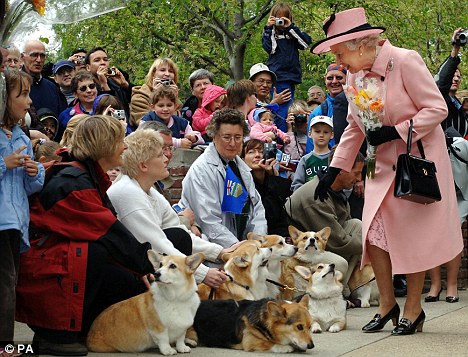
Queen Elizabeth II loves corgis.

2. What was the name of the first royal corgi, which was given to the Queen on her 18th birthday in 1944?

A. Sinbad
B. Susan
C. Senator
D. Sonata 


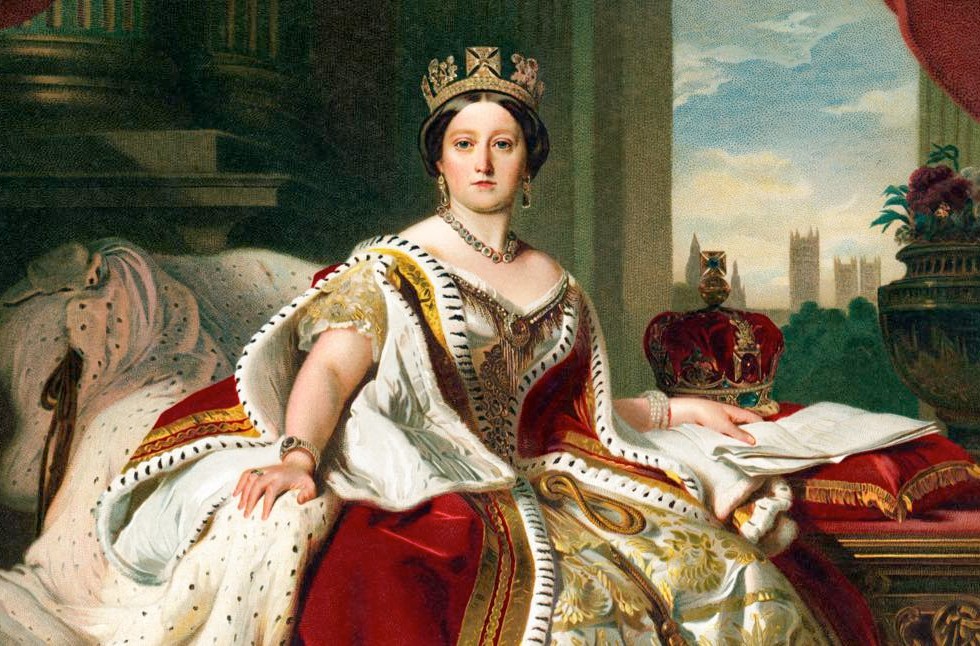
Queen Victoria celebrates her fiftieth year on the throne in 1887 at her Golden Jubilee. Queen Victoria lived from 1819-1901.

3. Who succeeded Queen Victoria?
A. Prince Albert
B. Edward VII
C. George V
D. Edward VIII

4. Of how many countries is the Queen head of state?
A. Four
B. Eight
C. 16
D. 21

5. What title did the British monarch also have until 1947?
A. King of India
B. Imperial Sovereign
C. Monarch of Asia
D. Emperor of India

6. In which naval engagement during World War II was Prince Philip mentioned in despatches?
A. Battle of Cape Matapan
B. Battle of Cape Potsandpans
C. Battle of Cape Cod
D. Battle of Barents Sea

The Duchess and Duke of Windsor in exile in France, years after the Duke AKA King Edward VIII abdicated the British throne in 1936.

 7. What was Edward VIII’s relationship to his successor, George VI?
A. First cousin
B. Father
C. Elder brother
D. Younger brother

8. What was the Queen Mother’s maiden name?
A. Lady Elizabeth Bowes-Lyon
B. Lady Elizabeth Glamis
C. Lady Elizabeth Bows
D. The Countess of Strathmore

9. Which king reigned throughout World War I?
A. Edward VII
B. George V
C. George VI
D. George VII


King George VI sits with Prince Charles of Wales. Charles was just 3 when the King died of lung cancer on Feb. 6, 1952.

10. What relation is Prince Charles to George VI?
A. Maternal grandson
B. Paternal grandson
C. Maternal nephew
D. Paternal great-grandson

11. How old was the Queen when she came to the throne?
A. 55
B. 45
C. 35
D. 25

12. Who did the Duke and Duchess of Windsor meet at Berchtesgaden in 1937?
A. Adolf Hitler
B. Charlie Chaplin
C. Tsar of Russia
D. Winston Churchill

13. In which war did Prince Andrew fight as a helicopter pilot?
A. Gulf War
B. Iraq War
C. Falklands War
D. Korean War

14. What was the name of the royal yacht decommissioned in 1997?
A. Britannia
B. Queen Elizabeth
C. Elizabeth and Philip
D. Queen Mary

15. What is Prince Philip’s favorite drink?
A. Bass
B. Brandy (Greek, of course)
C. Boddingtons
D. Bacardi

16. In which war did the Royal Family change their dynastic title from Saxe-Coburg to Windsor?
A. Boer War
B. World War I
C. World War II
D. Cold War


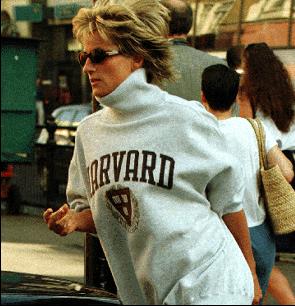
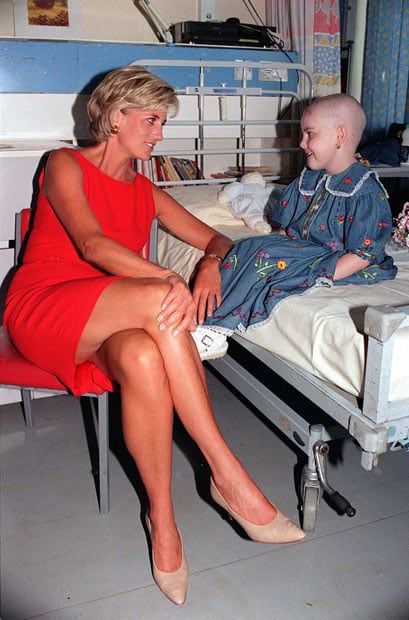
Princess Diana, spring 1997, photographed by Mario Testino

17. What was the maiden name of Diana, Princess of Wales?
A. Lady Diana Spencer
B. Diana, Lady Spencer
C. The Lady Diana
D. The Lady Spencer

18. Why is Prince Michael of Kent not in the line of succession to the throne?
A. He converted to Islam
B. He married a Roman Catholic
C. He became a Zoroastrian
D. He married without the Queen’s permission

19. What was the name of the most famous of Edward VII’s mistresses when he was Prince of Wales?
A. Lily Crabtree
B. Nell Gwynn
C. Mary Robinson
D. Lillie Langtry

20. Which monarch of the House of Windsor has reigned the longest?
A. Edward VII
B. George V
C. George VI
D. Elizabeth II


Elizabeth, the Queen Mother, as portrayed on a commemorative stamp

21. How old was the Queen Mother when she died in 2002?
A. 90
B. 95
C. 75
D. 101

22. Where was the then Princess Elizabeth staying when she heard of the death of her father George VI in 1952?
A. Treetops Game Reserve in Kenya
B. Stardust Casino in Las Vegas
C. Government House in Auckland, New Zealand
D. Ice Station Zebra in Antarctica

23. What post does the monarch hold in the Church of England?
A. Supreme Pontiff
B. Senior Governor
C. Supreme Ruler
D. Supreme Governor 

Queen Elizabeth's little sister, Princess Margaret, enjoying her bath.

24. Who did the Queen’s sister marry?

A. Antony Armstrong-Andrews, Lord Snowdon
B. Andrew Armstrong-Jones, Lord Mountbatten
C. Andrew Armstrong-Jones, Lord Snowdon
D. Antony Armstrong-Jones, Lord Snowdon 

25. What was Prince Edward Albert Christian George Andrew Patrick, later Edward VIII, called by his family?
A. Edward
B. Bertie
C. Albert
D. David

26. Who was prime minister at the time of the Abdication Crisis?
A Stanley Baldwin
B Neville Chamberlain
C Winston Churchill
D Ramsay Macdonald

Queen Elizabeth II is greeted by Winston and Clementine Churchill as she arrives for a dinner given at 10 Downing Street on April 4, 1955. In leading his guests in the loyal toast to Her Majesty, Churchill noted that as a young cavalry officer he had proposed similar toasts during the reign of her great-great grandmother, Queen Victoria. He resigned as Prime Minister on the following day.

27. How many prime ministers have served under the Queen?
A. 13
B. 10
C. 14
D. 12

28. Who is The Keeper of the Royal Conscience?
A. The Archbishop of Canterbury
B. Prince Philip
C. The Prince of Wales
D. Ken Clarke

ANSWERS: 1 C. 2 B. 3 B. 4 C. 5 D. 6 A. 7 C. 8 A. 9 B. 10 A. 11 D. 12 A. 13 C. 14 A. 15 C. 16 B. 17 A. 18 B. 19 D. 20 D. 21 D. 22 A. 23 D. 24 D. 25 D. 26 A. 27 A. 28 D (as Lord Chancellor).

Source: The Daily Mail, Jan. 11, 2011

Readers: For more on the British Royal Family on this blog, click here.
11th January 2011

Read Full Post »

Prince William and Kate Middleton announce their engagement at Clarence House, London, on November 16, 2010. They are both 28.

Prince William and Miss Catherine Middleton have made more decisions on their upcoming wedding,” Clarence House said in a statement, which was first released in a series of messages on Twitter.

The royal wedding will take place on Friday, April 29, 2011, at Westminster Abbey.

Kate Middleton will travel by car to the 11 a.m. service passing through some of Britain’s most historic sites – Pall Mall, Horse Guards Parade, Whitehall, and Parliament Square. The ceremony will be conducted by the Rev. John Hall and the couple will be married by the Archbishop of Canterbury, Rowan Williams.

Once the pair are husband and wife, they will travel along the same route that Middleton arrived in, but this time, in a horse-drawn carriage. Prince William’s grandmother, Queen Elizabeth II, will host a gathering at Buckingham Palace for guests. Afterward, William’s father, Prince Charles, will organize a private dinner for friends and family.

Source: Google News

Readers, for more on this blog about the royal wedding and the British Royal Family, click here.

Read Full Post »

Princess Diana, 1997

Following her 1996 divorce from Prince Charles, Princess Diana downsized her life. She reduced her Kensington Palace staff to cleaner, cook, and dresser with Paul Burrell filling in the gaps as her man Friday. The police, not the Royal Protection Squad, accompanied her to public events. She pared down the list of charities she supported from 100 to 6.  

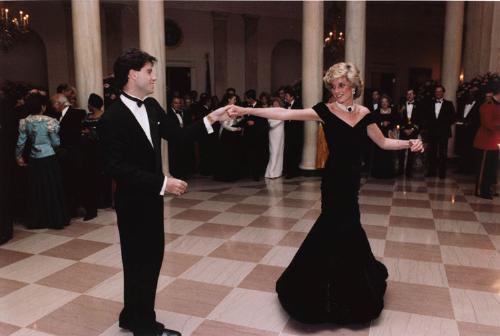
She culled her wardrobe, throwing out dresses that reminded her of her previous life, famously donating 79 of them to charity at a June 1997 Christie’s auction, including the black dress she wore while dancing with actor John Travolta at the White House in 1985.

American Actor John Travolta and Princess Diana of Great Britain dance at the White House, 1985.

She changed her friends. She dumped old confidante Elton John after he acted as a go-between with her and fashion designer Gianni Versace for Versace’s 1997 coffee-table book Rock and Royalty.  Diana blamed John for carelessly placing a photograph of the Princess and her sons in the book amid a portfolio of semi-nude male models, which Diana rightly feared would upset the Queen

In July 1997, Diana did make up with Elton John, consoling him at Versace’s memorial service. 

Princess Diana comforts rock star Elton John at the 1997 memorial for slain fashion designer Gianni Versace

By the end of August, Diana, too, would be dead, and John would play the piano at her funeral. In 2008, John reflected on Princess Diana’s last year:

I think in the end…Diana trusted the wrong people. She didn’t trust the people she should have trusted, her true friends. I always thought the people that really felt for her and really were true to her she just was a bit airy fairy towards in the end.”

Fergie was another of Diana’s old friends that got the heave-ho in the last year of her life. This rupture was also a result of the publication of a book.

Back in 1985, Sarah, the Duchess of York, and Princess Diana were close friends.

In her memoir, My Story: by Sarah, the Duchess of York, the divorced duchess shared that she and Diana wore the same size of shoes and often shared them.  Fergie claimed that she caught a verruca—a plantar wart – after wearing a pair of Diana’s shoes.

Diana was aghast that her old friend and former sister-in-law would portray her in such unflattering detail just to make a buck. Despite Fergie’s repeated apologies, Diana would not forgive her. She never spoke to Fergie again.

Brown, Tina. “Diana’s Final Heartbreak,” Vanity Fair, July 2007.

For more on Princess Diana, click here.

Read Full Post »


U.S. President Jimmy Carter (right) visits Buckingham Palace in May, 1977, and is greeted (l to r) by Queen Elizabeth II, Prince Philip, and the Queen Mother. Let me just point out that both Elizabeth and her mum are carrying purses. The Queen is never without her purse. The Queen Mum's purse blends so nicely with her frock they look cut from the same cloth! Although the Queen wears both gloves, her mother has taken off her right glove, presumably to shake Carter's hand - but he has something else in mind for her! (Lisa's History Room)

U.S. President Jimmy Carter only visited the British Royal Family once during his presidency but, in that short time, he made a very strong impression. In London for an economic summit in May, 1977, Queen Elizabeth II invited Carter to Buckingham Palace. While meeting her and other members of the royal family, Carter broke protocol and kissed the Queen’s mother right smack on the lips. 

Carter’s Southern hospitality did not sit well with the Queen Mother (1900-2002) who snapped,

Nobody has done that since my husband died.”(1)

Her husband, King George VI, died in 1952.

The Queen Mother took an instant dislike to the former peanut farmer from Georgia. Later, she wrote about the unpleasant encounter. Evidently, she had seen Carter leaning in for a smooch and had tried to dodge his ample lips:

 I took a sharp step backwards – not quite far enough.” (2)

While there are no obligatory ways to greet the Queen and the royal family, often a man bows his head or simply shakes hands. An American is not required to bow or curtsy. Planting a kiss on the royal lips is definitely out of bounds!

(1) www.mirror.co.uk

(2) Shawcross, William. The Queen Mother: The Official Biography. 2009

READERS: For more posts on the British Royal Family, click here.

For more on Jimmy Carter, click here.

Read Full Post »

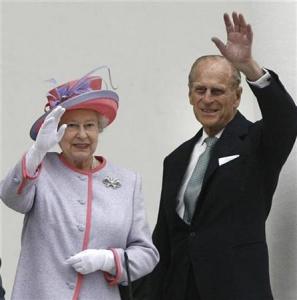
Queen Elizabeth and her consort Prince Philip visit Richmond, Virginia, May 3, 2007.

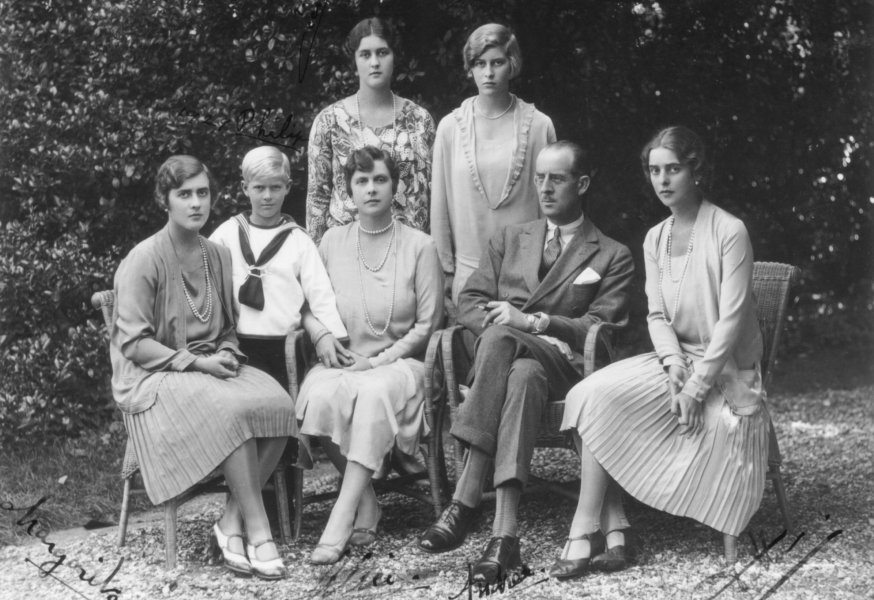
Prince Philip of England’s upbringing was far from normal. He was born June 10, 1921, on a kitchen table on the Greek island of Corfu in a house that had no electricity, hot water, or indoor plumbing. The only son and fifth and final child of Princess Alice of Battenberg and Prince Andrew of Greece and Denmark was christened Prince Philippos of Greece and Denmark. The platinum blond toddler learned sign language to communicate with his deaf mother.

Prince Philip (center) with parents, ca. 1923 (Lisa’s History Room)

Prince Philip of Greece’s father was a professional soldier in the Greek Army. With the Greek defeat in Asia Minor in 1922, Prince Andrew was accused of treason; he was tried, convicted, and jailed and faced possible execution by firing squad. Princess Alice (known as Princess Andrew to English speakers) appealed to her British relative, King George V, for help. Remembering what had happened to his Russian cousin the Tsar when he had refused his cry for rescue, the King quickly dispatched the HMS Calypso to remove Andrew, his wife, their four daughters, and Baby Philip from Greece. Prince Andrew boarded the ship carrying his 18-month-old son in an orange crate. They sailed for France.

For the next eight years, Prince Philip’s family lived in exile in Paris. Philip learned to speak English, French, and German, but no Greek. His family was royal – but not rich – and depended upon the charity of relatives and friends to feed, house, clothe, and educate them while in exile from their mother country.

Prince Philip of England’s family poses for a photograph October 1928. A young Prince Philip stands to the right of his mother, Princess Alice and Prince Andrew of Greece and Denmark. From left to right are Philip’s sisters, all Princesses of Greece & Denmark: Margarita, Theodora, Sophie, and Cecilie.

In 1930-31, the family fell completely apart. All four of Philip’s sisters, who were educated in Germany, married German noblemen and moved to Germany. Then Prince Andrew abandoned his wife and Philip and ran off to live with his mistress on her yacht anchored in the Mediterranean off Monte Carlo where Andrew quickly became addicted to the gaming tables.

Philip’s mother collapsed under the strain. She suffered a nervous breakdown and was institutionalized in Switzerland at the famed Bellevue Sanatorium. That left little Philip all alone in Paris, with no one to care for him. He was only nine.

Philip was then sent to England to be cared for by his maternal grandmother.  But then she died. Next he moved in with his Uncle George, who, by 1938, was dead also. Philip was 17 at the time.

Then another of his maternal uncles, Lord Louis Mountbatten, British sea lord and the last Viceroy of India stepped in and took Philip under his wing. “Uncle Dickie” took an intense interest in his promising nephew. He made grand plans for him.

Prince Philip as a young midshipman in the Royal Navy, ca. late 1930s

Even though Philip was a Greek citizen, Uncle Dickie pulled a few strings so that Philip could join the Royal Navy as a midshipman. Then Uncle Dickie began to pave the way for Philip to marry the future Queen of England. In 1939, he arranged for Philip to entertain King George VI‘s two daughters, Princesses Elizabeth and Margaret, while the King and Queen Elizabeth toured Dartmouth Naval College.

When Princess Elizabeth met Philip, she was only 13. She fell head-over-heels in love with the tall, handsome, and athletic young man. The two became pen pals and wrote constantly to one another during the next six years of world war. He celebrated the Christmas of 1943 with her and her family at their Scottish estate, Balmoral. The press hailed the romance as the love match of the century.

I

In this July, 1951 photo (a year before King George VI’s death and Princess Elizabeth’s ascension to the British throne), Princess Elizabeth and her mother, Queen Elizabeth, arrive at Westminster Abbey to attend the wedding of Lady Caroline Montagu-Douglas-Scott to Mr. Ian Hedworth Gilmour. Princess Elizabeth’s mother – who styled herself “Queen Elizabeth, the Queen Mother,” after her daughter became Queen Elizabeth II – had a fussy, overdressed sense of fashion. Her hats were generally broadbrimmed, trimmed in lace or swaths of chiffon, or piled high with feathers. Her neckline was often V-shaped and adorned with her trademark triple strand of pearls. Her dresses were feminine, flirty, and accented by enormous brooches and rings. As she aged, she dressed in fruity colors like pink, lime, and yellow. Her dresses and hats always matched in color. Her girlish style, peaches-and-cream complexion, pudginess, and sunny smile suggested a sweetness and wholesomeness that made her extremely popular at home and abroad. The Queen Mother, nee Elizabeth Bowes-Lyon, died in her sleep in 2002 at the age of 101. (Lisa’s History Room)

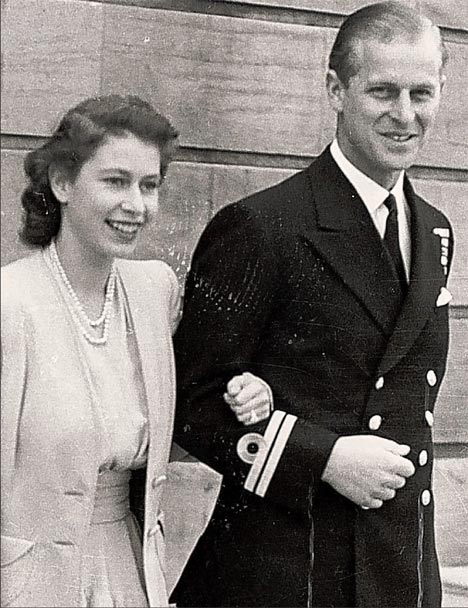
It was no surprise when, on July 9, 1947, the Palace announced that Prince Philip of Greece and Princess Elizabeth of Great Britain were officially engaged. Philip was 26; Elizabeth, 21. The wedding was set for November 20, 1947, at Westminster Abbey. The King and Queen were not wild about the idea of Elizabeth marrying before the age of 25, but it didn’t matter what they wanted. Elizabeth wanted Philip and she was going to have him.

Princess Elizabeth of Great Britain and Prince Philip of Greece announce their engagement, July 9, 1947. (Lisa’s History Room)

Buckingham Palace shifted into high gear planning the royal wedding:

“This was not simple a marriage ceremony, but an affair of state that would focus world attention on the British monarchy. Consequently the King and Queen told him [Prince Philip] that his sisters and their German husbands, some of whom had supported Hitler’s Third Reich, could not possibly be included. So they remained in Germany and listened to the service on the radio.” (1)

Still focused on the guest list, the Queen addressed the issue of Philip’s mother, Princess Andrew, whom she considered “pleasant but odd.” Although Philip’s mother had had nothing to do with Philip since he was 9, Princess Andrew had nevertheless been quite busy while others raised her son. After several years of Swiss therapy in the early 1930s, she had rejoined society and taken up charitable works. During WWII, she saved a Jewish family named Cohen from being sent to the death camp by sheltering them in her Greek home.

After the war, Princess Andrew founded a religious order called the Christian Sisterhood of Martha and Mary dedicated to helping the sick and the needy in Greece. Princess Andrew became a nun, taking a vow of celibacy, although she had born 5 children. She had a habit – a nun’s habit – that she wore all the time. It consisted of a drab gray robe, white wimple, cord, and rosary beads. She was commonly referred to as “Sister Andrew.”

Queen Elizabeth was understandably terrified that Princess Andrew would show up at the wedding at Westminster Abbey wearing her nun’s habit and embarrassing the family in a large way. The Queen pressed the issue with Philip. As a result, Princess Andrew appeared at her son’s wedding wearing a demure hat and a simple silk dress, which the Queen later described as “very pretty and most appropriate.”

Princess Elizabeth and Prince Philip marry on November 20, 1947

Six years later King George VI was dead. Elizabeth and Philip returned to Westminster Abbey for Elizabeth to be crowned Queen.

The coronation was held on June 2, 1953 and televised, at Elizabeth’s request, so that all her subjects could see her crowned. Twenty million viewers watched the seven-hour BBC-TV marathon. The ceremony began as the guests began their stately procession down the long aisle of Westminster Abbey, ahead of the Queen, to take their seats.

Prince Philip’s mother was among the guests. She turned heads as she processed up the aisle wearing a long grey dress and a flowing head-dress that looked remarkably like a nun’s habit! She had had it especially made for the coronation.

Princess Andrew of Greece and Denmark, Prince Philip’s mother (bottom left) processes down the aisle of Westminster Abbey for her daughter-in-law Elizabeth’s coronation as Queen Regnant of Great Britain. June 1953. Princess Andrew is dressed in an outfit resembling her usual attire – a nun’s habit. (Lisa’s History Room)

Princess Andrew, 1965

Princess Andrew died at Buckingham Palace in 1969. According to her wishes, she was buried in Gethsemane on the Mount of Olives in Jerusalem. On October 31, 1994, Princess Andrew’s two surviving children, Prince Philip and Sophie, Princess George of Hanover, went to Yad Vashem, the Holocaust Memorial, in Jerusalem to witness a ceremony honouring their mother. Princess Andrew was called “Righteous among the Nations” for having hidden a Jewish family in her home in Athens during WWII.

(1) Kelley, Kitty. The Royals. New York: Warner Books, Inc., 1997.

Read Full Post »

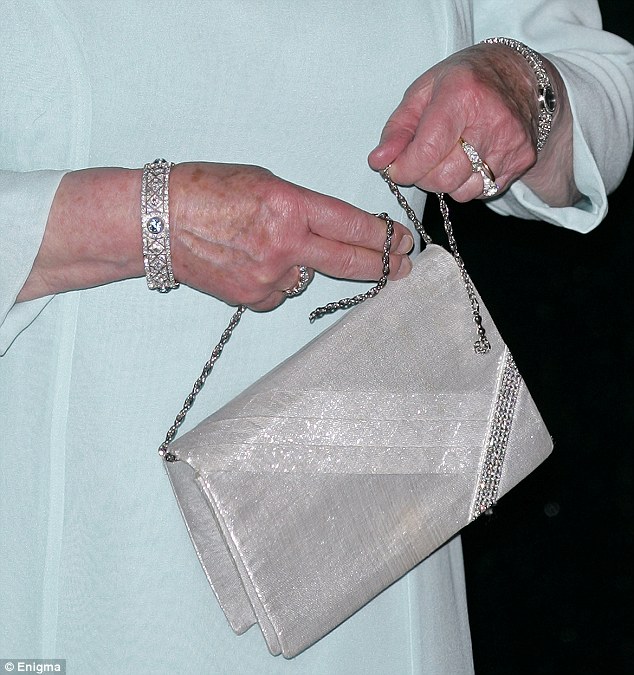
Queen Elizabeth II of England suffered two wardrobe malfunctions at a private party in London for her cousin King Constantine of Greece. A fellow guest spilled something on her beautiful blue gown, leaving huge stains running down the right side, then the chain link strap on her silver handbag broke. (June 3, 2010)

Two nights ago, Queen Elizabeth II of Great Britain helped King Constantine of Greece celebrate his 70th birthday and, at the party, had not one but two fashion mishaps. Someone – a fellow guest, possibly, or a waiter maybe – spilled what is purported to be coffee on the 84-year-old British monarch’s pale blue floor length gown, staining it permanently. Then, on top of that, the metal strap on the Queen’s ever-present handbag broke in half.

Queen Elizabeth clutches the broken strap of her evening handbag at King Constantine's 70th birthday party in a private London home.

Poor Queen! Where were all those ladies-in-waiting when she needed them most? Couldn’t someone have thrown a cloak over the Queen’s dress to hide the stains or stood in front of her to block her from the paparazzi’s unrelenting snaps?

If the Queen was ruffled by being uncharacteristically messy, she didn’t show it. Her Majesty – who is always neat, clean, and fastidiously turned-out – held high the royal chin throughout the terrible, horrible, no-good, very bad night and had a very good time, thank you, in spite of her multiple fashion faux-pas. Jolly brave, Elizabeth partied for hours alongside fellow royals — including son Prince Andrew, daughter Princess Anne, Queen Sofia of Spain, and Crown Prince Pavlos of Greece, who hosted the bash at his London home.

King Constantine of Greece escorts his cousin Queen Elizabeth down the steps at the end of his 70th birthday party. Despite the obvious food stains running down the Queen's dress and the broken strap of her glittery evening bag, the Queen maintained her always noble demeanor.

Read Full Post »

Sarah Ferguson watches polo at Windsor with Princess Diana, in 1985, the year before she married into the British Royal Family and became the Duchess of York

Sarah Ferguson –  “Fergie” –  and Princess Diana (1961-1997) knew each other for six years before Fergie married Prince Andrew in 1986 and became a member of the Royal Family. The two women had first met on the polo circuit, as Diana’s husband Prince Charles was an avid player and Fergie’s father, Sir Ronald Ferguson, was the Prince’s polo manager.

Soon after meeting, Diana and Fergie (b. 1959) became fast friends. The timid and reserved Diana was intoxicated by Fergie’s loud and breezy energy:

“The two girls would burn up the telephone wires trading gossip and irreverent royal tidbits they could share with no one else.” (1)

Since Diana’s 1981 wedding to Charles, she had been starved of fun. Diana thought about how lovely it would be to have Fergie as a mate in the Royal Family. In June of 1985, Diana decided to play royal matchmaker and make it happen. She wangled an invitation for Fergie to not only attend the Queen’s Ascot Week house party at Windsor Castle , but managed also to get the boisterous redhead seated next to the Queen’s second son, the 25-year-old Prince Andrew, a very eligible bachelor and second in line for the throne.

Sarah, the Duchess of York ("Fergie") and Diana, Princess of Wales, 1987

Within an hour of meeting Fergie, Andrew was “chatting her up” and “flirtatiously coaxing a merry-eyed Ms. Ferguson to eat every one of the chocolate profiteroles [cream puffs] on her plate.” (1) A year later, Fergie and Andrew were married at Westminster Abbey as the Duke and Duchess of York. Di had gotten her ally in the family.

This commemorative stamp was issued in Great Britain in 1986 to commemorate the Royal Wedding of Prince Andrew to Miss Sarah Ferguson. They became the Duke and Duchess of York.

 
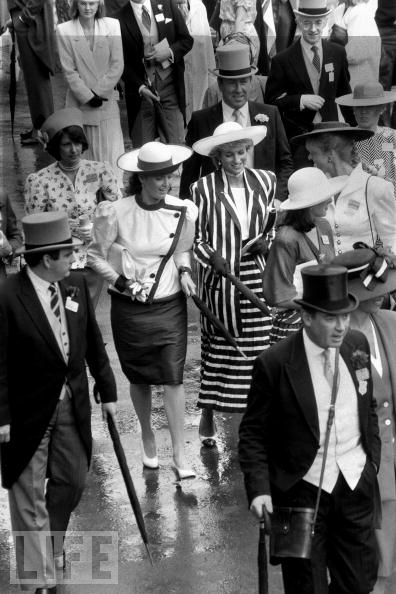
Encouraged by Fergie’s wildness, Diana began to loosen up publicly. She became a bit of a royal daredevil. Memorably, in June 1987, she and Fergie were photographed at Royal Ascot poking Fergie’s old school friend Lulu in the behind with their umbrellas, called “brollies” in England.  (2) 

Sarah Ferguson, the Duchess of York (l), and Princess Diana (r) attend the Royal Ascot, June 1987.

The Ascot Umbrella Caper – dubbed “the Brolly Folly” – drew public scorn. Woodrow Wyatt recorded in his memoirs that his wife saw Diana at Ascot

fooling about in the most childish manner, pulling people’s hair and tweaking them.”

The Sun reported the incident, referring to Fergie and Diana caustically as “silly, simpering girls.” It was the first of many desperate attempts Diana and Fergie made to “unstiffen” royal protocol. 

Over time, the fallout from the bad press would affect Diana and Fergie differently. Diana would weather the public criticism better than Fergie. With Diana’s tragic death, charity work, and sad marriage, the public has been more forgiving of her wild days. The late Princess Diana is lovingly remembered today as the People’s Princess.

Fergie, however, at age 50, continues to court disaster with her impetuous ways and money woes. Matter of fact, with the latest bribery scandal and “Oprah” TV appearance, the Duchess of York is being referred to in the press as the Duchess of Disaster. 


An image made from video shows the Duchess of York apparently selling access to ex-husband Prince Andrew for 500,000 British pounds to an undercover reporter from the UK tabloid, "News of the World." (foxnews.com_May 24, 2010)

(1) Brown, Tina. The Diana Chronicles. New York: Doubleday, 2007.

(2) “Births, Deaths, & Marriages.” Thirty Years of Majesty. Vol. 31, No. 5.

Read Full Post »

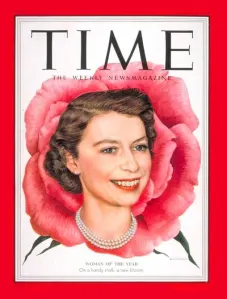
TIME magazine's 1952 Woman of the Year: Queen Elizabeth II of England (Jan. 5, 1953 cover)

TIME magazine's 1952 Woman of the Year: Queen Elizabeth II of England (Jan. 5, 1953 cover)

In February 1952, Princess Elizabeth was touring Kenya with her husband Prince Philip, the Duke of Edinburgh when she received the bad news that her father, King George VI of Great Britain, had passed away. Thus, at the tender age of 25, Elizabeth ascended the throne to become Queen of the United Kingdom, Canada, Australia, New Zealand, South Africa, Pakistan, and Ceylon. She took the title Queen Elizabeth II although she was not a descendant of Queen Elizabeth I (1533-1603), who was the last Tudor queen. Queen Elizabeth II belongs to the Royal House of Windsor, formerly known as Saxe-Coburg and Gotha.

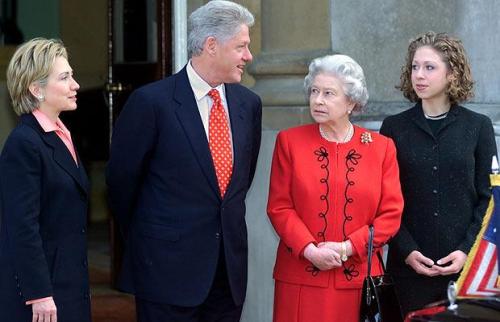
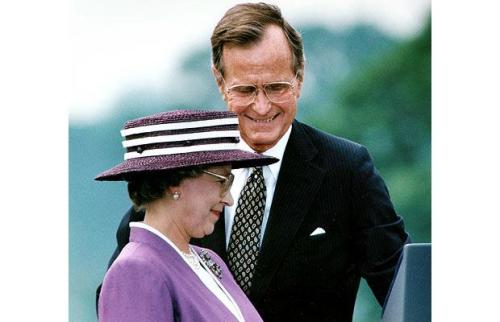
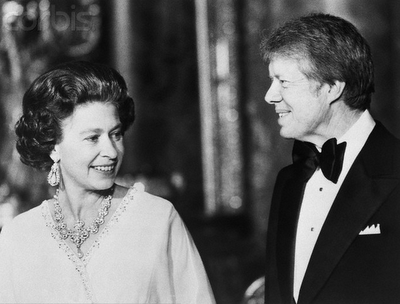
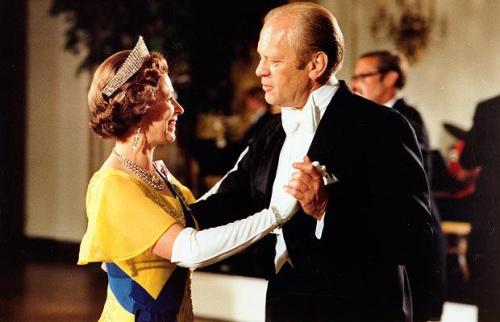
During the Queen’s reign, there have been 11 U.S. presidents. Queen Elizabeth II has met every one of them except Lyndon B. Johnson. She met Harry Truman before she became queen and Herbert Hoover when he was a former president.

Here is a photo gallery of Queen Elizabeth II and 12 U.S. Presidents:

The Queen with President Barack Obama in 2009

The Queen with President Barack Obama in 2009

The Queen with President George W. Bush in 2003

The Queen with President George W. Bush in 2003

The Queen with President Bill Clinton in 2000

The Queen with President Bill Clinton in 2000

The Queen with President George H. Bush in 1991

The Queen with President George H. Bush in 1991

The Queen with President Ronald Reagan in 1982

The Queen with President Ronald Reagan in 1982

The Queen with President Jimmy Carter in 1977

The Queen with President Jimmy Carter in 1977

The Queen with President Gerald Ford in 1976

The Queen with President Gerald Ford in 1976

The Queen with President Nixon 1970

The Queen with President Richard Nixon in 1970

The Queen and Prince Philip with President John and Jackie Kennedy (early 1960s)

The Queen with President John F. Kennedy in 1961

The Queen with former President Herbert Hoover in 1957

The Queen with former President Herbert Hoover in 1957

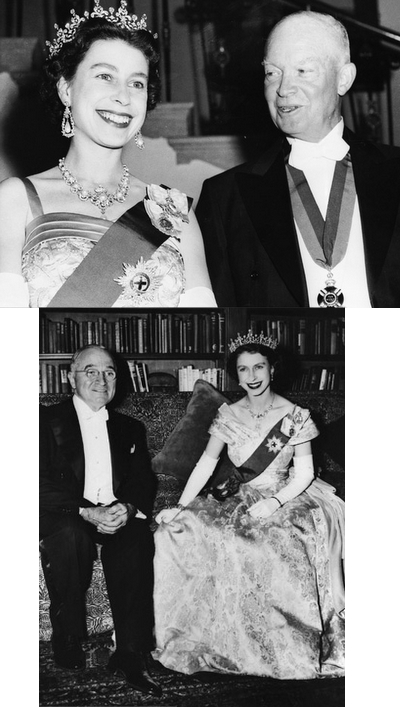
The Queen with Presidents Dwight Eisenhower (top) and Harry Truman (1950s)

The Queen with Presidents Dwight D. Eisenhower (top) in 1957 and Harry Truman (bottom) in 1951

Readers, for more on the Queen, scroll down the right sidebar to “Categories” – “People” – “Queen Elizabeth II”

Read Full Post »

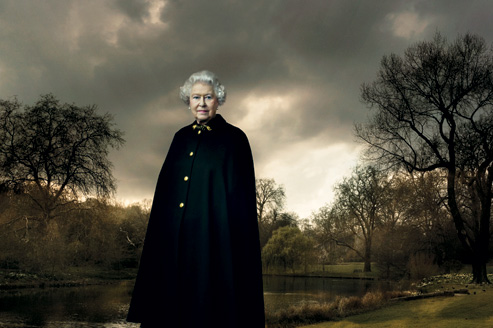
photo of Queen Elizabeth II at Buckingham Palace, March 28, 2007, by Annie Leibovitz

Annie Leibovitz photographed Queen Elizabeth. Here’s what she had to say about that experience.
Excerpted from Annie Leibovitz at Work, by Annie Leibovitz, published by Random House © 2008

The Queen

In 2007, a few weeks before Queen Elizabeth visited the United States for the 400th anniversary of the founding of Jamestown, I was asked to take her portrait. I was the first American to be asked by the Palace to make an official portrait of the Queen, which was very flattering. I felt honored. I also felt that because I was an American I had an advantage over every other photographer or painter who had made a portrait of her. It was O.K. for me to be reverent. The British are conflicted about what they think of the monarch. If a British portraitist is reverent, he’s perceived to be doting. I could do something traditional.

It’s ironic that the sitting with the Queen became controversial. I’m rather proud of having been in control of a complicated shoot. The controversy arose about two months after the pictures were published, when the BBC claimed that the Queen had walked out while we were shooting. This was completely untrue, and although they retracted the claim and issued an apology to the Queen and to me almost immediately, the scandal had a life of its own. The story, which came to be referred to as Queengate, wouldn’t die. Eventually the head of BBC One resigned over it.

When I was preparing for the shoot, I thought about using the landscape around Balmoral Castle, in Scotland. I brought this up in the very first conference call with the Palace. I said that Americans thought of the Queen as an outdoorswoman. I had been influenced by Helen Mirren’s performance in The Queen and I couldn’t help mentioning how much I liked her character in that film. There was a long silence on the other end of the line.

The second idea I had, after Balmoral, was to photograph the Queen on horseback. I asked where she rode and they said she went riding every Saturday at Windsor Castle. I said that I would love to see her in her riding clothes, and in a later conversation I asked if she could stop during her weekend ride and get off her horse and mount it again. That is, could I do a portrait of her in the trees. They said, No, it was not possible. She just rode the horse and came back, and, anyway, she didn’t wear riding clothes anymore. A few days later they said it was going to be Buckingham Palace and no horses.

I realized that I was going to need some time on the ground for this. When we arrived in London, we went straight to the palace and were shown all the rooms, including the throne room—everywhere except the private quarters. And then we scouted the back. There was a wintery sky and the trees didn’t have leaves. It was an appropriate mood for this moment in the Queen’s life. There was no way, however, that she was going to stand outside in formal attire.

For a sitting like this you don’t put all your eggs in one basket. You try to have as many options as possible. I kept thinking that somehow I would get the Queen outside, but I began choosing formal outfits. I narrowed the robes down to a very handsome Order of the Garter cape, but then we were told that she could wear only a white dress under it. We were lobbying for a gold dress. I was also hoping for a dress with more body to it. The Queen wears very streamlined dresses now that she’s older, and I wanted her in something with more volume. But she didn’t have anything like that. Finally everyone agreed that she could wear a gold-and-white dress under the Order of the Garter robe. The Queen was 80 years old. She was sturdy, but putting on and taking off a lot of heavy clothes is tiring, and she had to be dressed in layers to expedite things. The gold-white dress became the base.

I was still upset that I couldn’t get her outside. It was so beautiful out there. And it wasn’t cold or raining or anything. I began thinking about what Cecil Beaton had done. He brought in flowered backdrops. Beaton was big on backdrops. He made very stagy portraits. Perhaps because the pictures were made in black and white you don’t notice the backdrops. They sort of go out of focus. I realized that I could do something similar digitally. I decided to photograph the garden and the trees for a backdrop.

The Palace had given us 25 minutes with the Queen, so there had to be a battle plan. I chose a grand reception room, the White Drawing Room, as the principal setting because of the light from the tall windows. Supplementary lights had been pre-set so that when the Queen moved from one spot to another all we needed to do was switch them on. We had constructed a gray canvas backdrop in an anteroom, and she was to come in there wearing the Order of the Garter robe and the dress, but no tiara. The first shot was to be made on a balcony, with the sky behind her. That sky could be digitally exchanged later for the pictures I had taken in the gardens the day before. I didn’t want her to be wearing a tiara in the gardens.

The morning of the shoot, the Queen came walking down the hall very purposefully. She was definitely a force. This was all being taped by the BBC for a documentary. I would never have agreed to their being there if I felt I had any choice, but they had been following her around for months. Their microphone picked up her saying, “I’ve had enough of dressing like this, thank you very much,” as she marched down the hall. Later, when segments of footage for the BBC were edited for a promotional film, it appeared as if the Queen were stomping out of the photo session rather than going into it. Thus the brouhaha.

The Queen was about 20 minutes late, which we thought was a little strange. When that happens, you never know if it can be made up on the other end. My five-year-old daughter, Sarah, had come with us, and she curtsied and offered the Queen flowers, and I introduced my team. At this point I was in shock. The Queen had the tiara on. That was not the plan. It was supposed to be added later. The dresser knew that. The Queen started saying, “I don’t have much time. I don’t have much time,” and I took her to the first setup and showed her the pictures of the gardens. I think she understood what we had in mind. Then I walked her into the drawing room, probably sooner than I would have if things had been going well. She composed herself when I took some pictures.

I knew how tight everything was, especially with the loss of 20 minutes, and I asked the Queen if she would remove the tiara. (I used the word “crown,” which was a faux pas.) I suggested that a less dressy look might be better. And she said, “Less dressy! What do you think this is?” I thought she was being funny. English humor. But I noticed that the dresser and everyone else who had been working with her were staying about 20 feet away from her.

We removed the big robe, and I took the picture of the Queen looking out the window, and then I said, Listen, I was a little thrown when you first came in, and I have one more picture I’d like to try, with an admiral’s boat cloak. I was thinking of one of Cecil Beaton’s last pictures of the Queen. A very stark and simple and strong portrait in which she’s wearing a boat cloak. We went back into the anteroom, where the gray canvas backdrop had been set up, and she took off the tiara and put on the cloak. That’s the shot we digitally imposed on pictures of the garden.

Right after we finished, I went up to the press secretary and said how much I loved the Queen. How feisty she was. Later I mentioned to a couple of friends that she had been a bit cranky, but it was nothing unusual. What was remarkable about the shoot, and I wrote the Queen a note about this later, was something the BBC missed: her resolve, her devotion to duty. She stayed until I said it was over. Until I said, “Thank you.” We were finished a little before our allotted 25 minutes were up.


Readers, for more on this episode, read my post, “The Queen is Mad.”

Read Full Post »

In this March 2007 photo, Britain's Queen Elizabeth II greets American photographer Annie Leibowitz at a reception prior to their photo shoot. Notice that the Queen has her black Launer purse on her arm.

In this March 2007 photo, Britain's Queen Elizabeth II greets American photographer Annie Leibovitz at a reception prior to their photo shoot. Notice that the Queen has her black Launer purse on her arm.

Prior to her May 2007 visit to the United States, Queen Elizabeth II sat for a series of official photographs by famous celebrity photographer Annie Leibovitz. Ms. Leibovitz is well known for her sometimes controversial celebrity photographs including one of a naked John Lennon hugging a fully clothed Yoko Ono.

December 8, 1980 photograph of John Lennon with wife Yoko Ono taken by Annie Leibowitz. Five hours after this photo shoot, Lennon was shot dead.

December 8, 1980 photograph of John Lennon with wife Yoko Ono taken by Annie Leibowitz.

Leibovitz has said the original concept for the now legendary John Lennon and Yoko Ono Rolling Stone cover was for both to appear nude, designed to mark the release of their album “Double Fantasy.” As legend has it, Lennon was game, shedding his clothes quickly, but Ono felt uncomfortable even taking off her top. Leibovitz recalled for Rolling Stone:

“I was kinda disappointed, and I said, ‘Just leave everything on.’ We took one Polaroid, and the three of us knew it was profound right away.”

It was December 8, 1980. Five hours later, Lennon was dead – shot and killed by Mark David Chapman in front of his Manhattan apartment.

Now back to what I was saying about the Queen:

Leibowitz took the official portraits of Queen Elizabeth II in March 2007. One of the photos, shown below, shows a very serene Queen sitting in the White Drawing Room at Buckingham Palace dressed in a pale gold evening dress, fur stole, and diamond tiara. The wide shot captures the Queen gazing towards a large open window and reveals some of the room’s furnishings and a reflection of a chandelier in a mirror. The room is dark except for the soft light flooding through the open window. All is calm.

Queen Elizabeth II photographed by Annie Leibowitz, March 2007

Queen Elizabeth II, photographed by Annie Leibowitz, March 2007

The session was going smoothly until Leibovitz asked the Queen to take off her tiara (crown) to look “less dressy” for the next photo. The Queen flew into a huff and replied:

“Less dressy? What do you think this is?”

Queen Elizabeth II, photographed by Annie Leibowitz, March 2007. The Queen is not amused after having been asked by Leibowitz to take off her crown, which is actually a tiara.

The Queen was definitely not amused and the tiara stayed on the royal head.

The incident was caught on tape and included in a  BBC documentary “A Year with the Queen.” The BBC kept the footage and included it in a  promotional trailer for the film. The trailer shows the Queen telling an aide, “I’m not changing anything. I’ve had enough dressing like this, thank you very much” and storming out of the room.  The BBC later apologized and admitted that the sequence of events shown on the trailer had been misrepresented, as the Queen was in fact walking to the sitting in the second scene, not exiting. This led to a BBC scandal and a shake-up of ethics training. The event is known as “Tiaragate” and “Crowngate.” According to sources, the Queen was still furious about the incident months later.

Here’s the NBC-TV report:

Read Full Post »

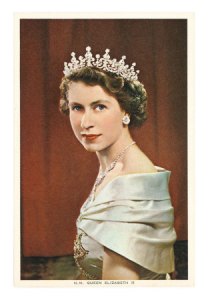
the newly-crowned Queen Elizabeth II

the newly-crowned Queen Elizabeth II

Here is a typical weekday morning for Queen Elizabeth II while in residence at  Buckingham Palace in London:

7:30  The maid enters her bedroom with a tray of  morning tea: 2 silver pots of Earl Grey, milk, and a few biscuits. The cup and saucer are bone china. The linen napkin bears the royal cypher “EIIR” (Elizabeth II Regent). The maid sets down the tray on a bedside table and crosses the room to open the bedroom curtains. She then turns on the radio which is tuned to BBC Radio 4’s Today programme. The Queen listens to the day’s news as she sips her tea. Outside her window the traffic on Constitution Hill is building and people are strolling through Green Park. The maid draws a bath.

While the Queen is bathing, the maid lays out the first of perhaps many outfits the Queen will wear that day, depending upon the royal schedule. Once the Queen is dressed, the Queen’s hairdresser styles her hair.

8:30  The Queen joins her husband Prince Philip for breakfast which is served in the first floor dining room that overlooks the Palace garden. Prince Philip has had a shower and coffee. During their breakfast together, the Prince may place little morsels of food on the bird feeder outside the window. A tail-coated footman brings the breakfast – whole wheat toast with marmalade and more tea and coffee. The Queen reads her papers: The Daily Telegraph and The Racing Post.

9:00  The Piper to the Sovereign – referred to as the “Queen’s Piper” – steps into the Palace garden. He is wearing a kilt of Royal Stewart tartan and two eagle feathers in his headwear.  The Queen and Prince Philip listen as he tunes his bagpipes. For the next fifteen minutes, the Queen’s Piper plays a selection of bagpipe tunes below the dining room window.

9:30  The Queen is seated at her Chippendale desk in her office to begin reviewing her correspondence. A footman comes in with her corgis, who have just had their morning walk in the garden. She works all morning. After lunch, she may take the dogs for a walk herself.

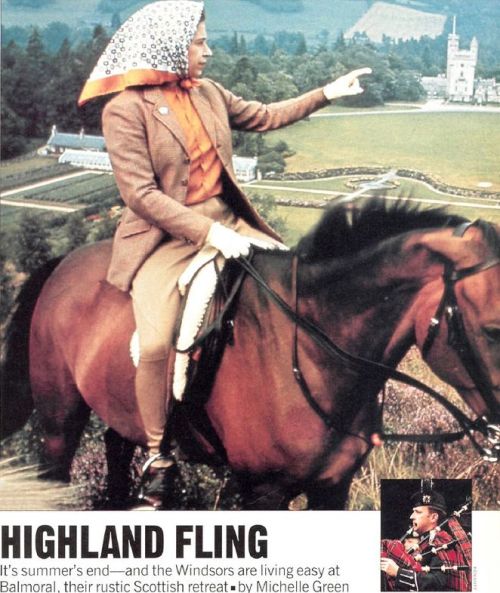
This 1994 People magazine photograph shows Queen Elizabeth II at Balmoral, her Scottish Highland hideaway every August. Whether at Balmoral, Windsor Castle, or Buckingham Palace, the Queen's weekdays start with a fifteen-minute bagpipe serenade. When at Balmoral, the pipers wear the Balmoral tartan.

Above, a 1994 People magazine photograph shows Queen Elizabeth II at Balmoral, her Scottish Highland hideaway she retreats to every August. Whether at Balmoral, Windsor Castle, or Buckingham Palace, the Queen’s weekdays start with a fifteen-minute bagpipe serenade at 9 a.m. When at Balmoral, though, the pipers wear the Balmoral tartan.

For more on Queen Elizabeth II, look in the left column “Categories-People-Queen Elizabeth II.” I’ve written many posts on the Queen; I hope you enjoy them!


Read Full Post »

Buckingham Palace

Buckingham Palace

He wasn’t the first person to scale the garden wall of Buckingham Palace. The year before, three German tourists had done it. While there had been others who’d breached Palace security, Michael Fagan was to become one of the most infamous.

1982 Buckingham Palace Intruder Michael Fagan

1982 Buckingham Palace Intruder Michael Fagan

It was 7:15 a.m. on July 9, 1982. Michael Fagan, 31, had been up all night, drinking whisky, and wandering London’s dark streets, brooding. He had just been released from the psychiatric ward at Brixton Prison. The judge had sent him there after he slashed his wrists with a broken bottle during his court hearing on charges that he stabbed his teenage stepson in the neck with a screwdriver. (1)

Fagan was discouraged. He was broke and faced a mountain of debt. His wife was unfaithful. There were problems with his kids and even his mum. The voices in his head told him to go and tell the Queen how unhappy he was and she would help. The voices told him he could do it. These were the same voices that before had talked him into climbing the towers of the bridges across the Thames River and to strip off his clothes and dive into the Grand Union Canal.

A guard at Buckingham Palace

A guard at Buckingham Palace

It was 7:15 on the morning of July 9, 1982 when Fagan, unshaven and dressed in jeans and a dirty t-shirt, gathered up his courage, climbed over the black iron fence of Buckingham Palace, and dropped down on the grounds of the royal residence. No guards noticed. He found an open window and crawled in. But the Queen wasn’t in that room, it held only an old stamp collection (King George V’s $20 million stamp collection). Fagan was not a thief. He wanted only to find the Queen. An alarm was tripped twice, but the policeman at the palace sub-station thought it was malfunctioning and turned it off both times.

Fagan then went back out into the courtyard and spied a 55 foot drainpipe that lead to the second floor. “I climbed it in seconds,” he proudly told interviewers later. “I was a Prince of the Earth.” He pulled back some wire meant to keep pigeons away and crawled in a window. He found himself in the office of Vice Admiral Sir Peter Ashmore, the man responsible for the Queen’s security. He took off his sandals and socks and proceeded to explore the Palace barefoot with dirty hands.

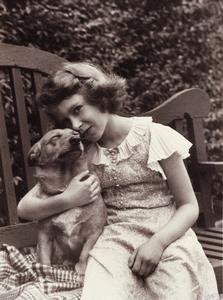
Princess Elizabeth, age 9 or 10, comforts her corgi Dookie, 1936

Princess Elizabeth, age 9 or 10, comforts her corgi Dookie, 1936

This wasn’t the first time Fagan had broken into the Palace. Only the month before, he’d had a practice run. He’d entered through an unlocked window on the roof and wandered about for a half hour. He viewed the royal portraits and rested on the thrones before entering the Postroom, where he drank half a bottle of California white wine before leaving.

On this, his second, visit to the Palace, Fagan was on a mission. He had to find the Queen. He wandered the corridors in search of her, and, on the way, cutting his hand on a glass ashtray. When he spied some dog dishes on the floor, he knew the Queen was near. She was never far from her precious dogs (See previous post, “Queen Elizabeth’s Corgis and Dorgis.”) He passed a housemaid who said, “Good morning,” then entered the Queen’s bedroom.

The Queen awoke to find a strange man sitting on the edge of her bed, cradling a broken ashtray and dripping blood on her bed linens. She kept calm and picked up the phone, asking the operator to summon the police. The operator did call the police but they didn’t come. She pushed the button for a chambermaid yet no one appeared. The armed guard regularly stationed at the Queen’s bedroom door was not at his post; he had taken her dogs out for a walk. Meanwhile, Fagan talked away, still sitting on her bed. He wanted to talk about love but the Queen didn’t. He thought it a coincidence that both he and the Queen had four children. Fagan wanted a cigarette. Again, the Queen called the palace switchboard yet no one responded.

After the Queen had spent ten minutes with the mentally disturbed, bleeding intruder, a chambermaid entered the Queen’s quarters and exclaimed, “Bloody hell, ma’am! What’s he doing in there?” The chambermaid then ran out and woke up a footman who then seized the intruder. The police arrived twelve minutes after the Queen’s first call.

When the public learned of this incident, they were outraged at the lapse of security around their Queen. Prime Minister Margaret Thatcher personally apologized to the Queen and measures were immediately taken to strengthen palace security.

Nevertheless, a 1999 report by the Royal Protection Squad stated that, in the six years previous, at least 6,000 mentally-ill persons had visited British royal residences or written to the royal family. Most of the mentally-disturbed people are harmless, the report stated, but the police guarding royalty are still trained to handle the few intruders who do indeed pose a danger. 

A man protests at Buckingham Palace, insisting upon his right to appear in public naked

A man protests at Buckingham Palace, insisting upon his right to appear in public naked

Over the years, the Royals have attracted unwanted attention from, among others, a group of lesbian anti-nuclear demonstrators who scaled the walls with ladders, and an American paraglider who landed on the roof as a stunt.


(1) Erickson, Carolly. Lilibet: An Intimate Portrait of Elizabeth II. (New York: St. Martin’s, 2004)


For more on Queen Elizabeth II, look in the left column under “Categories – People – Queen Elizabeth II.” I’ve written many posts on the Queen; I hope you enjoy them!

For more on Insane Asylums, scroll to the very bottom of “Categories – The Insane Asylum.”

Read Full Post »

Apple iPod

Apple iPod

Oops!!! Someone on the Obama team goofed.

In my last post, “What’s Playing on Queen Elizabeth’s iPod?“, I reported that President Barack and Michelle Obama had given the Queen a new, full-loaded iPod as a gift. The royal monarch, who turns 73 on the 21st of this month, gave the Obamas a signed portrait of herself.

Obviously, the Obama team didn’t do extensive research when selecting an iPod as a gift for the Queen, not that there’s anything wrong with giving her an iPod. It’s just that she doesn’t need one! She already has an iPod. She bought one for herself back in 2005. Australian news outlet Fairfax Digital carried the June 17, 2005 announcement on its website:

Britain’s Queen Elizabeth II has dipped into the royal purse to snap up an iPod, a report said today.

Britain’s biggest-selling daily The Sun said the 79-year-old sovereign had bought a six-gigabyte silver model for £169 ($400.05).

The pocket-sized digital music players can hold up to 10,000 downloaded songs.

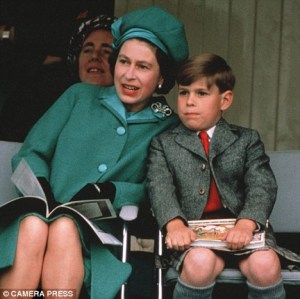
Queen Elizabeth II with son Prince Andrew when he was 7.

Queen Elizabeth II with son Prince Andrew when he was 7.

Queen Elizabeth’s second son Prince Andrew, fourth in line to the throne, was reported to be behind the move, having bought his mother a mobile phone and taught her how to use it in 2001.

“The Queen loves music and was impressed by how small and handy the iPod is,” a royal insider told The Sun.

“Obviously it is quite complicated to download songs, but I’m sure one of the courtiers will do it for her.

“Prince Andrew will probably also help out because he’s a real dab hand with gadgets.”

Read Full Post »

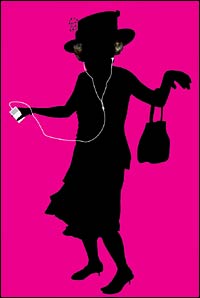
Queen Elizabeth Jiving to Her New IPod

Queen Elizabeth Jiving to Her New IPod

In London for the Group of 20 Meeting (see last post), President Barack and Michelle Obama visited Buckingham Palace yesterday. The Obamas gave Queen Elizabeth and Prince Philip a fully-loaded engraved iPod, with music and videos.

According to the Associated Press, the following songs were loaded onto Queen Elizabeth’s  iPod:

“Oklahoma!”
“If I Loved You,” Jan Clayton, “Carousel”
“You’ll Never Walk Alone,” Jan Clayton, “Carousel”
“There’s No Business Like Show Business,” Ethel Merman, “Annie Get Your Gun”
“Once in Love with Amy (Where’s Charley?),” Ray Bolger
“Some Enchanted Evening,” “South Pacific”
“Diamonds Are a Girl’s Best Friend,” Carol Channing, “Gentlemen Prefer Blondes”
“Getting to Know You,” Gertrude Lawrence, “The King and I”
“Shall We Dance?” Gertrude Lawrence, “The King and I”
“I Could Have Danced All Night,” Julie Andrews, “My Fair Lady”
“I’ve Grown Accustomed to Her Face,” Rex Harrison, “My Fair Lady”
“The Party’s Over (Bells Are Ringing),” Judy Holliday
“Maria,” “West Side Story”
“Tonight,” “West Side Story”
“Seventy Six Trombones,” “The Music Man”
“Everything’s Coming up Roses,” Ethel Merman, “Gypsy”
“The Sound of Music”
“Try to Remember,” Jerry Orbach, “The Fantasticks”
“Camelot,” Richard Burton
“If Ever I Would Leave You,” Robert Goulet, “Camelot”
“Hello, Dolly!” Carol Channing
“If I Were a Rich Man,” Zero Mostel, “Fiddler on the Roof”
“People,” Barbra Streisand, “Funny Girl”
“On a Clear Day (You Can See Forever),” John Cullum
“The Impossible Dream,” Richard Kiley, “Man of La Mancha”
“Mame,” Charles Braswell
“Cabaret,” Liza Minnelli
“Aquarius, Ronald Dyson, “Hair’
“Send in the Clowns,” Judy Collins, “A Little Night Music”
“All That Jazz,” Chita Rivera, “Chicago”
“One,” “A Chorus Line”
“Tomorrow,” Andrea McArdle, “Annie”
“Don’t Cry for Me Argentina,” Patti LuPone, “Evita”
“And I Am Telling You I’m Not Going,” Jennifer Holliday, “Dreamgirls”
“Memory,” Elaine Paige, “Cats”
“The Best of Times,” George Hearn, “La Cage Aux Folles”
“I Dreamed a Dream,” Aretha Franklin, “Les MisDerables”
“The Music of the Night,” Michael Crawford, “The Phantom of the Opera”
“As If We Never Said Goodbye,” Elaine Paige, “Sunset Blvd.”
“Seasons of Love,” “Rent”

Read Full Post »

 
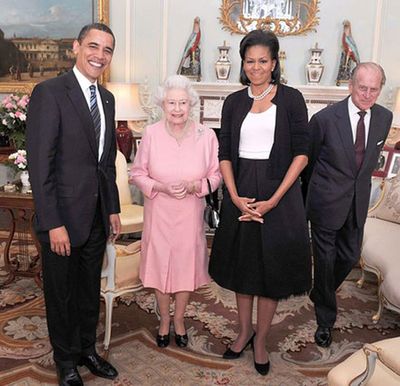
The Obamas met Queen Elizabeth and her husband, Prince Philip, at Buckingham Palace on Wednesday, April 1. The two couples exchanged gifts. The Obamas gave the queen an engraved iPod. The Queen’s new music player came already loaded with some Broadway show tunes and videos of her 2007 visit to Washington and Virginia.  The Obamas also gave the Queen a rare songbook signed by the composer Richard Rodgers. The British royals gave signed silver-framed portraits of themselves to the Obamas, their standard gift for visiting dignitaries.

The Obamas Visit Buckingham Palace. Note that the Queen has that purse in her arm although she is at home!

The Obamas Visit Buckingham Palace. Note that the Queen has that purse on her arm although she is at home!

If you enjoyed this post, you might also like the following:

“Queen Elizabeth’s Grandmother Had the Gimmies”
“What’s in Queen Elizabeth’s Purse?”
“What’s Playing on Queen Elizabeth’s iPod?”

Read Full Post »

« Newer Posts - Older Posts »